
 As someone who adamantly enjoys two-player, card-driven games, I was quite excited to have the opportunity to check out The Battle of Versailles. But in a crowded field, how does it stack up against the intense competition? Does it slowly fade away like the French fashion scene, or explode out of nowhere like the American scene?
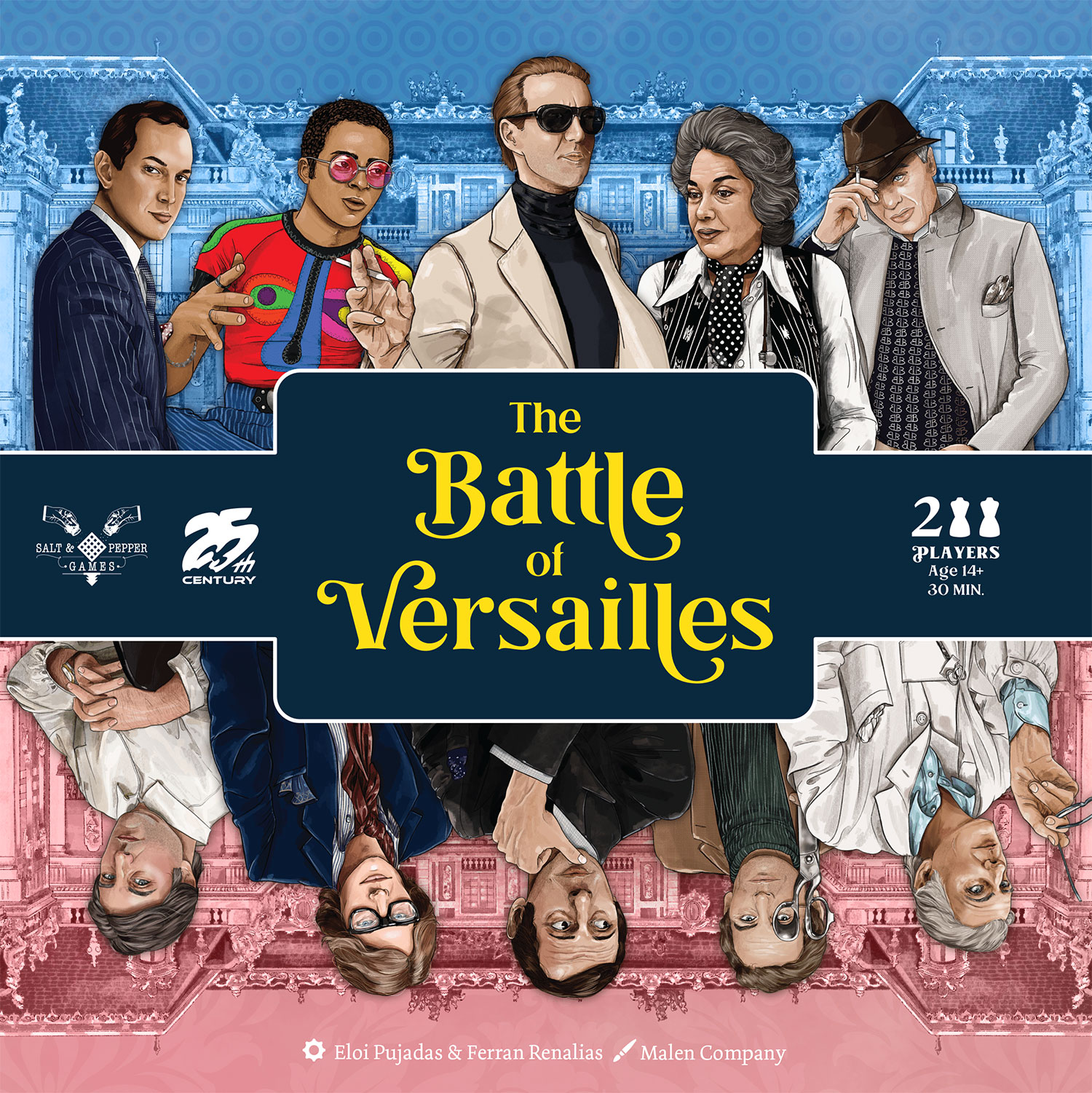
The Battle of Versailles is a 2-player board game published by 25th Century Games and takes about 30-45 minutes to play.
Gameplay Overview:
In The Battle of Versailles, two players will be competing in the 1973 Versailles fashion show as either the French or the Americans. Due to their prominence entering the competition, the French player has a playing field that feels set up for them to succeed: they get to play more cards, they get more income, all of their dresses are worth one point the whole game… how could they possibly fail? And yet, the Americans have a tricky play style full of bombastic dresses worth four or more points, devastating events, and more Wild Card symbols throughout the game, leading to their designers getting more clout and gaining more actions.
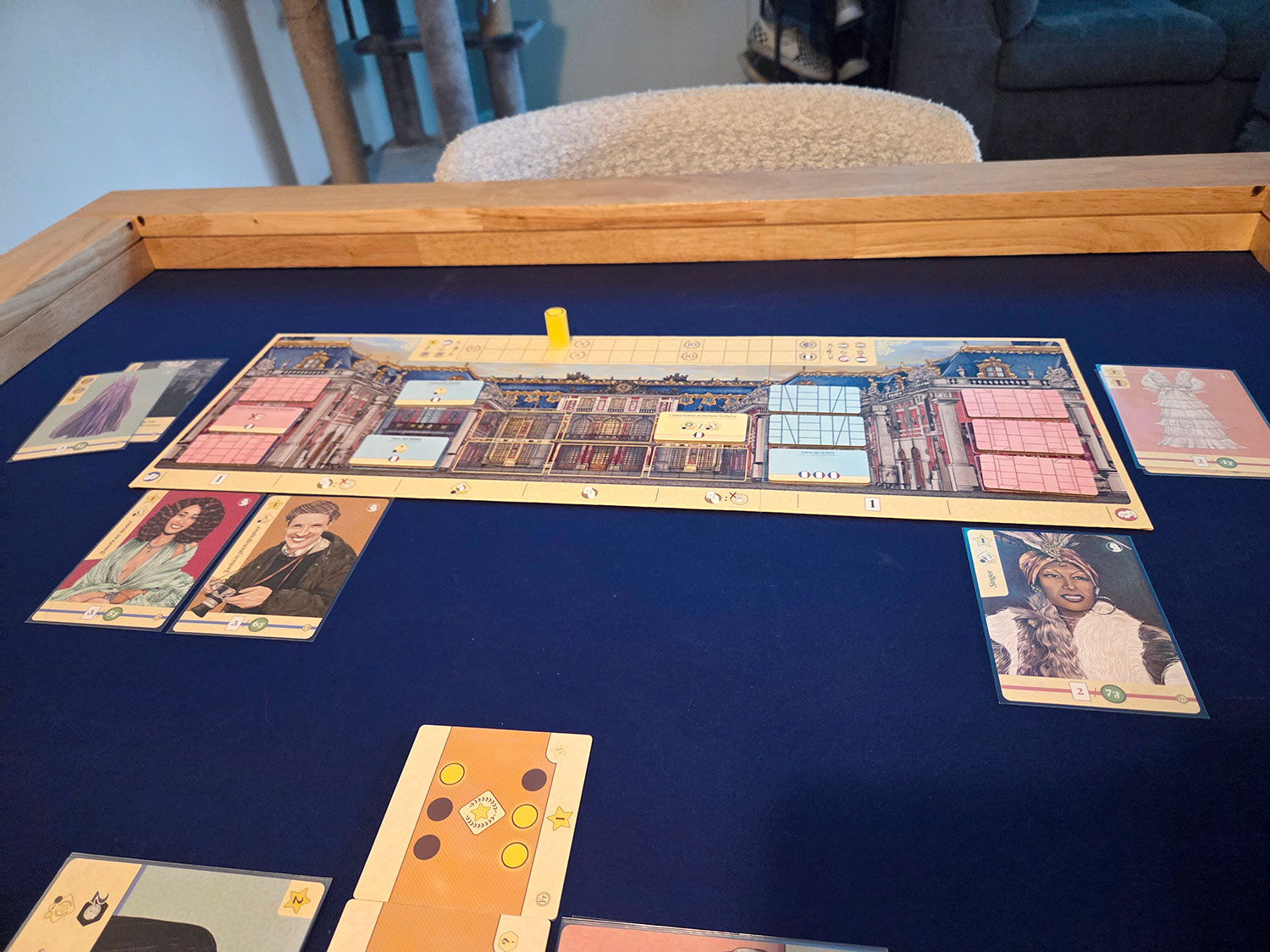
Throughout the game, both players will be playing dresses, playing celebrities, and playing events. If one player gets seven celebrities out onto the field, they win the game. If the French player gets 15 French flag symbols out onto the board, they win. If the American player gets six unique dress types out onto the board, they win. However, if after five rounds of play, no player has won via an alternative win condition, the player with the most Prestige (Victory Points) wins the game.
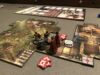
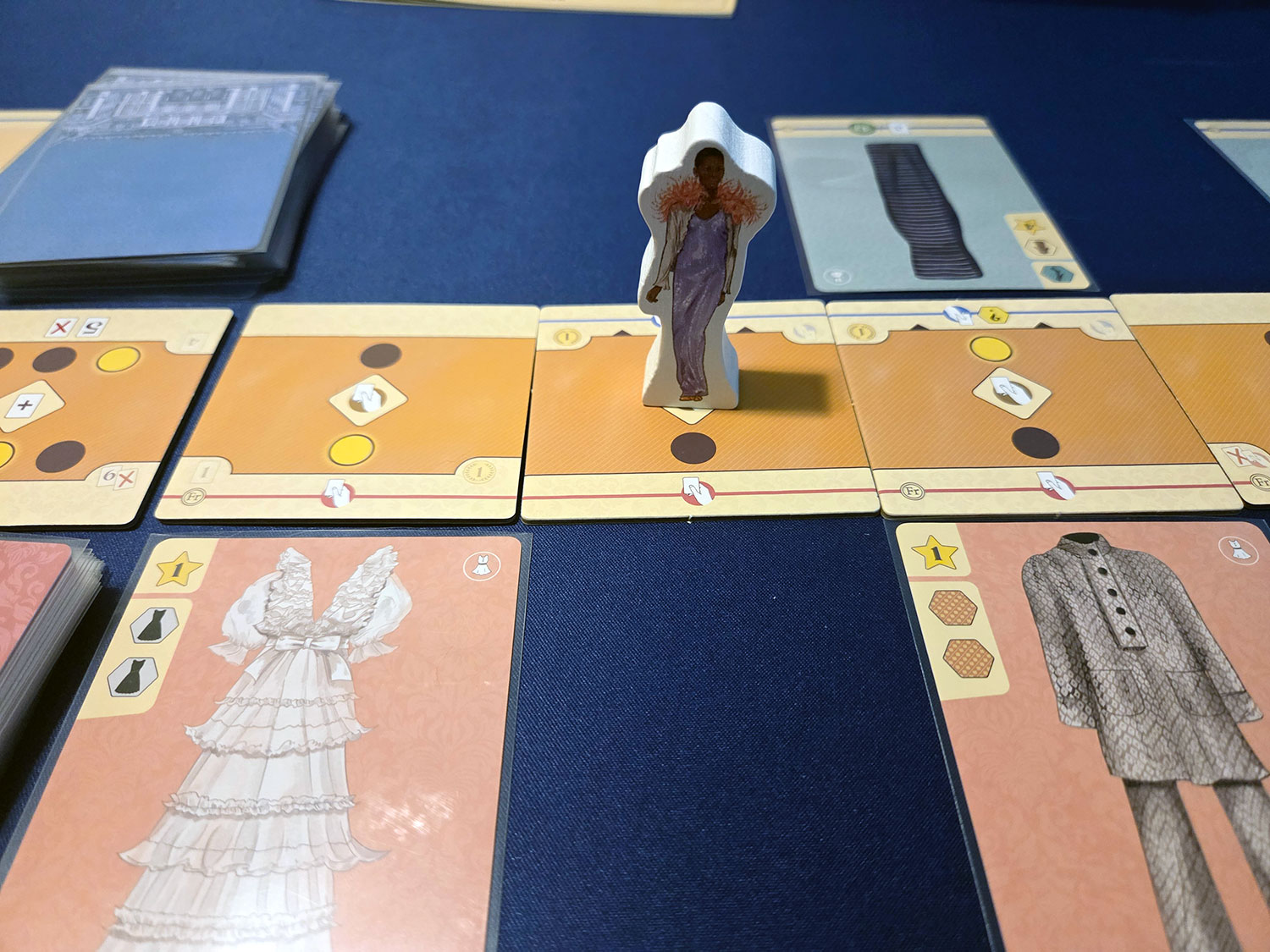
Each action in the game is driven by the runway model. When she lands on a tile of the runway, the player(s) with symbols on the tile will get to complete an action. But do not fret if the tile is lackluster for one side or the other, as a large part of this game is upgrading those runway tiles in your favor to improve your actions.
Play the right cards at the right time, show off the best dresses, and upgrade tiles to your heart’s content to come out on top in The Battle of Versailles.
Game Experience:
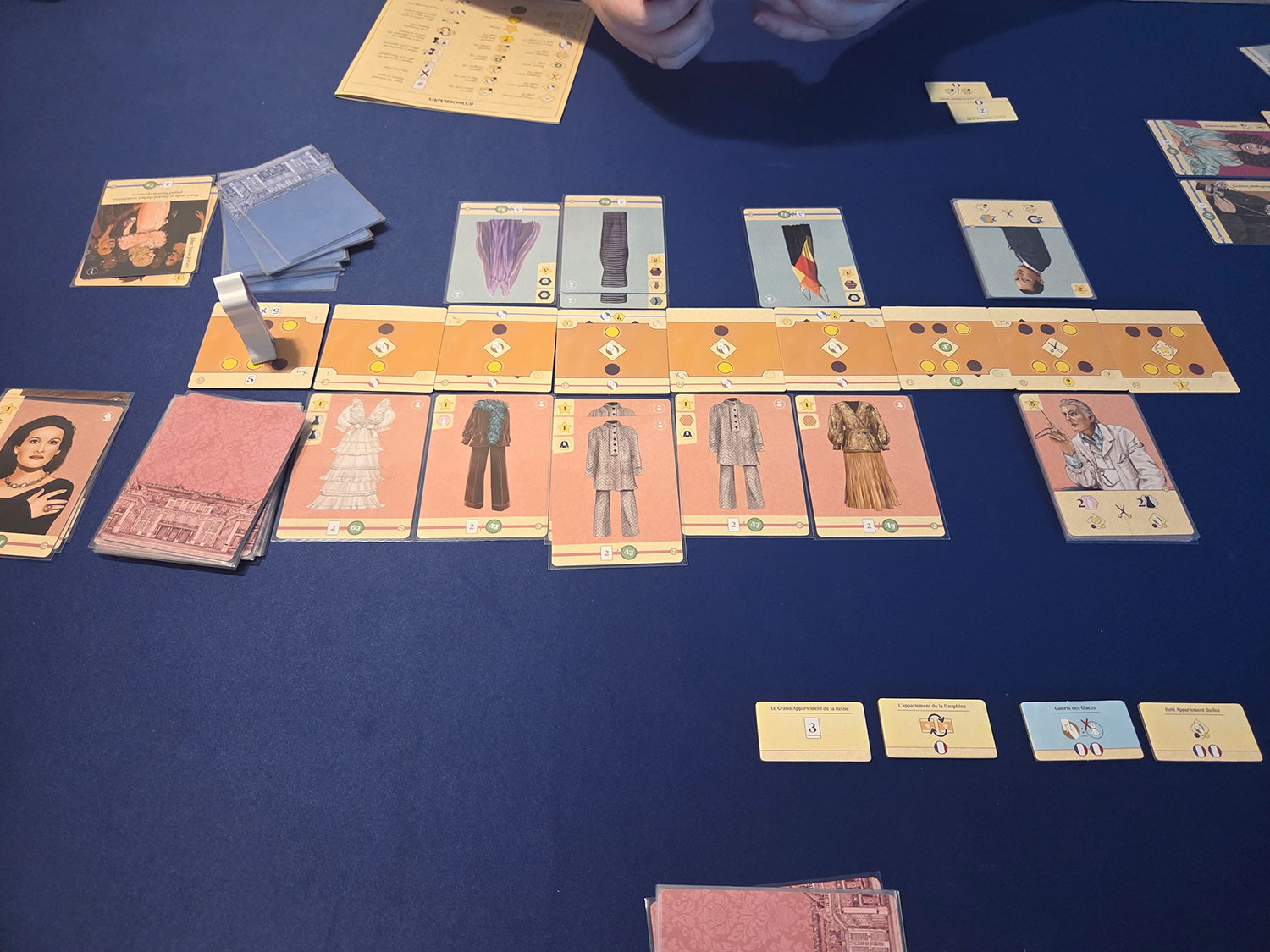
For a small-box, two-player game that has a listed play time of 30 minutes, The Battle of Versailles is a lot to keep track of for little payoff. Between three different card types, upgrading the tiles, getting reward tiles through the income step, gaining victory points every round… the game feels like there’s a large, diverse landscape in which the two players can compete. However, in my experience, as either the French or American player, the game always fell flat. It felt like going to your Grandmother’s house and getting to raid her candy drawer: sure, it’s unlimited candy because Grandma rules, but it’s just full of circus peanuts from the ’90s and candy dots that have since lost all of their color.
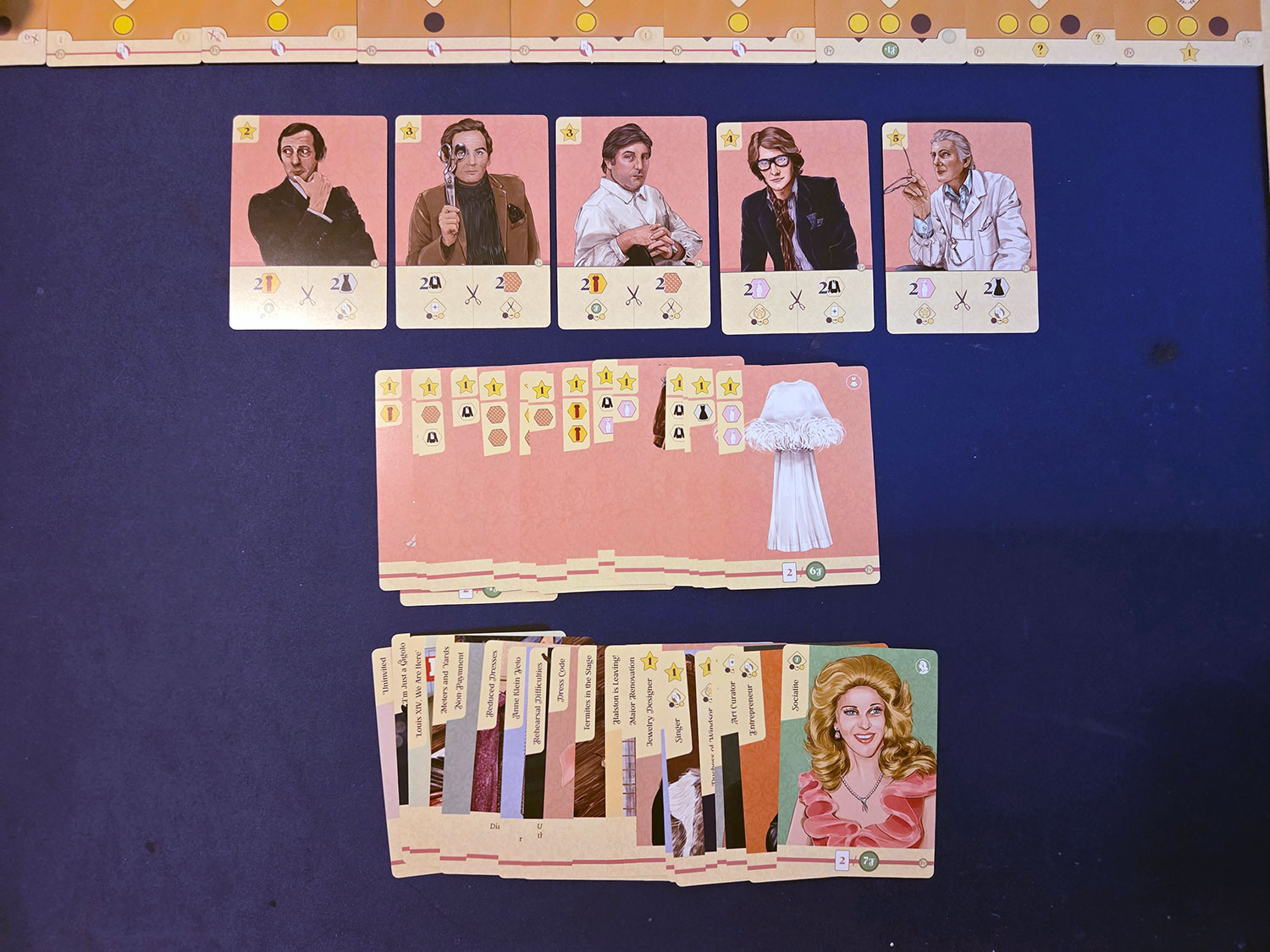
Let me elaborate. Let’s look at upgrading a tile. I spend an Event card on my turn to flip over a runway tile two tiles away, making one of my future card plays look extra juicy. However, my opponent has at least one (if not two or three) opportunity to undo the upgrade I just did. So what we’re left with as a table is basically two wasted actions. I can hear the counterargument that this creates tension through tight, tactical gameplay, but with a lot of the upgrades in this game functioning that way, it just makes upgrading feel fleeting and unsatisfying.
Consider another analogy: a lot of games that feel tight and tense have much wilder swings in the pendulum of the game. A player gets to take a wild turn, but the other player gets to swing wildly back in a different area of the play space, or undo that wild turn through creative gameplay. However, in The Battle of Versailles, the gameplay options feel so limited that no turn ever has much impact, and the overall gameplay pendulum of the game feels like it’s hardly moving.
Although the game itself fell quite flat for me, I do want to give this game credit for something I personally have been craving for a while now: re-theming wargame tropes into a new theme. Trying to get some of my gaming friends to play a COIN game or even Watergate can be tough because of the historical, often dark theme. However, taking similar mechanics and applying them to a fashion show is something I would love to see tackled more moving forward. I just do not think that these two co-designers can pull off a game with that level of tension to it.
Final Thoughts:
While The Battle of Versailles takes the trappings of other tense two-player games and applies them to a fresh theme, the mechanics simply don’t stick the landing. No individual action has any pop: even when they feel good in the moment, few have any lasting power or major impact in the game. If you are one for games where each little thing you do matters and every game comes down to a few points or a tight race, then you might enjoy this game.
But for me, the game had no momentum or trajectory to make it worth playing more than I did for this review. If you want a step-up from something like 7 Wonders Duel but wargames intimidate you, definitely check this out. However, if you’re accustomed to the heights of two-player wargames, the re-theming here is not enough to keep you here and invested.
Final Score: 2.5 Stars – A “sew-sew” game through-and-through.
 Hits:
Hits:
• Great theme
• Great production quality
• A “gateway” into wargaming
Misses:
• Flat, low-impact turns
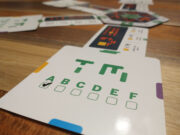
• Confusing iconography
• Too many disjointed systems