 Over a year ago, when the second set for Star Trek: Captain’s Chair was announced, the big surprise was that there was also a small box alongside it. As someone who has over 200 Attack Wing ships, I’m always for more content for any Star Trek game, so in theory the existence of a smaller box expansion was something to look forward to. After a year of waiting, did it live up to the hype?
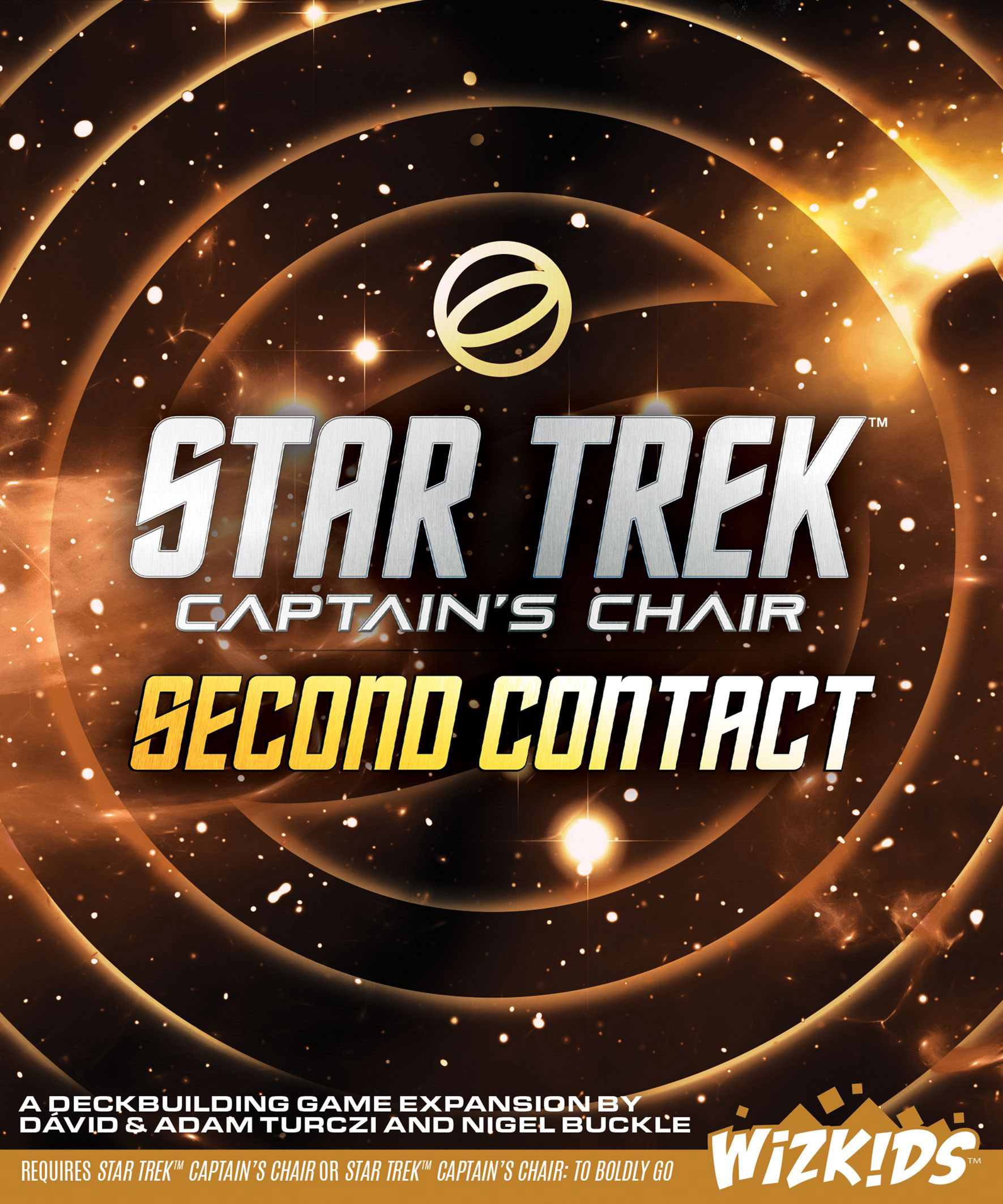
Star Trek: Captain’s Chair – Second Contact is an expansion for 1-2 players, and requires a standalone set to integrate into in order to play. As with other Captain’s Chair sets, as it’s a heavy game, the play time can range from 1-2 hours.
Expansion Overview:
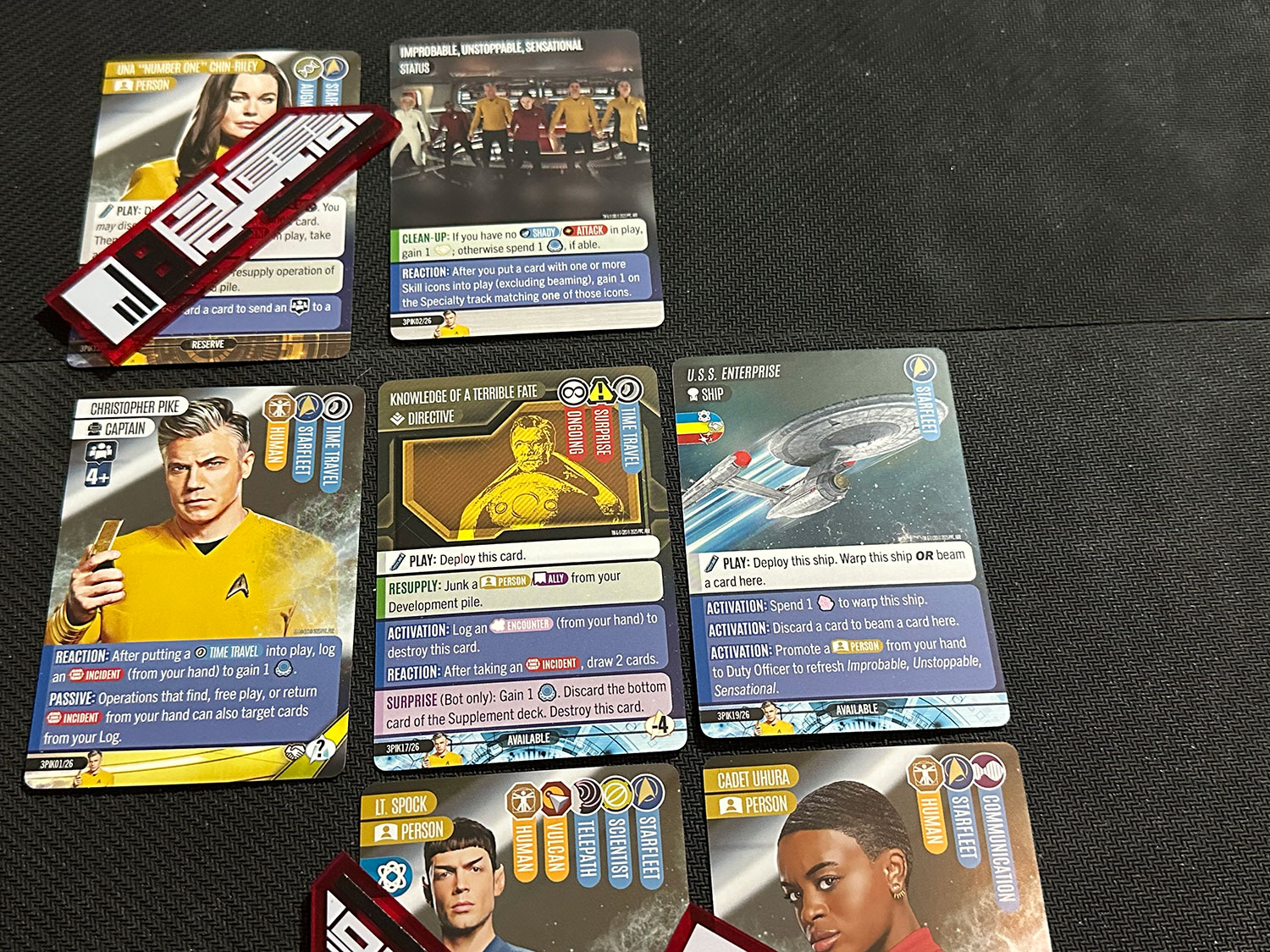
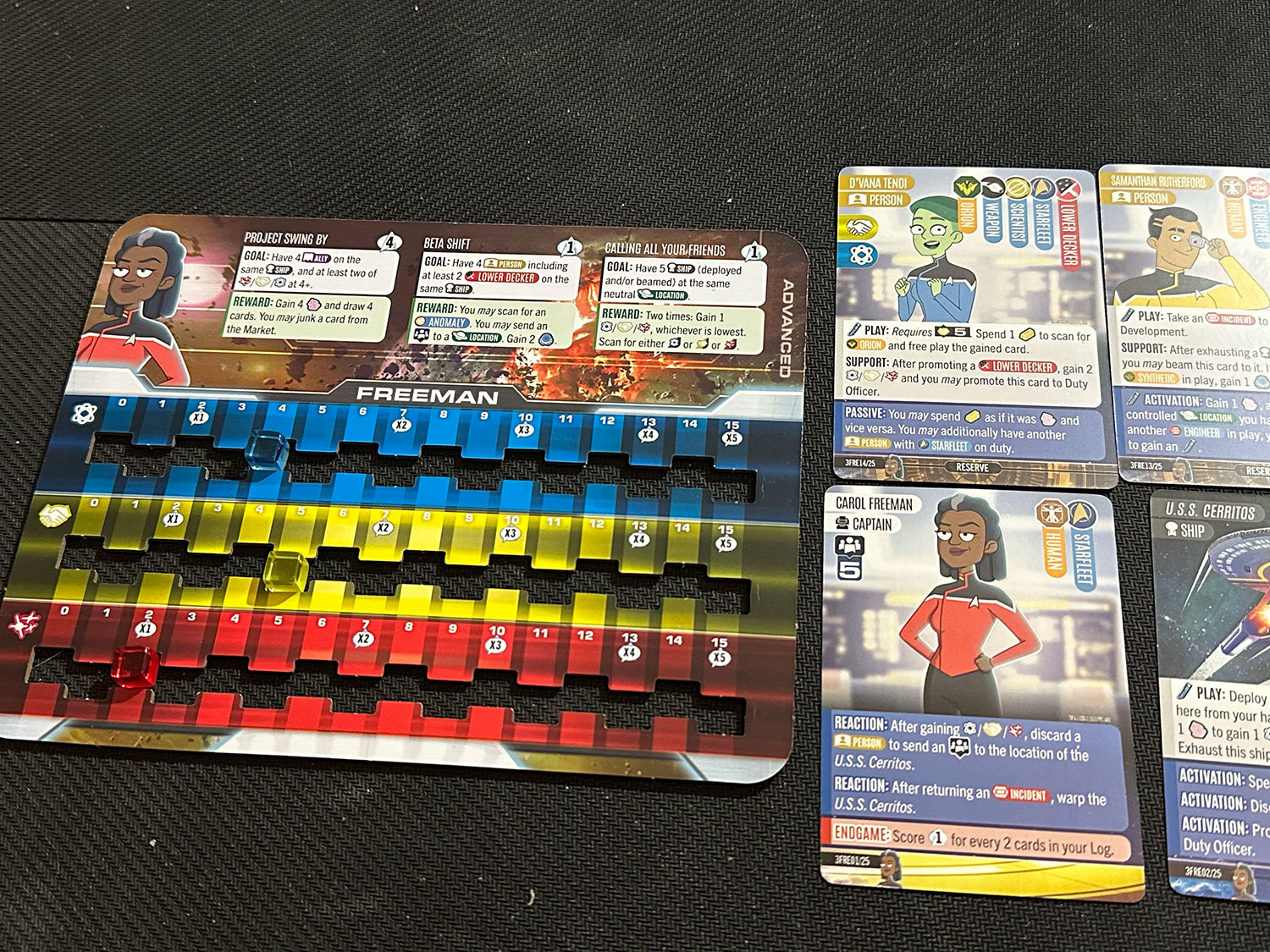
Like other sets of Captain’s Chair so far, the primary attraction is the new captains to play as. This time, the selection is smaller, as this is an expansion. The available captains to try are Carol Freeman (Lower Decks, giving the box its title), Christoper Pike (Strange New Worlds), and William T. Riker (Next Generation/Picard, but represented here from Lower Decks as well). Most of the box is their decks, associated cards, and captain boards.
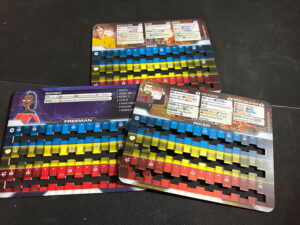
Also included are a small selection of market cards and locations, as well as some cards supporting a new mechanic called Rewards. In order to use the set, you need either the original set or To Boldly Go (or the newly announced Resistance is Futile next year), as that’s where you’ll get most of your market cards, and the basics like latinum, dilithium, tokens, and so on.
What this set brings to the table—other than the new captains—are two new mechanics: the aforementioned Rewards pile, and Lower Deckers. Though it seems like it has the potential to be expanded in other ways in the future, in Second Contact, the Rewards are all Person cards with a Crossover tag such as live-action Mariner, Ambassador Spock, and Chef Riker, which you can only acquire by controlling the new neutral Location, Krulmuth-B. That is, if that Location is not in the game, or never comes out/is controlled, the Rewards won’t come into play. Each of these Rewards is stronger than your typical card, but most also reduce your score if they aren’t logged by the end of the game (gotta send those time travelers back where they came from to ward off a visit from the Department of Temporal Investigations, after all).
The other new mechanic is the Support operation on cards with the Lower Deckers tag. The term “lower deckers” derives from a late Next Generation episode called “Lower Decks,” which focused on what being on the Enterprise-D was like from the perspective of a group of ensigns, rather than the command staff, as they support the senior officers, without being in charge or in-the-know. The concept was expanded on for the full series of the same name. In Captain’s Chair, a Support operation is in addition to the usual options for playing a card, and will always say when you can use the Support operation. For example, Ensign Tendi’s Support operation can be used when you promote a Lower Decker to Duty Officer. Sometimes, you can also chain them together, getting a much greater benefit than if you’d used them for their standard Play operations.
Game Experience with Expansion:
When playing with Second Contact, you have to combine the new market cards with the market cards from a standalone set like To Boldly Go (though be careful, do not mix the Rewards Person cards into the market!). As a result, the market cards that come in the box do have a fairly limited impact on the game, and the primary experience with the set comes just from the three captains. Those three captains do deliver, though. Like with To Boldly Go, this set really shows the depth and variety that is possible with this system. No matter which standalone set you have, playing with the new captains feels different than what you’ve played before. On average, they are more complex than what you’ll find in the standalone sets (though not on the same level as the most complex captains like Burnham or Khan). None are really starter captains, though Pike does get close. Freeman, in particular, has a bit of a complex play pattern that can be very satisfying once you figure out ways to make full use of your Lower Deckers’ Support operations.
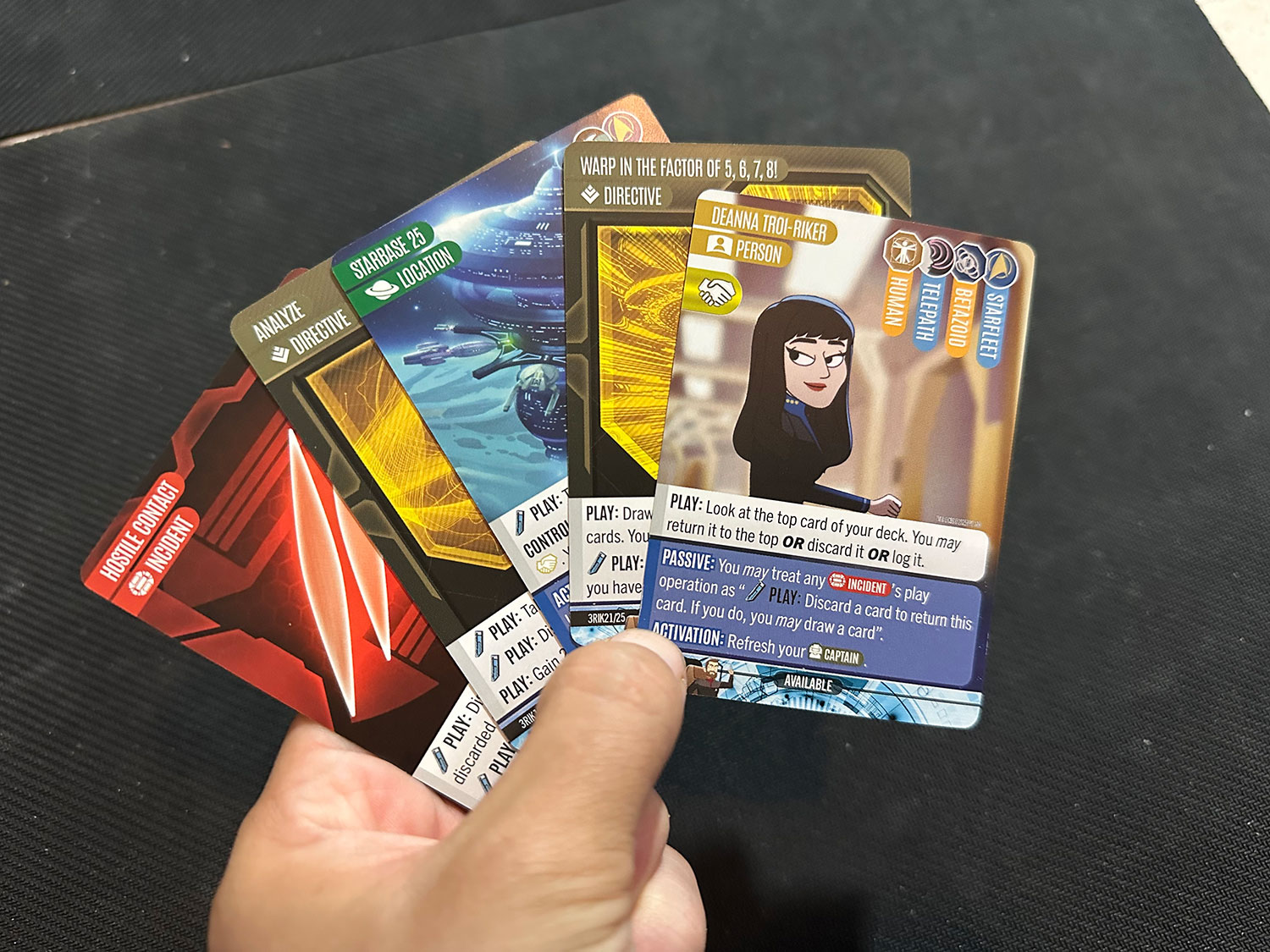
Of the two new mechanics, Lower Deckers show up more frequently, particularly with this expansion. While they are the primary mechanic for Captain Freeman, there are a few in the new market cards that may show up, and Riker has a limited number as well in his cards. While the entire game often can represent a big puzzle, that’s really the feel of the Lower Deckers cards. Figuring out how to play so you can most fully utilize the free actions from their Support operations is a big part of the mechanic and the gameplay in this expansion. While it clearly has direct connections to the show in question, there are Star Trek characters across the franchise’s 60 years that could retroactively be called Lower Deckers, so it’s a mechanic that I think will be seeing more of in sets to come, since it adds an extra layer of strategy to the gameplay.
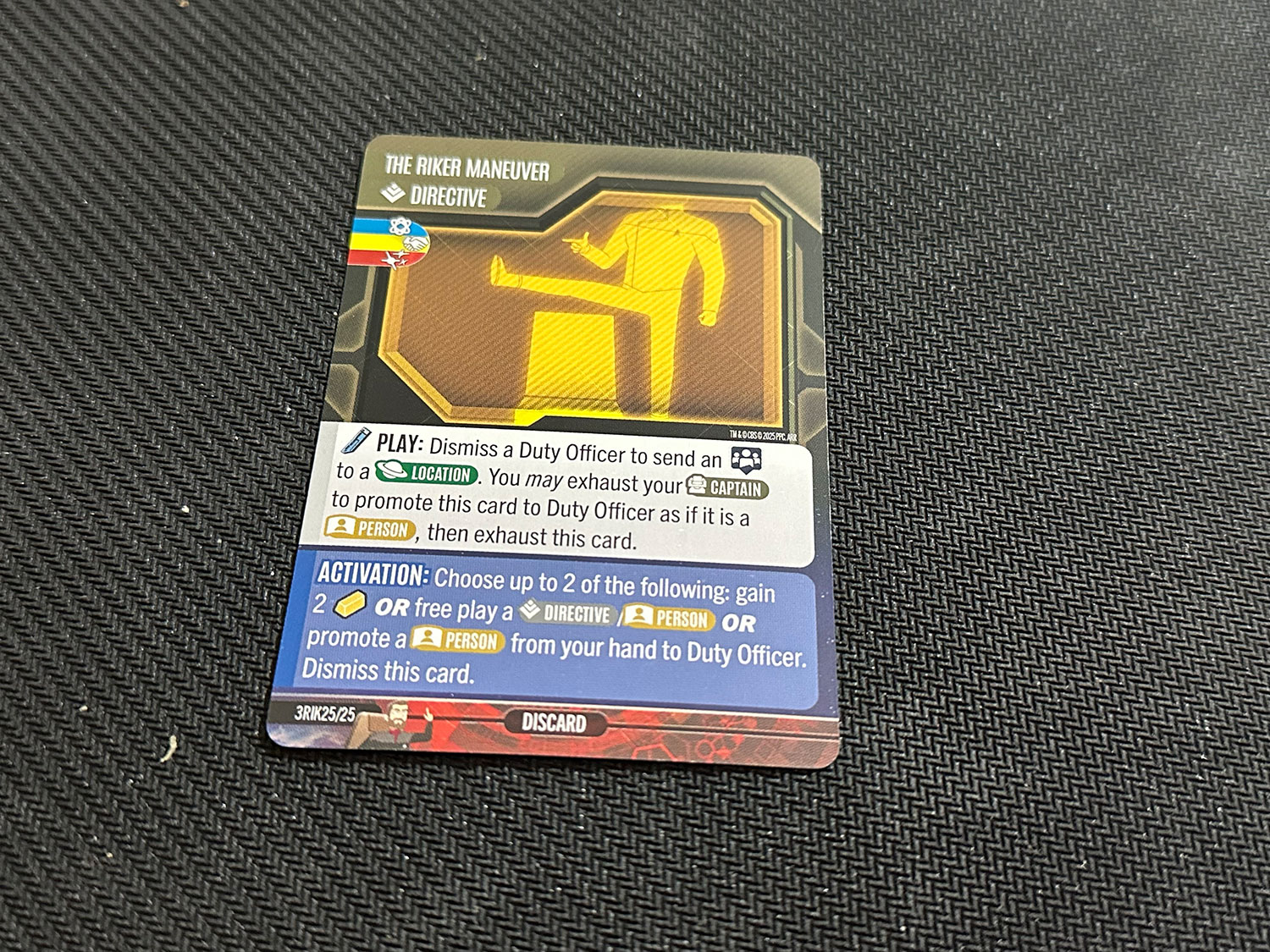
The Crossover Rewards feel a bit harder to judge. Since they are specifically tied to one Location, and it is a Starting Location, playing with the expansion cards doesn’t even ensure it will be in the game. If it is, it will likely come out, but then someone needs to control it (which may not be you!). As such, they aren’t really something you can build a strategy around coming out. The Reward cards themselves are pretty interesting and can be quite powerful. The inclusion of the Strange New Worlds versions of Mariner and Boimler was an especially nice and unexpected touch. But since they cannot be counted on, it is hard to really plan for. Future Rewards piles might be more consistent.
Final Thoughts:
This expansion is a small box, which tends to not be a big seller in deck-building games simply because there is less stuff to enjoy. That is true here: the game has simply less going on in this set than it does in other sets. I think one thing that’s a saving grace for this game in particular over another deck-building game (such as Ascension, which tried small sets, and saw them not do well relative to standalones) is that each individual captain does provide something new and unique. Each captain has distinct wants and missions, and how you get to a high score is unique for all of them, even if many of the underlying mechanics are the same. Is that enough to overcome the usual downsides of a small box expansion? I think it certainly gives it a leg up.
Beyond the captains being unique across the board, I think what Second Contact does especially well is the way it expands what the system can do and lays the groundwork for more envelope-pushing in future sets. Support operations are a great way to enhance the gameplay of both future captains and future market cards. Rewards are a fairly conservative and limited mechanic here, but creating the system opens up some possibilities for future sets to play around in that maybe aren’t so limited, since this time it worked out well.
The biggest downside to the set is that it does require one of the big sets to play. You have to mix the market cards into one of the other two, and splitting them out if you want to switch is a bit of a chore (though I just combined them with the To Boldly Go market, and left it at that). The way that captains often rely on the tags on cards for completing missions and using abilities, there’s a certain risk there that using these captains with different boxes might be more or less effective. That seems to have been mitigated pretty well with the design on these captains, but it’s something that could impact their integration with future boxes.
All that said, I think this is a natural buy if you’re a fan of the franchise or of the system. At some point, I think these small boxes might not be as interesting, but for now, just having more captains is a big plus.
 Hits:
• Three new captains, all with unique gameplay and strategy considerations.
• Lower Deckers’ Support operations are interesting and add depth.
• Integration into a standalone set is not an intricate procedure.
Misses:
• The Rewards pile mechanic, while interesting and powerful, feels less impactful the way it is implemented here.
• As a small box, there’s little in the way of new content other than the captains themselves.