
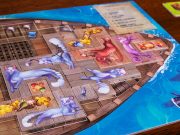
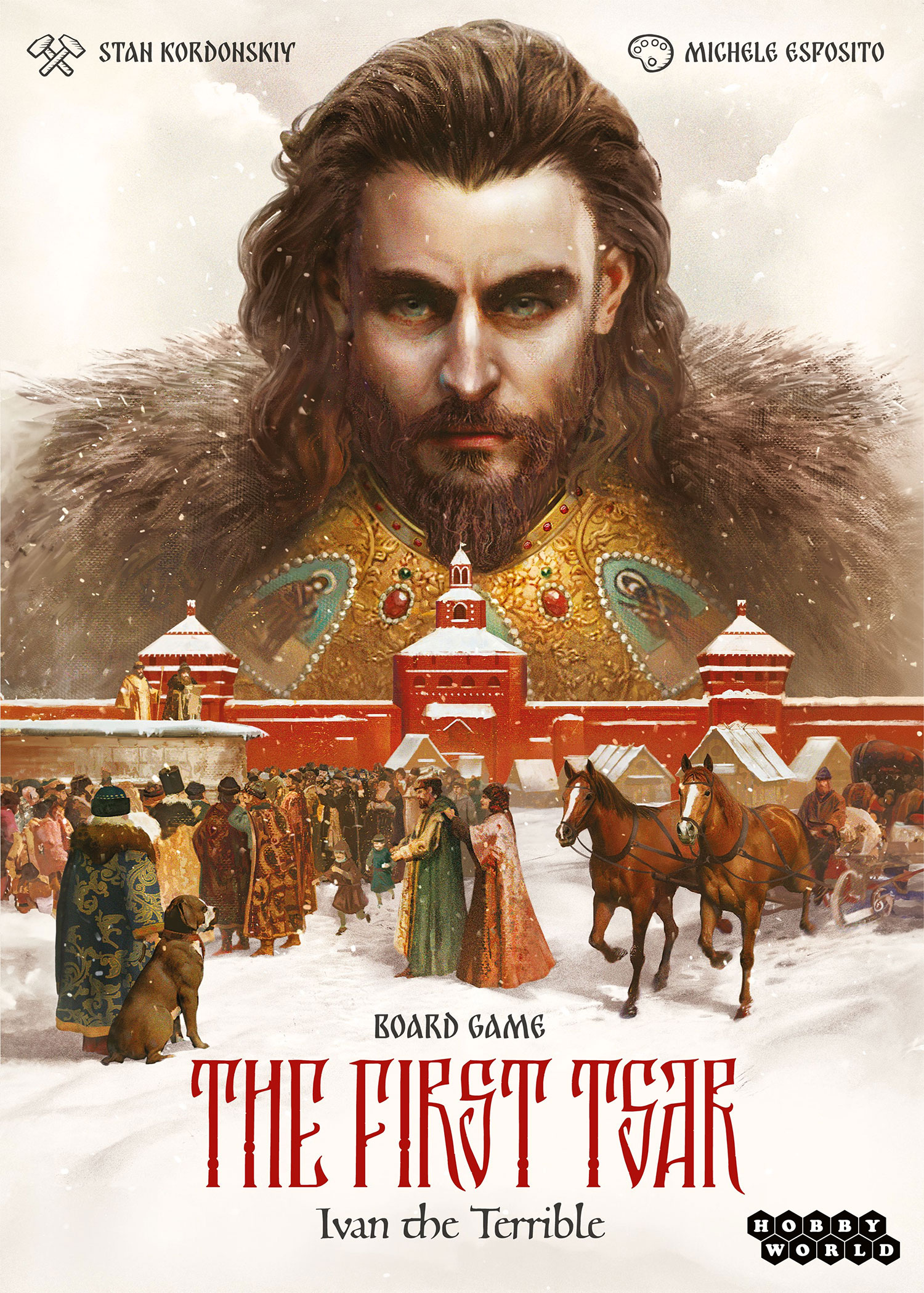
 Prior to Ivan IV Vasilyevich consolidating power to become the first Tsar of Russia in 1547, the land was a decentralized collection of rival principalities ruled by feudal nobles, or boyars. These boyars didn’t simply relinquish power during Ivan’s reign; rather, they showed loyalty to the crown by raising armies, occupying state offices, and acting as trusted advisors.
In The First Tsar: Ivan the Terrible, designed by Stan Kordonskiy (Minos, Rurik, Endless Winter), players take on the role of rival boyars during Ivan’s reign, attempting to amass influence through various pre-programmed worker-placement actions. And in case anyone thought this was a purely noble meritocracy, bribery is a key element of the game to secure better actions for yourself. This medium-heavy Eurogame accommodates 2-4 players over 60-120 minutes in a ruthless competition featuring contract fulfillment and area control to see who’s willing to sink the lowest to come out on top.
Gameplay Overview:
The First Tsar is played over 4 rounds, each of which is divided into planning, action, and end-of-round phases.
Planning phase:
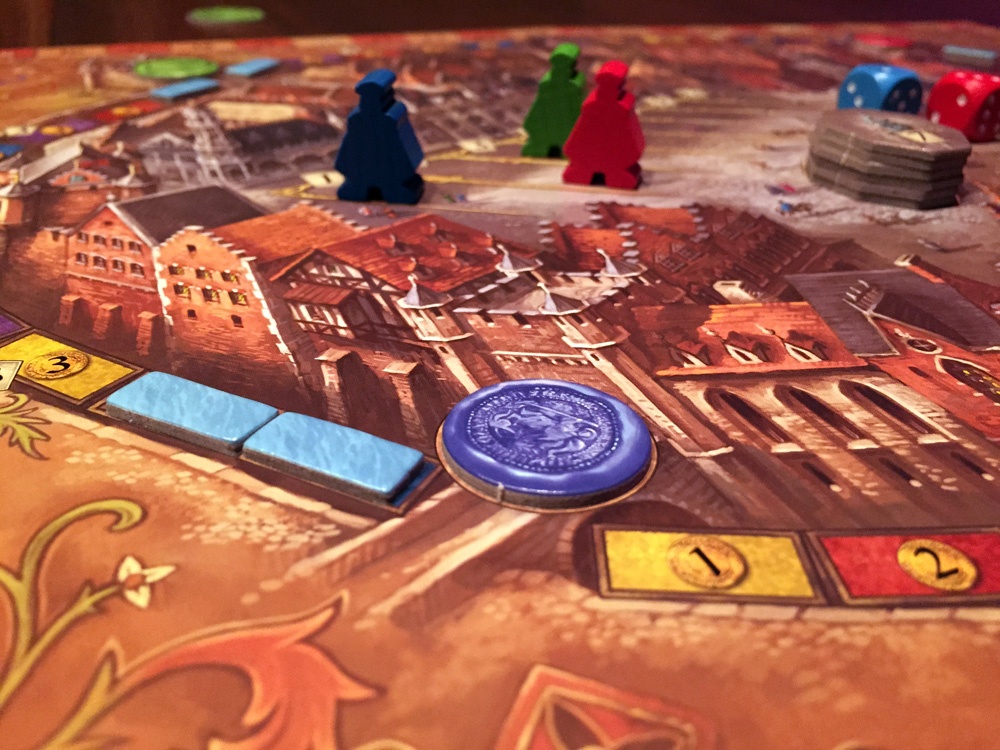
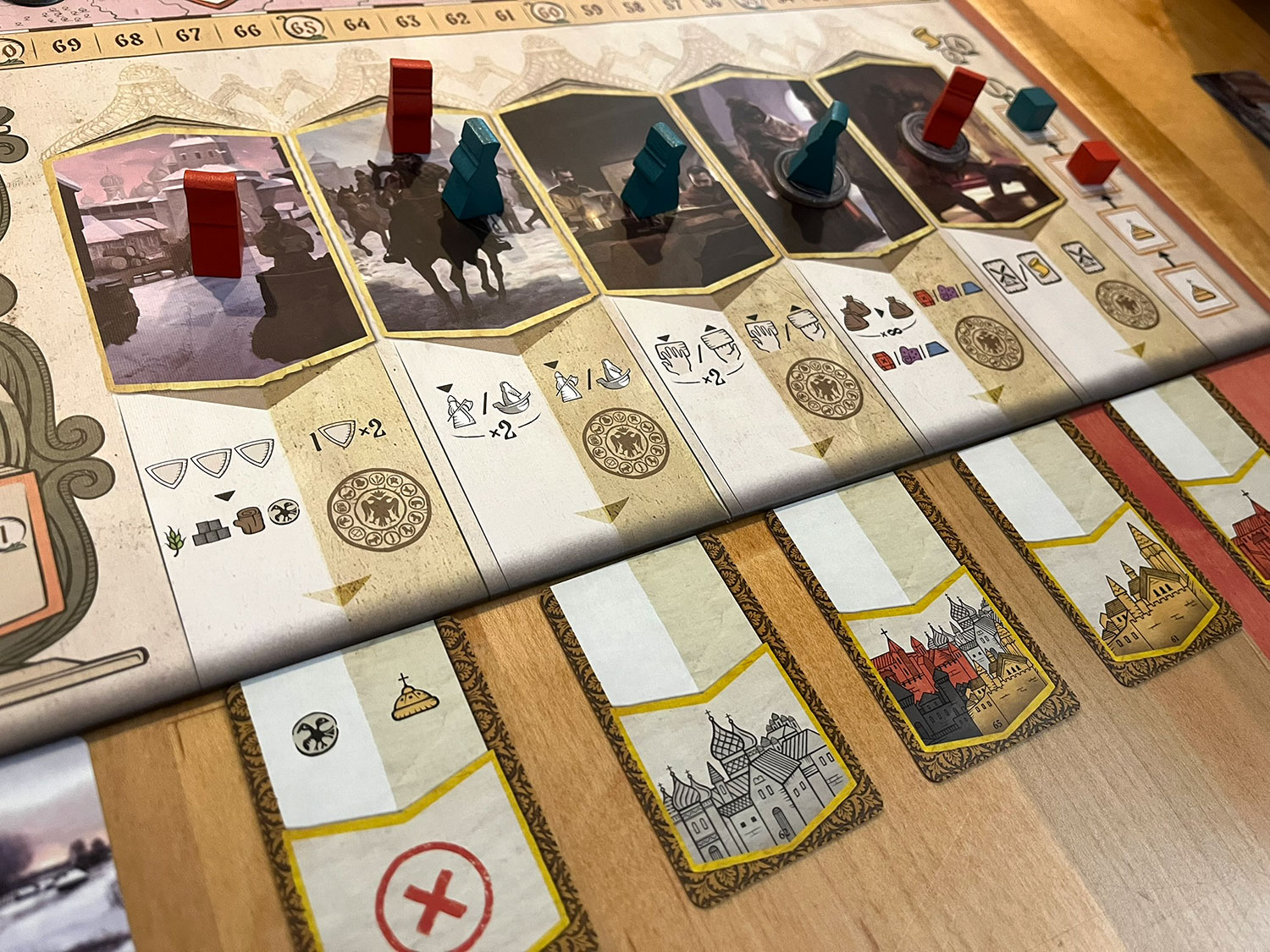
Players will alternate placing each of their 3 boyars on 5 possible action locations.
The moment you assign your boyar to an action location, you must also decide if you will be providing them with any bribery money. You cannot choose to later increase your bribe if another player outbids you.
Multiple different players may have boyars in the same action location, but no two boyars belonging to a single player may be assigned to the same location. Only one boyar at the location can be the “most important” (because they bid the highest), granting them the ability to take an enhanced version of the action.
Action Phase:
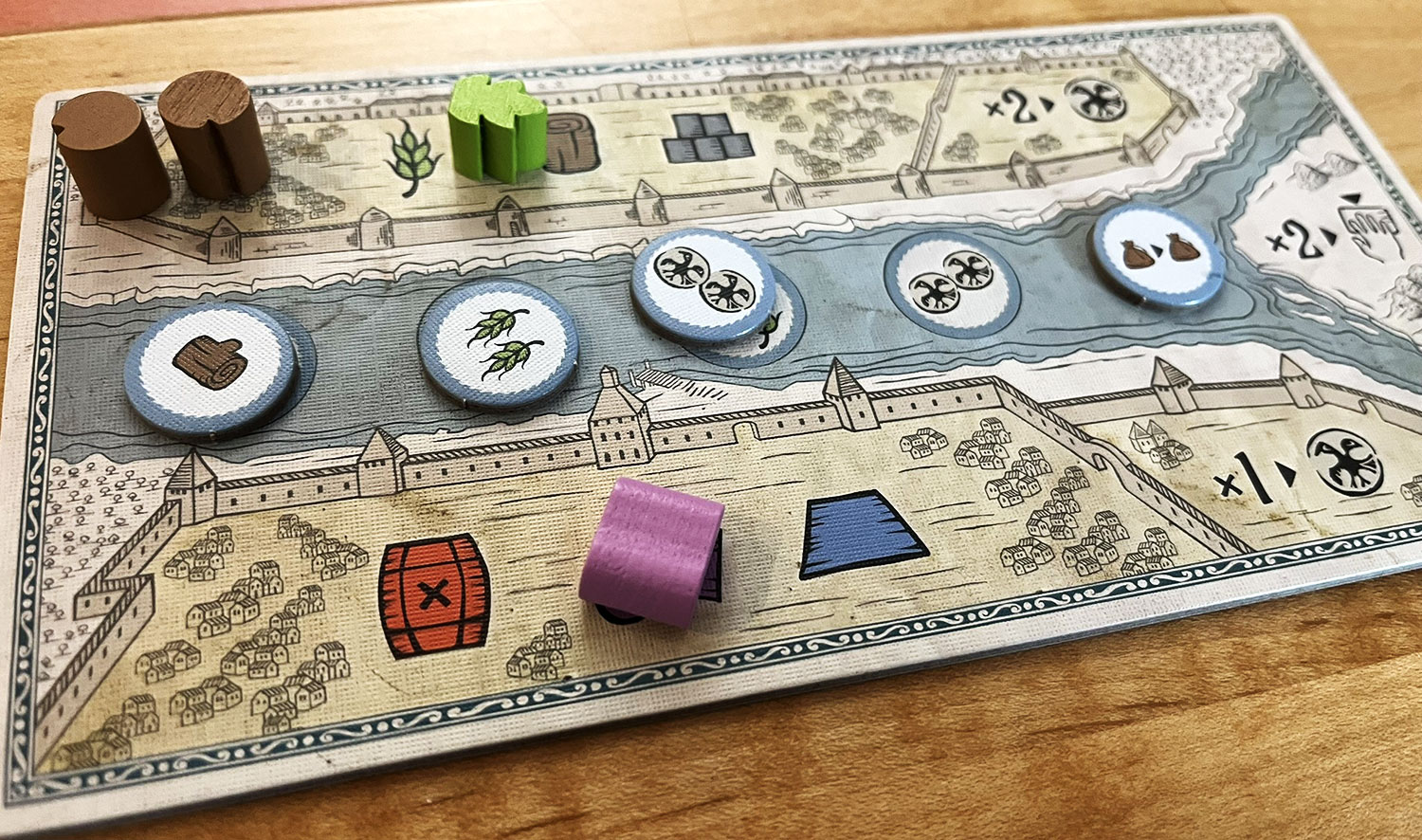
Players will alternate choosing one of their previously placed boyars to activate in its chosen location.
Locations provide the following benefits:
- Deploy and/or move warriors to cities on the shared map
- Produce resources on map locations where you have player pieces
- Exchange some resources for other resources
- Secure and/or fulfill contracts by spending resources to get rewards
- Claim end-game scoring and/or engine-building cards
If the boyar you choose to activate possesses the highest bribe in its location, you will be eligible to take an enhanced action specific to that location; you will also lose your bribe money, whereas all other players in that location get their bribe money returned.
Following boyar activation, look to see what city-assignment card is matched with its location for this round; they change every round and dictate to which subset of cities you’ll be allowed to deploy your boyar, if any.
End-of-Round Phase:
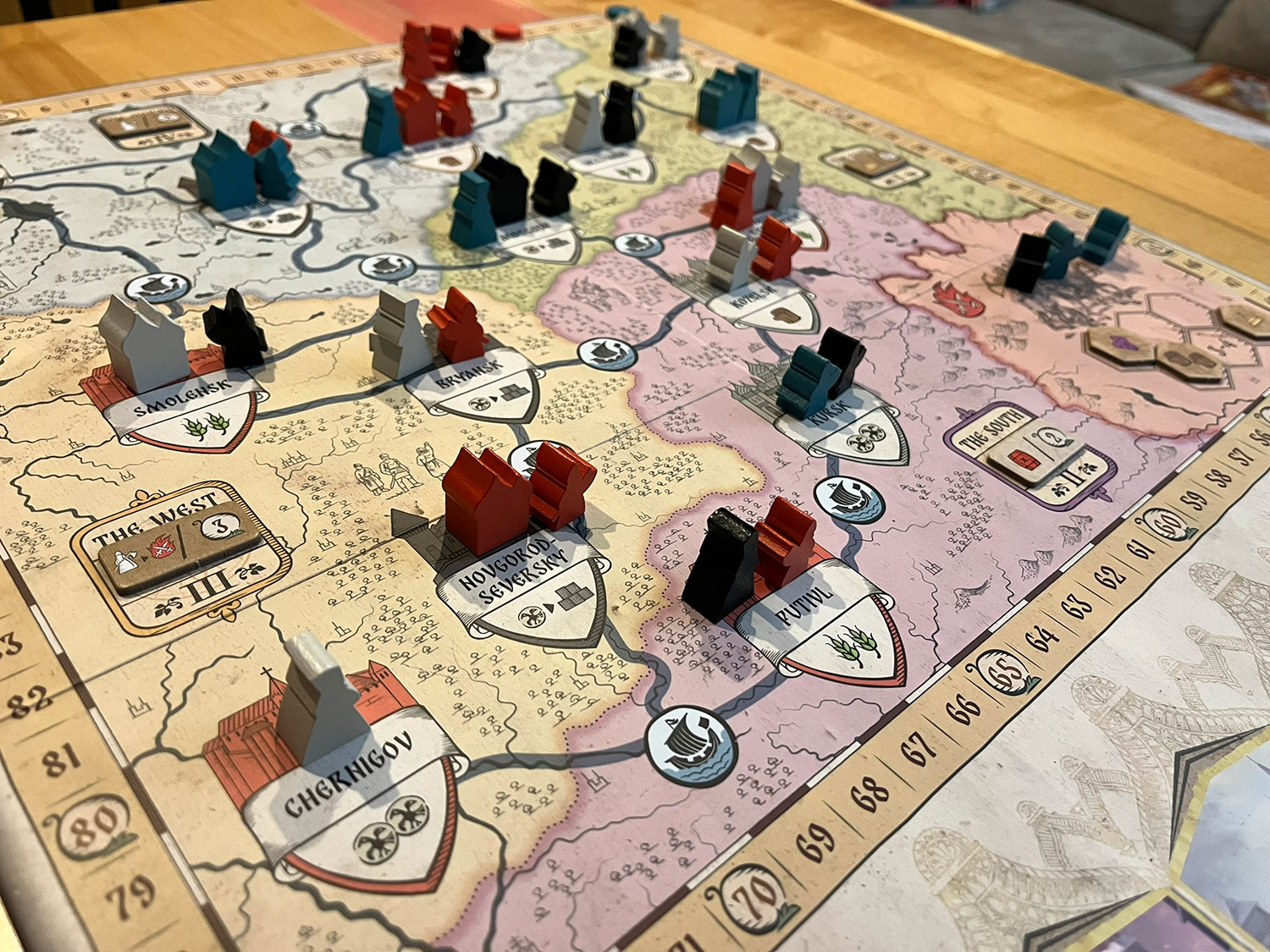
Evaluate area control winners in each of the 4 regions of the shared map (each containing multiple cities) by summing presence due to boyars, warriors, and buildings, and distribute awards appropriately.
Reset for the next round.
The highest score at game-end wins.
Game Experience:
The pre-programmed action-selection mechanic with bidding in First Tsar is absolutely excellent. It can potentially make being the first player a slight disadvantage since you may end up either over-bidding or not bidding high enough for bonus actions of greatest importance to you. It also makes timing your actions critical, since all ties in the game (including bidding ties) are broken by players’ current positions on the Tsar’s favor track, and this favor track ordering can change due to other players’ actions taken during the activation phase. In other words, players must prioritize between different sequenced options on their turn, and the variables can be affected by other players’ gameplay.
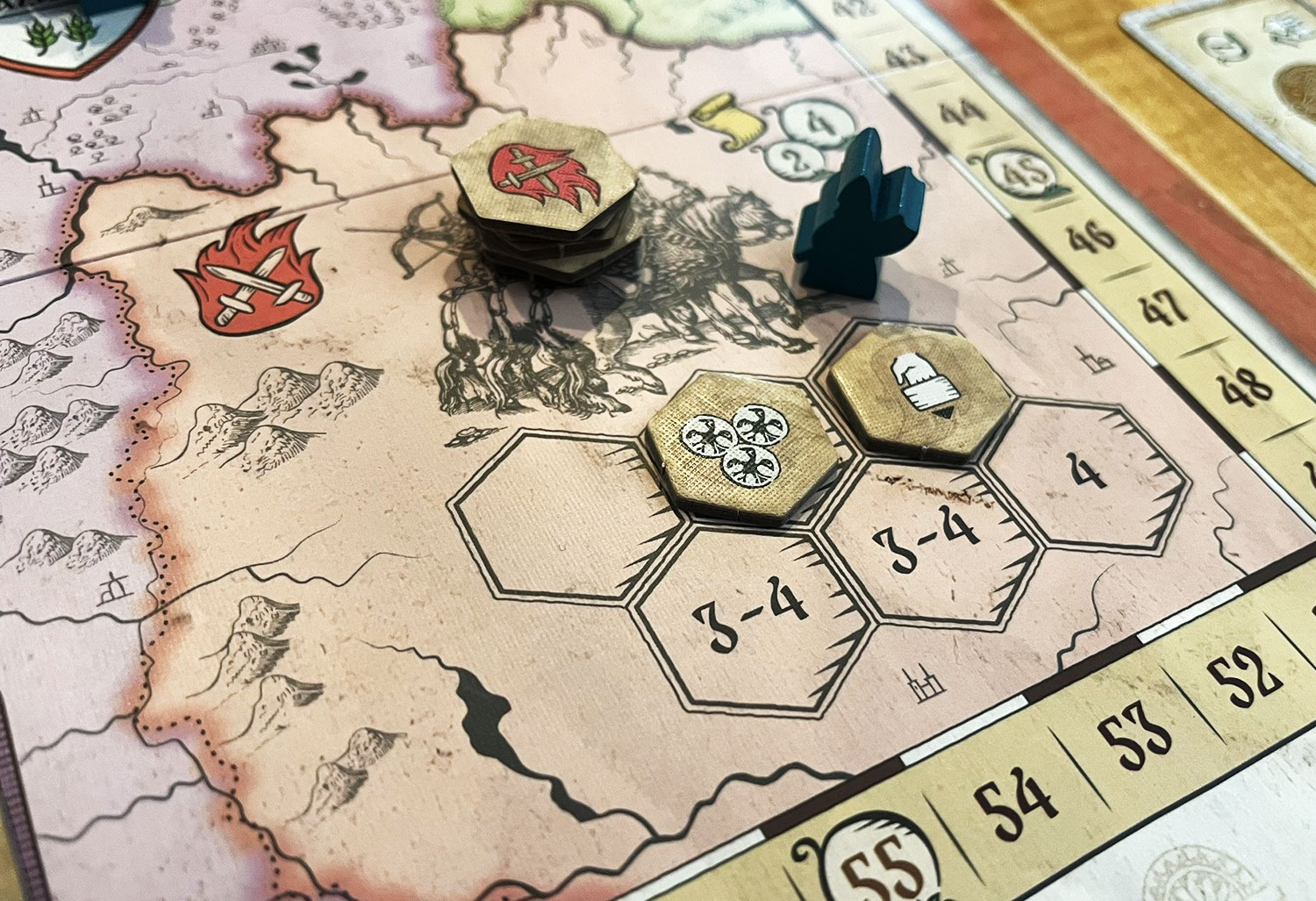
The rearrangement of assignment cards round-to-round can also make a big impact on both your planning and action phases, since these dictate to which cities (if any) you’ll get to deploy boyars after each main action. Boyar presence in a particular city can provide easier access for troops and building construction in specific regions of the shared map, all of which can influence area control points at round-end. A preference for specific assignment cards better suited to your area-control needs may often influence your choice of main action priorities each round.
The area control portion of the game can add up to a lot of points and other in-game rewards and should not be ignored. It’s fantastic at playercounts 3+, and it even works surprisingly well at 2-players, where each location has 2 possible rewards, and unless a player wins a region by a particular point threshold, their opponent gets to choose their reward. Thus, it’s not always merely good enough to have a majority; for the important rewards, you still need to take a commanding lead.
The majority of your points will ultimately come from area control contests, contracts, and end-game scoring cards. Winning the right contests and efficient play to maximize the number of completed contracts will usually dictate the winner.
To compare First Tsar with Kordonskiy’s other designs, it is supposed to be a thematic sequel to Rurik, which I have not played. Of his other games, Minos seems to have the most in common with pre-programmed worker placement tied to an area control puzzle. While Minos is probably the game I like more at 2-player for the combo-tastic nature and awesome engine-building, the Fist Tsar is definitely a more player-interactive experience; the area control element feels more important and dynamic, and it plays in about half the time (~ 60 minutes at 2 players). First Tsar is thus the clear favorite at player counts of 3+.
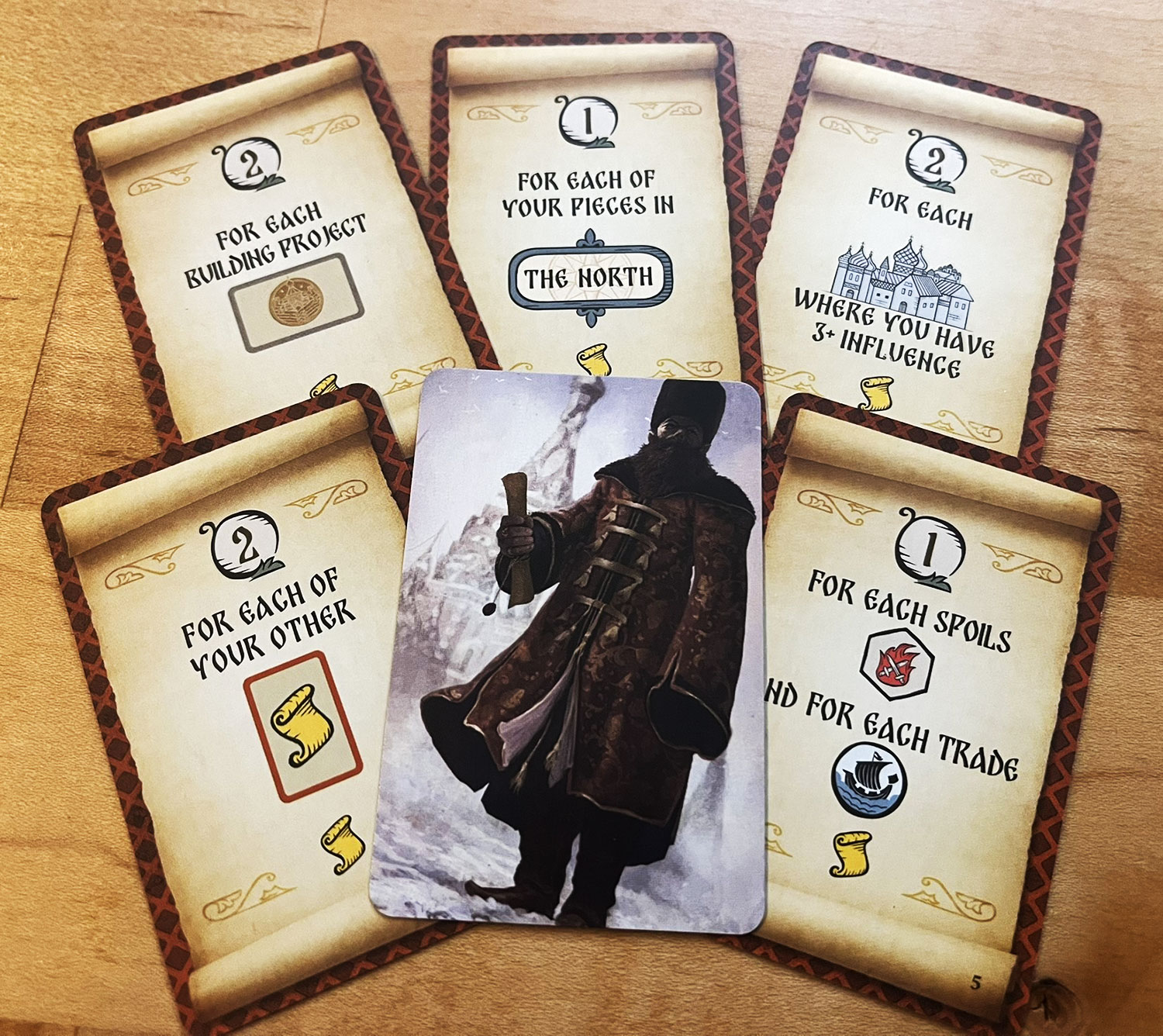
The main factor holding First Tsar back from being a truly excellent game–and it really is just shy of that mark– is the limited variety when it comes to end-game scoring cards, engine-building cards, and contracts. Contracts come in 3 flavors where points are generally 6-10, and the reward is constructing a building, activating trade tokens, or claiming spoils of war. The resource inputs for contracts are somewhat varied, but if you’re flush with resources, one doesn’t feel so different from the others, which can reduce some inter-player tension. The end-game scoring cards generally relate to presence on the map in specific regions/cities or completing certain types of contracts.
Final Thoughts:
The First Tsar is much more player-interactive than your average Eurogame. First, there’s an engaging bribing/bidding mechanism built into the pre-programmed worker placement that can impact the strength of your actions and creates ample inter-player tension. Secondly, there’s a dynamic area control element that is evaluated at the end of every round and works surprisingly well even at 2 players. Notably, the interaction stops short of any “take-that” elements. The overall excitement is only held back a bit by somewhat limited variety of the contracts and end-game scoring cards, but the inherent unpredictability of your opponents’ choices still makes this a solid Eurogame choice that’s notably shorter and easier to teach than Stan Kordonskiy’s other designs like Minos and Endless Winter.
Final Score: 3.5 Stars — Bribe your way to bureaucratic glory in this player-interactive Eurogame
 Hits:
• Pre-programmed worker placement with bidding makes simple actions much more interesting
• Dynamic area control is well-integrated with other actions
• Relatively straightforward teach
Misses:
• Contract and end-game card variety are a bit lackluster
• Theming integration is rather loose