From the coffee table to a fully kitted-out dungeon, our gaming spaces are cherished spots where we gather to laugh with friends, flex our brains, and adventure via the tabletop. The biggest challenge to maintaining a gaming area is less about what we need (a flat surface, a shelf for games, space to roll or flip or write) and more about keeping up with the accoutrements of play. Where should you put all the writing tools and scratch pads? The dice? The myriad playmats and iron clays and dice trays and baggies and a hundred other bits and bobs that make up game night?
Organisation helps your game night in a number of ways. The most obvious is that it creates a restful, positive environment for you to play. Additionally, your collection will be accessible, allowing you to jump right into setup without spending twenty minutes looking for pens, the game, missing bits, etc. It’s also great for the games themselves: your boxes will remain undented and uncrushed, allowing you to keep them as nice as the day you bought them. For folks who live with non-gaming partners, it can also cut back on resentment over your space (because the truth is, it’s very rarely about the games, and more about how you’ve got game stuffed scattered through literally space in the house, or have taken over most of the shared areas with half-punched games and random containers stuffed full of dice, minis and scoresheets. Don’t shoot the messenger.)
The first step doesn’t involve any tidying at all. Just sit down with a pencil, some index cards, and a cup of coffee, and ‘design’ your space. What do your game nights look like (space needed, games played, etc)? What objects besides your games do you use regularly: pencils, measuring devices, a tablet? Can you accommodate everything you need in one area, or will you have to split things into storage and game space? Be honest about how your game life works right now. (We can dream of library-like game rooms with rolling ladders and display shelves for meticulously painted minis, another day.)
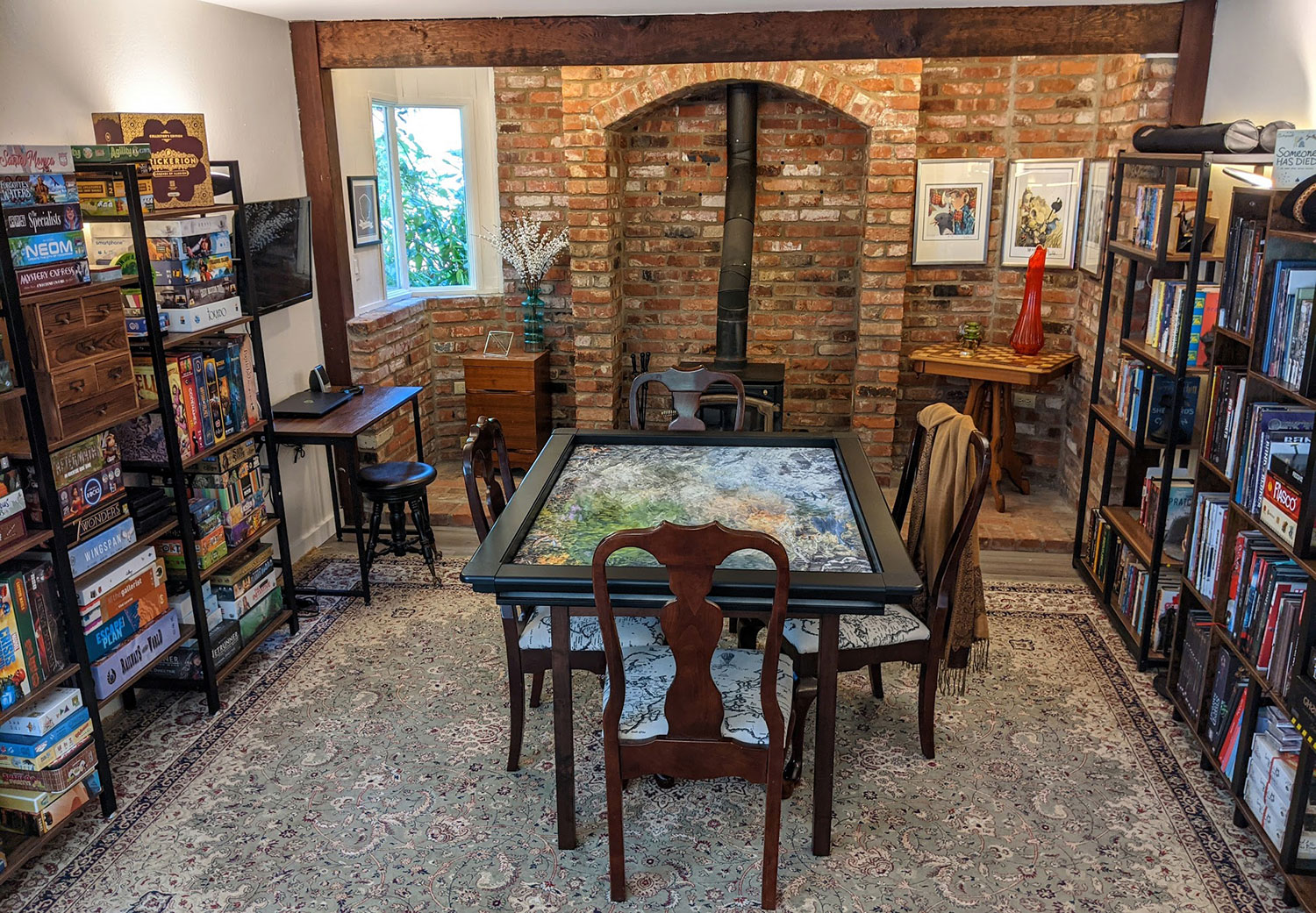
Next, let’s talk about shelving. There are a few bookcases the game community seems to favour, but ultimately, what you need is space to house X games tidily and visibly. This could be square shelving. This could be the shelves you’ve had since university, or an older wooden bookcase inherited from mom. An underused linen closet. There are so many creative options that are budget-friendly. China cabinets are in abundance at second-hand shops, and they’re a fantastic way to store games visibly, keep them dust- and kitchen-grease-free, and the bottom drawers and cabinets are great for all your game-y extras. Ditto old entertainment cabinets, which are also found in abundance at your local thrift shop (the TV cutout can have a shelf added if you’re handy, or would make a fun space to display your geeky art and tchotchkes).
Don’t forget to think vertically! Home improvement stores sell all manner of ready-made shelving (especially for closets, but they’re not required to be used in a closet). Wall shelves, hanging baskets, and pegs can all help make the most of your space.
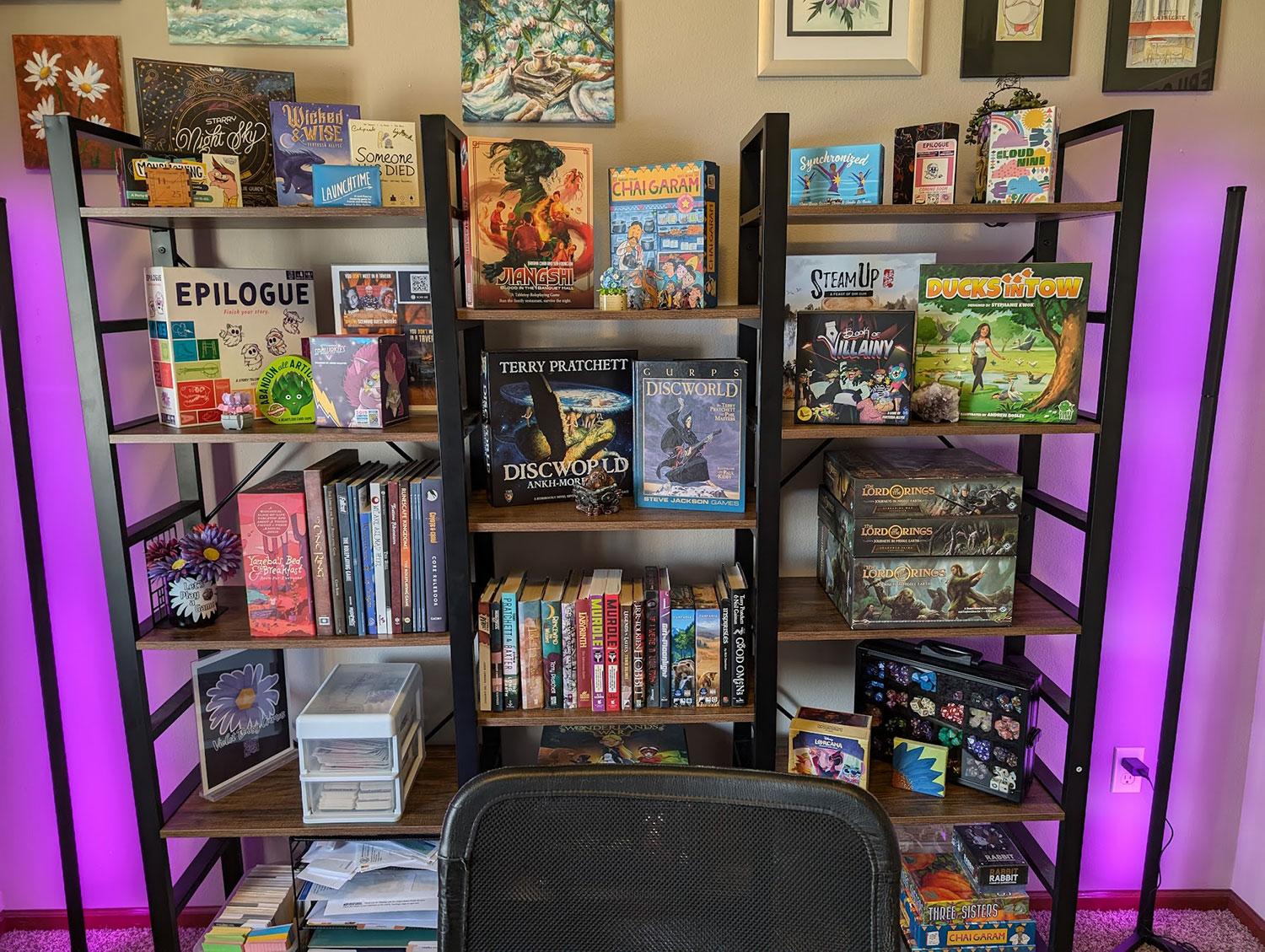
Now, let’s take a minute to think about how you play. Are you a weekly Twilight Imperium campaigner? Party-game, big-group night owl? Maybe you have numerous gaming get-togethers with just a few other folks for light strategy and snacks? While there are numerous systems for organising and cataloguing your games, the best methods (and the ones you’ll keep up with) are those that take into account how you play. Sorting by colour or box size may be the most aesthetic, but we don’t play games that way, so it’s not long before these systems get left behind. If you’re regularly hosting friends, it would be helpful to have all the games of each player count put together. If you have a weekly RPG night, all your books, dice, stat sheets, and minis should be housed in the same area. That giant jar of dice looks cute til you have to fish two D20 sets out of it. Consider sorting by player count or by weight. Nothing deters a friend from choosing a game more than you constantly vetoing their choices because something is only for two players or would take 3 hours when you only have 90 minutes.
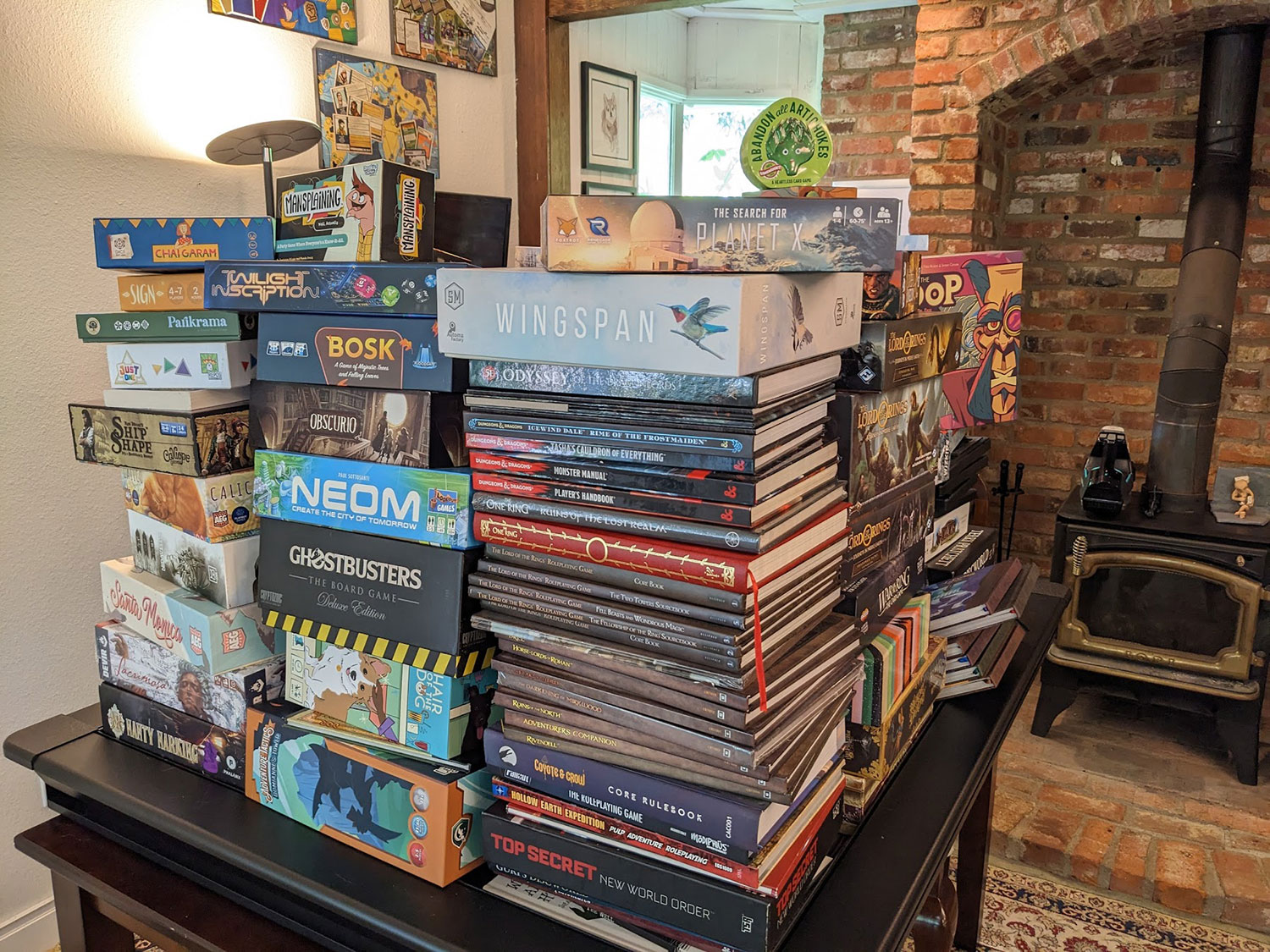
Shelving vertically allows for the easiest access, but not all games are boxed in a way that keeps them tidy (and no one wants to play ‘let’s reorganise the whole box’ before we set up). If you’re stacking, try to keep stacks to 4-5 at most for ease of getting things in and out. It’ll also prevent box damage. Heavier boxes on the bottom keep everything stable, as well as prevent you from getting a big box to the noggin. A combination of both methods – vertical and horizontal – will create visual interest as well as making it a little easier to find things over one solid wall of boxes.
Like most nerds, I love a labeller. And chances are, you do too. Don’t be afraid to use it on your shelves, binder covers, or (gasp) your boxes if needed. Your labels can indicate what type of game is on a shelf, how long it is, how many can play, or its weight. Labels take the guesswork out of where to put things back, as well as what the game details are for easy choices on game night.
Last but not least, one final question to ask yourself. Do I need this? If you haven’t opened the box or even moved it from its shelf in two-plus years, is it claiming valuable space from something else? I realise not everyone is comfortable getting rid of games in their collection (and if you are, good for you! There are so many places that would love your used games). If you can’t bear to be parted from the things you aren’t actively using, consider finding a different space for them and free up your active gaming space for the things you’re actually using now. If you’re constantly having to move a couple of games or baskets of game bits you have not played with in ages, it needs a new home (whether that’s a friend’s home or an out-of-the-way closet).
Ultimately, the biggest key to getting your game space organised is to be thoughtful about the way you and your cohorts use the space. Having a tidy space helps you locate anything in an instant when you’re ready to play, making hosting your next game night a snap.