
 I am not a hardcore historical board gamer by any means, but when you offer me a way to casually dive into them in under two hours of gameplay, I’m more than happy to give it a whirl. What I’ve found with these types of board games is an emphasis on new mechanics that players need to adapt to, but noticing the focus on poker hands and tableaus encouraged me to look further into the potential of this one. Plus, who doesn’t want to toy around with spies and secrets one-on-one?
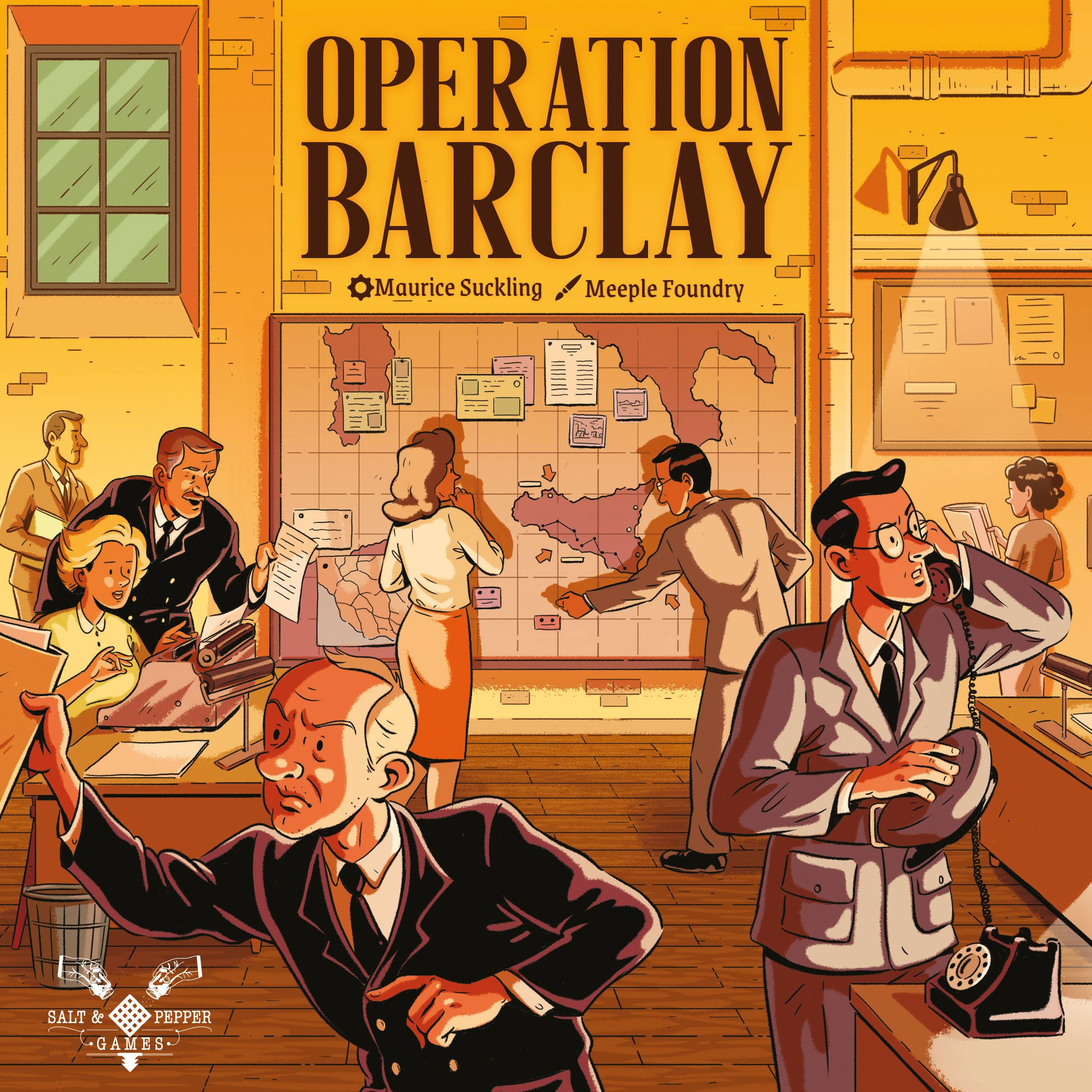
Operation Barclay is a hand management game for two players that takes about 30 minutes to play.
Gameplay Overview:
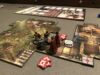
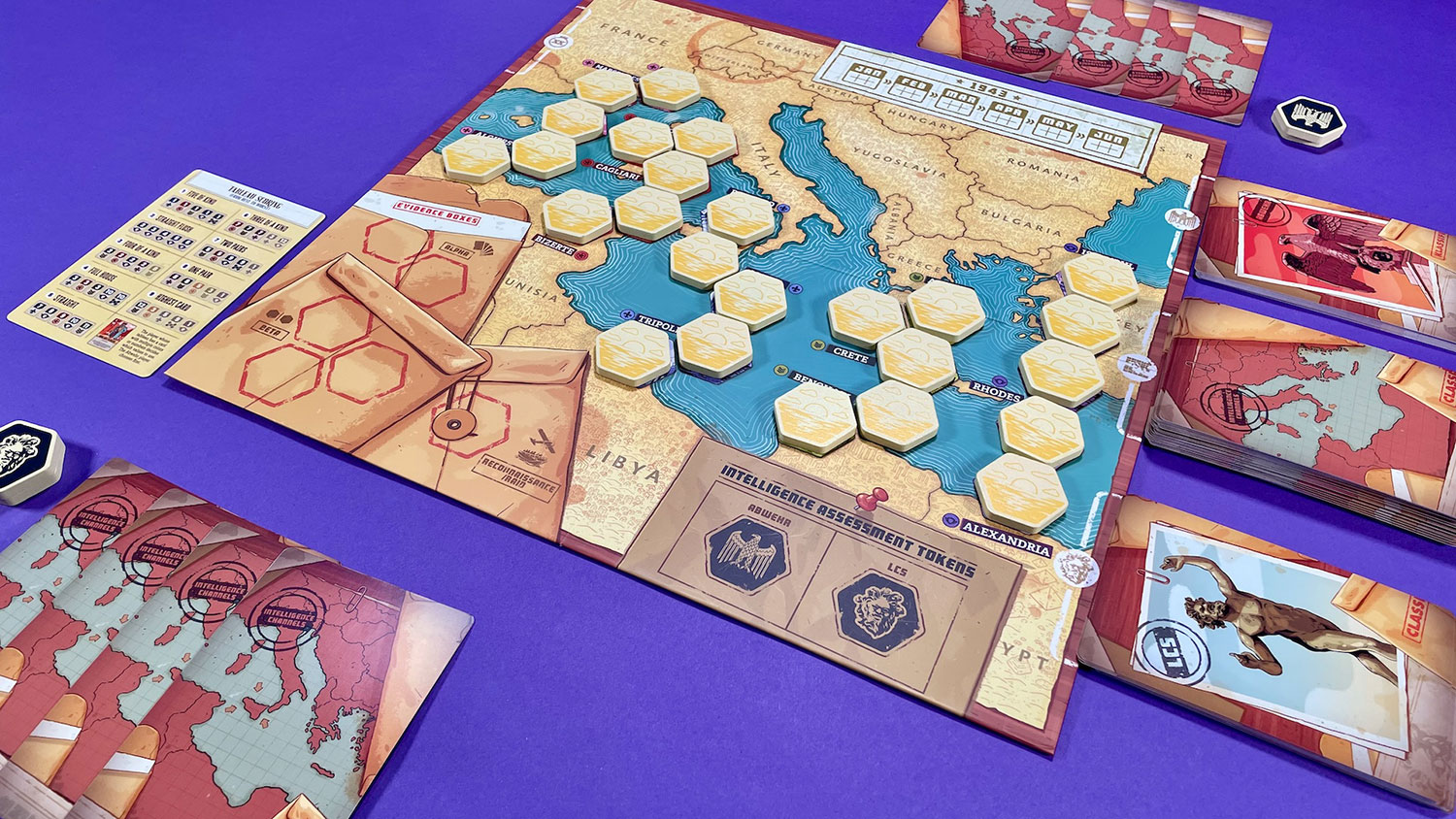
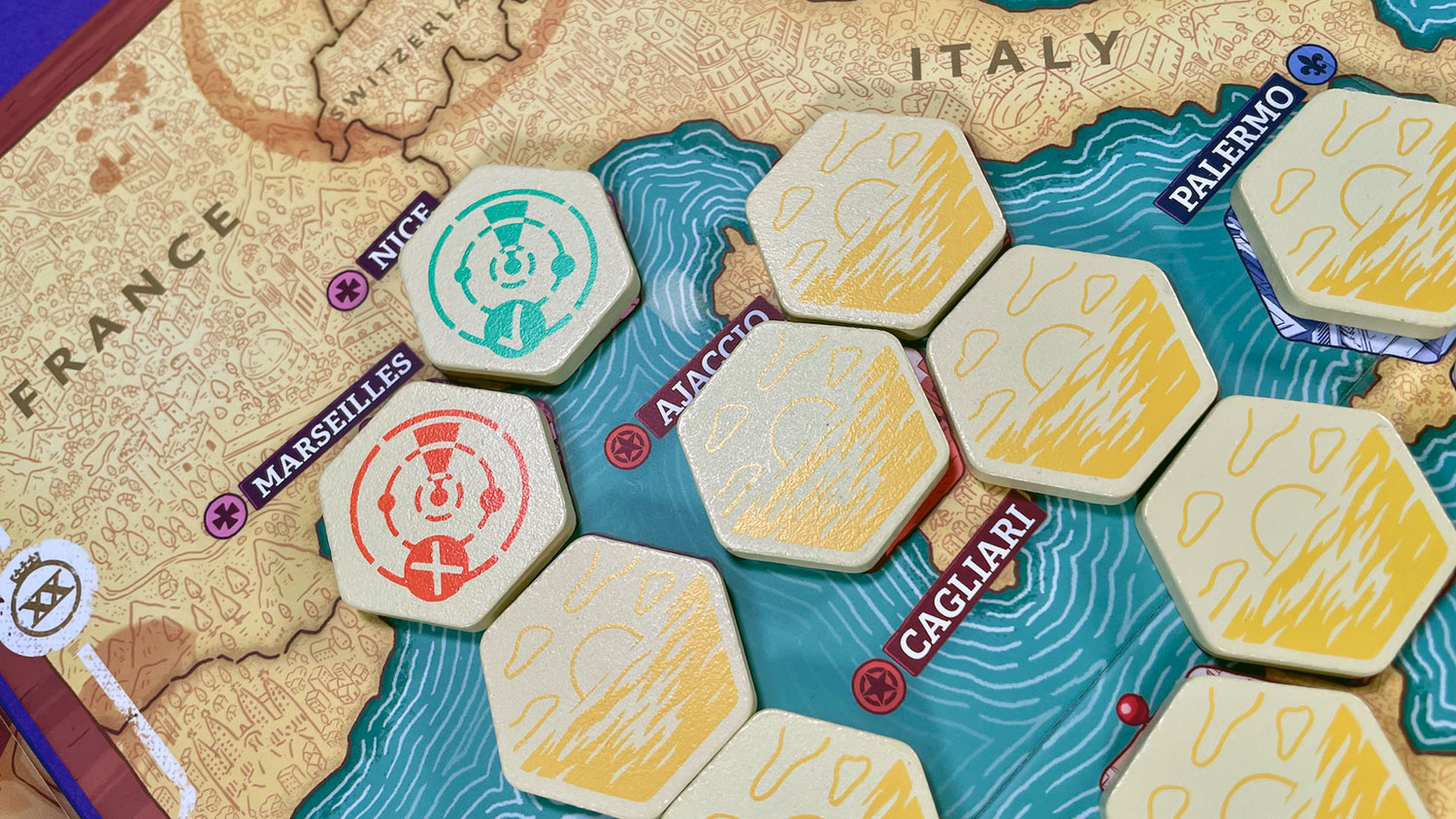
Once players decide who will play the British LCS and the German Abwehr, the LCS player will secretly choose one sector on the map for their primary offensive, one for their secondary offensive, and three sectors as diversions. The LCS player places Intelligence tokens in the corresponding map sectors face down. Once the rest of the decks are arranged by the main board, four Intelligence Channels cards are dealt to each player face down.
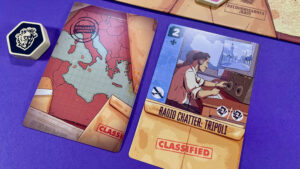
The game takes place over six rounds or “Months”, and each month has 5 phases: Preparation, First Three Cards, Intelligence Assessment, Final Two Cards, and Evidence Results. During Preparation, Evidence tokens are drawn from the bag by the LCS player one by one to place them in the Evidence Boxes on the board: Alpha, Beta, and Reconnaissance/Raid. During the first three cards, the Abwehr player starts by playing a single card face-up to their tableau, resolving any effects, followed by the LCS player, until both players have played three cards to their tableau.
During Intelligence Assessment, starting with the Abwehr player, each takes turns to play one of their two Intelligence Assessment tokens face down onto the board. The goal here is to bet on who will have the best tableau by the Evidence Results phase. Then, during Final Two Cards, starting with the Abwehr player, players take turns again playing a single card to their tableau, but this time they are played face down.
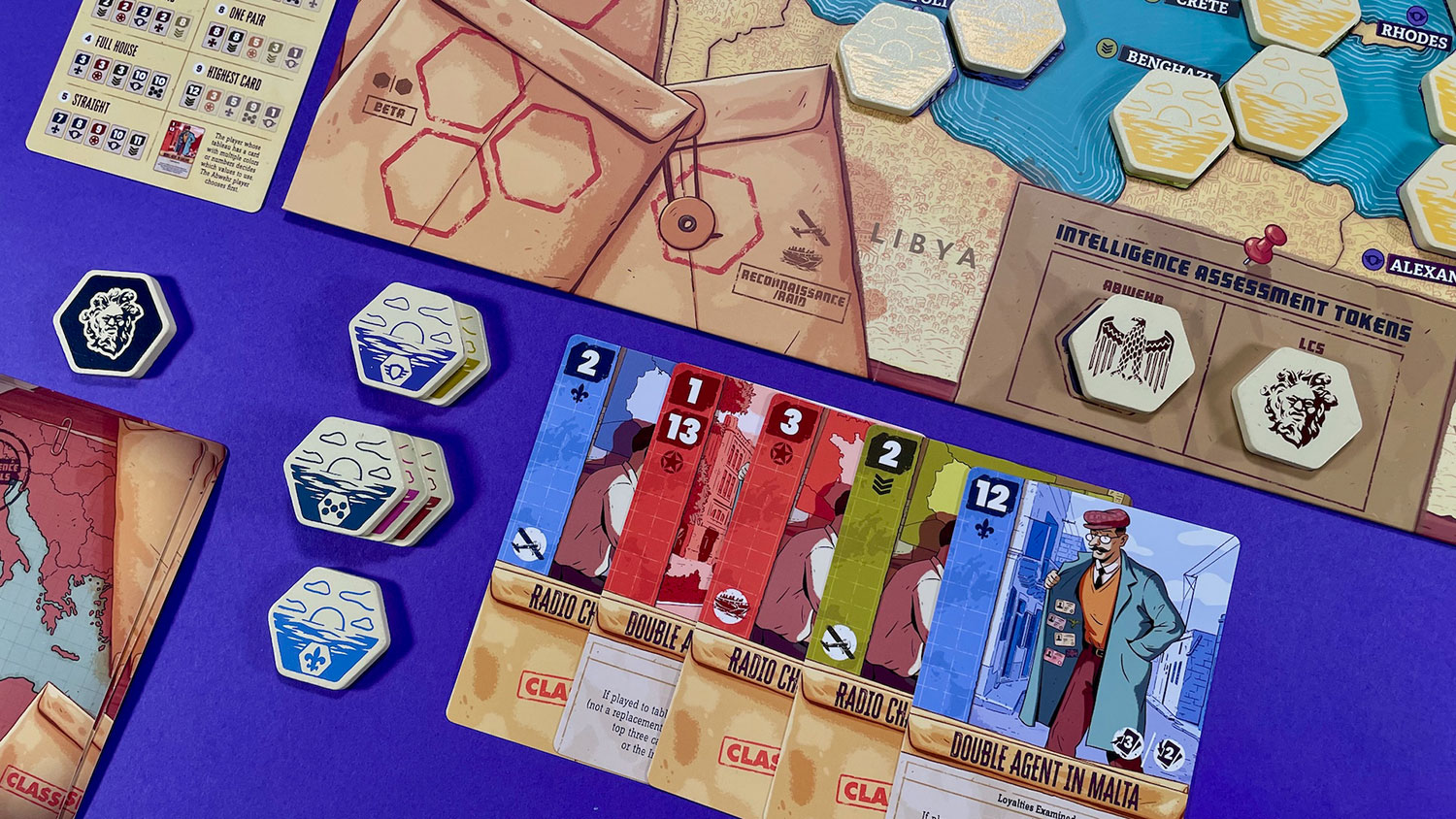
The Evidence Results phase is the most exciting, where both players simultaneously turn their last two cards face-up and resolve any effects. The Evidence tokens in the Alpha box go to the player with the best tableau. For the Beta box, the two Intelligence Assessment tokens are turned face-up to determine who bet correctly on who has the best tableau. The player who bet correctly receives the three Evidence tokens in that box. Finally, for the Reconnaissance/Raid box, the player whose tableau has the most Reconnaissance icons, or the most Raid icons receives the Evidence token in that box. Once all three boxes are assessed, the Abwehr player chooses which order they want to use the Evidence tokens they won, turning over the corresponding Intelligence tokens on the board for the matching sector.
At the end of the Month, the Abwehr player can win in one of two ways: revealing enough Intelligence tokens on the board to show which sector has the primary offensive and which has the secondary offensive or turning over enough Intelligence tokens on the board to demonstrate irrefutably where the primary and secondary sectors must be. Otherwise, a red Calendar marker is placed on the Month that just ended, and a new Month begins. If all six Months are marked off without the Abwehr player identifying the offensives, the LCS player wins.
Game Experience:
When I saw that this was intended to be around 30 minutes to play, I was honestly bamboozled because I am used to these kinds of historical-themed games being several hours long. The rules themselves seemed intimidating at first, but after playing just one round or “Month” of the game, you get the hang of it in real time on a first playthrough. The gameplay loop itself is very rewarding, and the two-phase poker hand reveal makes the betting aspect intriguing.
I really love the use of poker hands in the tableau for a game like this because it feeds into the kind of strategy deployed for wartime, similar to chess. Adding in card per-phase effects and card interactions makes the gameplay less of a silo and more like a dynamic experience. This is one of the few times I’ve seen in recent months that a game seamlessly blends a mechanic with its theme in such a way that creates an atmosphere true to life. One of my favorite in-game examples of this is the Agent Lilou card for the Abwehr player, which interacts directly with Operation Mincemeat for the LCS player. The cards interact together and separately during the Evidence Results phase in a way that will surprise both players, even more so if they were played during the hidden Final Two Cards.
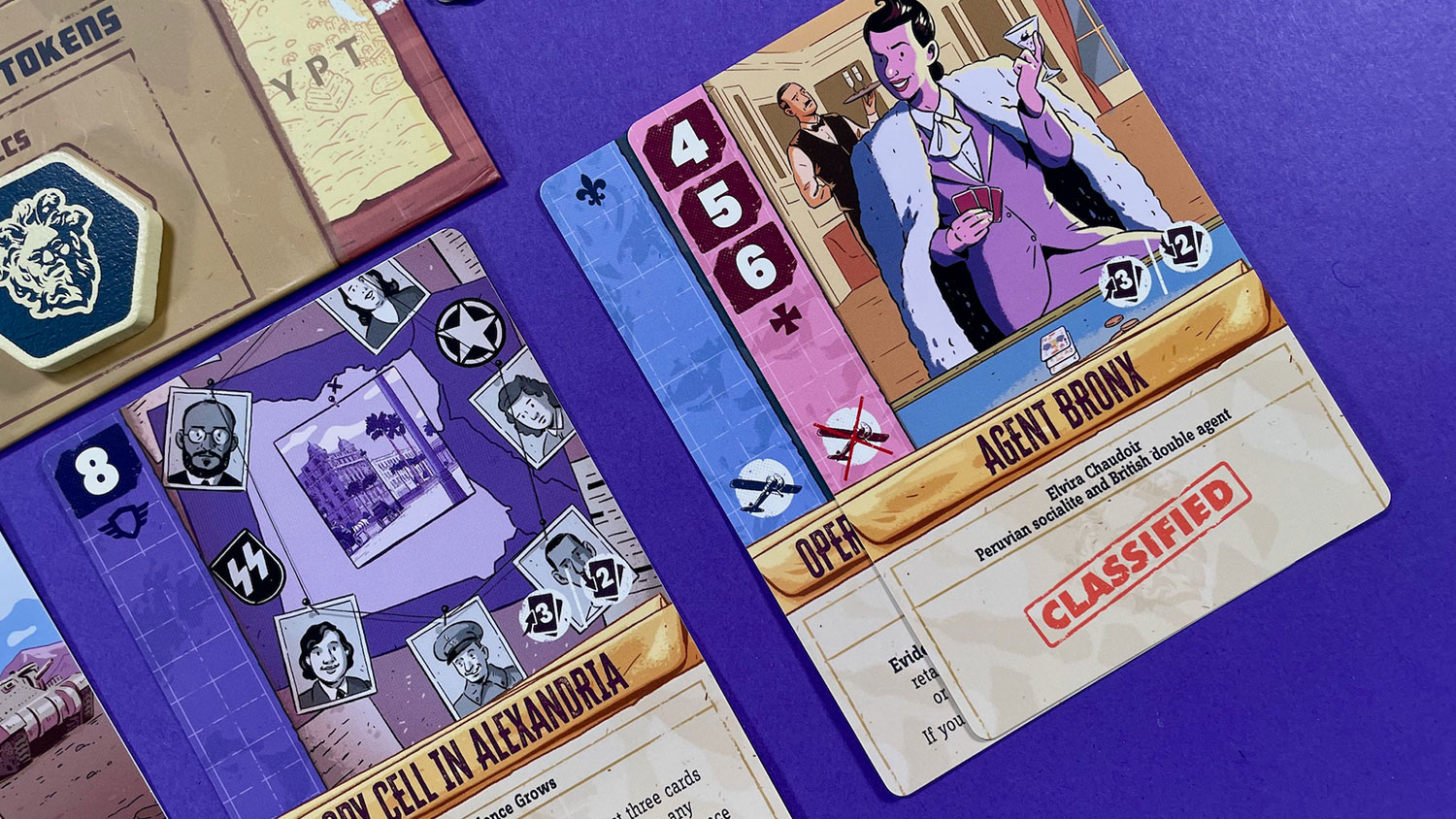
For the Abwehr player, the added tension of using Evidence Tokens to reveal the LCS player’s offensive Intelligence tokens on the board rounds out the gameplay. There are two opportunities to use logic: the first during the real-time reveals and the second during gameplay strategy to win specific Evidence Boxes. That player, if noticing that they are losing in the tableau for that month, could try to pivot to Reconnaissance/Raid icons even on a terrible hand. This kind of calculus shines alongside a historical theme, and I’m so happy the designers included this in the mechanics.
One caveat to all this positive feedback is the housekeeping that happens between months. Due to the fact that some card effects interact with discard piles differently, managing both your hand and your discard pile categories (e.g., LCS separately from Intelligence Channels) becomes quite important. There may be times that you find you have too few or too many cards in your hand because of some card effects that allow you to draw and discard, but I wouldn’t say that’s a mistake unique to this game. I’ve run into this issue in other games in the past, so it doesn’t have as much weight on my criticism for this one, but it’s still worth calling out.
During the first playthrough, one of the harder rules to memorize was the order of operations for the Evidence Boxes because each box has a different “win” condition, as well as tiebreak conditions that always favor the Abwehr player. Our rulebook was permanently opened to that page for the entire first playthrough. From a thematic standpoint, it does make sense to give Abwehr some consolation prizes for making an effort throughout the game, especially given the fact that they are on defense. However, I wish there were some iconography on the game board to give players a nudge if they forgot about conditions without forcing them to check the rulebook.
Final Thoughts:
Operation Barclay is for players who enjoy hand management with elements of poker and a dash of secrecy in a historical setting. Experienced players who enjoy these two-player bluffing and spy mechanics from other games may find this to be too light. However, if they’re looking to scratch an itch for 30-60 minutes instead of investing several hours in gameplay, then this could still be a viable addition to the game shelf. For all players, if you can get over the hurdle of tricky tiebreaker conditions and discard management, the hidden offensives and asymmetrical card effects will encourage you to play twice in a row to get the experience as both the LCS and Abwehr in one sitting.
Final Score: 3 Stars – Play the roles of directors of military intelligence during the Allied invasions in 1943 in this hand management card game with secret deployment elements.
 Hits:
Hits:
• Poker hands help with familiarity
• Historical tension is palpable in gameplay
• Aspects of logic blend well with the theme
Misses:
• Housekeeping between months can overwhelm
• Easy to mess up rules on first play
• Discard deck management is cumbersome