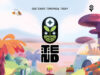
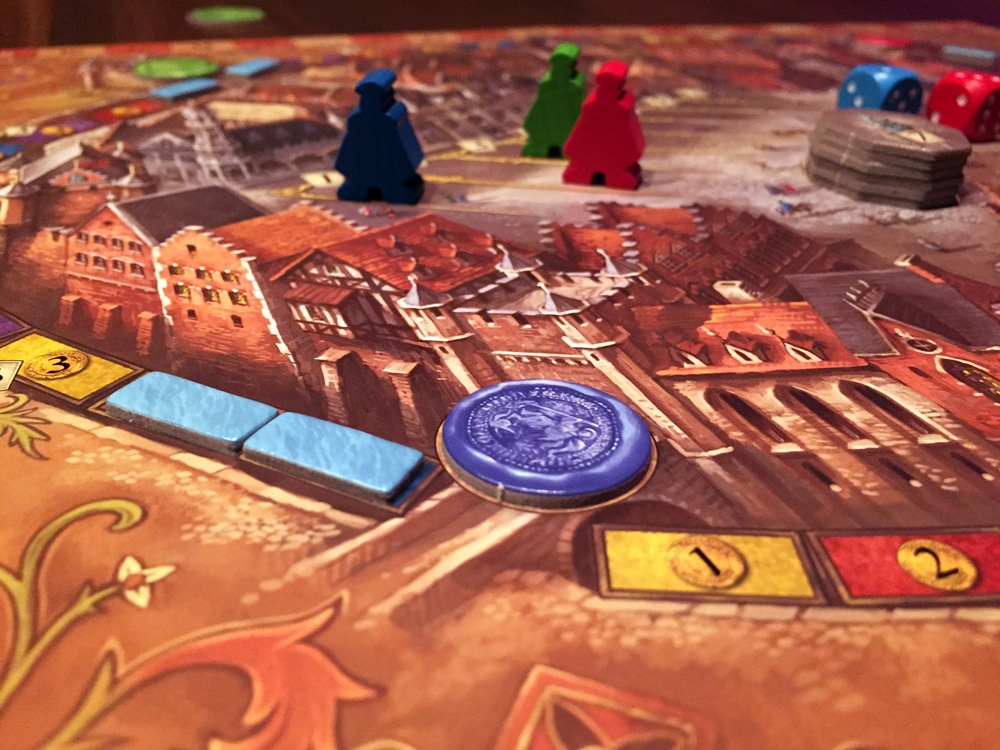
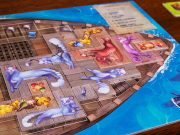
 Stonemaier Games recently acquired the rights to the classic white box game Tokaido and its follow-up Namiji. Tokaido is well known and loved around my house, as we have the collector’s edition that was on Kickstarter a while ago. But it’s been over a decade since that game first debuted.
When Stonemaier’s version of Namiji arrived, I was curious when this game was originally printed. Turns out it was only a few years ago, in 2022. I was a bit shocked, as I could have sworn it was a lot longer ago. Anyway, Namiji is designer Antonie Bauza’s follow-up to Tokaido. Instead of walking a path through Japan, you are sailing a ship. The zen-like experience from the original is here as well, but there are some new wrinkles this time.
Gameplay Overview:
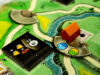
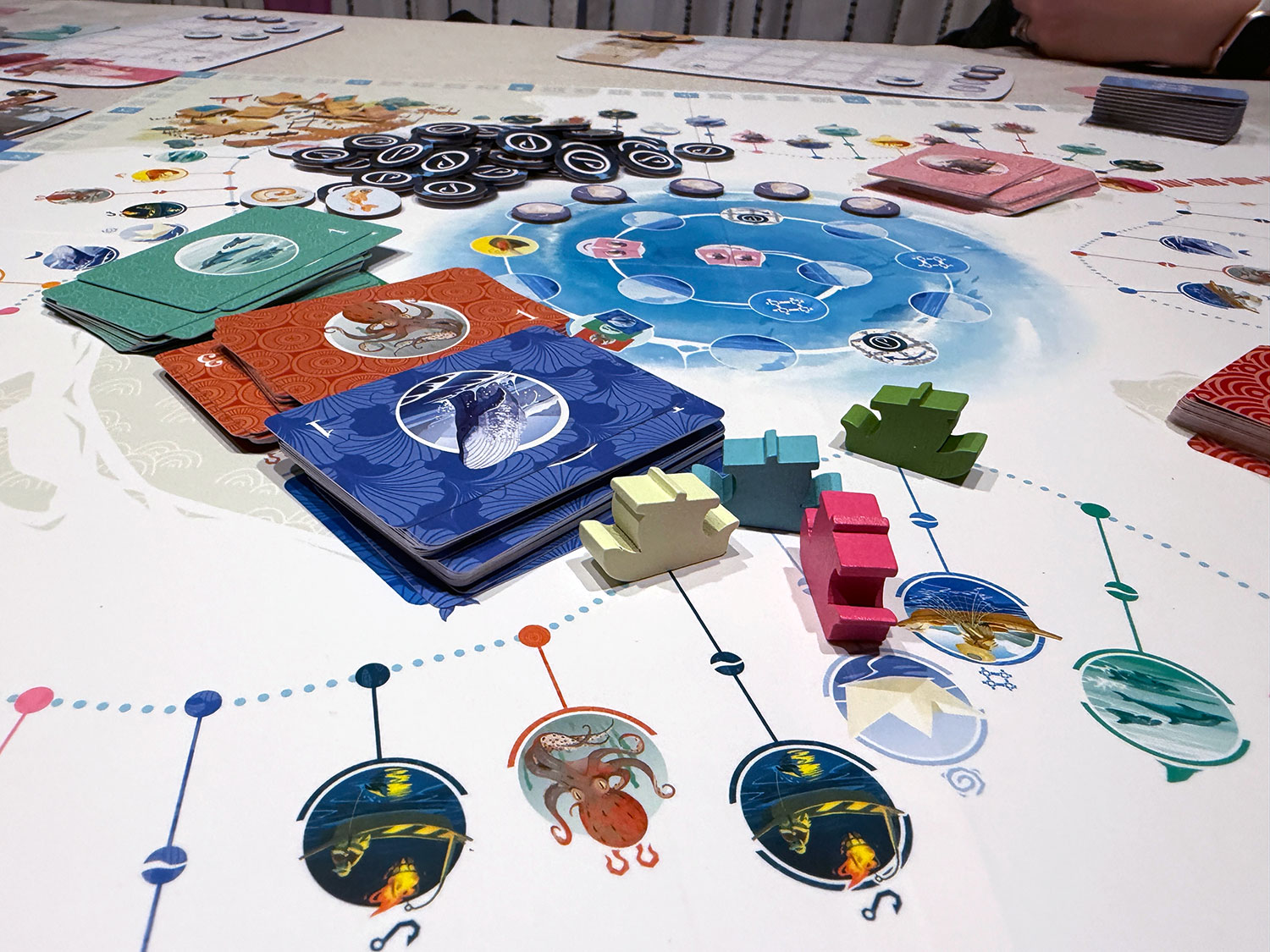
Games of Namiji are pretty simple, at least for the turn structure. You are working your way around the board, trying to stop at various points of interest. The player who is furthest back on the track is the one who gets to take their turn. They are allowed to move their boat forward any number of spaces, up to the next dock, which is basically a checkpoint everyone needs to gather at before continuing on.
The only rules are that you always have to move forward, and you can’t share spaces. First come, first served. There are a variety of locations to stop at:
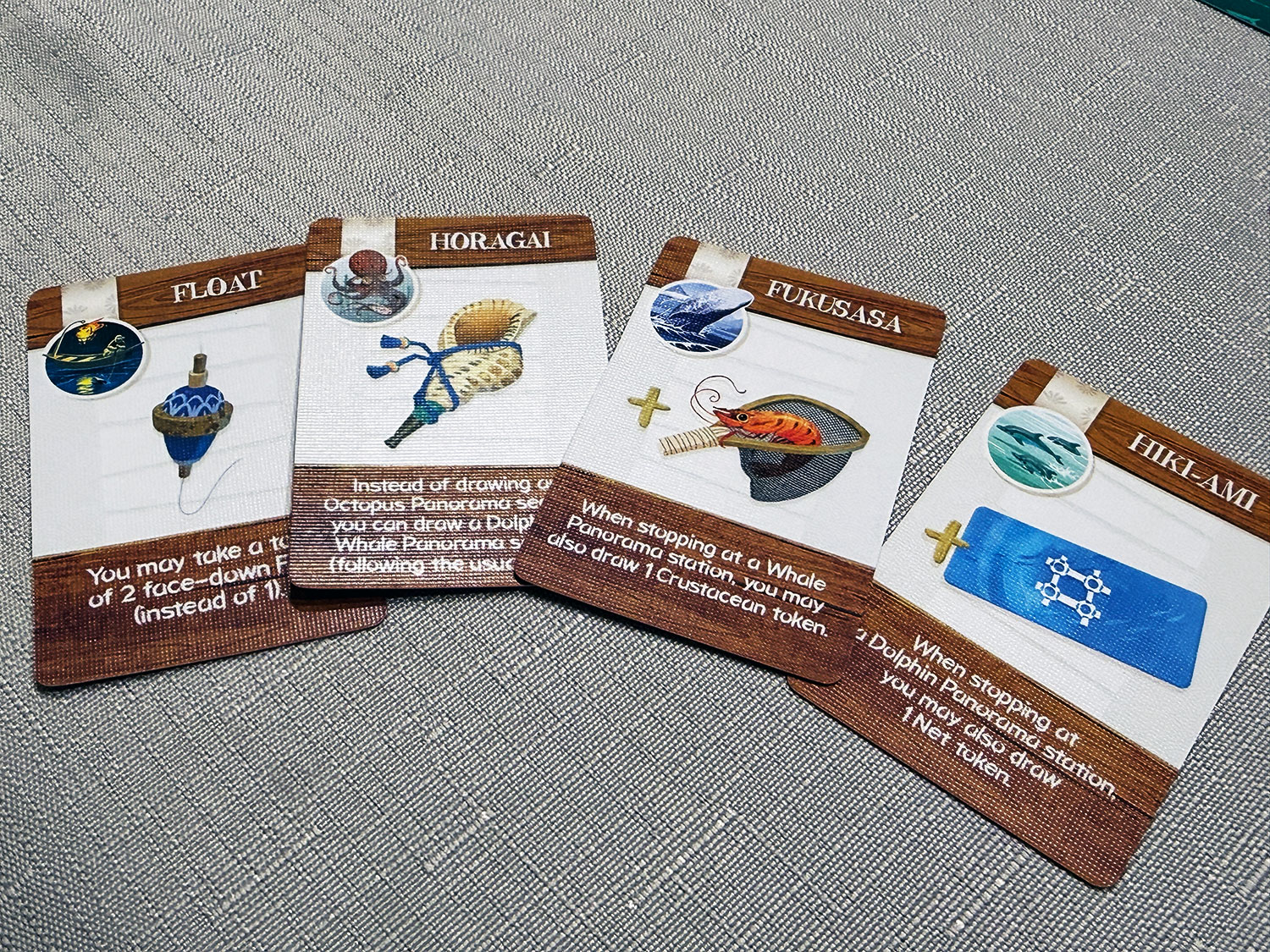
Panoramas: There are 3 different panoramas; each piece will give you an increasing amount of points, with the first to complete it earning bonus points.
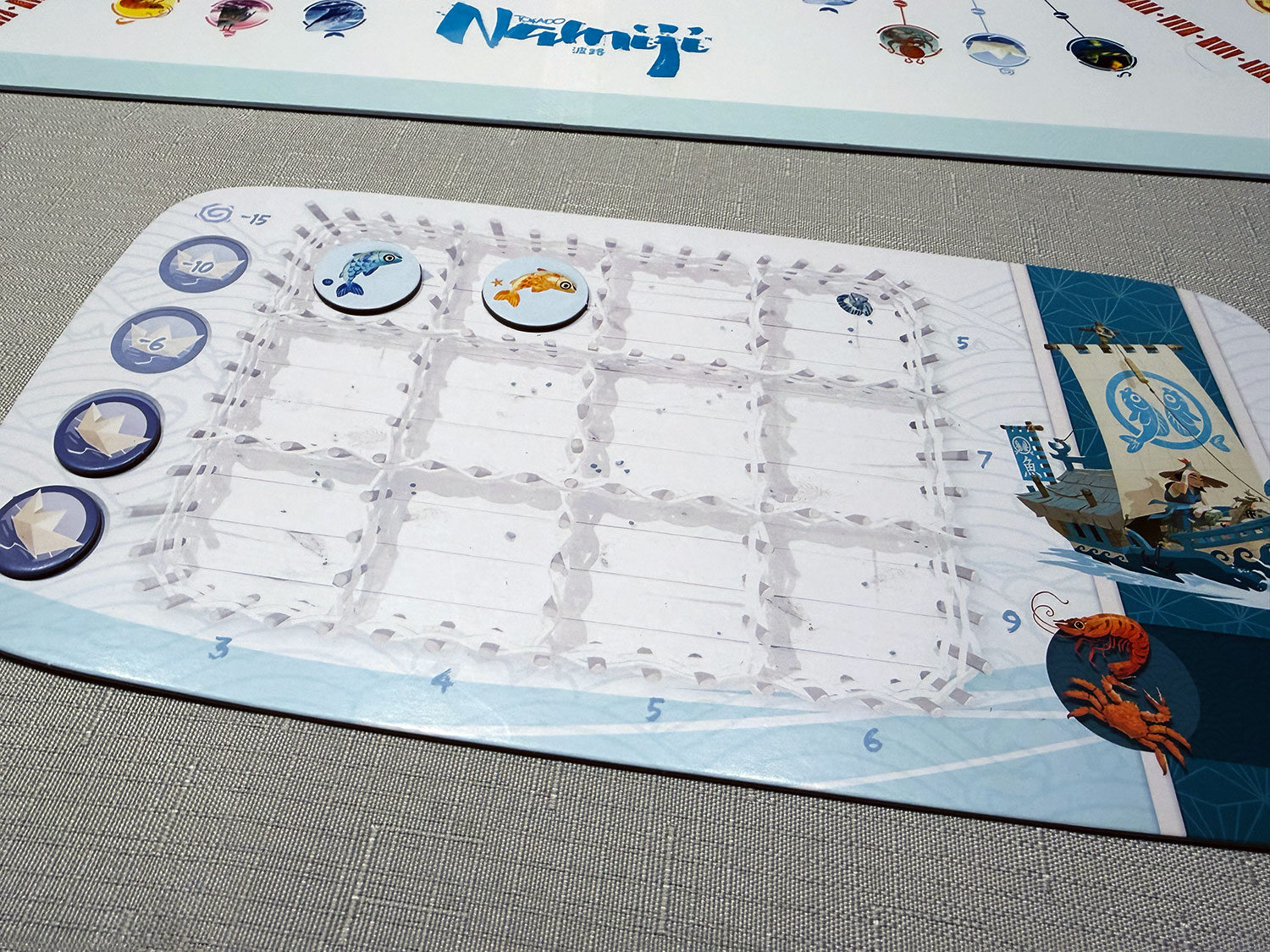
Fishing: There are 3 different fishing stations. One lets you draw a fish token from a pile and add it to your rack. Another lets you take the top net token and place it in your rack (basically it’s a double fish). And then there is shrimping. In a press-your-luck style game, you draw tokens from a bag trying to stop before you draw a second crab and bust.
Whirlpool: Place one of your offering tokens in the whirlpool. This reduces your penalty at the end of the game (each token you still have loses you points) and sometimes grants minor bonuses.
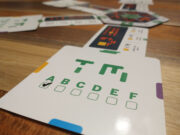
Sacred Rock: Draw two cards and keep one. These are secret objectives for end-game scoring.
Once a player arrives at a dock, they have to wait there for the rest of the players to catch up. Once everyone is there, bonus cards are drafted, and then it’s back on to the sea.
Once everyone arrives back in town, the game ends, and the player with the most points wins.
Game Experience:
This was my first time playing Namiji, and overall, I was a fan. Tokaido is a unique experience in both its aesthetic beauty and simple gameplay. Namiji, in my opinion, takes things up a little bit from Tokaido but not so much that it overcomplicates the game. Honestly, it’s just about the right amount for me.
The new fishing mechanic has you trying to complete rows and columns in your rack with fish of the same color or shape. This adds a tiny bit of complexity to the game, but also makes for more interesting turns. You need to figure out where you want to place fish with the limited information you have. Because if you fill up your rack, but none of the rows or columns match, you’ve basically wasted the turn.
The panorama track is pretty much lifted right from Tokadio, which is fine, but I almost wish for something a bit different there, just to see where Bauza could have taken things. Right now, the only difference is that the cards line up from top to bottom instead of left to right.
The shrimp mini game was probably the most frustrating for me. And not for design reasons, but I always seemed to bust out. Shrimpin’ ain’t easy. I really need to dig into that bag and see how many crabs there are, because it was very rare for me to pull more than 2-3 tokens before busting. I’m used to playing Seaside where you can draw with abandon. Now I’ve learned my lesson and usually stop once I’ve gotten at least 2 points.
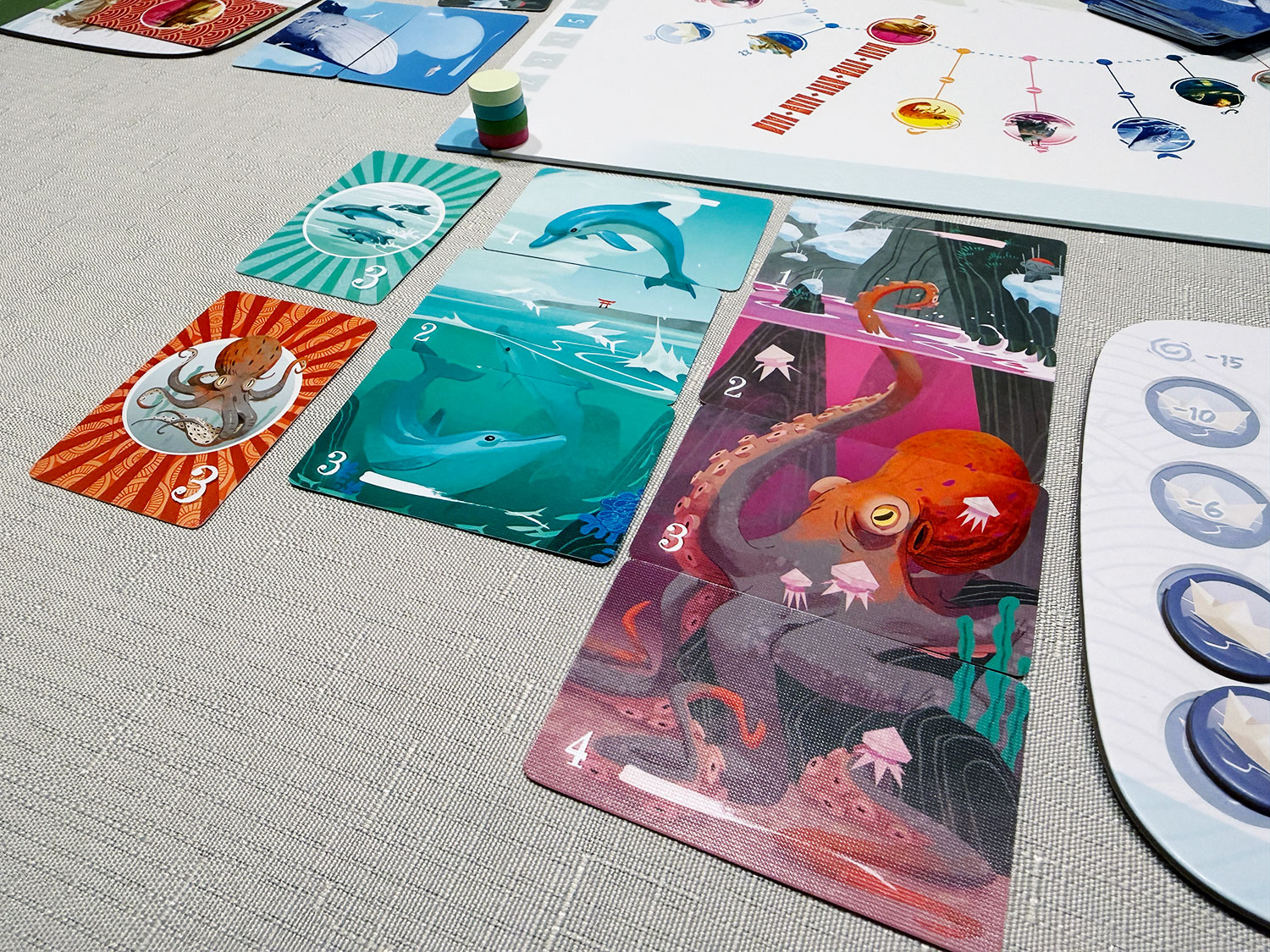
The other new area was the offering track. You place tokens into the center whirlpool, and every other space (or so) grants you a bonus. While it does suck to place your offering token and get nothing, the thing to remember is that you are lowering your end game penalty with each offering you place. If you don’t play any tokens during the game, you are losing a whopping 15 victory points; that steps down to zero loss if you place all four.
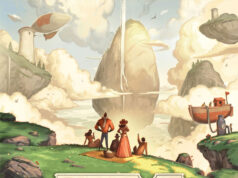
Finally, Artist Xavier “Naïade” Durin is back to do the artwork, and he again knocks it out of the park. His beautiful painterly artwork matches the calm feel of the game perfectly. The components from Stonemaier were quality as usual, so in general, it’s a top-notch production.
Final Thoughts:
Namiji isn’t going to be for everyone, as the gameplay is very light and player interaction is minimal. Yet as a family game, we’ve really enjoyed it. My kids, both 8, have really taken to it and have asked to play it a few times. The main teach is just saying what each spot does, with the sacred rock locations being the most difficult.
Namiji, like its predecessor Tokadio, is a casual, relaxing trip through the sea. There are no pirates to battle or storms to weather. It’s sailing, fishing, and painting. It’s different from a lot of other games out there and, in my opinion, it’s a nice step up from Tokaido.
Final Score: 3.5 Stars – Tokaido’s little brother takes its gameplay and elevates it a bit.
 Hits:
Hits:
• Great for casual gaming
• Looks beautiful
• A nice step up in complexity from Tokaido
• The fish mechanic elevates the decision space
Misses:
• Shrimping can be frustrating
• No changes in the panorama mechanic