

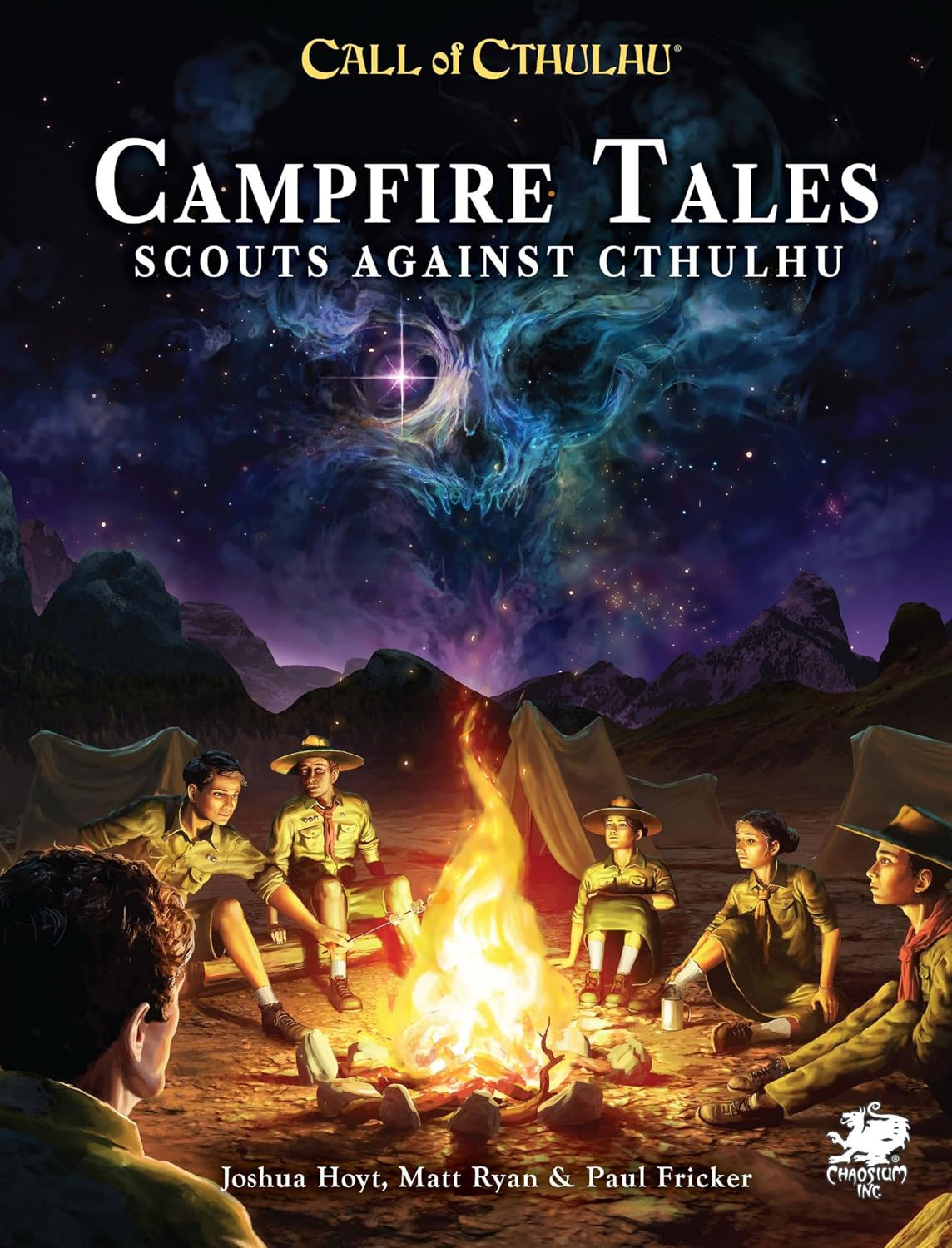
 Sitting around the campfire telling scary stories is as old as humanity itself. For some, it evokes camping with close family; for others, it reminds us of a scouting camping trip for another badge. Call of Cthulhu Campfire Tales is a supplement that adds the ability to play younger investigators who are members of a fictional scouting organization fighting against the unnamable creatures of the mythos. This review will be broken down into two parts: the additional rules and modifications and the review of the campaign included in the supplement.
Gameplay Overview:
One of the challenges that has plagued Call of Cthulhu has been the implementation of younger investigators into the struggle against the mythos. While some adjacent supplements have done this, it hasn’t been officially (at least to this writer’s understanding) done by Chaosium in a way that integrates new mechanics into the game. As stated in this book, the tone is much different than most Call of Cthulhu games, with a focus on a more young adult fiction feel.
 The first section of this supplement focuses on the history of scouting organizations in the world and the United States and what scouting is. For those who may need clarification, the Scouts organization focuses on connecting to nature and developing skills that focus on wilderness survival and citizenship. This book also establishes the “Wayfarer Scouts”, a fictional scouting organization that provides the rank structure and systems needed to create scout investigators.
Creating a scout character can vary from age 11-18, with age being roughly tied to rank within the scouts. This character creation age usually results in damage bonuses being low or in the negative.
Instead of jobs and professions helping determine skill values, players choose a hobby for their scout character ranging from amateur sleuth to sports protégé. This hobby will affect what your skills as a younger investigator are and which badges will be beneficial in the future.
Creating a backstory may seem odd in this circumstance since these investigators will be a bit younger and have less life experience than usual, but the authors have implemented some adjustments to help with this. Besides personal descriptions and home environment, players should choose a trusted adult in their life, traits, and (more importantly) a core fear. This fear is implemented in the “cool” rolls that take the place of sanity, but more on that later.
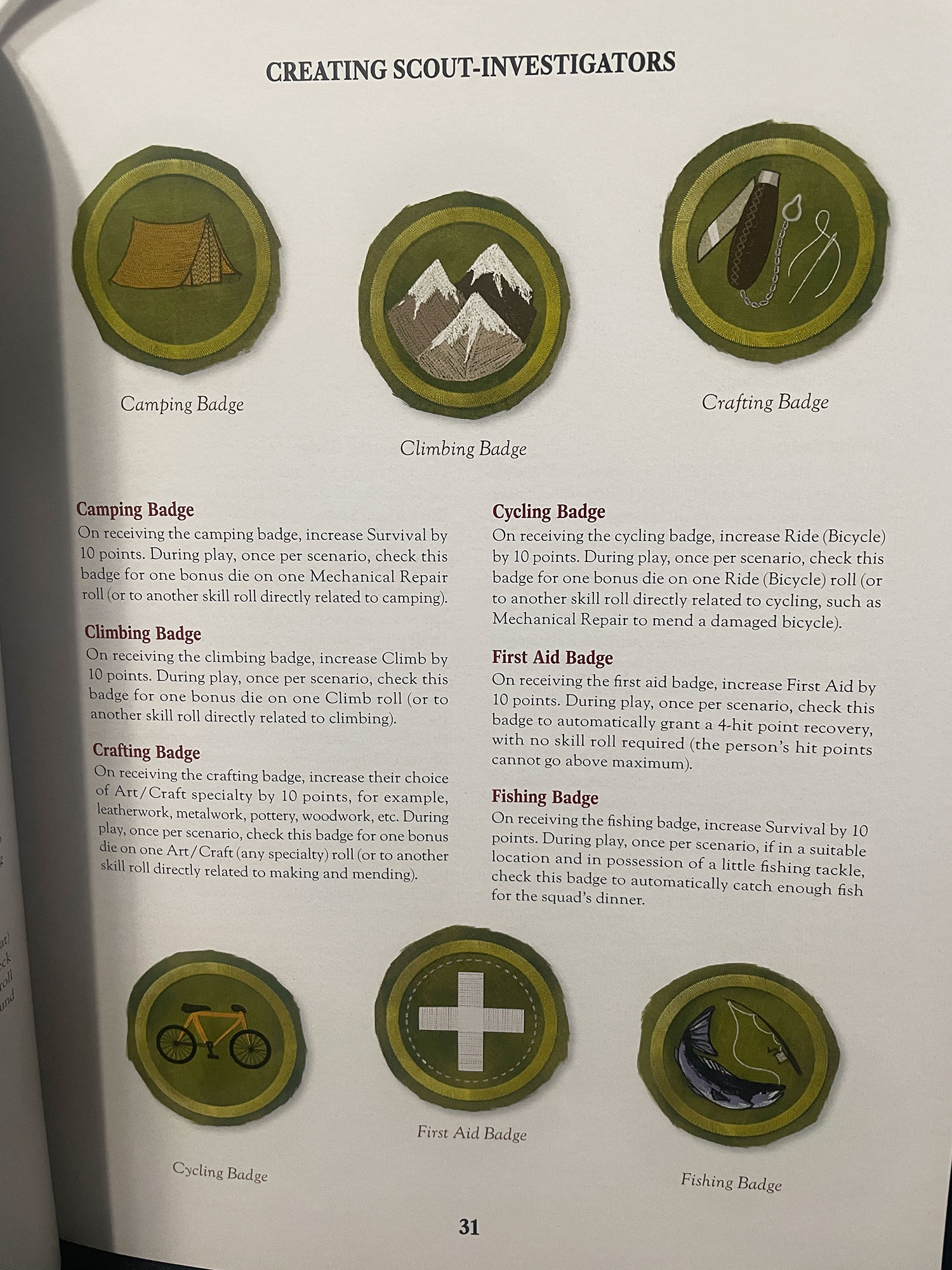
 One of the core ideas of scouts is earning merit badges as skills are learned. In this supplement, badges provide additional bonuses to skills, such as the camping badge adding 10 points to survival. As your rank progresses, your character will gain additional skills through unlocking the Wayfarer Scout badges.
Four new skills introduced for younger investigators specifically are Family Credit Rating, Language (Signals), Reassure, and Ride (Bicycle).
Combat is a part of any Call of Cthulhu game, and this book helps reframe combat for younger investigators with two central rule adjustments. One is that full-size weapons are cumbersome. Investigators need to make a strength check to see if they must take a penalty die with a fighting roll. In the same vein, for younger investigators, there are assisted combat maneuvers, allowing for coordinated attack strategies when fighting larger opponents, offsetting the damage bonus penalties and allowing for more creative solutions.
The biggest difference when using Campfire Tales is the replacement of sanity rolls with a “cool” roll. A scout investigator’s cool value is equal to their power attribute and doesn’t rise and fall like a sanity stat. Younger minds are more flexible, and a successful cool roll will allow a scout to take the event in stride, while a failed roll always invokes a response. The five F’s that the authors suggest are Fawn, Fight, Flight, Flop, and Freeze. In addition, when you fail the check, you must check a distressed box. One or two boxes checked result in a roleplaying effect such as being jumpier in game. When all three become checked, though, an investigator must become the subject of a delusion (found in the core rules).
There are a couple more mechanical changes, such as using wilderness challenges such as cold and being lost in the woods, and how keepers can integrate that into the adventure. Leaps of logic are also introduced, allowing younger investigators to jump to logical conclusions with some help from successful intelligence rolls.
Game Experience:
*Minor Spoilers Ahead about the Campaign*
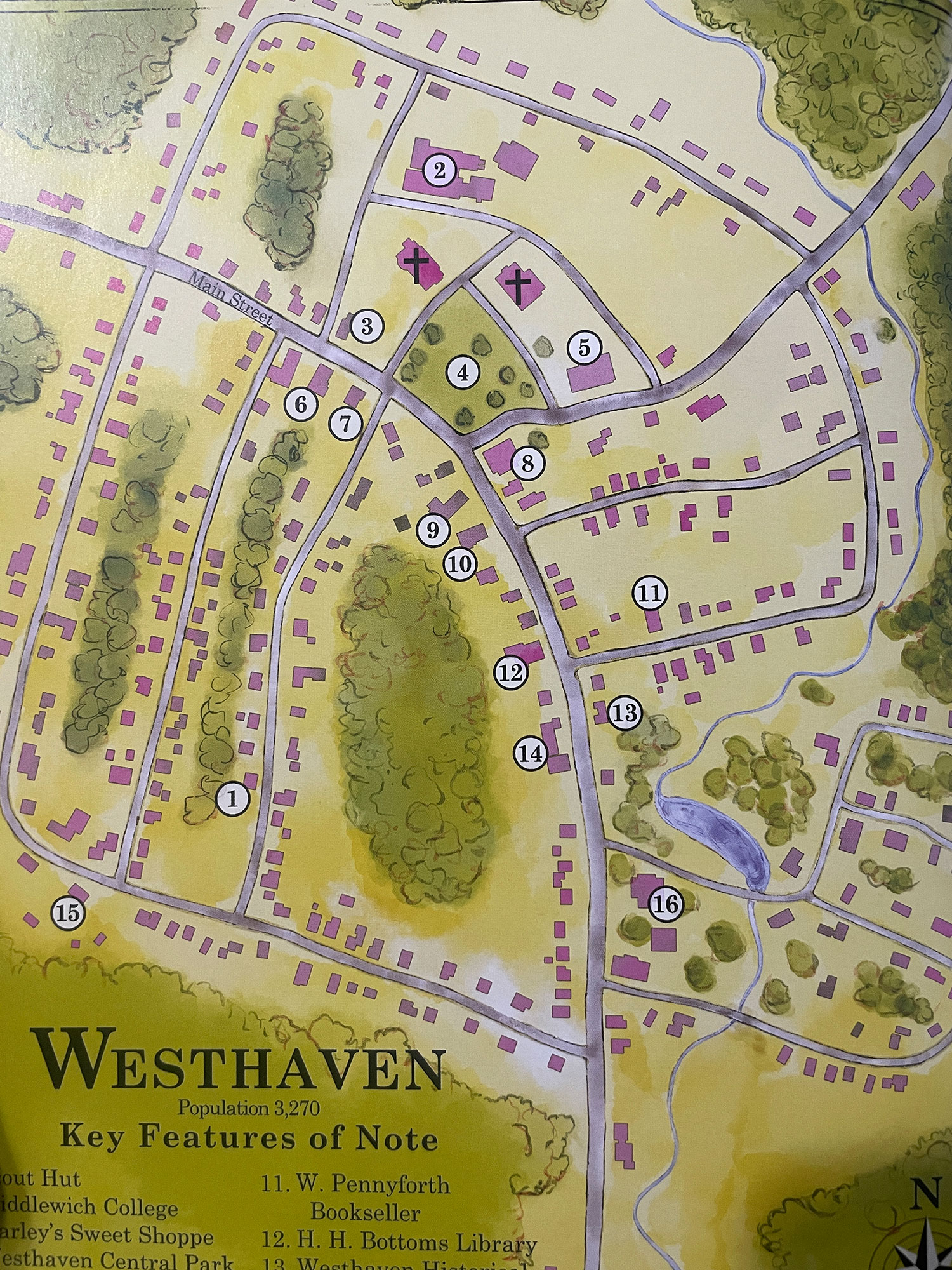
The second half of this supplement focuses on the fictional town of Westhaven and the corrupt adults that inhabit the town, with a campaign resulting in a Great Old One possibly being summoned into the world. Westhaven exists about 40 miles West of Arkham in-universe, and is a small town located in central Massachusetts. I will try to avoid specific spoilers and keep things general.
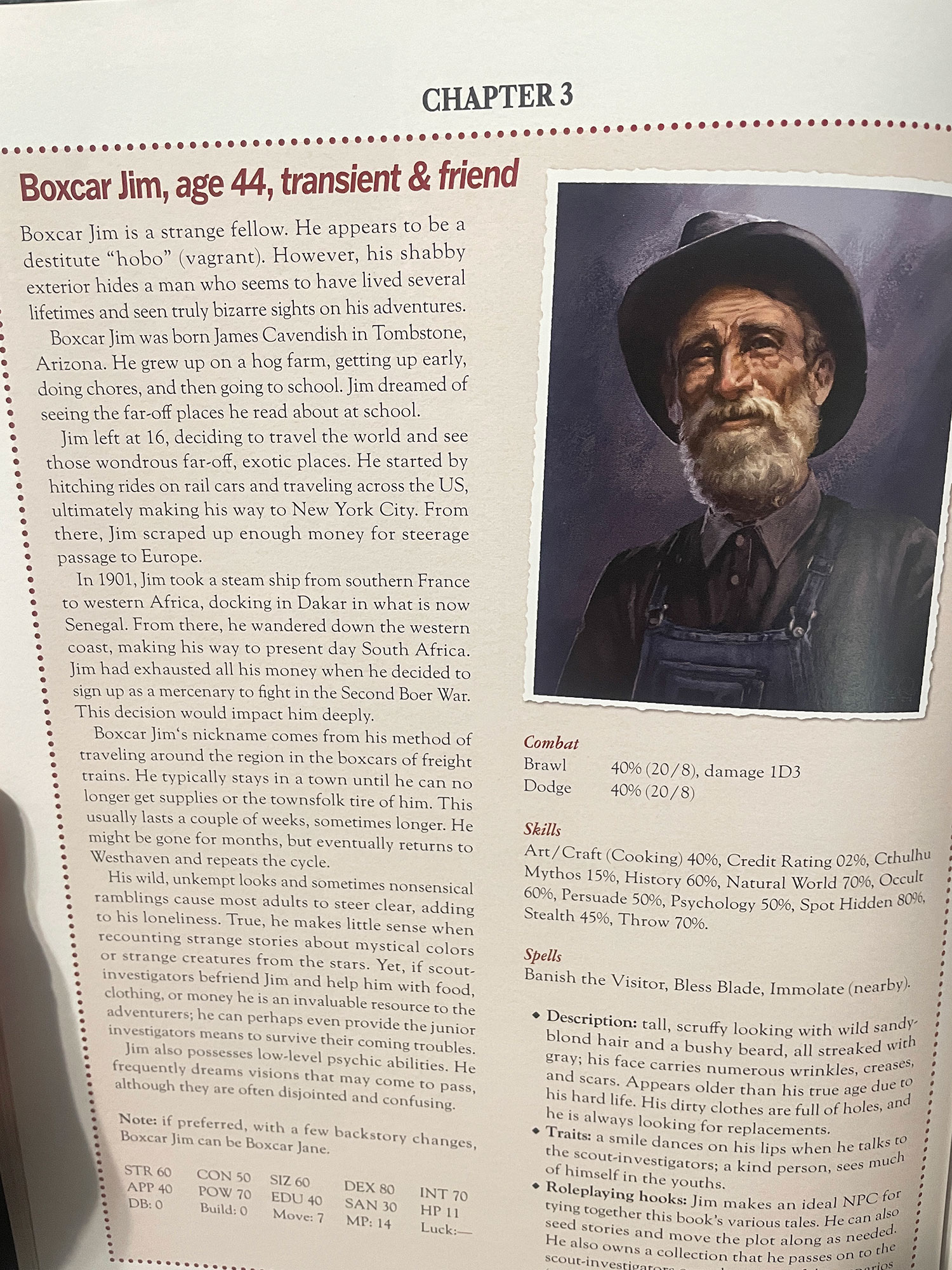
 Those familiar with the amazing 7th edition layout for Call of Cthulhu adventures will be at home in this section. The significant characters within Westhaven are previewed, as well as locations that are important in town. The rival Wayfarer scout squad, “The Stumbling Moose Squad”, is introduced as well, alongside a lovable and mysterious recurring character, Boxcar Jim, who serves as a link to the mythos for the young investigators. The authors have also included an Arkham “translation” guide to set the adventure for scouts who may be adventuring around Arkham instead of Westhaven.
The following missions can be played as one shots or as a campaign. I would personally recommend the latter for a larger payoff in the last scenario.
The first scenario, “Tremors Below”, finds the scouts caught in between a dispute of the cult leader in town and a former cultist who threatens to expose the cult to the town. The leader then summons a large worm to hunt and kill the subordinate as a lesson to those who would threaten the cult in Westhaven. Unfortunately for the scouts, they wander into the woods that the massive worm has made its hunting ground.
The second scenario, “Box of Evil”, has the scouts falling prey to their curiosity as the cult leader punishes a rival in town using a homunculus that eventually is sprung upon the scouts in a large eclectic mansion. This is also where the scouts start to uncover the larger evil that exists in Westhaven by finding clues amongst the rival’s effects in his manor, dealing with Egypt and even a mummy attack!
 The third scenario is a classic lost treasure hunt in an abandoned gold mine. The scouts are provided a map of where to find the mine, and so has a conman, Silas Ardmore. They are in a race to find the treasure in the mine, but eventually run into the ghost of the prospector who initially established the mine. This adventure turns into a creepy dungeon crawl that can result in an “explosive” ending.
The final scenario within the book is truly an epic conclusion to the Westhaven campaign. The scouts-now much older-leave for a weekend camping trip to New Hampshire. The cult leader in Westhaven has promised acolytes of a Great Old One to reunite themselves and their grandfather with the god they worshipped. Unbeknownst to the acolytes, the cult leader will be the one to ascend and gain the power granted by the mythos deity. Upon the scouts return, they find the entire town of Westhaven transformed and the ritual in progress. This scenario includes missing scouts, murder, a multitude of monsters, and the emergence of the Great Old One into our reality, with a conclusion that includes coming of age for the scout investigators.
Final Thoughts:
I was skeptical about the idea of utilizing younger investigators in Call of Cthulhu. I love the system and have run classic, pulp, gaslight, modern, and dark ages. Yet, younger investigators are something I have been hesitant to try. This book changed my mind. It provides enough rule modifications to make the game feel fresh and thematic while building rich situations for fun roleplay events. The inclusion of how to transition scout investigators into full-blown Call of Cthulhu investigators can make this into a legacy game where characters can emerge from the campaign and jump into another scenario. Chaosium has deftly supplied us with another essential supplement that can even be utilized with younger players safely and can help flesh out investigators’ group’s past. Not only does the campaign pacing feel great, but it captures the essence of a coming-of-age adventure. The art is beautiful and the layout, as always, is clear and easy to understand. This truly is a supplement that stands alongside Chaosium’s other quality products.
Final Score: 5 Stars – If you want to capture the feeling of hanging out with the Goonies or the Loser’s Club while they fight the Cthulhu Mythos, this supplement is a must-buy for your group.
 Hits:
Hits:
• New rules for using younger investigators that are flavorful and impactful.
• Campaign captures a perfect coming-of-age story.
• “Cool” system allowing for flexible roleplaying opportunities.
• Mechanics force players to think critically of creative solutions to solve problems.
• Can safely be used with younger players.
• Top-quality book production.
Misses:
• May not appeal to all play groups.