
 Back in the aughts, I spent an embarrassing amount of time playing a building simulator that placed you on the banks of a river in BCE, building rich civilizations that eventually created impressive ziggurats and pyramids. Assyria gives me the same vibe, in a board game I can whisk on and off the table in about 75 minutes (and without finding an emulator).
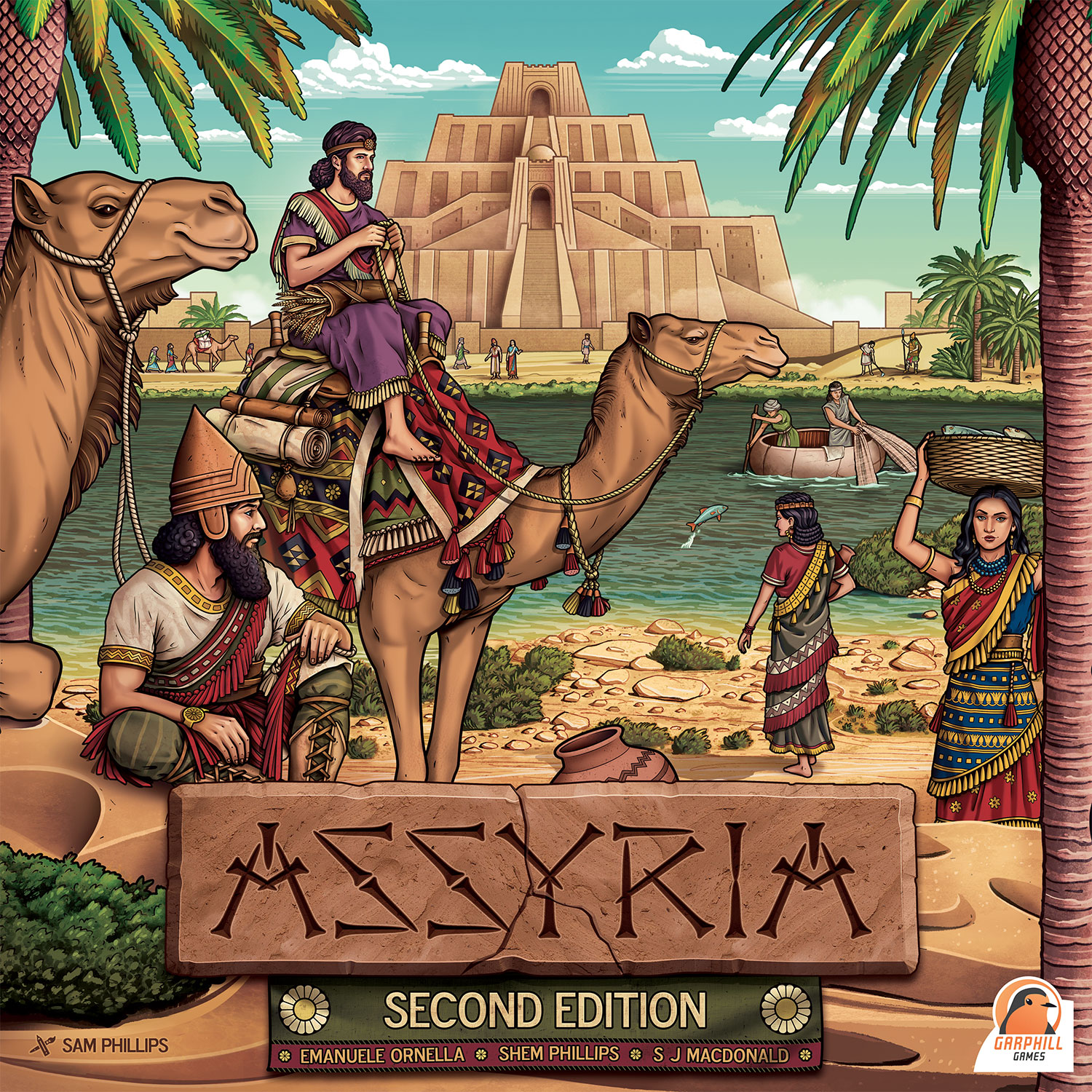
Assyria: Second Edition is a beautiful addition to Garphill’s Ancient Anthology. Fans of the original will find even more to do, and new players will enjoy the strategy as well as an introduction to life in ancient floodplains.
In Assyria, players gain victory points over six turns by building ziggurats and farms along the Tigris and Euphrates. Players need to balance growth and risk, while keeping workers fed and earning camels.
Gameplay Overview:
To start, players will bid for initial food cards and starting spaces (depending on the size of the game, the game board and rows of food/favor cards will vary). The player with the highest bid selects a row of food cards. Following players can choose the same row (outbidding with a payment of VP that will cause leaders on higher spaces to have to move) or another. Once all leaders are placed, players will collect food/favor cards from their row and move their leaders to the turn order tracker.
Next, players will, in turn order, place their opening ziggurat. Starting ziggurats must be placed on either side of the rivers (not the center) and cannot be within 3 spaces of another ziggurat. Now the regular rounds can begin.
 Play consists of 6 rounds that share the same turn order, punctuated by 2 floods which will change the main board. At the start of the turn, an expansion marker is revealed, dictating how many huts players receive for the round. Players will bid for food (just like in the opening) and set up turn order.
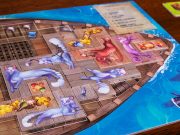
Once cards have been collected, players expand across the grid in turn order. In turn order, players place their huts adjacent to their own huts or ziggurat, on a tile containing no other huts or ziggurats. Once huts are placed, they must be fed using food cards, ploughs, or wild tokens. Unfed huts are removed from the board. Ships may be placed on river hexes during expansion.
Huts on river spaces generate camels (action points). Camels are used to build, as well as acquire gold and regain plough actions. Huts on dry land generate VP.
 The action phase starts after all huts are placed and scored. Players may complete as many actions as they can afford. These include: gaining ploughs, building ziggurats or adding to them, making offerings and tributes, gaining gold or cards, purchasing a hut, farmer, or ship, placing a hut or ship, using a favor card.
After the third round, the first scheduled flood occurs. During the flood, all huts and ships located on river spaces are destroyed and removed from the board. Ziggurats built on dry land are completely immune to the flood. Influence is scored based on the players’ position in the Influence Track. The influence tracker is then reset. Victory points are scored based on how far a player has advanced on the offerings track.
Rounds 4-6 play as the first three. After the second flood, a final scoring phase occurs wherein each player feeds and destroys unfed huts, then scores points from constructed ziggurats, leftovers on the offering track, and civilizational influence majorities. The player with the highest total of victory points wins
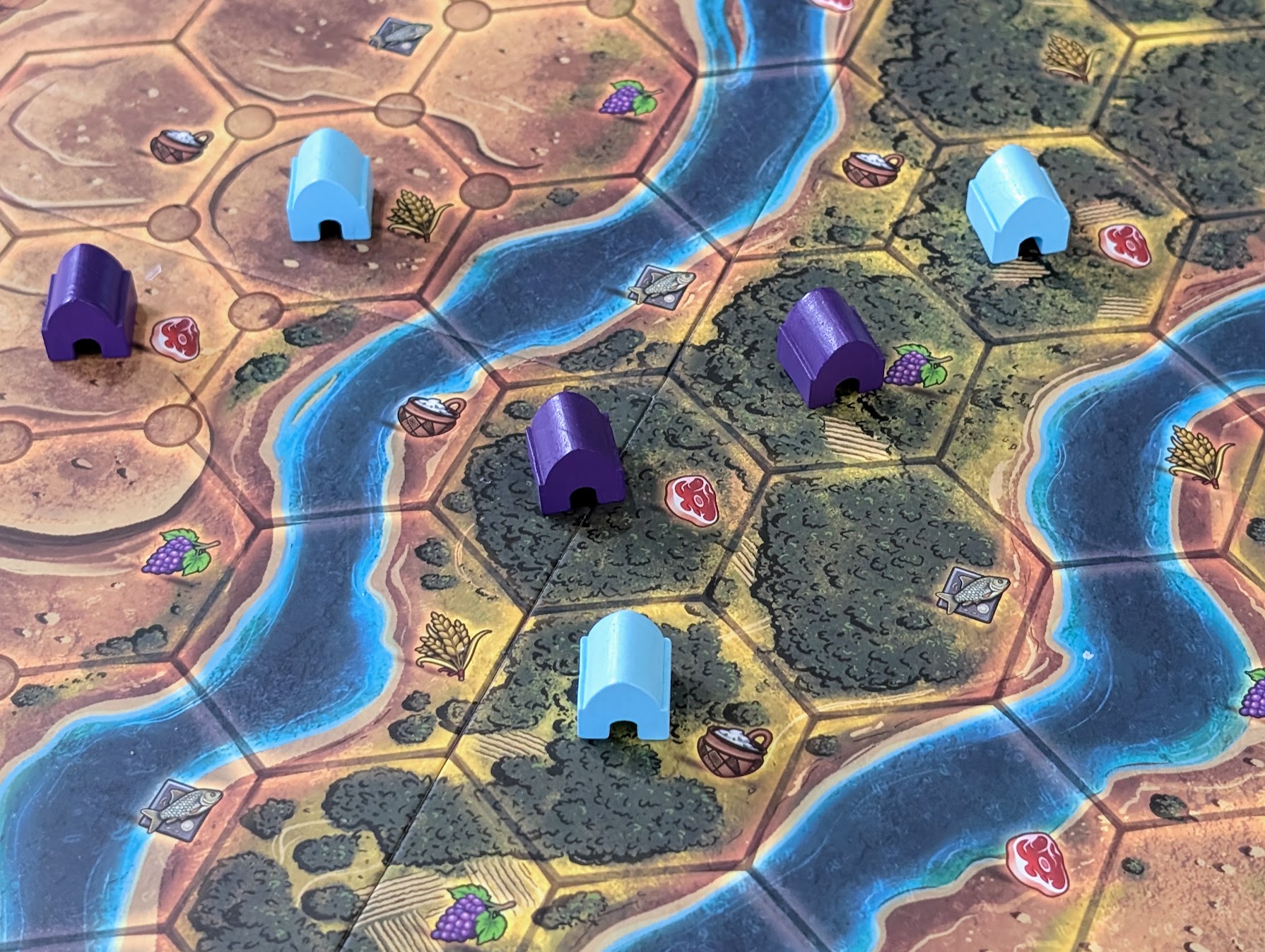
Gameplay Experience:
I played the original version early in the twenty teens, before I was writing for games, so my focus was more on enjoyment and less on mechanical details. I do remember thinking it was a good game, but it was missing enough variety to add to my game shelves. Assyria Second Edition offers more by way of changing neighboring civilizations and favor cards.
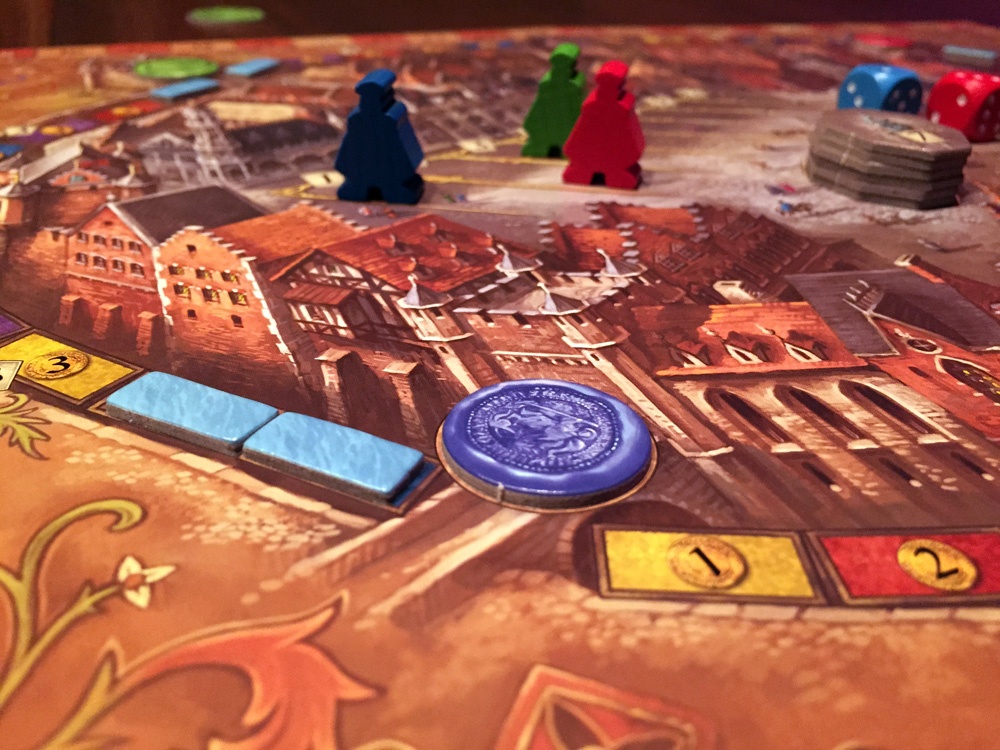
The game allows for variable set-ups based on player count, and I appreciate that, particularly on the main map. Area control shines less when there isn’t a little back and forth fighting over who will get the better spaces. That being said, I love the addition of the ships, which work well to squeeze in that last space before scoring, or help with adjacency if a player gets hemmed in.
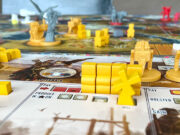
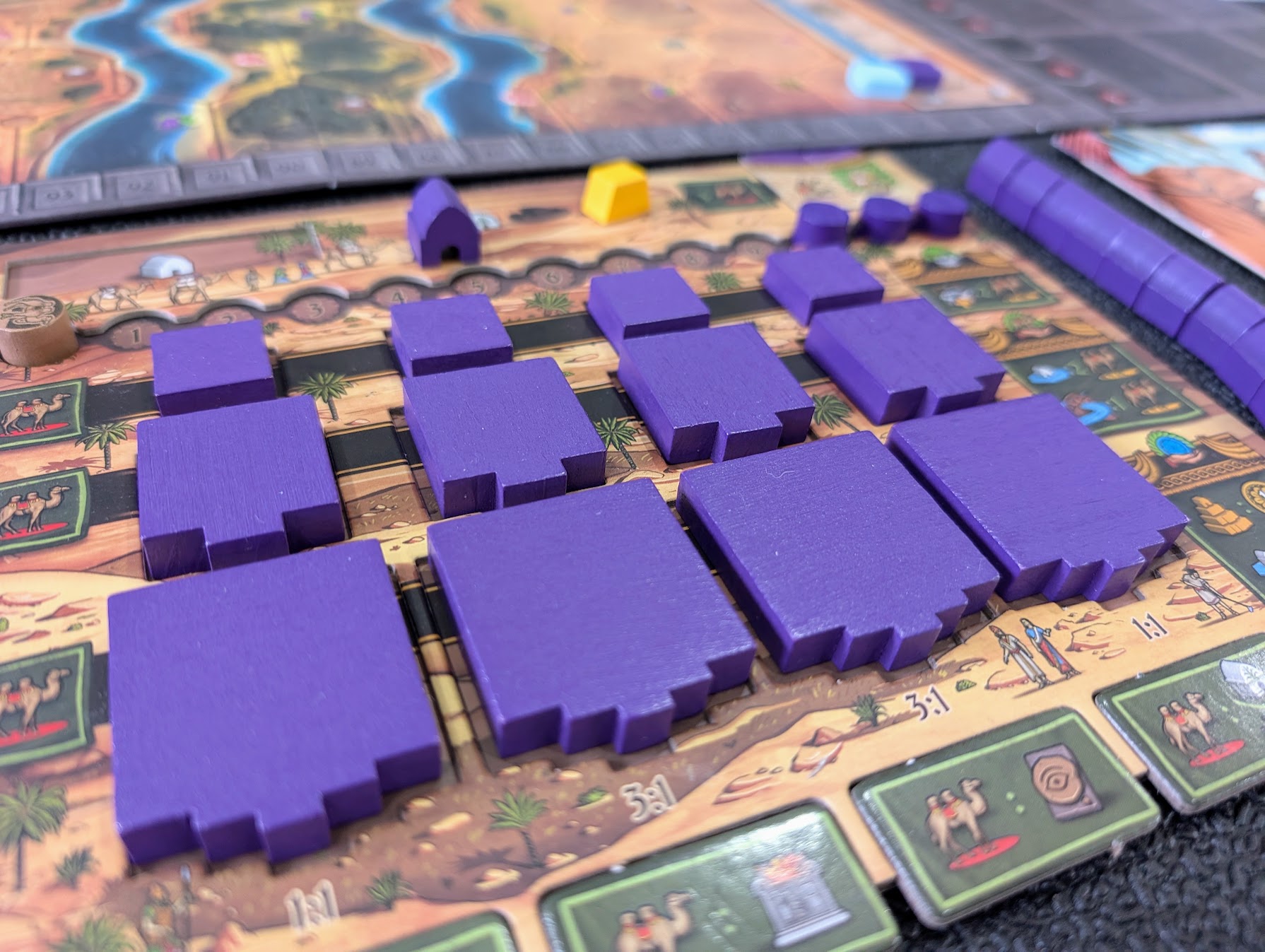
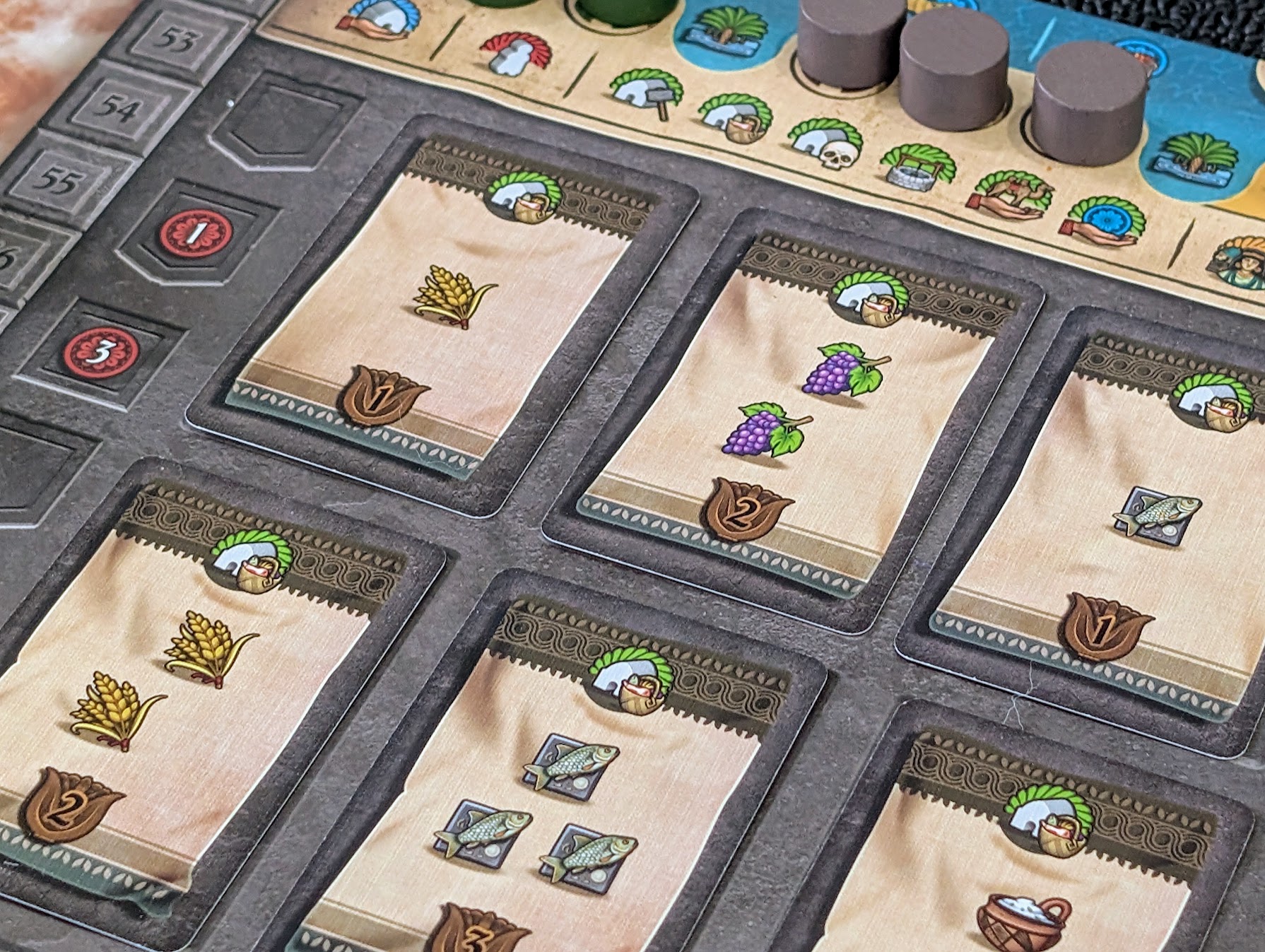 I appreciate that little change about the ziggurats themselves. I stack my game pieces while I’m playing most games; Assyria just makes it part of the game, and (relatively) tumble-proof. As small a detail as this seems, just think about how frustrating it is to try and place a piece during some other games, only to watch every piece around it fall over and slide across the board (Fate of the Fellowship, I’m looking at you).
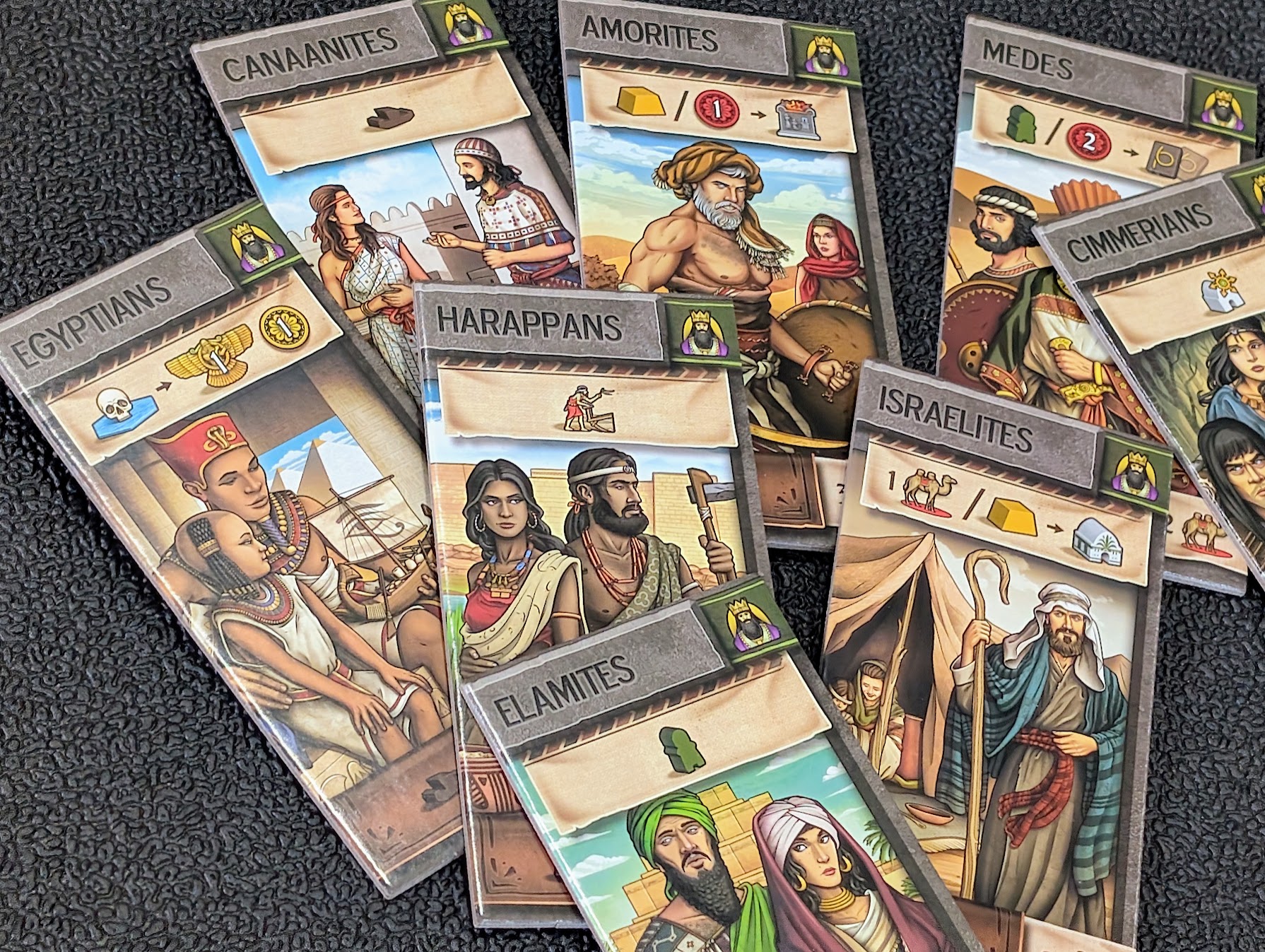
Varying the neighboring civilizations is a nice touch as well. These bonuses may seem small, but they’re fun goals to work towards and may allow you that extra couple of points you need to win. Additionally, as with a few games in this line from Garphill, I feel like I’m learning about civilizations I only partially remember from long-ago history classes. I wound up on a half-hour deep dive all about the Canaanites after my first playthrough.
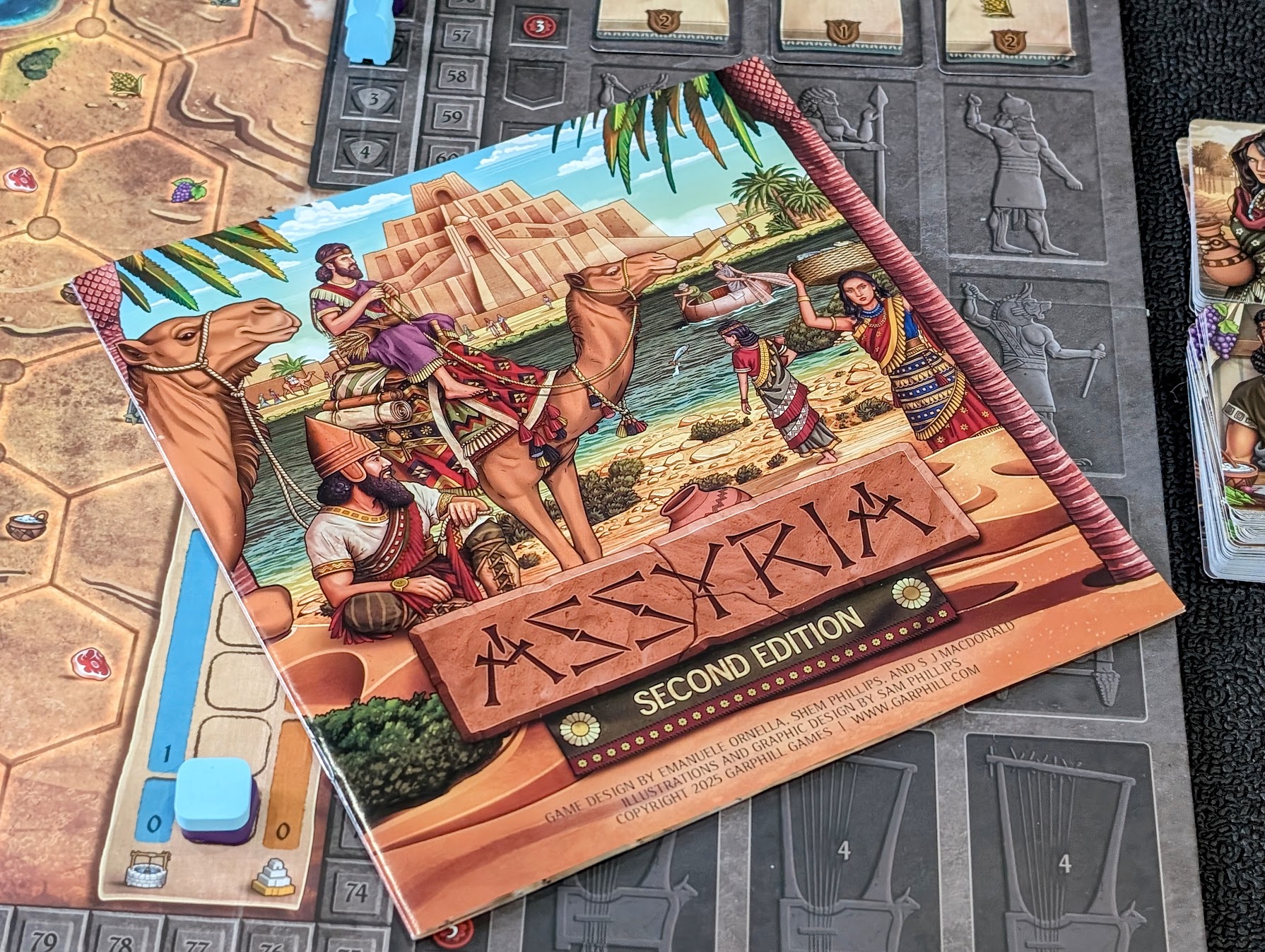 The rulebook includes a lot of helpful graphics for setup, as well as some examples when gameplay order might be unclear. There is some repetition, and if you’re a cover-to-cover rulebook reader, this might seem like overkill. I tend to digest them in chunks (set up, round one, actions, etc.) so I found it very easy to reference, as well as helpful in its little reminders.
Assyria: Second Edition boasts a new solo mode as well. Given its similarities to that long-ago video game, I could absolutely see why someone would want to set up and give it a go. Tho I’m not generally a single-player board gamer, this is really the first time I’ve even considered setting up a solo game. One thing that really stands out is that the changes are small, so that playing solo doesn’t seem so wildly different than playing with others.
Final Thoughts:
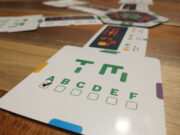
Overall, I found Assyria to be an excellent addition to Garphill’s catalogue. Whether you’re new to strategy games or an old hand, this is worthy of a game night. New additions add more depth and replay value, while the new art brings it into the twenty-twenties. Clear symbology and reminders across the rulebook, player aids, and on the board help gameplay keep rolling without frequent breaks to search for the next thing to do. Player count changes keep players focused on their next action.
Final Score: 4.5 Stars – A fantastic upgrade of a classic makes this strategy game evergreen.
 Hits:
• New additions add to replay value
• Player adjustments create just enough tension to keep folks engaged
• Helpful graphics and board directions keep the game flowing
Misses:
• The rulebook can seem a little repetitive if read straight through.
• I miss the little round huts