
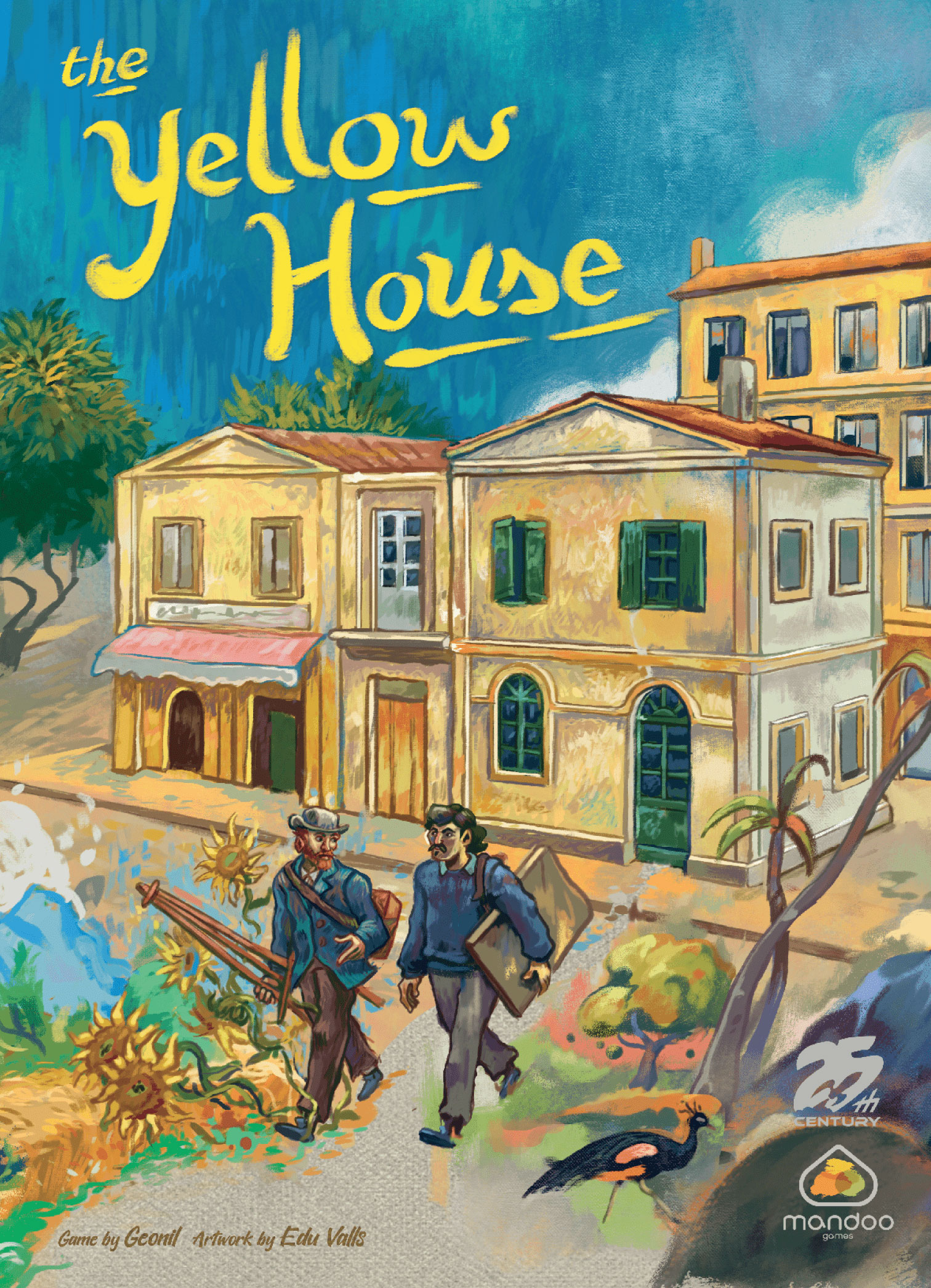
 While I’ve had my share of visits to art galleries and spent a reasonable amount of time reading the tiny placards or wall explainers of exhibits, I can’t say that I’ve ever looked into some of the well-known rivalries. I may be a heathen in admitting this but when I looked at the premise for this card game, my brain immediately locked on “Van Gogh” and definitely had no recognition whatsoever of “Paul Gauguin”.
The Yellow House is a trick-taking card game for two players that takes about 30 minutes to play.
Gameplay Overview:
Setup is fairly simple for this game, with a fabric “Canvas” board set in the center of the table to track Elements of art, extra Topic cards, and Support cards placed to the side. The player who most recently visited an art gallery becomes the dealer, and they shuffle all of the available Topic cards before dealing 12 cards face-down to both players as their starting hand. Each player chooses any two Topic cards from their hand to exchange with their opponent. Those cards are revealed and then influence the advancement of the corresponding Element on the Canvas board.
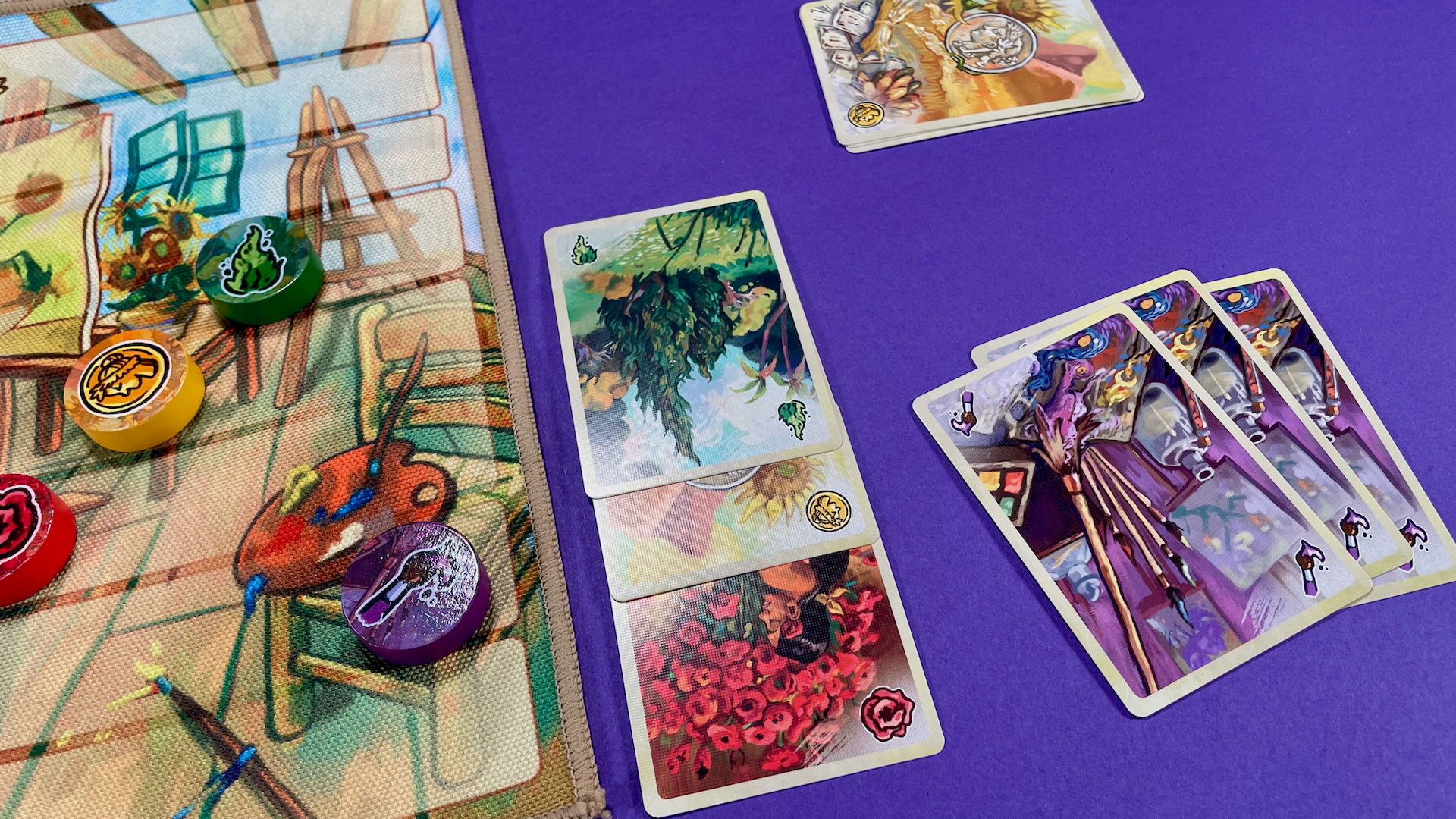
The game takes place up to five rounds, with each round consisting of multiple tricks. Tricks in this game are called a Debate. Rounds only end when a player successfully empties their hand of cards, thus winning the round. If a player has two Topic cards of the same element or any three Topic cards won over the course of the round(s), the game ends, and that player wins.
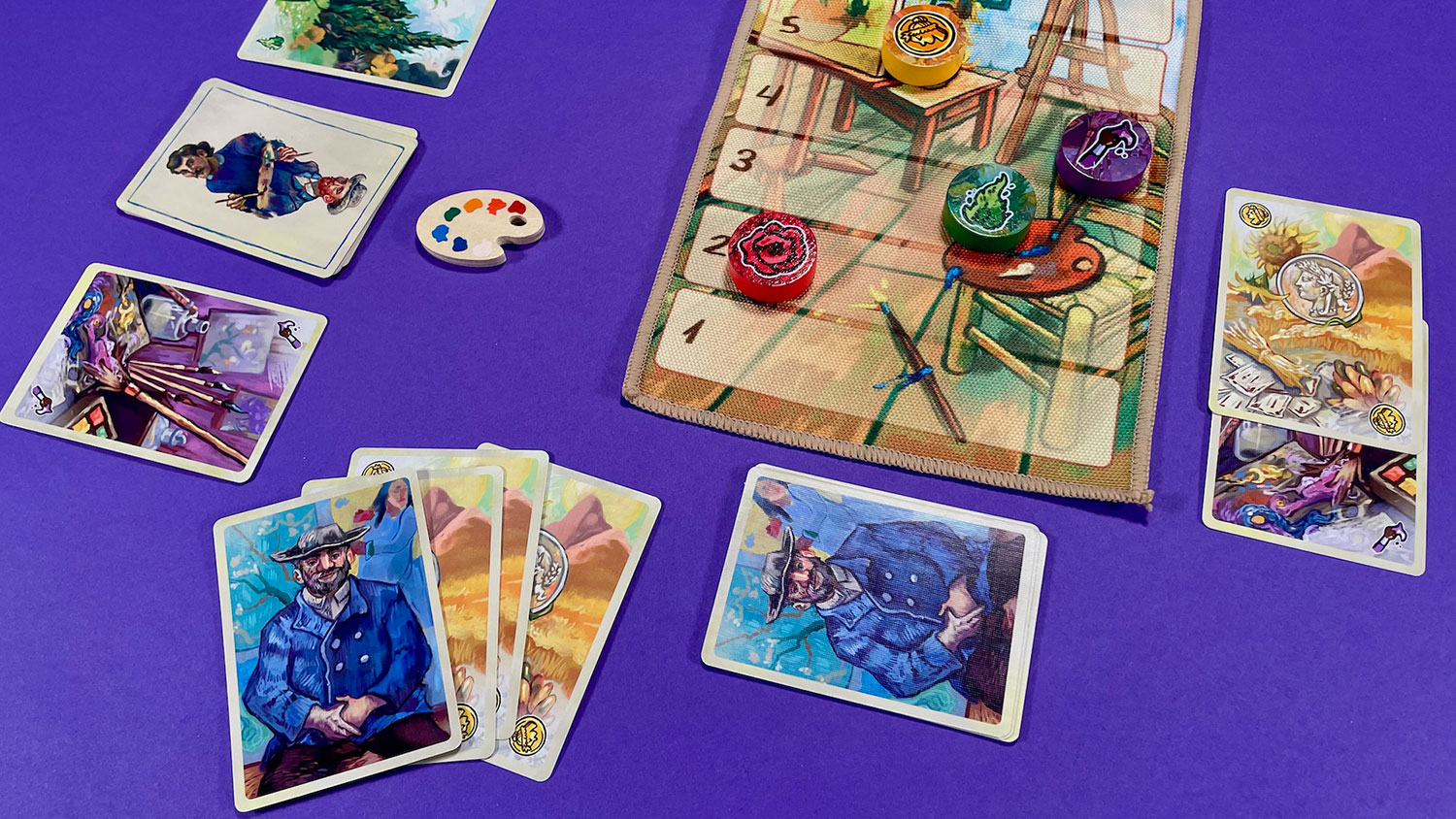
During a Debate, players take turns to choose one of two actions: Make a Claim or Strengthen, then Make a Claim. To make a Claim, the player who made the most recent Claim simply plays any Topic card from their hand. The next Claim made must be new to the Debate and stronger than the current Claim, which is indicated by the rankings on the Canvas board. To Strengthen then Make a Claim, the player plays Topic cards from their hand equal to the number of levels that Element must advance to be entered into the Debate. One Support card can be used to do this if the player does not have enough Topic cards in their hand. Once the Element is properly ranked, then the player makes a Claim as before by placing a Topic card from their hand of that Element beside the Canvas among the other Claims.
Once a player successfully empties their hand of Topic cards, the card used to make the most recent Claim is taken as a reward and placed face-up under the Palette token to track the win condition.
Game Experience:
As someone who has an interest in art and art history, I was really disappointed that the box description hyped itself up about the theme, and it barely came through in the actual gameplay. I anticipated elements of potential verbal interaction between the players because of the “Debate” mention, or other immersive mechanics in the gameplay loop. Unfortunately, I found none of that outside of the card art style. I will still give credit to the game’s artist for making the game itself stand out on the table, with the vibrant design of the fabric Canvas, pretty Element symbology, and the main Topic card suit art.
On the first playthrough of this game, I found the poorly organized rulebook wildly frustrating, not because the rulebook itself was long, but because for something so short, I had re-read each page twice or even three times to understand how to even play. Important information regarding some of the trick-taking and housekeeping aspects was buried in sections rather than being called outright. It took a second playthrough to finally grasp what mechanics were forgotten or misinterpreted before I genuinely felt that I played this game correctly.
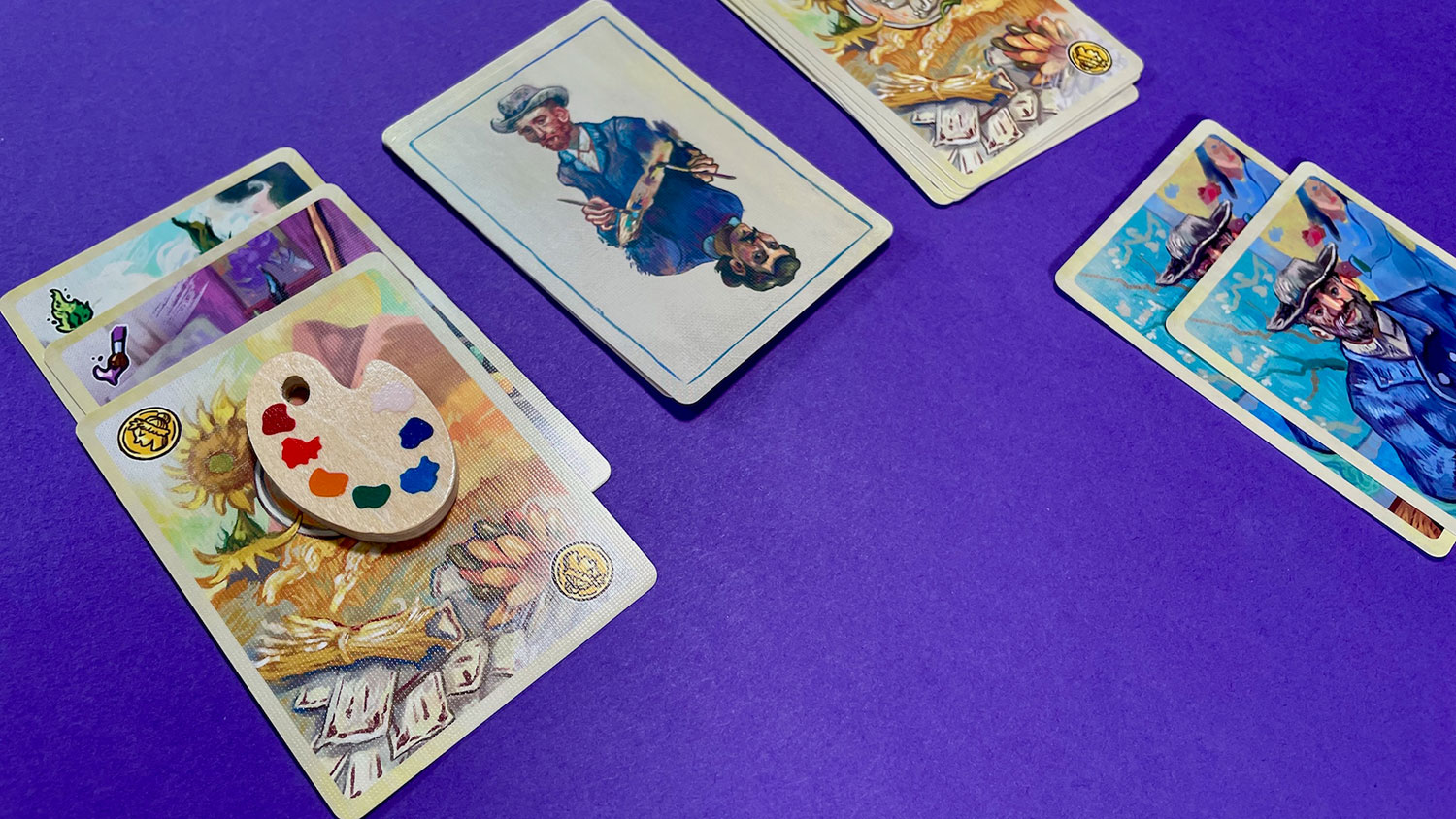
One of the key aspects of the game state is the initial two-card exchange that determines the starting ranking of the Elements. This variable ladder climbing aspect was interesting, I’ll give the designers that. There’s something exciting about bumping the value of an Element sky high and making your opponent scramble to adjust their hand strategy. The number of times I could have made an easier Claim but chose chaos instead, dumping an excessive amount of Topic cards to strengthen an Element, was more satisfying than I can put into words.
However, I haven’t objectively figured out whether there’s a deeper strategy to this for hand management that one couldn’t simply pick at random to get the Debate going. I tried both thinking deeply about the two cards to exchange and choosing at random, without either feeling particularly more beneficial than the other. To me, that indicates a weakness in the design rather than a flaw in the players. If they’re going to include a phase in a round, it needs to feel like there are stakes; otherwise, you’re just going through the motions.
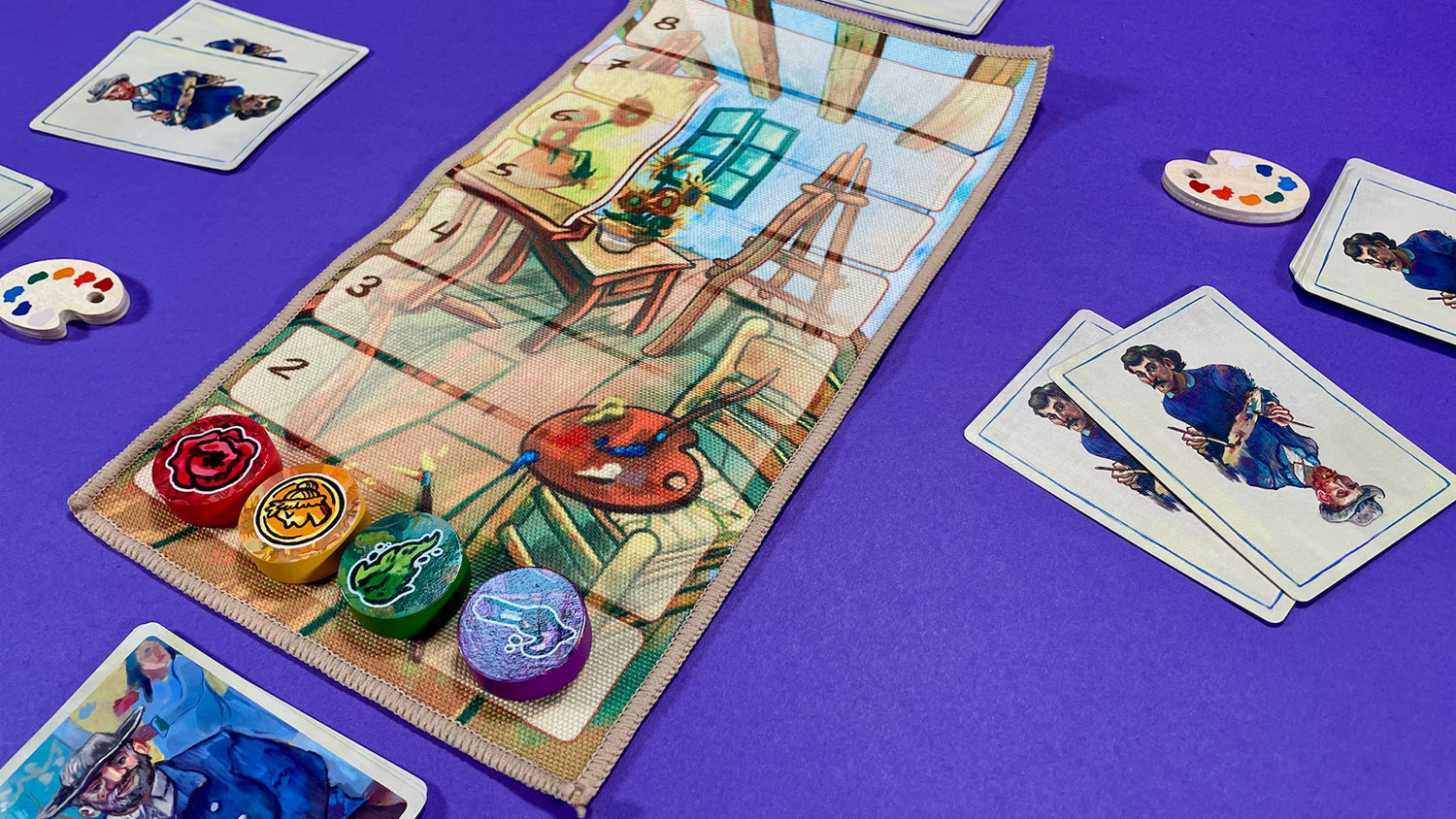
My first major issue with this game is the housekeeping when changing the ranking of Elements. As we discussed in the Gameplay Overview, you must have enough Topic cards to spend to strengthen the Element and then an additional card on top of that to make a Claim. There were several points where the starting player thought they needed to spend additional Topic cards to make the initial claim, and there were also times when a subsequent player tried to make a Claim but didn’t have enough cards to strengthen because they were one short for the Claim card itself. Undoing some of these mistakes was an absolute nightmare.
My other issue with this game is the fact that on a third playthrough, the strategy dies down completely, and players can become resigned to their choices. There’s nothing stopping anyone from just dumping their cards during a Debate haphazardly since the goal of the game is to get rid of your hand first. Arguably, once you have a good idea of what your opponent has in their hand, it devolves into just locking them out of making claims rather than anything impressive you’re doing with your hand.
Final Thoughts:
The Yellow House is for players who are looking to dip their toes into trick-taking games that have a casual atmosphere with low pressure and low stakes. Experienced players who love trick-taking and have played several games with that mechanic would not enjoy the variable ladder climbing of this game because it starts to be more about hand management than serious strategy. Anyone looking for deep thematic integration surrounding the tension between Van Gogh and Paul Gauguin will be very disappointed as well. If you can simply focus on the pretty card art and the simplistic nature of the gameplay, then this might be for you.
Final Score: 2 Stars – Explore the tension between Van Gogh and Paul Gauguin in this trick-taking card game with variable ladder climbing.
 Hits:
Hits:
• Art style is visually pleasing
• Easier to teach on a second play
• Ladder climbing makes tricks fun
Misses:
• Weak theme integration
• Confusing ranking system rules
• Limited replay value