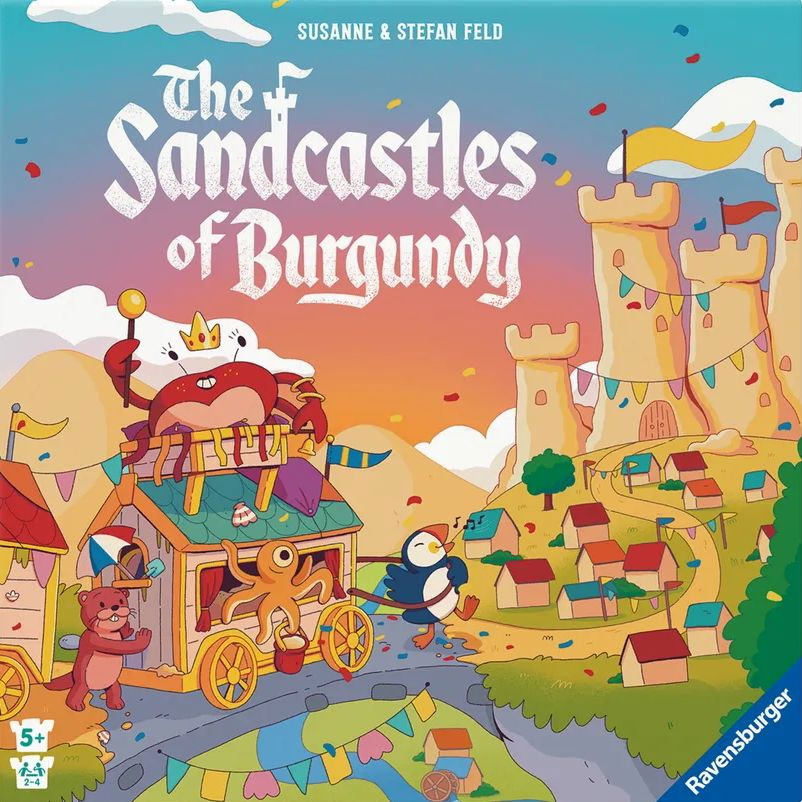
 It is well known around Board Game Quest Headquarters that I am the resident Stefan Feld aficionado/fanboy/devotee/stalker. Naturally, then, when the BGQ Bulletin Board announced an assignment to review a new version of my favorite game of all time, I jumped at the chance. The next day at my desk—neatly nestled beside my daily BGQroissant and Cthulatte breakfast—sat a copy of The Sandcastles of Burgundy.
It’s a stripped-down and family-friendly version of Stefan Feld’s most enduring game, this time a co-design with his wife Susanne Feld. Would this intentionally lighter game for 2 to 4 players that takes roughly 20 minutes to play scratch the same itch as its big brother? Only one way to find out. So, I threw on my fave pair of board shorts, some snazzy polarized lenses, as many plastic shovels as I could find, and dove into the review.
Gameplay Overview:
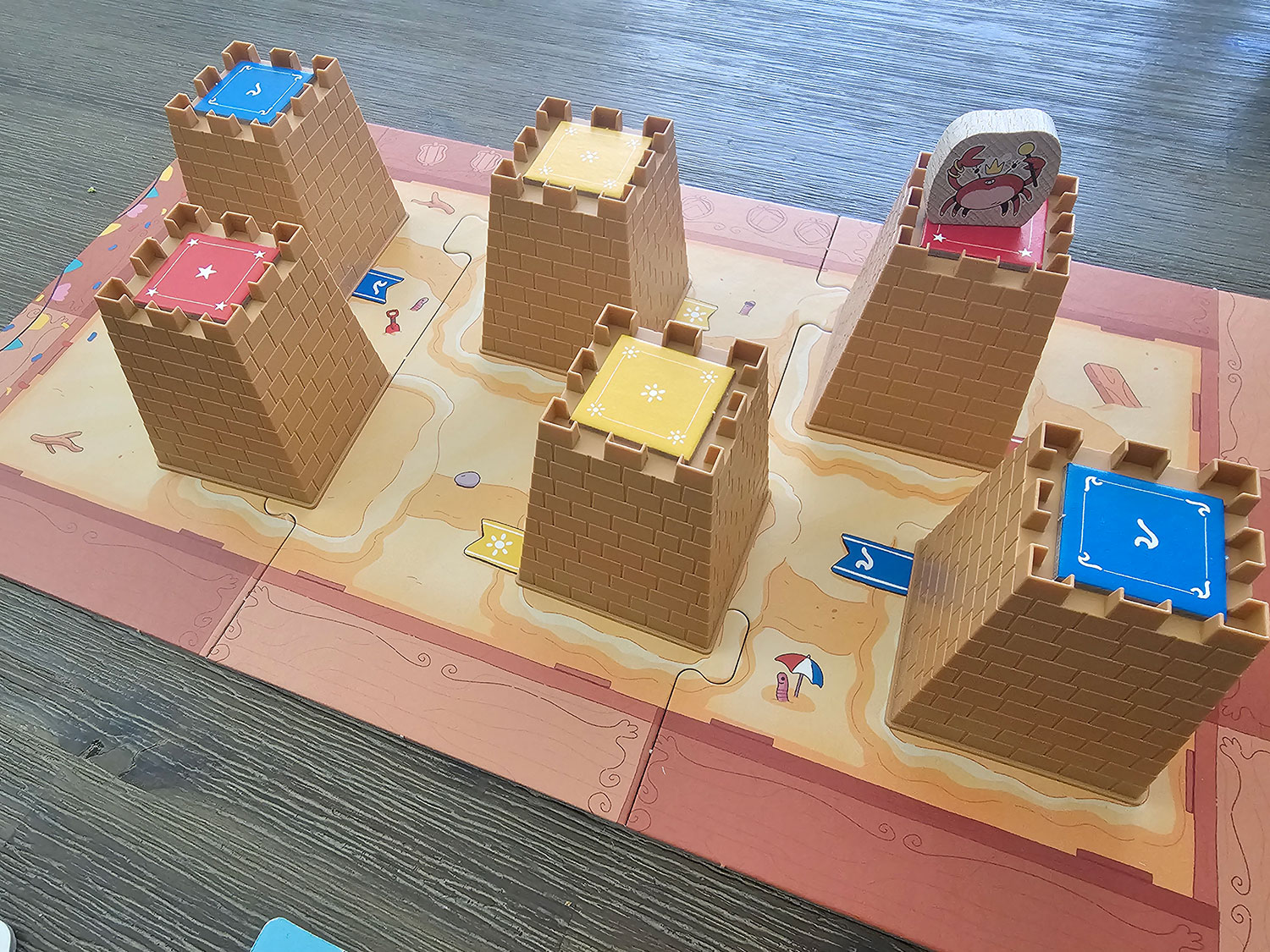
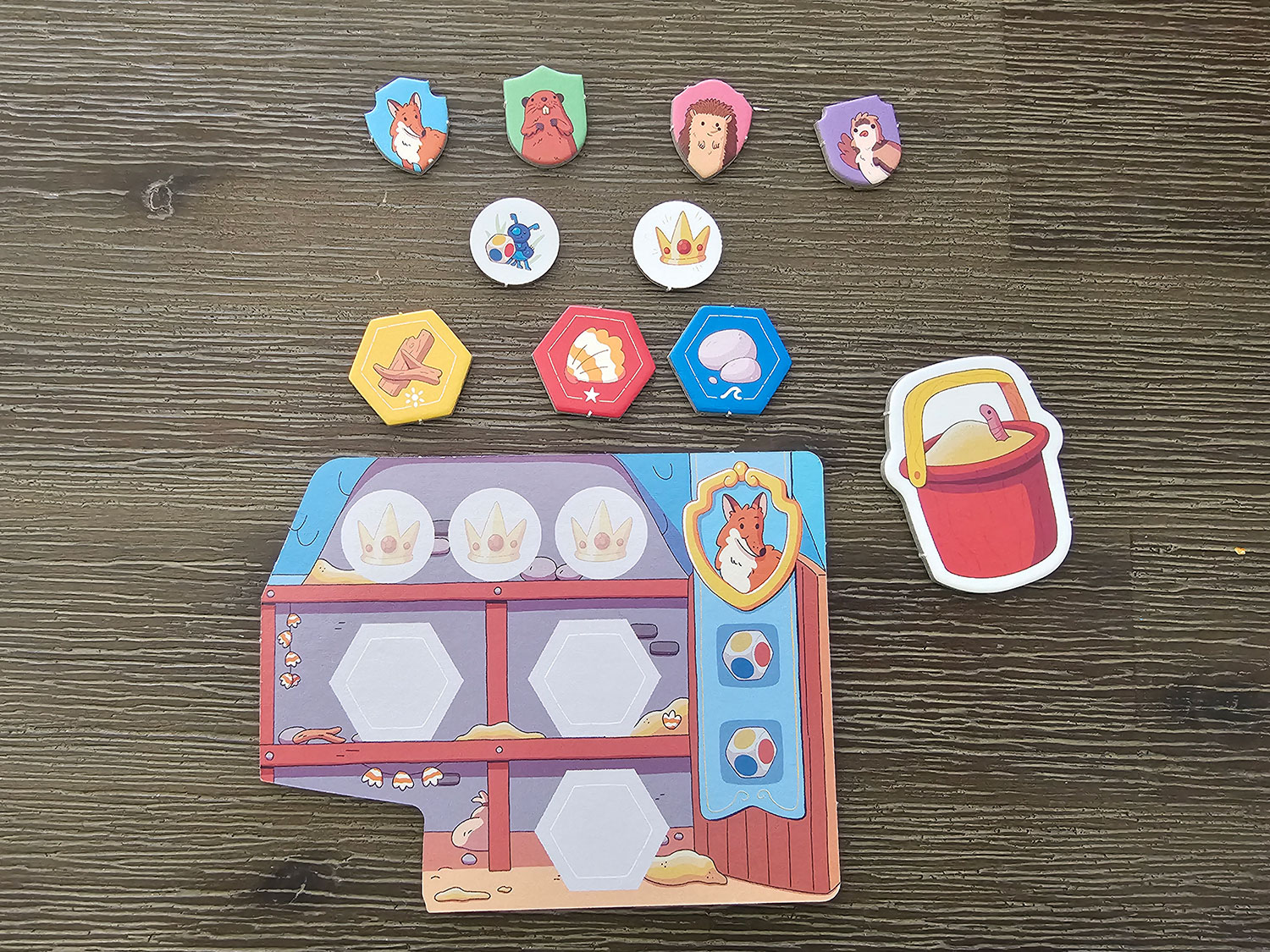
Given that this is primarily a children’s game, the ruleset for The Sandcastles of Burgundy is relatively lean. Each turn, players will roll their dice and have a pair of colors to work with on their turn. These colors will determine which of the six sandcastles they can search under for decorations. The decorations in question will be added to each player’s board (we’re sprucing up our villages for Queen Crab (obviously)), and players receive points at the end of the game for completing their village’s shops by adding two decorations to each. The first player to finish decorating a shop in each color will also be visited by a matching, friendly animal figurine for an extra point.
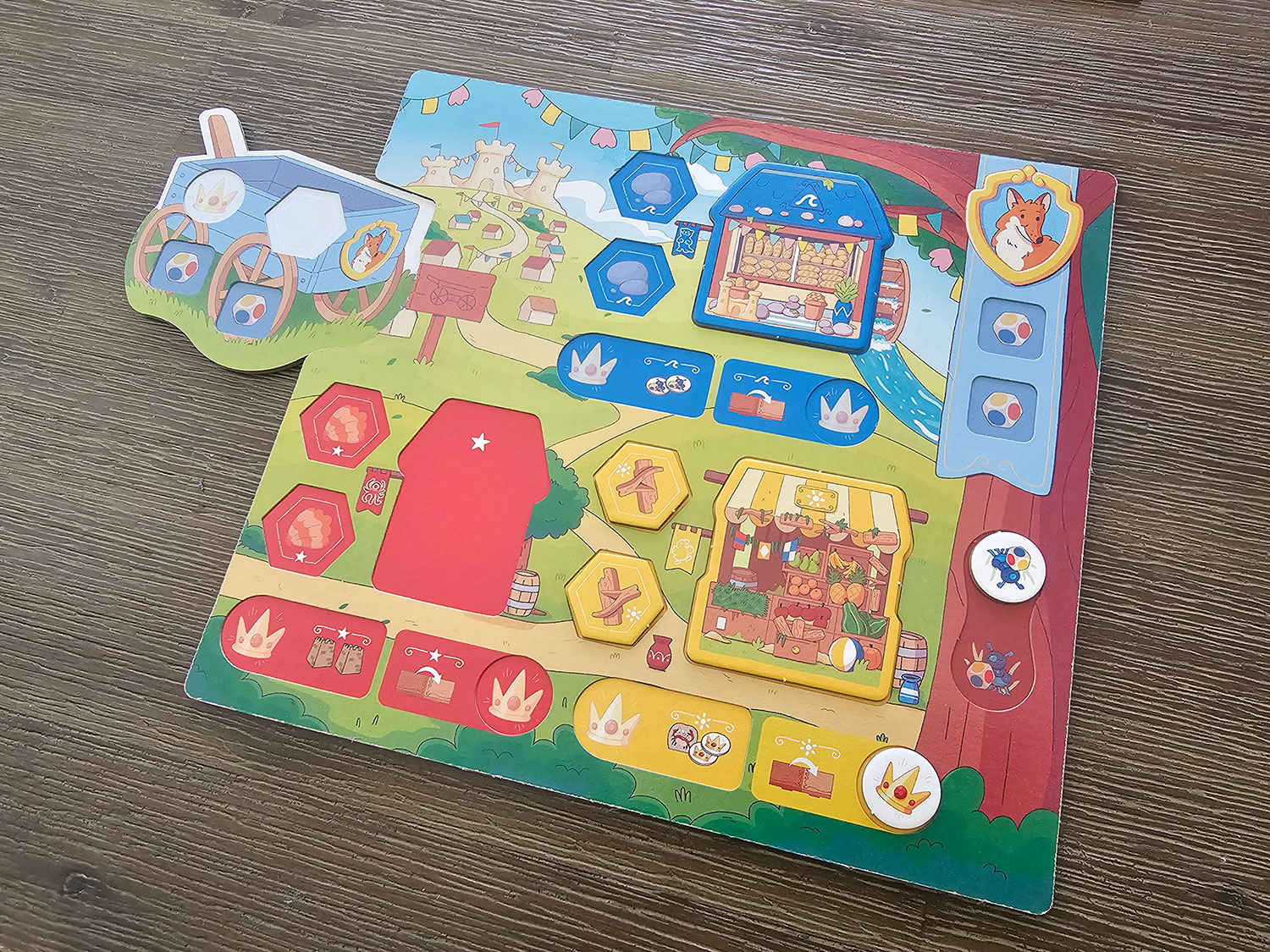
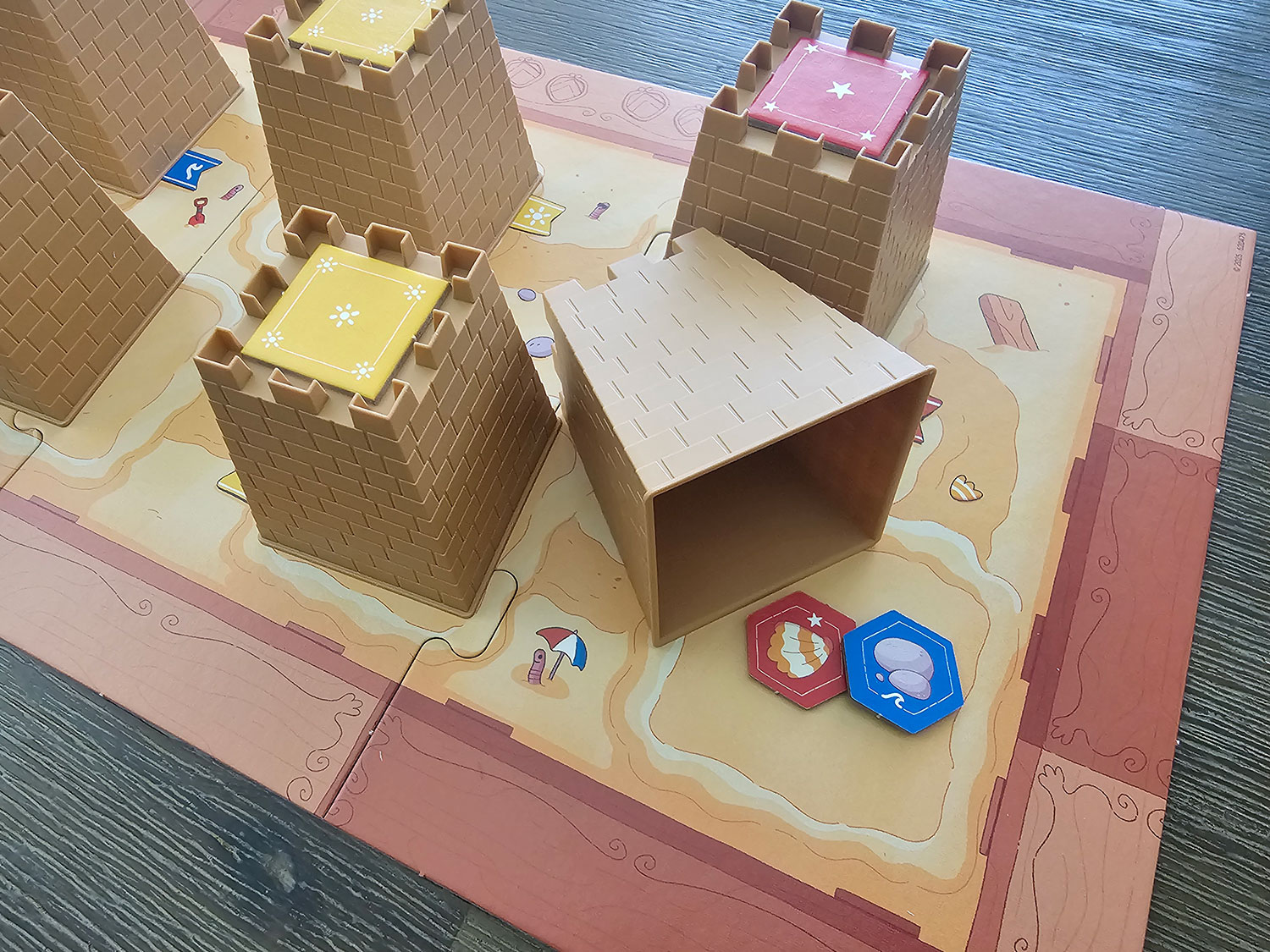
If a player chooses a castle with a color they don’t need or without a decoration at all, then they’re out of luck, which adds a slight memory element to the game. Players also can’t immediately decorate their shops; they first need to collect the decoration from under the castle and then, with a later action using the same color die, transport the decoration to the shop to decorate it.
The game also includes an “advanced” version and a mini expansion. The former adds some basic player powers (things like “roll doubles and earn a wild die token for later”), and the expansion includes a few different powers you can mix in for the advanced version.
The game ends when a player has made it to the end of the score track (roughly a dozen points depending on player count), and whoever has the most points is the king of all sandcastle-adjacent villages (or something).
Game Experience:
If you were expecting more from those rules, I guess that’s a function of expecting the game to be a closer reimplementation of the original. As it stands, there’s very little that ties directly to The Castles of Burgundy aside from players choosing an action based on the die and the notion of “delaying” tile placement until a section action is triggered. In that way, it’s an interesting thing to include in a children’s game.
“You can’t place that tile just yet, Timmy. You’ll have to store it for a different turn.”
“I understand that, Dad, but my name isn’t Timmy.”
Even the best children’s games don’t typically delay their rewards behind a two-step planning process, and that is a fun wrinkle for very young players. It also is a decent gateway concept to the type of design that makes The (Actual) Castles of Burgundy special; players can essentially do whatever they want but have to be adaptable just in case they don’t get the exact roll they were hoping for.
The game then adds other smaller elements that add a little bit to the proceedings. There’s a memory component which is mildly interesting, even though as an adult playing the game felt very basic and moving the pieces that you needed to remember each turn underneath the large sandcastles was more fiddly than it was fun. But for very young kids, I imagine that wouldn’t be an issue.
There are also the two versions included in the game (and the expansion), and while I can’t imagine ever suggesting playing the basic version with children over the age of five, it’s there as an option to ease them into the game. And while I wouldn’t go so far as to say the game is overproduced for what it is, there are some neat components in the box, including the aforementioned large, plastic sandcastles and dual-layer boards that do a nice job of laying out all places for all the stuff players will need to store. Some of the things are a bit silly even for a children’s game (the cart you use to thematically deliver decorations to and from your board is a little goofy save for plays with the youngest of children), but all in all it does add to the whimsical nature of the project as a whole.
Final Thoughts:
In general terms, I had fun playing The Sandcastles of Burgundy. We here at Board Game Quest don’t officially give “ratings” to children’s games, so this will not get a score in the traditional sense, but I do recommend it for very young children who are still curious about the large, fancy-looking games their parents play when they’re off coloring and eating mud (or whatever it is kids do).
My kids have aged out of games like this and are basically ready to start playing the original Castles of Burgundy, so this is unlikely to make it back to my gaming table anytime soon. I’m also not convinced that it adds anything particularly special to the kid-game genre for it to have a lasting impact on the hobby. It does hint at what you might expect in some of Feld’s bigger games, however, and, in that way, it’s a welcome addition to his overall canon.