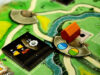
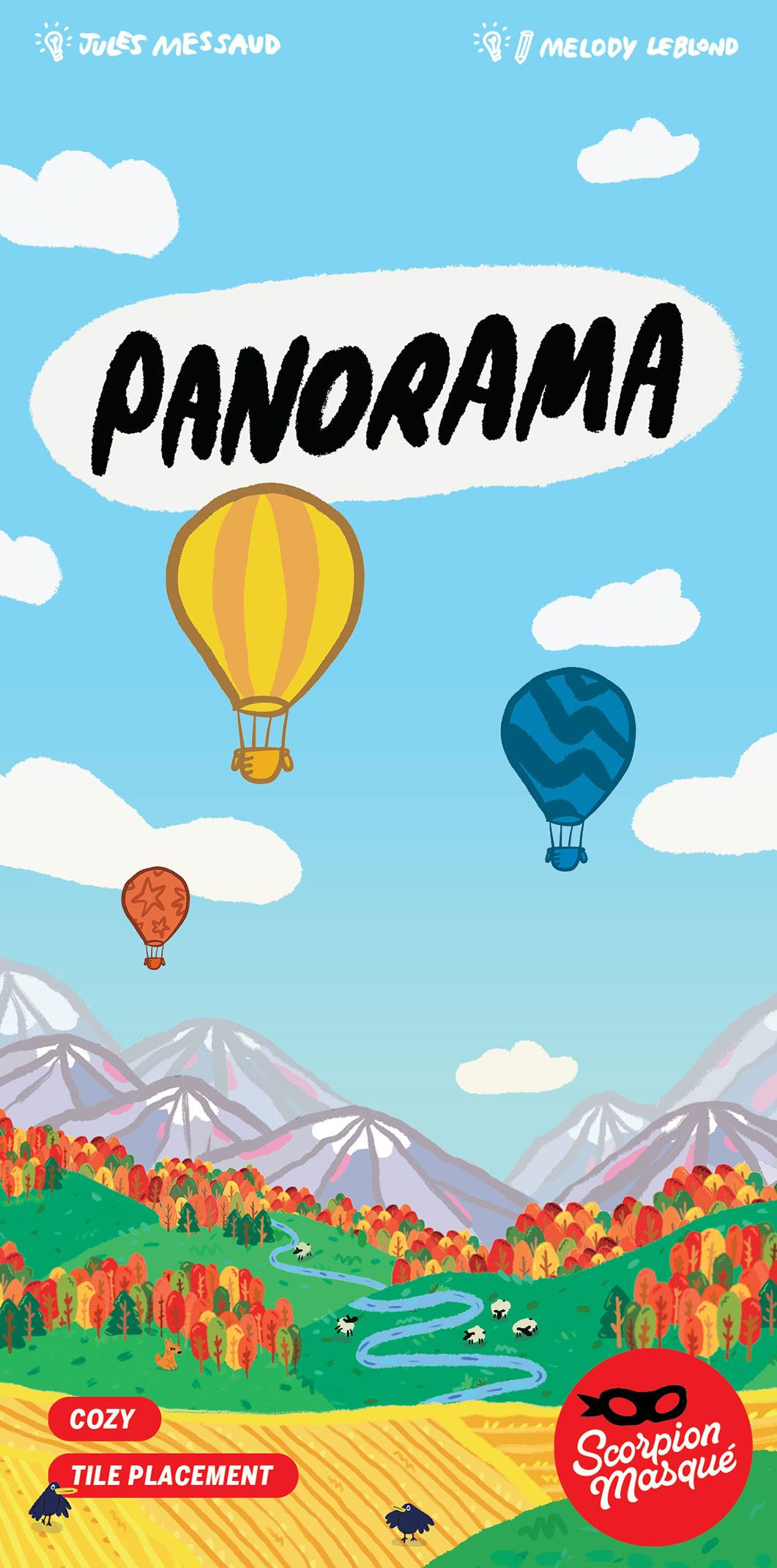
 When I hear the words “hot air balloon” and “panorama” used to describe a board game, I expect a game with gorgeous table presence, breathtaking views, and a serene, cohesive aesthetic. PARKS, by Henry Audubon, promises beautiful scenery, and it delivers. While I didn’t expect Panorama to have artwork as gorgeous as PARKS, I did expect it to at least have a cute, if not pretty, flowing landscape of scenery as I sailed through the clouds.
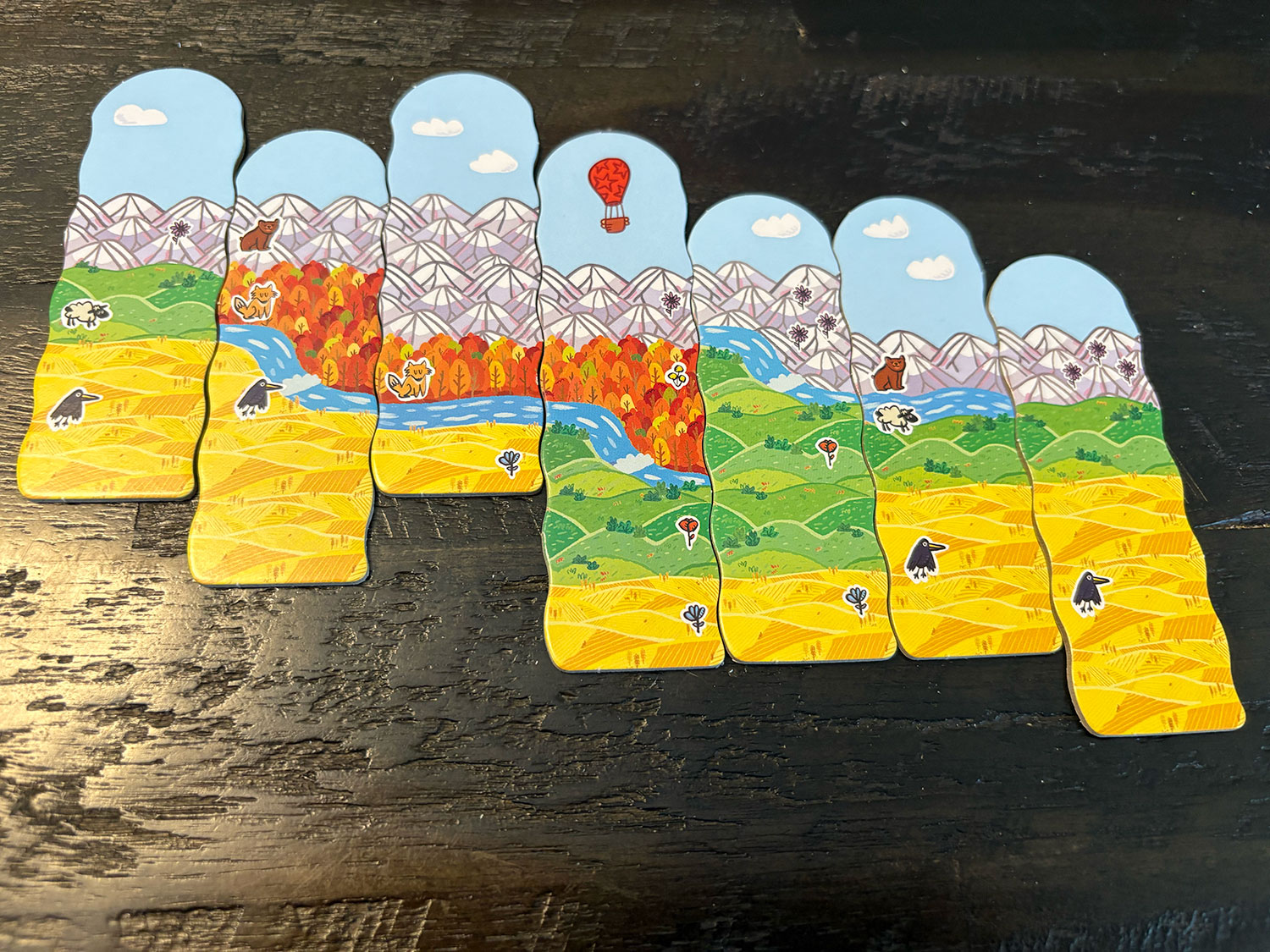
Unfortunately, once the balloons land and you actually look at the landscape you have built, the illusion kind of pops. Instead of a sweeping vista, you are left looking at a disjointed, clunky puzzle that doesn’t quite live up to its name.
The 2026 release by Scorpion Masqué tries to offer a relaxing ride, but it ultimately feels like an inelegant game design.
Gameplay Overview:
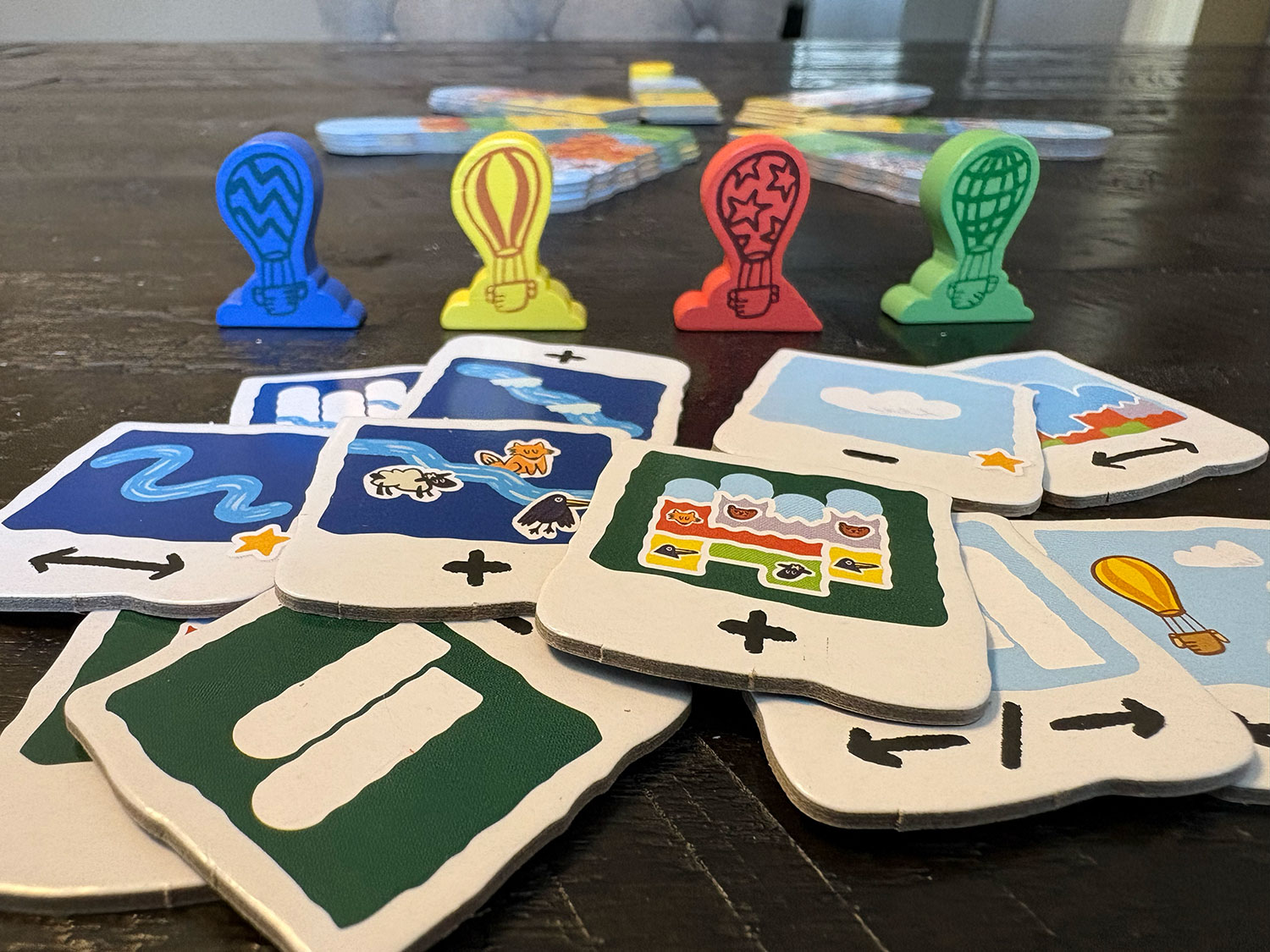
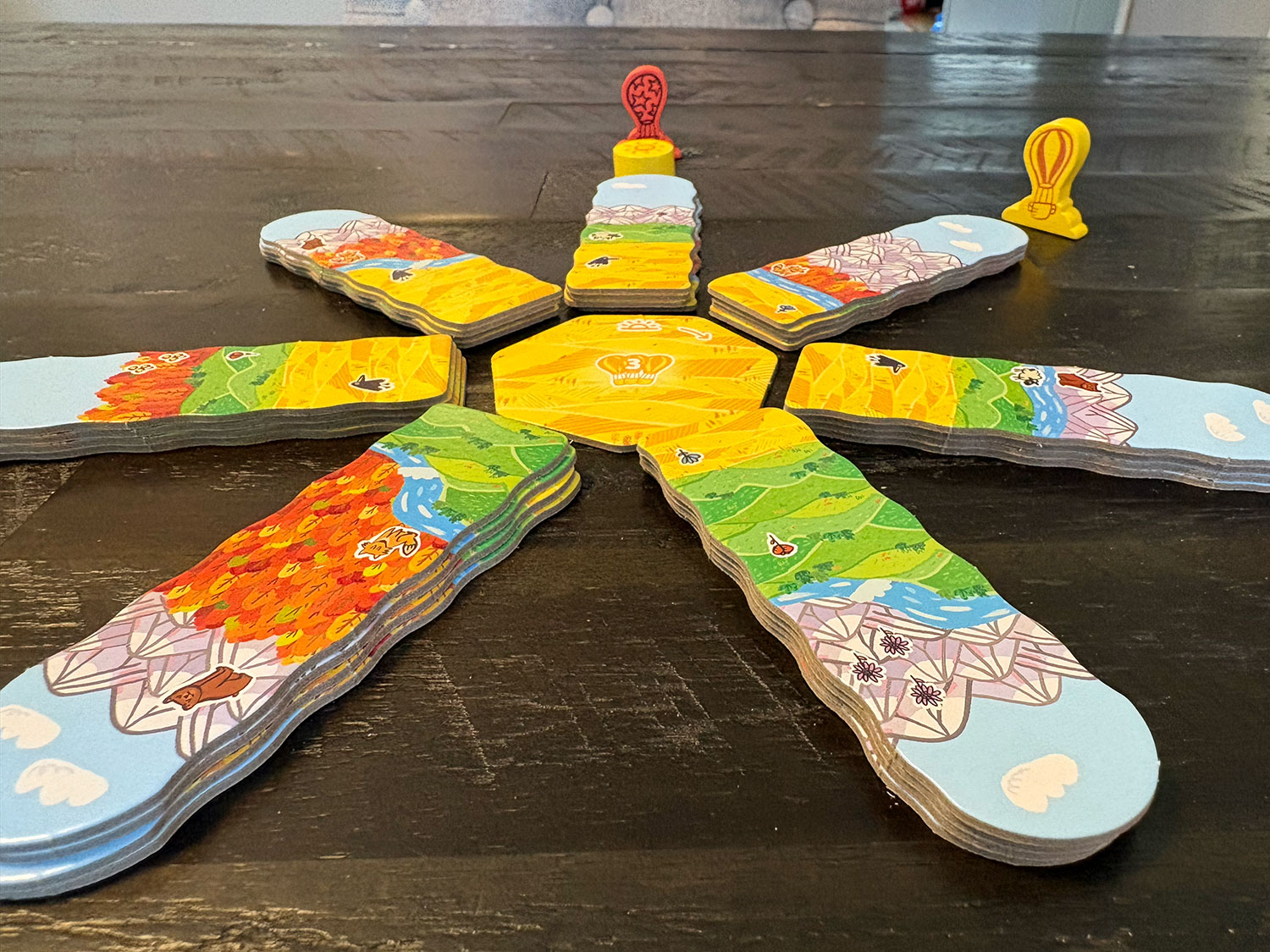
The core loop of Panorama is pretty straightforward and easy to learn. A series of terrain tile stacks of 4 is arranged in a large circle on the table, and players move their hot air balloon tokens clockwise around the ring to draft them. It uses a turn-order mechanic where whoever is furthest back goes next—meaning you can skip ahead to grab a great tile, but you risk giving your opponents multiple free turns in a row.
Once you take a tile, you add it to either the left or right side of your expanding personal horizon. The tiles feature different types of environments—like forests, mountains, and prairies—populated by various animals and flowers.
The scoring relies on some simple math. At the end of the game, you look at your connected terrain zones and multiply the number of animals by the number of flowers inside them. For example, a forest zone with 2 foxes and 3 flowers nets you 6 points, while a mountain zone with 2 bears and 6 flowers grabs you 12.
When a player takes the last tile of one of the stacks, that is their last turn in the game, and the other players get one final turn.
Game Experience:
The game sets up and plays fairly quickly, which is nice for a light game. Both players I played with independently commented that it reminded them of Kingdomino. There’s definitely overlap in game concept, and other than the circular setup in the middle, there is nothing new in this game.
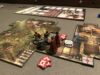
Because the tile stacks are set up in a large circle, it causes players to constantly pick up the panorama pieces just to see if it accomplishes what they want on their personal layout. Because players are frequently picking up these tiles to see if they work on their panorama and putting them back down, the stacks can get a little messy. This constant handling takes up a bit of time and bogs down what should be a smooth flow.
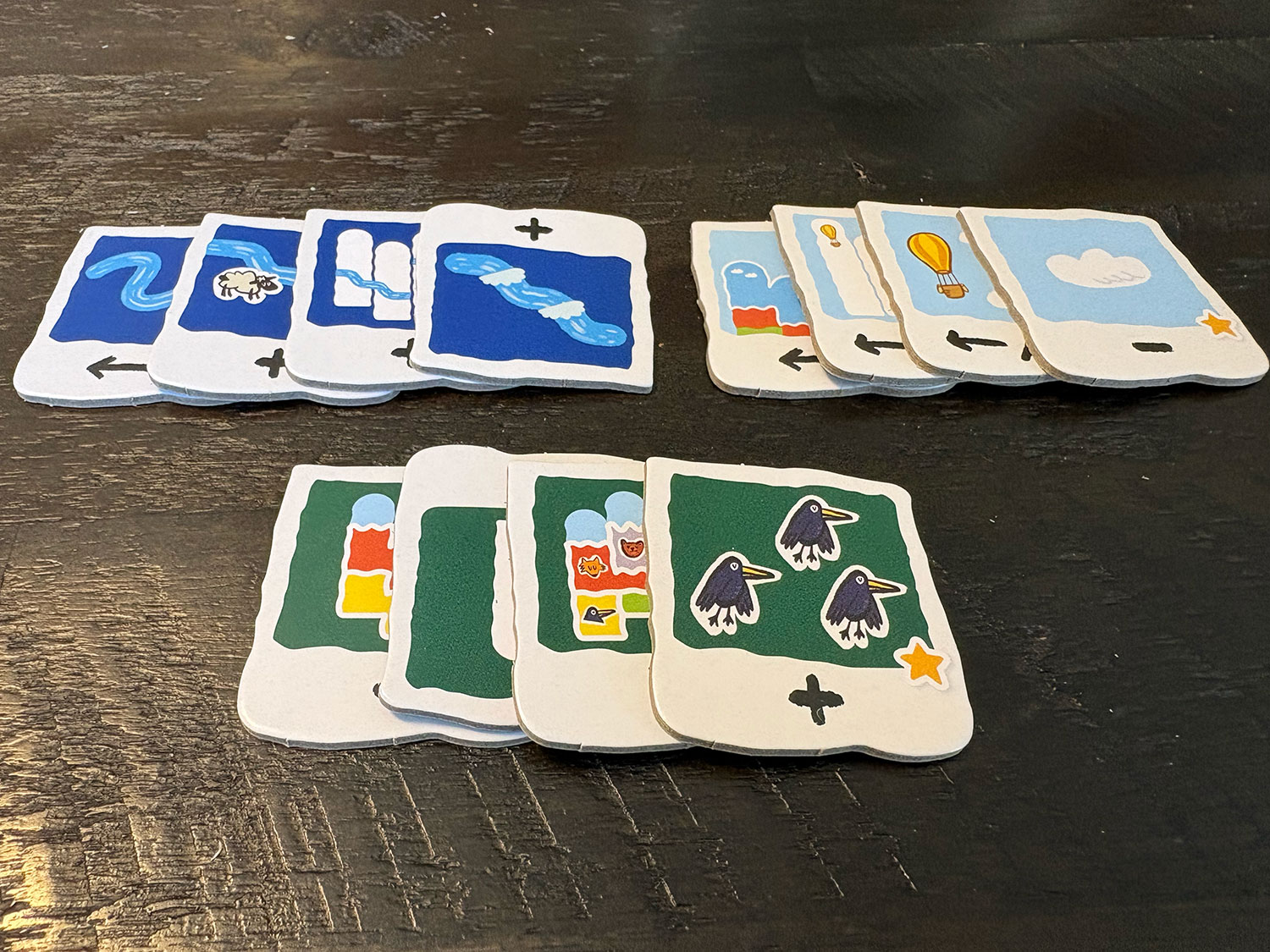
There is also a real mathematical trap hidden under the cozy theme. If a player really wanted to win, they could easily stall the table by mathematically reviewing every single possibility and calculation before taking their turn. In my opinion, if you play it that way, it completely takes away from the relaxing hot air balloon ride.
But my biggest disappointment with the game comes down to the final visual presentation.
There are definitely some good ideas in this game, but it just feels unfinished. Individually, the pieces look great, and the artwork is genuinely cute. But when you place your pieces down, your terrain will often be disjointed, breaking up the environments in very unnatural ways. The edges just do not flow seamlessly into a beautiful, flowing scenery. While discussing this with one of my opponents after the game, he looked down at his board and said, “Look at my panorama, it’s straight up ugly.” I had to agree. Together, the final display looks pretty random and messy.
Sadly, in the case of these tiles, “the sum is greater than its parts” does not apply.
In Panorama, you’ll either always pick the tile that gives you the most points and fits your horizon, or choose a tile you don’t necessarily want just ahead of your opponents so they don’t get too many pieces before your next turn. Occasionally, if you get lucky, the tile you want is just ahead of your opponent. It’s certainly a tactical game, but I don’t feel there’s a ton of actual strategy because there are very limited decisions to make.
Final Thoughts:
Ultimately, Panorama is a bit of a mixed bag. When you see the theme, you expect a beautiful, flowing experience, but the actual puzzle leaves you with a disjointed, random visual mess. It has some good ideas going for it, but the final execution just didn’t connect for me. Oddly, due to its relaxing nature and short playtime, I would consider playing it again if asked.
All that said, at the end of the day, if you just want to go on a hot air balloon ride and are happy to go where the wind takes you, it’s a relaxing game you may want to check out.
Final Score: 3.5 Stars – I might rate it higher if I didn’t care what the Panorama looked like at the end.
 Hits:
• Sets up quickly and is very easy to learn.
• The individual cards and animal illustrations look great and have a cute style.
• Simple turn-order mechanic that keeps players from leaping too far ahead without a penalty.
• A lot of replay value is built into the tile mix and end-game objectives.
Misses:
• Inelegant design; finished panoramas look disjointed and visually messy instead of forming a flowing landscape.
• The circular setup, while thematic, invites tedious tile handling, causing the stacks to get messy as players constantly check their layouts.
• Prone to downtime if a player decides to min-max the animal and flower multiplication math.