



 Are you searching for something to watch in the doldrum days of summer reruns? Do you find yourself endlessly scrolling through the options on multiple streaming services looking for something that catches your eye? Do you then settle on a show that you’ve seen a hundred times already when the scrolling gets to be too much? We’ve all been there. It’s an adage as old as television: there’s nothing good on. I feel like having more options has only made this problem worse, not better.
Do you want to continue the endless scroll through less than stellar options, or do you want to grab a board game? I think I know the answer. And before you say, ‘yea but what should we play?’ I have just the game. A game that lets you decide which TV shows to air and when. So pull up a chair; this time there is no one to blame but yourself if you don’t like what’s on.
Gameplay Overview:
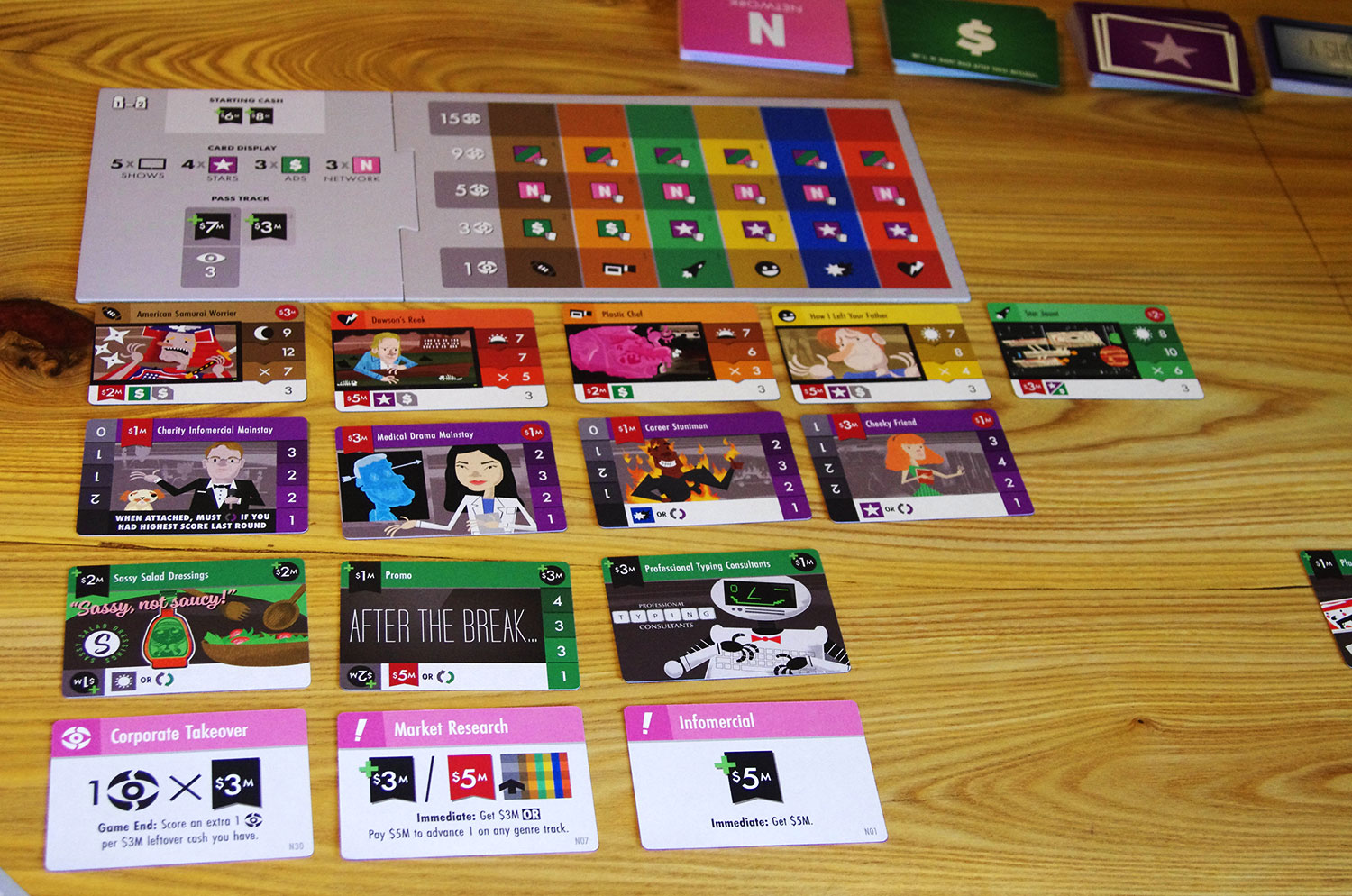
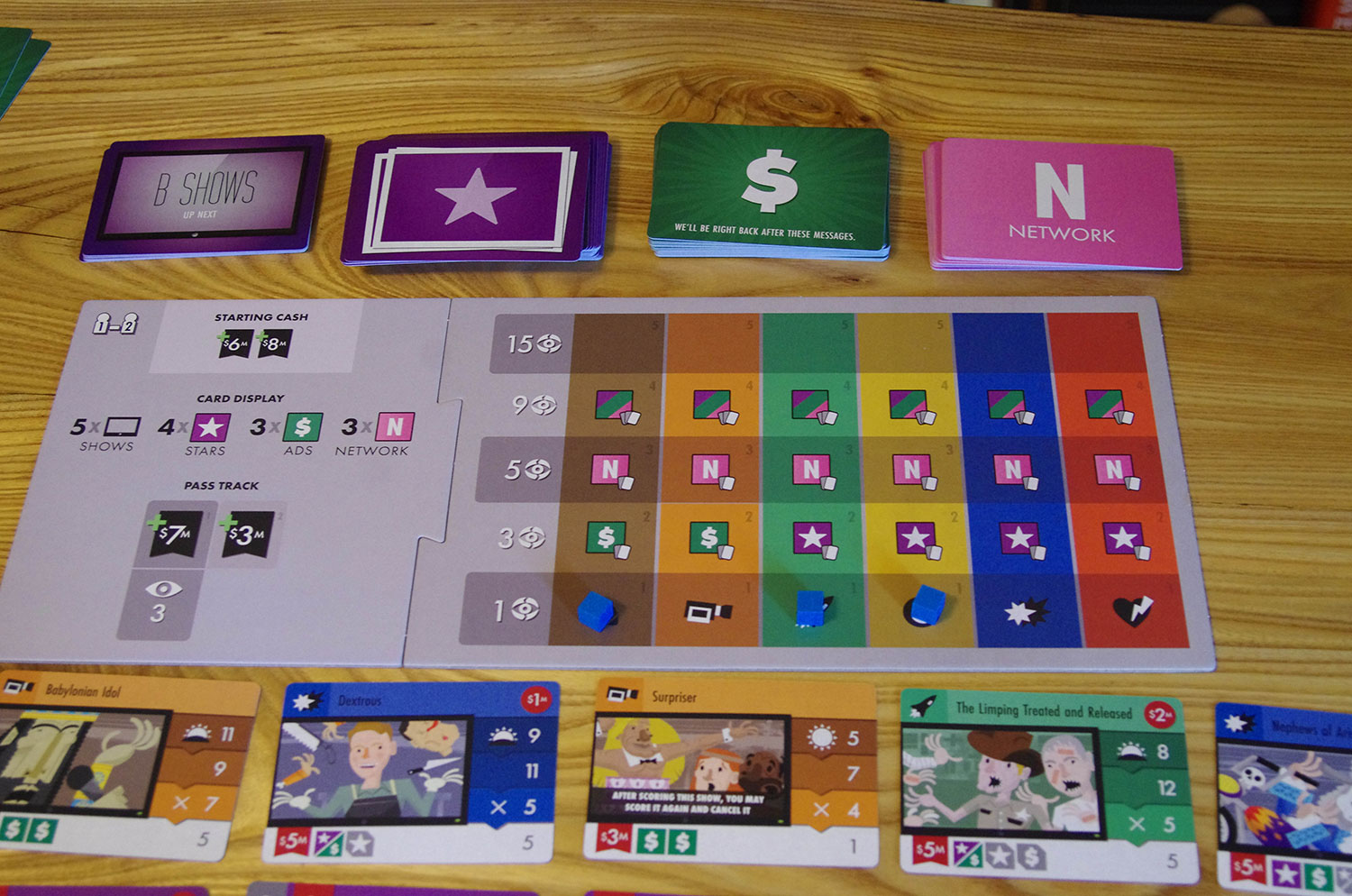
The Networks: Primetime plays over four rounds. Each round lasts until players have run out of actions. On each turn, players can take one of six actions. Actions like signing a star, signing an ad, or producing a show are how you build your lineup, earning viewers. You can also replace actors on shows that are already running (I hate it when they do that). There are also network cards that you can collect as an action. These provide bonuses, some immediately, some at game end. If you are unable to perform any of those actions, you can pass. Once two players pass, the round ends.
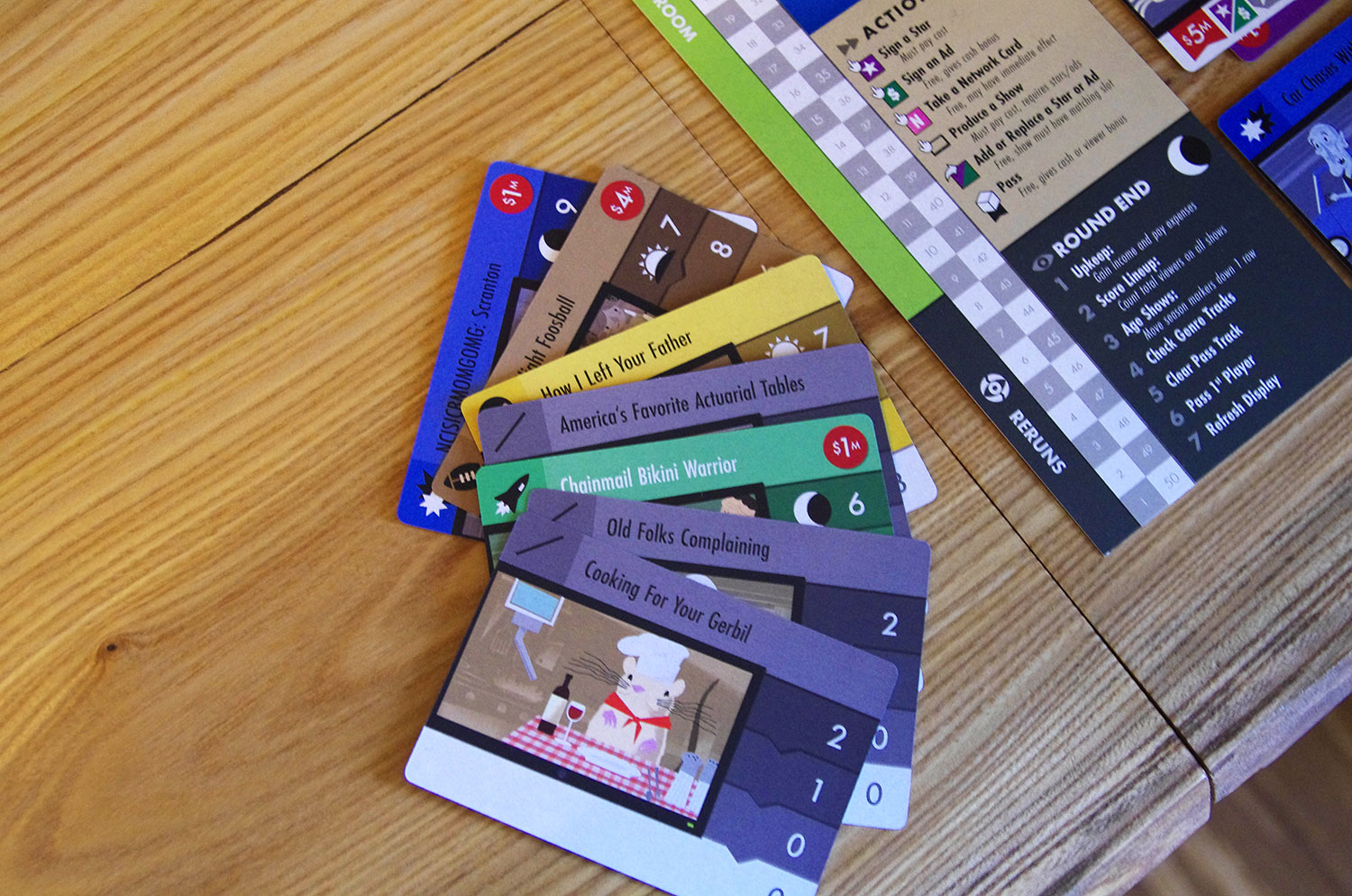
Producing a show is the heart and soul of the game, and in order to do that, you have to meet the show’s requirements. First, you have to be able to afford it. Some require stars or ads, or even both. Shows also have preferred time slots. Meeting time slot requirements means more viewers. You have different options for stars; some stars are better in certain genres and bring in more viewers when assigned to those shows. Ads earn you money both when you sign them and again when the show is running.
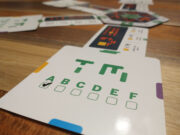
At the end of each round, you earn income (ads are good for something), pay your expenses, and then tally up viewer totals. Record your round score on the handy wipe-off board provided with the game. At the end of scoring, each show ages. Then you deal fresh cards and start the next round.
At the end of round four, you perform regular round-end scoring once more, then game-end scoring. Game end scoring earns viewers for re-runs (shows you took out of your lineup), any end game bonuses from network cards, and remaining funds. The highest score wins.
If, like me, you are a solo player, you have an opponent in the form of an automa deck. Each card in the automa instructs you to pull random cards from those available. If the automa can’t remove a card, it ‘passes’. If this happens twice, the round ends. If you pass once, the round ends. The score chart at the end of the rulebook lets you know how well you are doing.
Game Experience:
This review is based on solo play only.
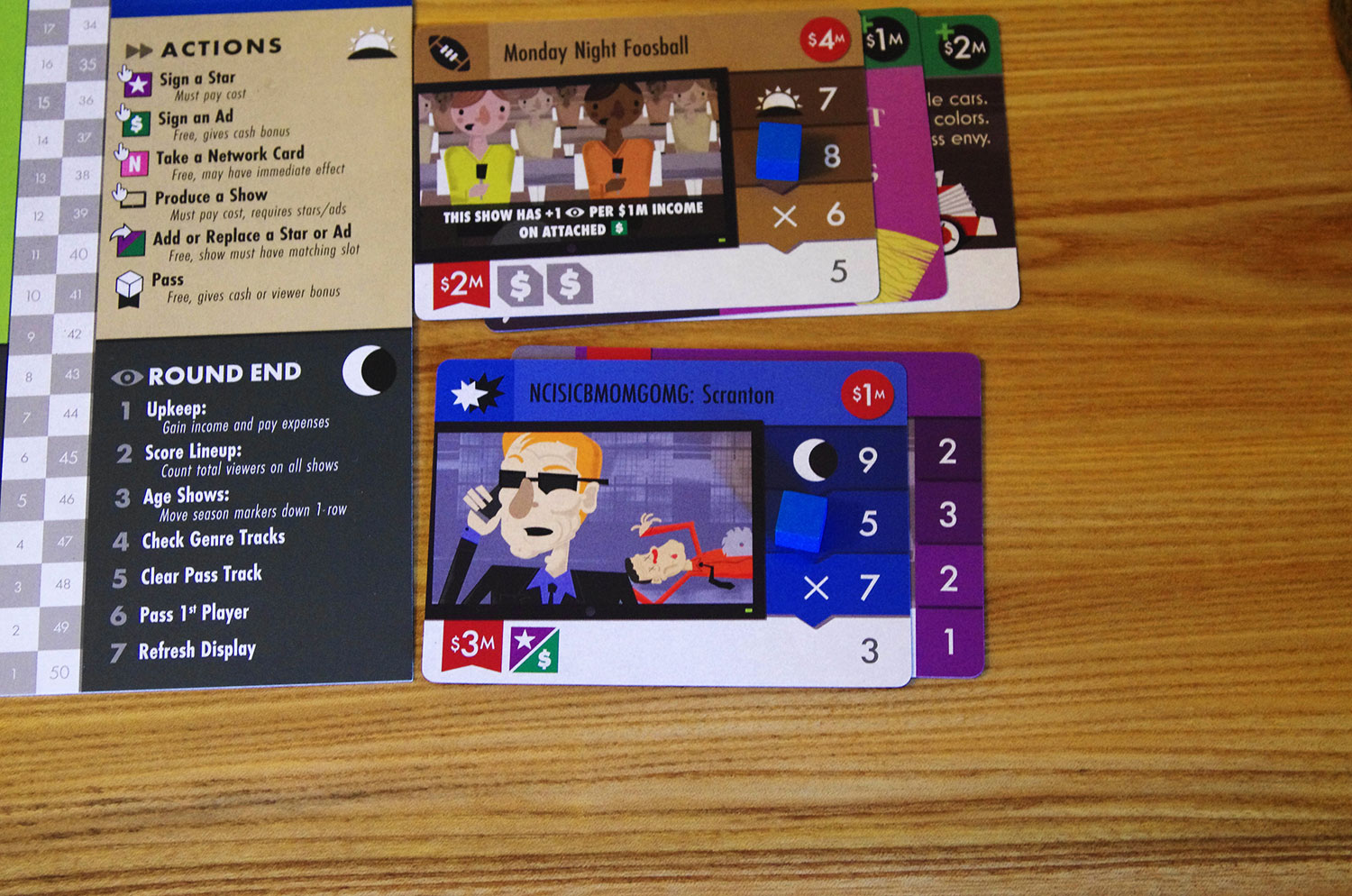
The Networks: Primetime is a quick to learn, fun game. It only takes one or two rounds to get the hang of what you need to do. After that, it’s the mad scramble to set up a really good lineup of shows before your opponent takes the stars or shows you are most interested in. In solo play, the automa does a good job of mimicking another player, and the cards used this round are shuffled back into the deck so you can’t really predict what might be coming up next by learning the deck.
Some rounds are super short with your opponent passing while you were still hoping to sign ‘the guy who dies in everything’ into your midday show. Others see nearly every card removed from the display, and you are passing because there simply isn’t anything left to do. It’s not overly complex, but you do need to be able to adapt as the game goes on.
There are a lot of decks to shuffle, but it doesn’t take too long to set up or reset, making it easy to talk yourself into one more game to see if you can do better this time around.
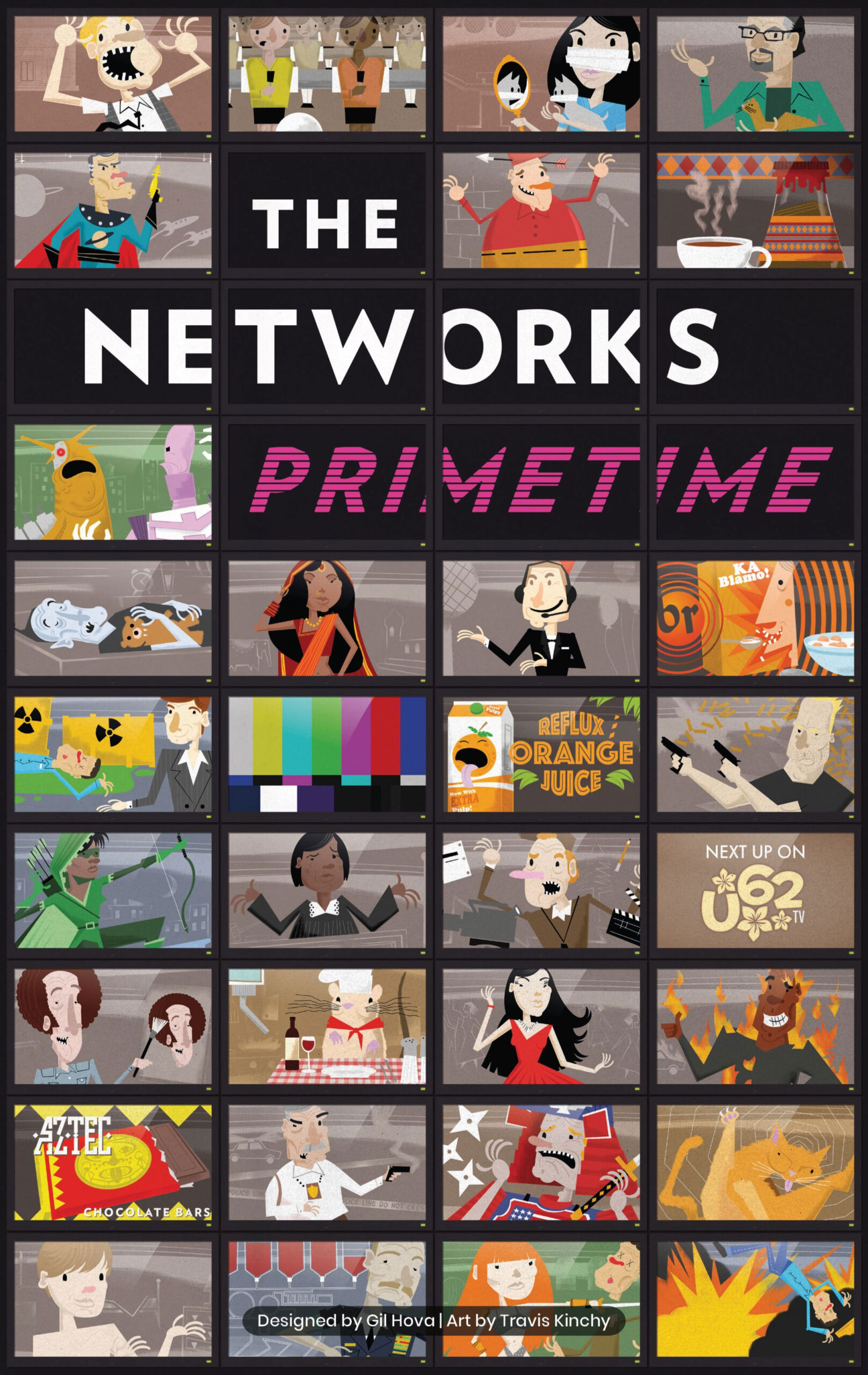
Where this game really shines is the punny names for shows and sarcastic descriptions of stars. Would we spend as many hours in front of the TV watching ‘Throne of Games’ as we did watching Game of Thrones? Well, we are gamers, so we might. I admit though, the image of someone sitting on all those game boxes and likely crushing them is pure nightmare fuel. Do I want to cast ‘the producer who can’t act’? Or buy an ad for Persnickety Pizza? There are lots of tongue-in-cheek jokes which make it hard to play this game without smiling, even if you weren’t able to cast the likeable nobody in ‘Car Chases without Context’.
Final Thoughts:
I opted to be thematic the first time I played and set my soundtrack to a playlist of TV theme songs from my youth. Bad idea, I spent more time on a nostalgia trip than paying attention to what I was doing. So take care in your background music choices. Once I started paying attention to the game and not the music, I enjoyed The Networks: Primetime. It’s a solid game, with quick-to-learn rules and just enough decision-making to keep it engaging, while allowing for some fun conversation. Variable player powers would have added just a little extra, but I think those are in the expansion.
This might not be my most frequent play, but it’s definitely getting back to my table.
Final Score: 3.5 Stars – A quick to learn game with a cute theme and cuter execution of that theme.
 Hits:
Hits:
• Humorous show titles
• Easy learn
• Wipe off score board!
Misses:
• Lots of shuffling between games
• No variable player powers in base game














Whether you’re aiming to phrazle continue a winning streak or simply looking for a fun mental workout, Phrazle is the challenge you’ve been searching for.