

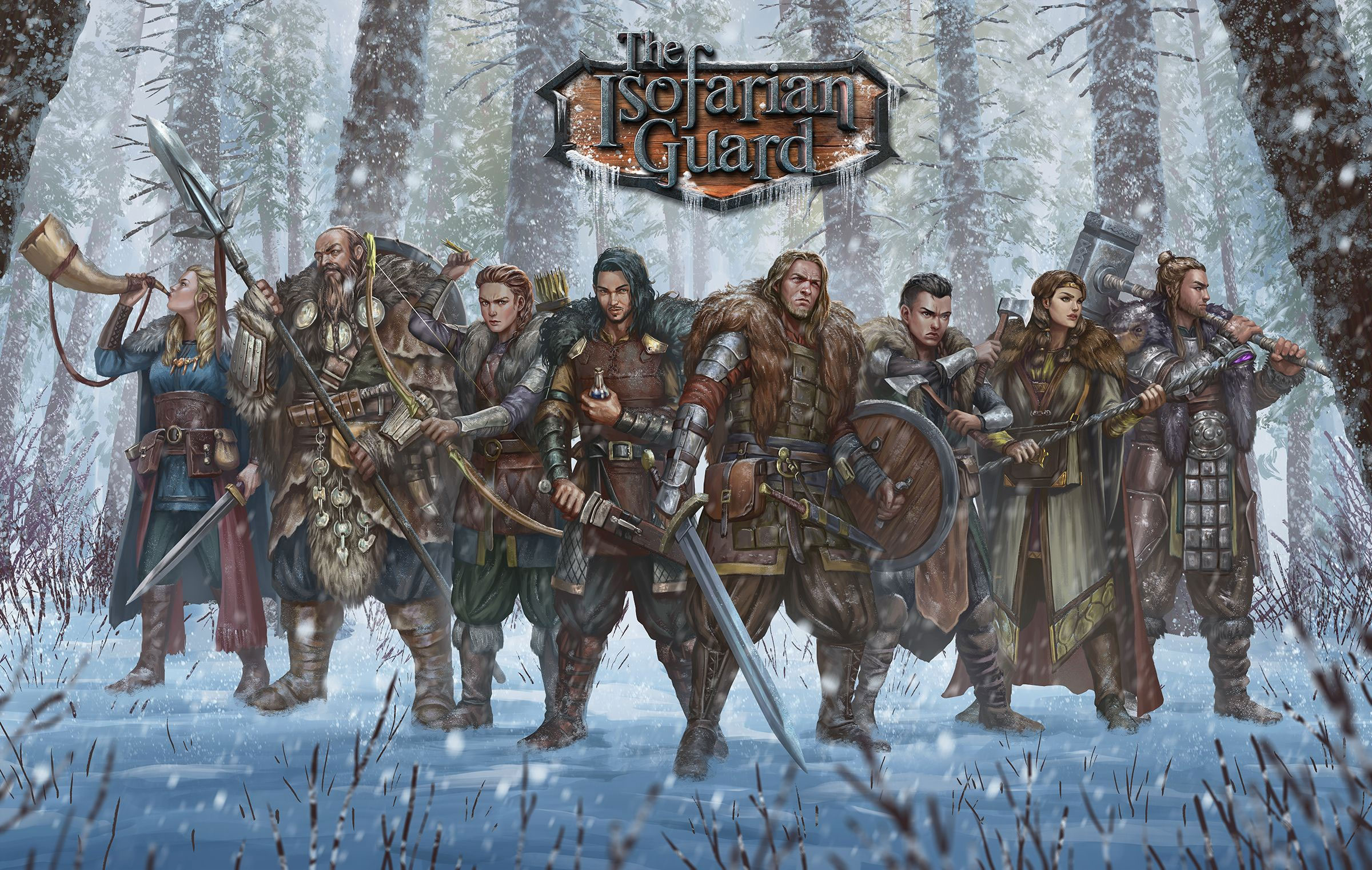
 Welcome to Isofar, a wild land severe in its beauty. As a member of the Isofarian guard, life is never dull. You try to keep the peace among your fellow Isofarians (a never-ending job), as well as deal with constant threats from the aggressive Falmund Empire to the south.
That’s the phrase that first caught my attention for The Isofarian Guard. Published by Sky Kingdom Games, The Isofarian Guard is a narrative-driven, cooperative board game for 1-2 players. Each session you play can be as short as 30 minutes or as long as multiple hours. As it’s a campaign game, each session will build on the previous one. Interested? Let’s dive into this one.
Gameplay Overview:
It would not be possible to recap how to play The Isofarian Guard in a few short paragraphs. While the game is not super complex, there are a lot of moving parts in this open-world adventure game. But here is a brief rundown.
The heart of The Isofarian Guard is a bag-building experience. The box comes with 5 campaigns, and you’ll either control 2 guards if you play solo, or 1 each if you play cooperatively with another player. The game is broken down into exploration passes and encounters. If you’ve ever played an old school RPG, like Dragon Warrior, you know the drill. You walk around the land and get pulled into battles.
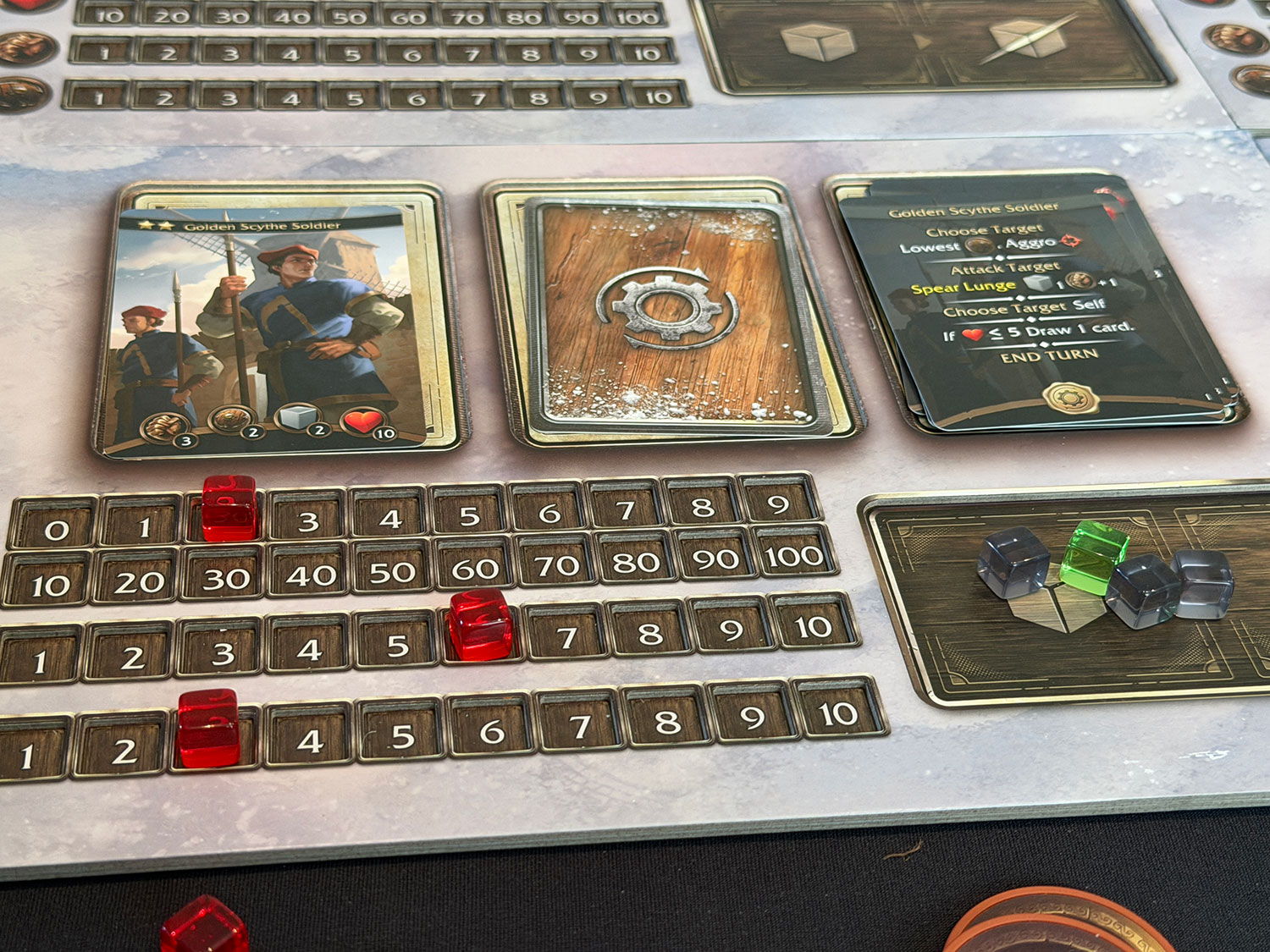
When a battle starts, there are no minis or a board to set up. This isn’t a tactical game where positioning matters. Instead, you face off against up to 4 enemies, each of which is controlled by an AI deck. You’ll alternate between the guards’ turns and the enemies’.
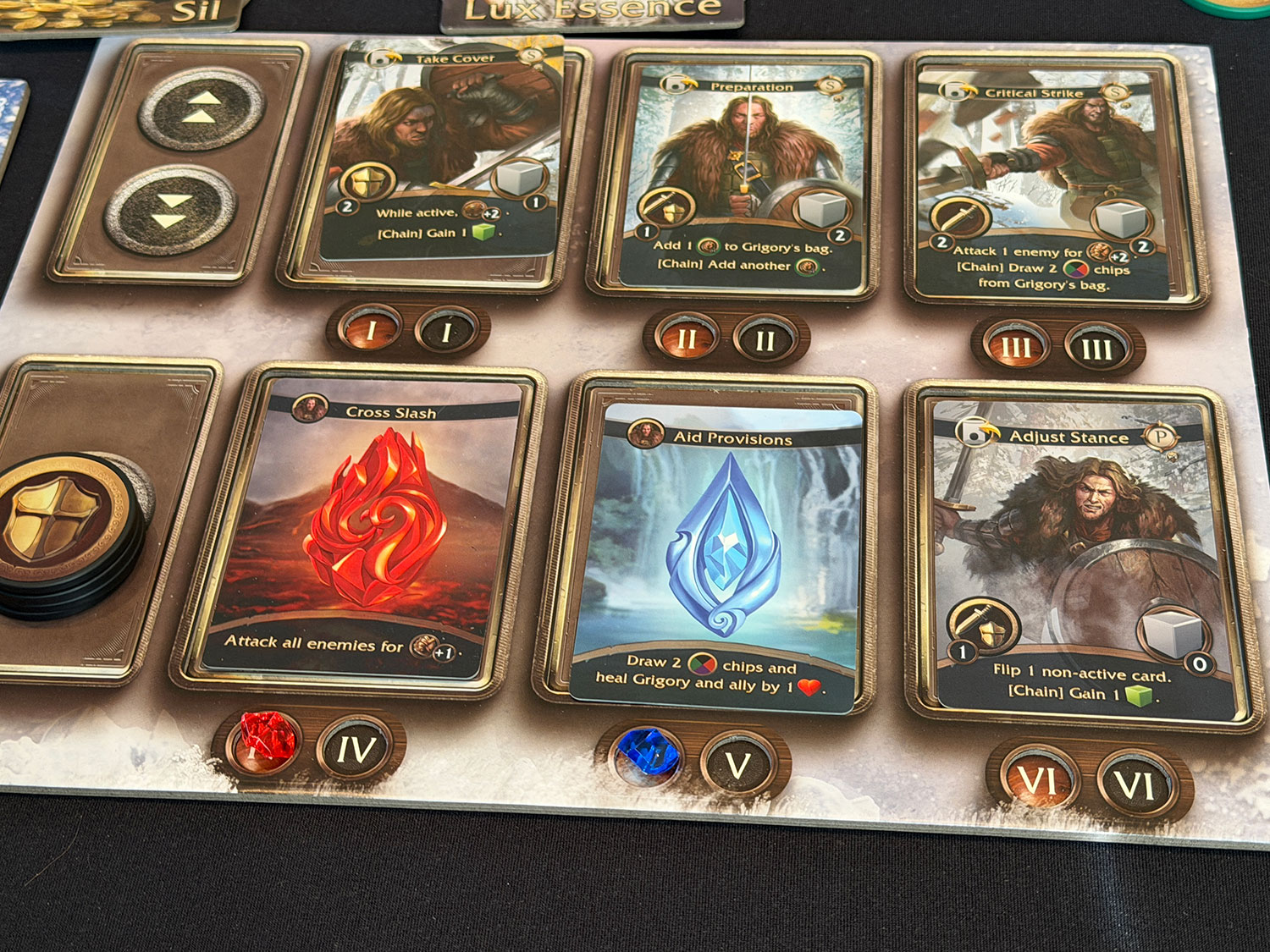
When the guards go, you’ll pull a number of chips from their bag and use them to activate their weapons and special abilities. Many of your powers will flip over to the other side after being used, adding a bit of strategy to combat. While the chip draw is random, there are no dice in combat, so when you activate a power, you know just what it will do. Enemies will attack you for damage and also clutter up your bag with negative status effects. But defeat the enemies and you win the battle, earning experience and precious loot.
Exploration is just as important to the game as combat is. You’ll move around a large game board performing different activities. In addition to fighting enemies, you’ll gain resources from mining, harvesting wood, and fishing. You can also visit towns, which zoom into a mini map, allowing you to shop, visit a blacksmith, or hang out at an inn for some R&R.
You can choose to stop for a session whenever you want and just pack things up into the provided game trayz, noting any relevant info on the save sheets. In general, setup and tear down is a breeze.
Game Experience:
When this 40lb box showed up on my doorstep, I was a bit scared as to what I had gotten myself into. I love open-world games, but wow, I was hoping not to get a hernia carrying this to the table (lift with your legs!). But as I love open-world games in general, I was definitely looking forward to giving it a try.
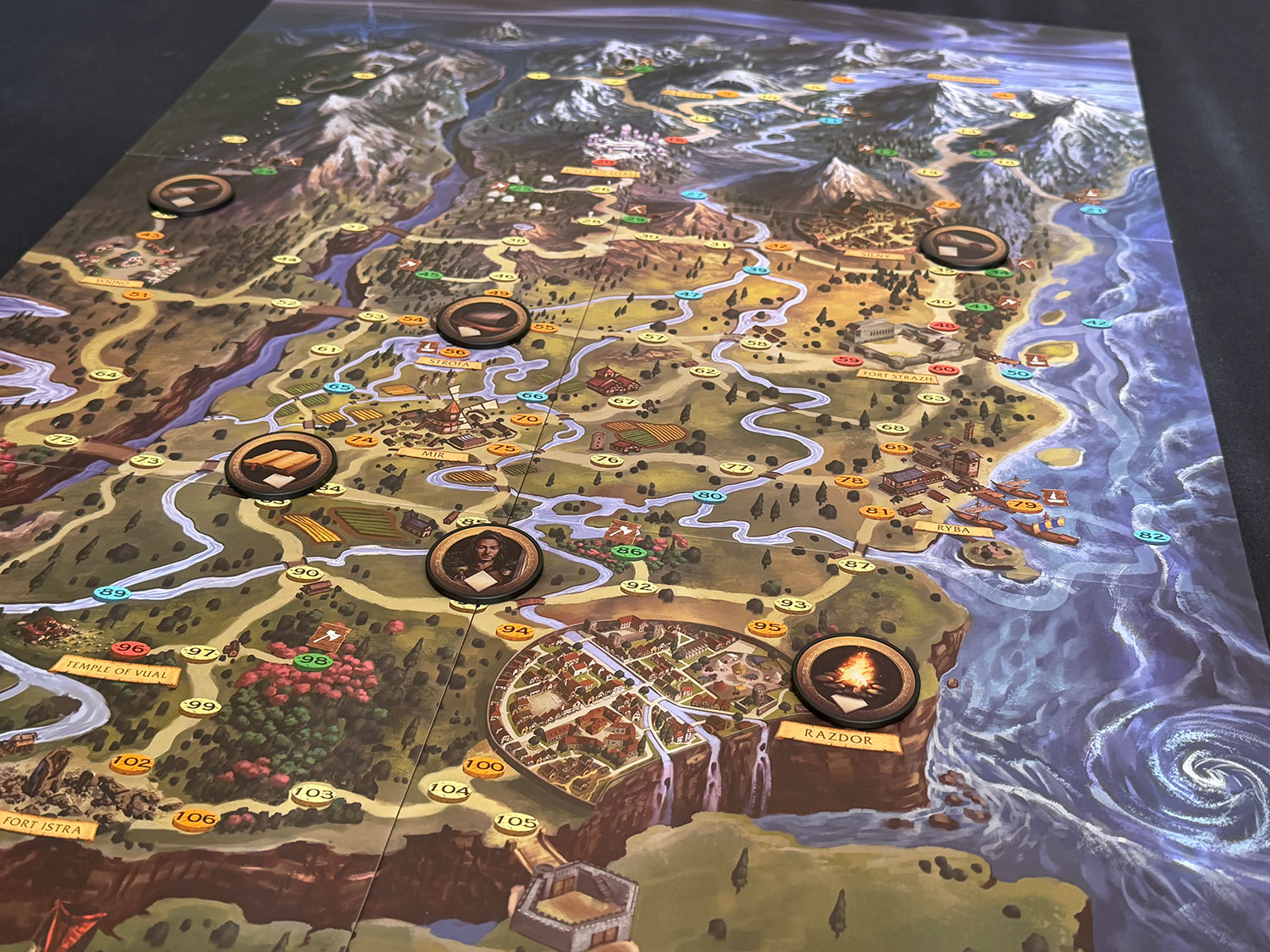
The Isofarian Guard feels as if someone grabbed a video game and dropped it on your tabletop. The open-world nature of this game shines through pretty quickly. Once you get off the tutorial track, you can literally do anything. You want to head to a town and see what’s for sale? Go for it. Want to just follow the main plot arc? Go ahead. Maybe you want to do some base building and head out to mine stone. That’s an option too. You can grind character powers or just focus on the narrative. The game gives you a lot of freedom there.
Speaking of narrative, the story is pretty great (especially for a board game), and if you decide to get the Foreteller App (which I’d highly recommend), then you get some fantastic narration for your game. I will say that some of the narrative passages can be lengthy, so if you don’t care as much about the story, you can just skim the text and know where to go next.
While I love the open-world nature, on the other side of that coin is that The Isofarian Guard can get super grindy. Every time you move, you’ll hit a node on the map, and you draw a token from the exploration bag. The game starts with 5 chips in there, three of which are enemy encounters. The other two progress towards a narrative card for the area. Where the game falters is that with unlucky draws, you can be fighting battles over and over. Not that battles aren’t fun, but if you are trying to get to a town to rest or gain some gear, it can be frustrating to have to stop moving to fight over and over again.
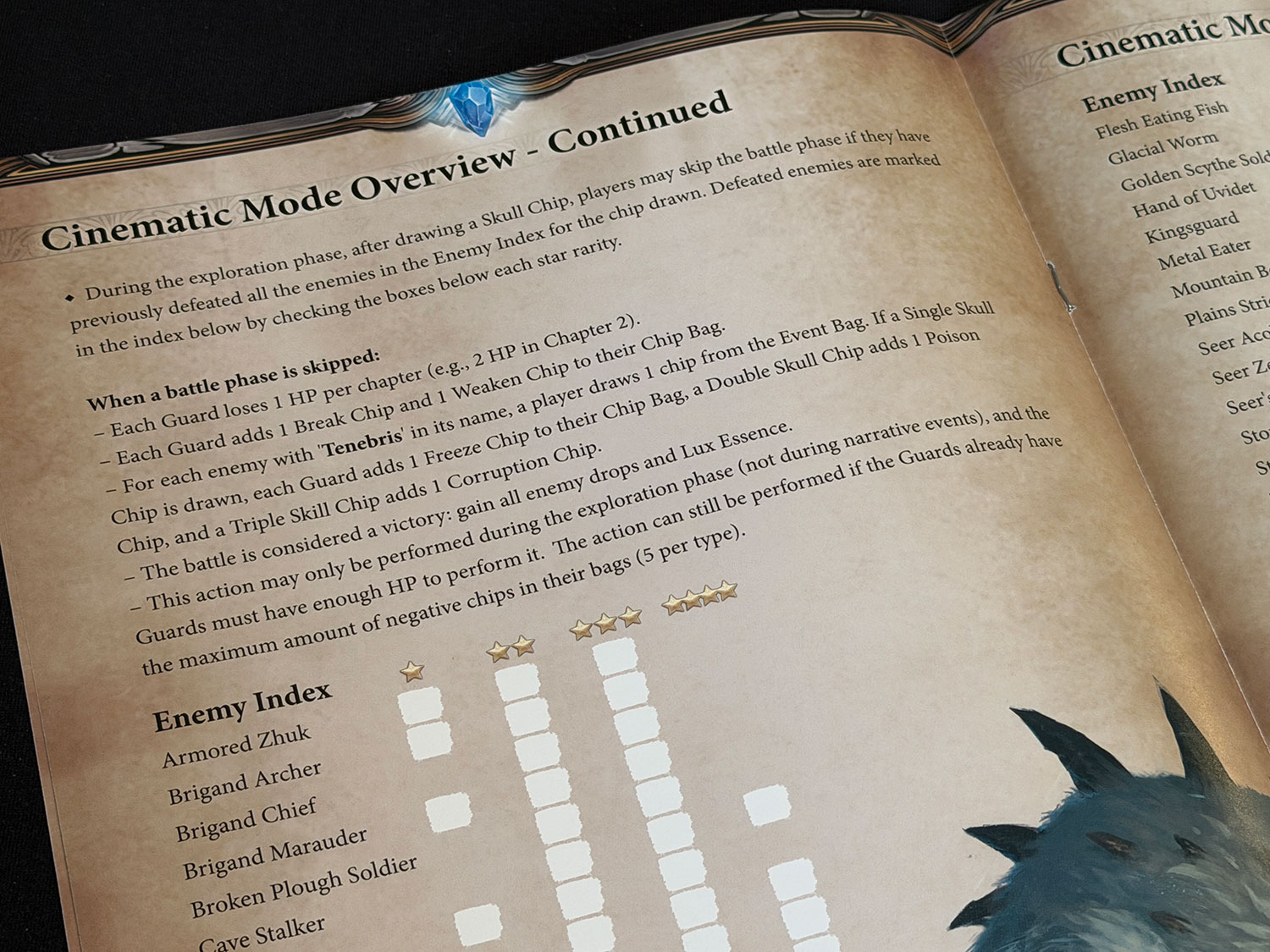
Thankfully, the game designers have been listening to feedback from players on this note. This new printing of The Isofarian Guard has added a new Cinematic Mode. Much like the Mercury’s Boots mode improved Hoplomacus Victorum by streamlining elements of the game, this new mode takes out some of the constant grind. The main way is that you now have a sheet to track each battle you fight at a node. Every time you fight a battle there, you mark the sheet, and if you encounter the same battle at the same node on a future turn, you can just skip it. Yet, you don’t have to forgo the resources to do so. Instead, you gain the benefits from the enemies you would have fought, and simply take some damage and add a few negative chips to your bag.
I love this new version of the game. While I really enjoy the combat, I didn’t like the absolute slog it was to move around the board at times. This way, I can still head to places I want to go and not have to stop and battle every turn. It also has the narrative feel of you’re actually making progress clearing out an area of dangers. If I manage to beat all 3 types of encounters at a node, I know I can move through the area a bit quicker.
Cinematic Mode also gives you upgrades at certain benchmarks, making sure your progress stays on par with the narrative. While it doesn’t completely remove the grindyness of the game, it’s a major step in the right direction for players who want to smooth things out a bit. For me, this is the only way to play the game.
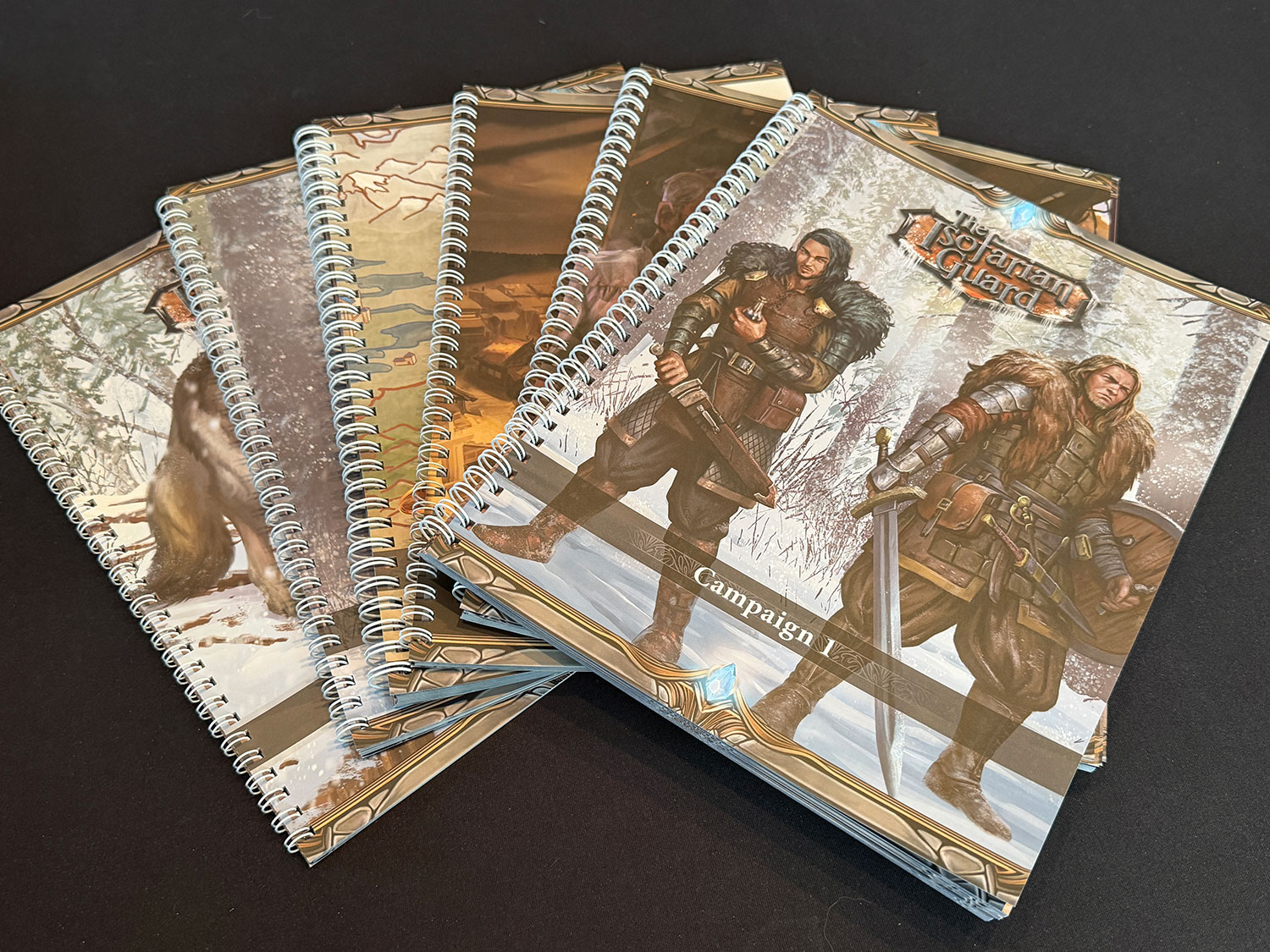
Finally, I do want to touch on that, while the gameplay itself is open-world, the character selection is not. Each campaign features two specific guards, and you have to play them. Their progression and customization are very flexible during the campaign, but if you really want to play a wizard, for example, you won’t be able to until it’s time. Campaign 1 starts you off with a really good fighter and an alchemist of sorts, that more of a support role.
Final Thoughts:
The Isofarian Guard is a pretty excellent game that set out with an ambitious goal to create an open-world experience and gave players just that. I do want to say that this is definitely going to be a lifestyle game, similar to Gloomhaven or Kingdom Death Monster. Not only because it’s so content-rich, but learning the interconnected systems takes a bit of time. And if you only pick up the game for a play every 6 months or so, you’ll have to relearn a lot.
But if a narrative-driven, fantasy adventure campaign sounds fun, The Isofarian Guard checks all those boxes. I’ve played it both solo and cooperatively with another player and enjoy both. While the game comes with 5 full campaigns, I’m just finishing up campaign one, which has taken many, many hours. So I can’t comment on how the other campaigns are. But I’m fully enjoying my time with the guard.
Final Score: 4.5 Stars – A content-rich game that you can spend hours and hours exploring.
 Hits:
Hits:
• Interesting mechanics
• Great narration with the optional Foreteller app
• Open world with lots of things to do
• Easy setup and tear down
• No character choices during a campaign.