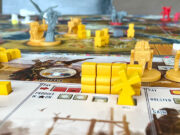

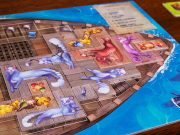
 At Gen Con last year, I was really excited to try out the auto battler from Scorpion Masque named Tag Team. Designed by the duo of Gricha German and Corentin Lebrat, this unique 2-player game has seen its way to my table more times than I can count.
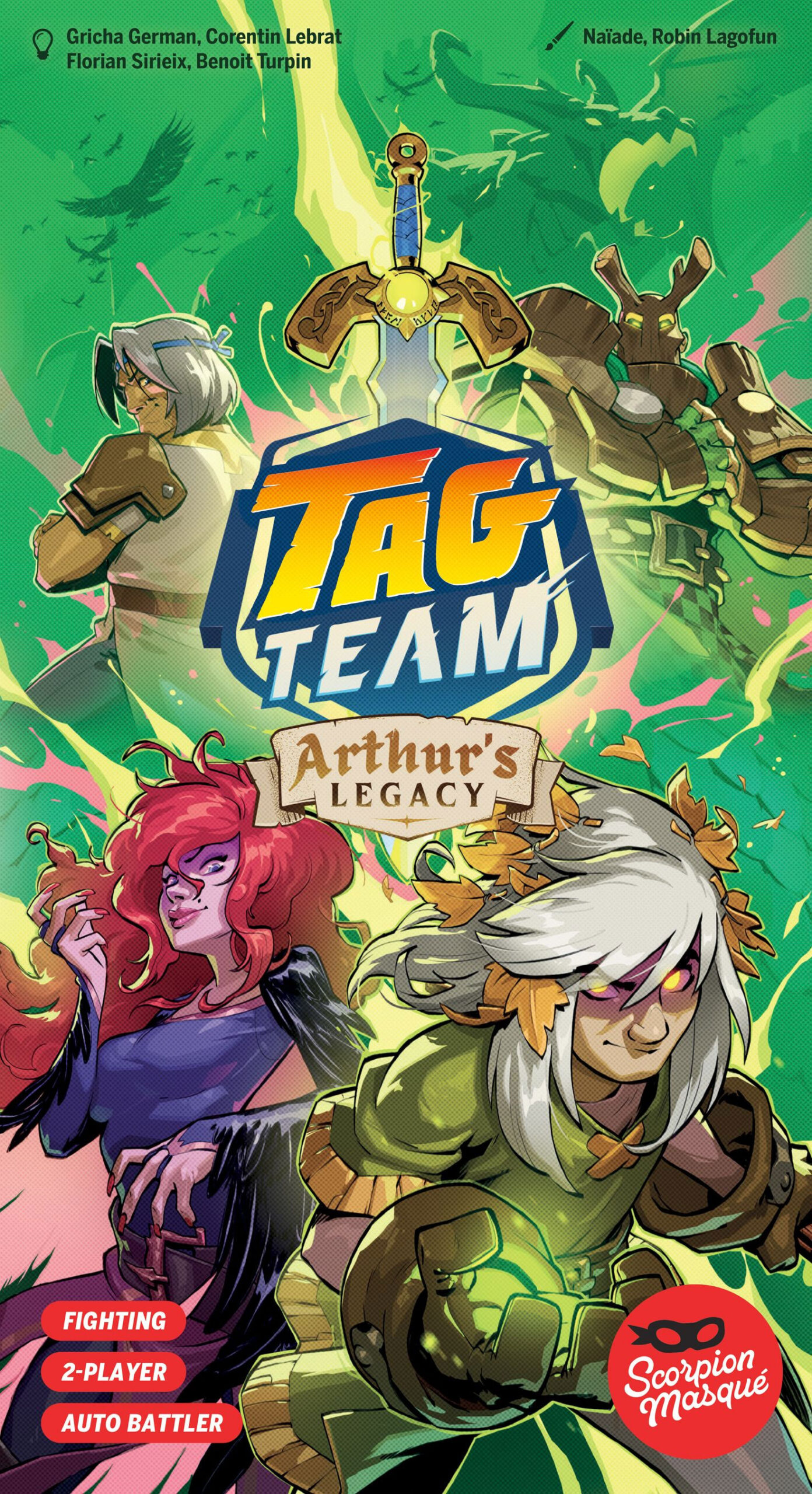
To the surprise of absolutely no one, Scorpion Masque released the first expansion at Gen Con this year. As it was teased in the box of the original game, most gamers knew this was on the way. Called Tag Team: Arthur’s Legacy, this new expansion adds 6 new characters for your games of Tag Team.
Expansion Overview:
Tag Team: Arthur’s Legacy is a standalone expansion, meaning you don’t need to have bought the original game to play this one. That being said, if you do own the original Tag Team, all of the characters are fully compatible with each other, giving you more options to mix and match your fighters.
But other than that, the gameplay is pretty much identical to the original Tag Team, outside of the fighters’ uniqueness. So if you are curious about how the game plays, be sure to head over to my original Tag Team review and get the full details there.
Game Experience with the Expansion:
These kinds of expansions are both easy and hard to review. They are easy in that if you liked Tag Team, you can buy this one to add 6 new characters to your lineup. For the most part, “more content” expansions that only add variety are pretty much a buy if you like the game, so there isn’t a ton to say about it.
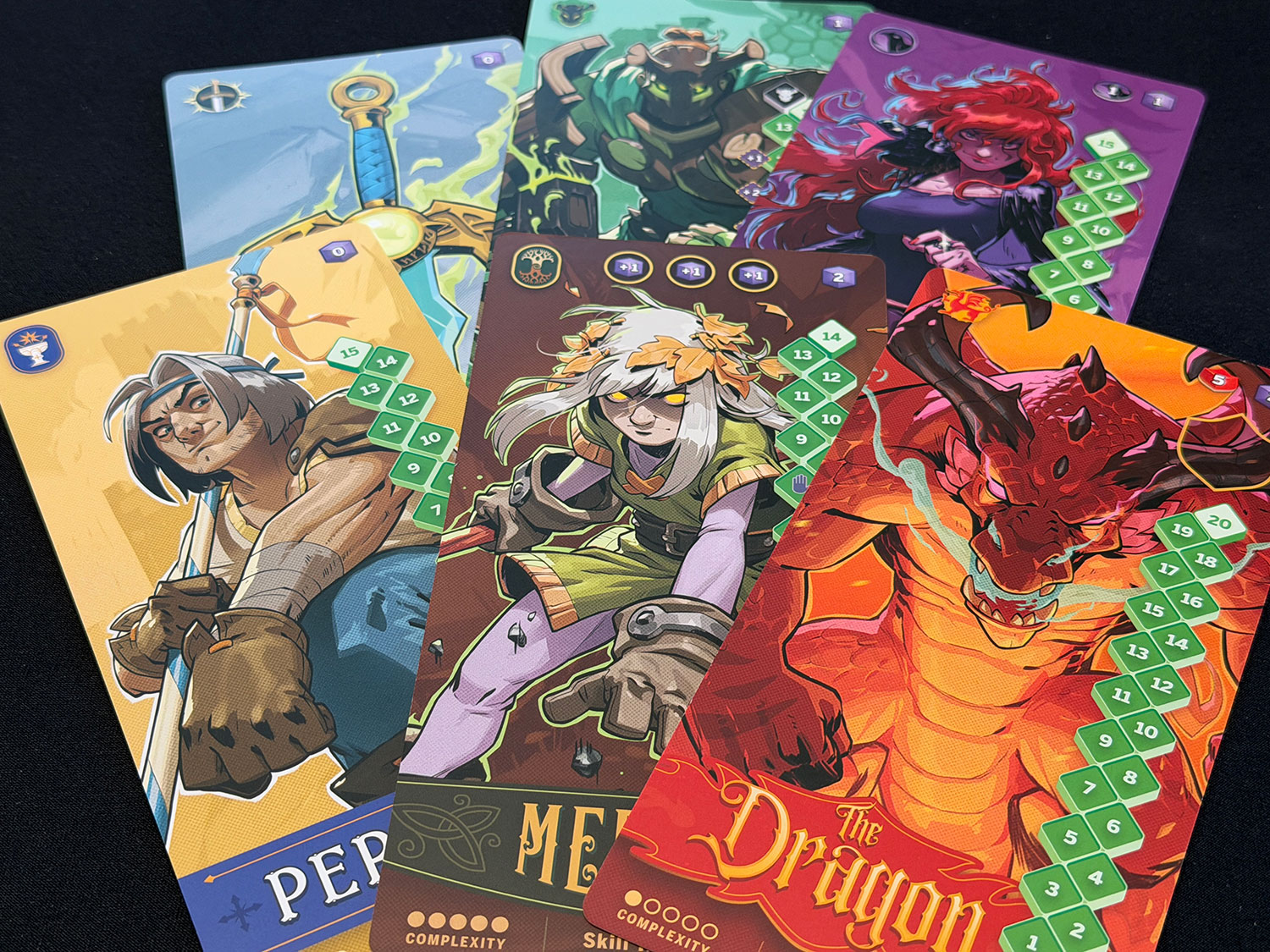
That being said, let’s dive into the characters to see what makes each one unique, and hopefully that will help you decide if you need to pick this one up. The six new characters are Morgan, Merlin, The Dragon, Perceval, The Green Knight, and Excalibur. There is a nice variation in complexity with the characters in this expansion, as there is one of every level of complexity (from 1 to 5), with the 6th character being another complexity level 3.
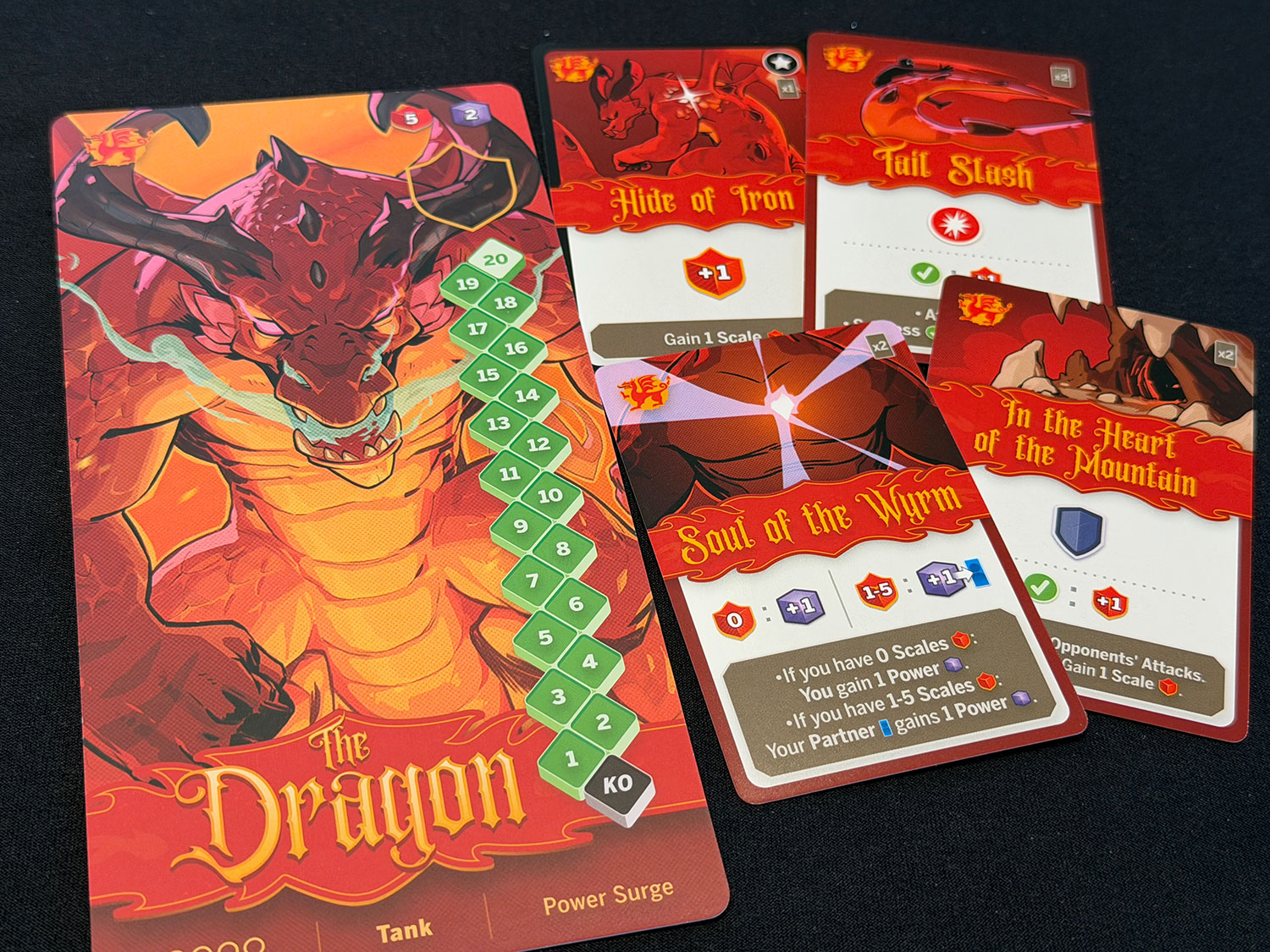
Starting with the easiest one, you have The Dragon. His main thing is that he’s a tank. He has 5 scale tokens that essentially block damage for him. While he does have attacks, he’s pretty much there to soak up damage for the team and help buff his partner.
Next up is Perceval, the Knight Errant. His main thing is that he gains buffs from previously played cards. So if you are good at card counting, he’s a great character to pick. As his attacks are buffed by cards you played earlier in the round, the order you play them can make a big difference.
The first complexity three character is Morgan. She is a control-style character who also has a really useful persistent power. Called The Crow’s Eye, during the build phase, the other player has to choose and show the card they select to Morgan’s player. Then she gets to choose her card. This gives her some foresight into what her opponent is doing and potentially react accordingly. She doesn’t know where in the deck the card is placed, but at least she’ll know what’s coming.
The Green Knight is the other three complexity character. He’s a push your luck character who can also regenerate health. He has a health token and also a max health token. Every round, he regenerates his health up to his max health token, which moves down one space every round. His other thing is that a lot of his card play will be based on what cards your opponent happens to play. So if you are good at predicting where to slot a card, you can do a lot of damage with him.
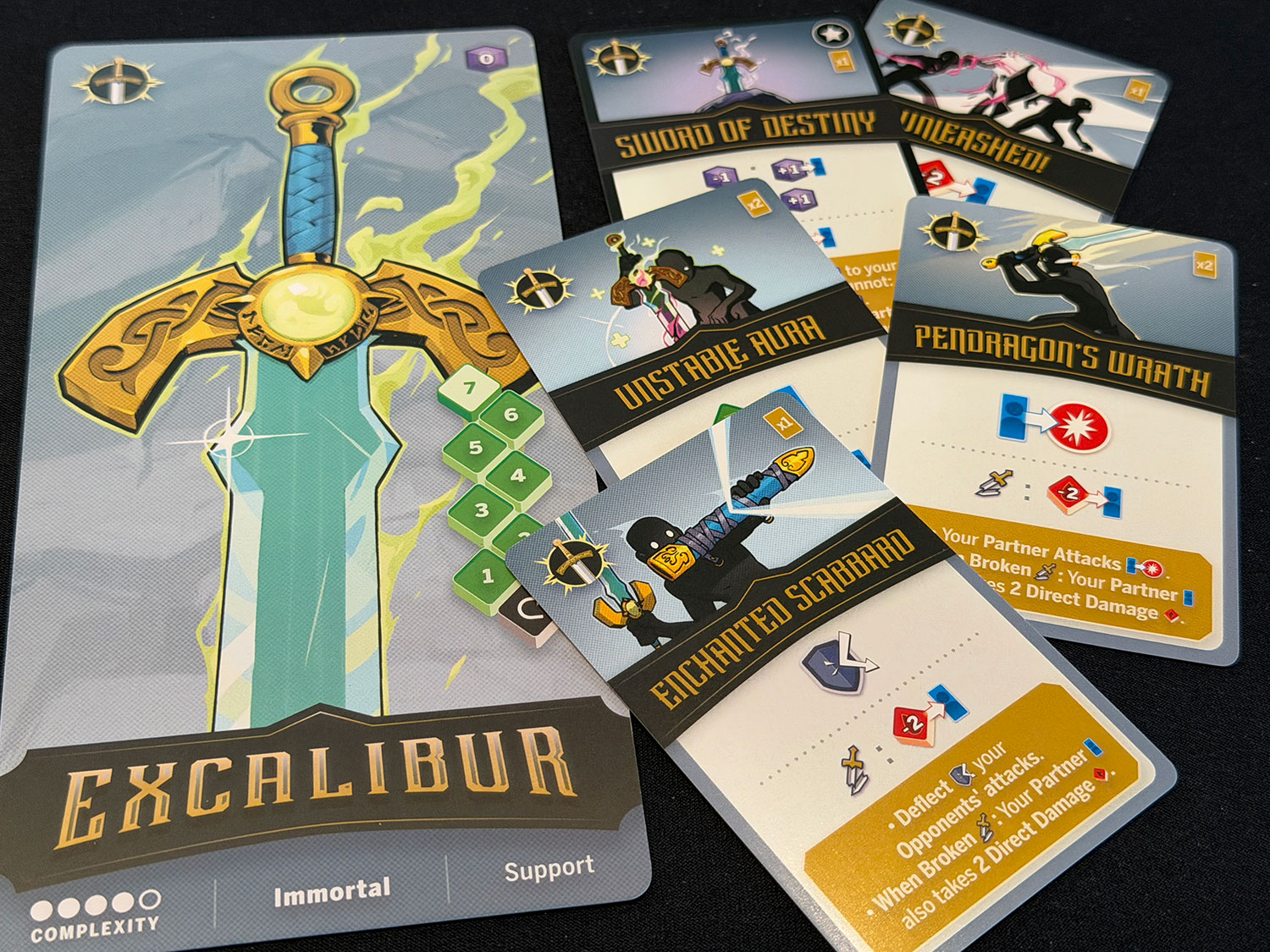
At complexity four is The Broken Sword. While, oddly enough, Arthur isn’t in the game, his sword is. This unique hero has a two-sided board. The front side only has 7 hit points, and after they are gone, it flips to its other side, which is immortal. The thing is, a lot of the sword’s powers are pretty strong while it’s on its first side, but once it’s broken, it will damage its partner every round. So then you are in a race to finish off your enemy before your sword does you in.
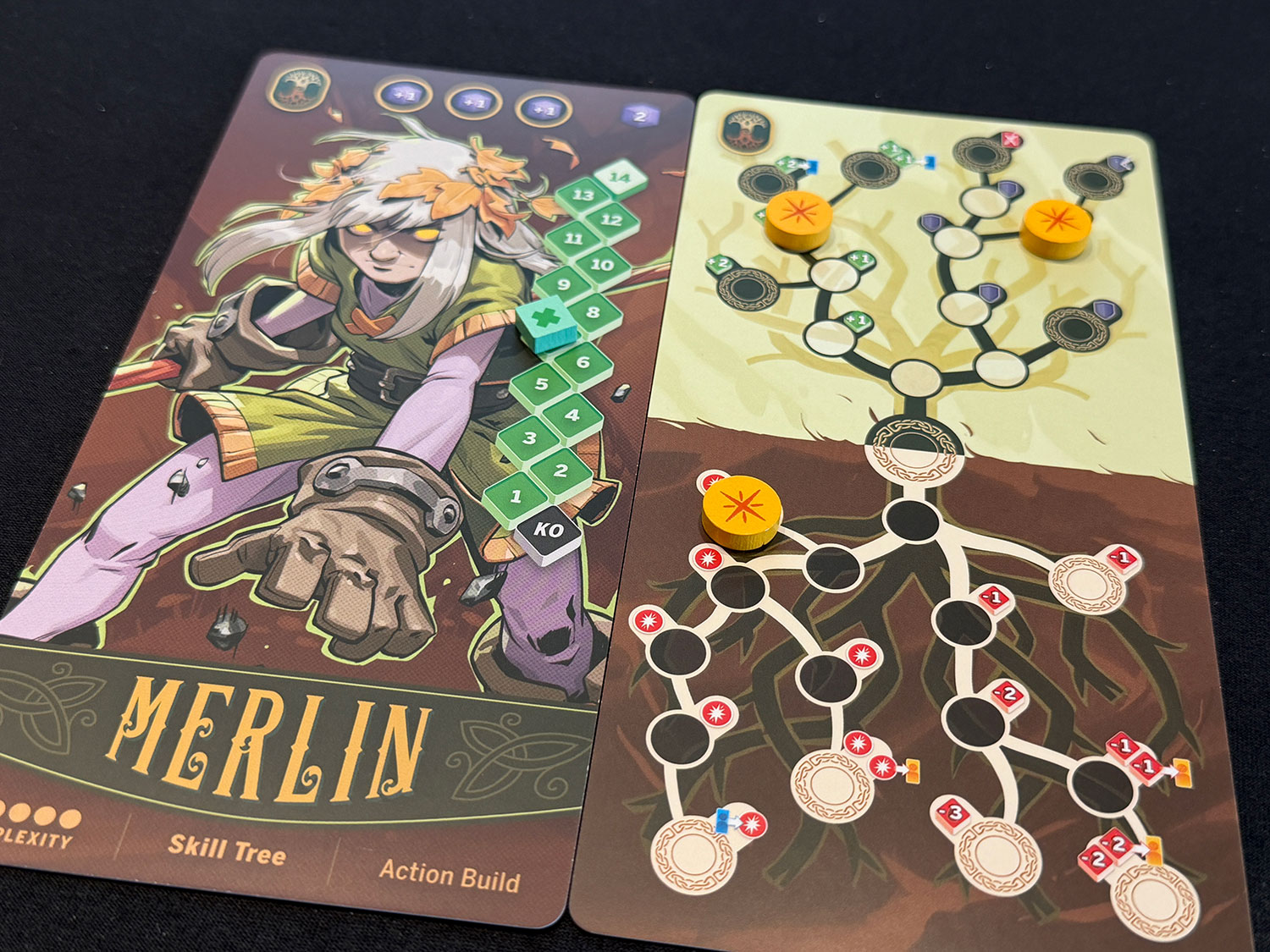
Finally, there is Merlin. He actually has a second board called his Tree Board. You will move markers around this board, which represent spells he is casting. These will give you various buffs and attacks. The board has two halves, with a tree on each half. Each tree is further divided into 2 parts. In all you have a heal path, blocking path, attack path, and direct damage path. At the start of the game, Merlin gets 3 tokens to place on his board. This means you can customize his spell-casting ability, but you will also have to leave one branch unused for the game.
Final Thoughts:
Tag Team: Arthur’s Legacy is a bit smaller than the core game (6 characters vs 10), it’s still full of interesting heroes that all feel really unique. For fans of the game, you shouldn’t hesitate to pick this one up. The added heroes inject some variety into the game, and you can have fun seeing how they interact with each other and the core heroes. For those that didn’t like the original Tag Team, nothing here will change your mind.
Even though this is a standalone expansion, I’m going to rate it on our expansion scale, as a numerical rating would be the same as the original game.
 Hits:
Hits:
• Nice complexity range of characters
• Characters feel on theme
• Can mix and match with the base game
Misses:
• Only six characters in the box, vs 10 in the core