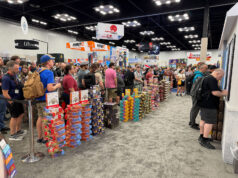
It’s that most wonderful time of the year—the temperatures are dropping, the days are getting shorter, and the latest board game releases from SPIEL Essen have started to make their way across the pond to the US. PAX Unplugged represents the largest board game convention in the eastern US and a tremendous opportunity to play games both new and old.
Keep reading to hear my thoughts on:
- Best of the First Look games
- Favorite new games found in the Expo Hall
- Not-yet-released game highlights
- How Pax Unplugged has changed

First Look Games
A select number of new-release games are set aside each year for open play in a “First Look Space.” Many members of the cult-of-the-new vie for a seat at these tables, so it’s impossible to play all the offerings in one weekend. Here are my personal thoughts on some of the First Look offerings.
Loved it!

Ada’s Dream
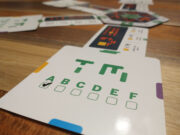
This was my most anticipated game of the con, and it exceeded my expectations. This minimally interactive Eurogame has players working with Ada Lovelace as she builds a prototype computer, and your brain will need a computer to ponder all your many options in the heaviest title on this list. Featuring a dice-drafting rondel and 3 inter-connected mini-games, players ultimately construct a personal computer using their dice, drafted punch cards, and mathematical cogs that will calculate end-game points. Dice color determines mini-game accessibility, dice pips determine which cards can be played, and dice-drafting location determines your immediate bonus, so it’s an AP-inducing puzzle in the best of ways. It’s also gorgeously produced with an exciting historical science theme.

Recall
I already own, and love Revive, but this follow-up title from the same designers scratches the same gaming itch in a more streamlined fashion. Recall is a heavy point-salad engine-builder Eurogame containing exploration, excavation, and building on a shared map. It’s a crunchier title than Revive (3 building options and 8 terrain types) with a set number of rounds that feels just right. Players start with one of 14 asymmetric tribes and one of 18 distinct gadgets that will dictate strategy. Three random additional tribes get revealed mid-game (like in SETI), and each player can work to form an alliance with these for extra ongoing abilities.

Feya’s Swamp
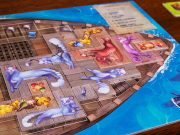
If you enjoy the interactive (but not cutthroat) nature of Eurogames like Brass Birmingham and Terra Mystica, this could be a hit. Designed by Helge and Anselm Ostertag (of Terra Mystica fame), this is an even more interactive experience featuring drafted asymmetric characters each round, worker placement, and a shared swampy map with player-built islands that progressively constrain boat movements across the swamp over time. The economic loop of the game forces players to sell fish to one another as a primary means of gaining income, so it’s mostly positive interaction until somebody builds right where you wanted to be.
Really liked it
Papyria
Set amid the backdrop of a rather colorful ancient Mesopotamia, Papyria is as dry as Eurogames come, despite containing the Euphrates and Tigris rivers on its main board. This game perfectly intertwines tile placement and resource management with a double-rondel action selection mechanism and has players trying to maximize point multipliers across 7 unique scoring conditions.

Orloj
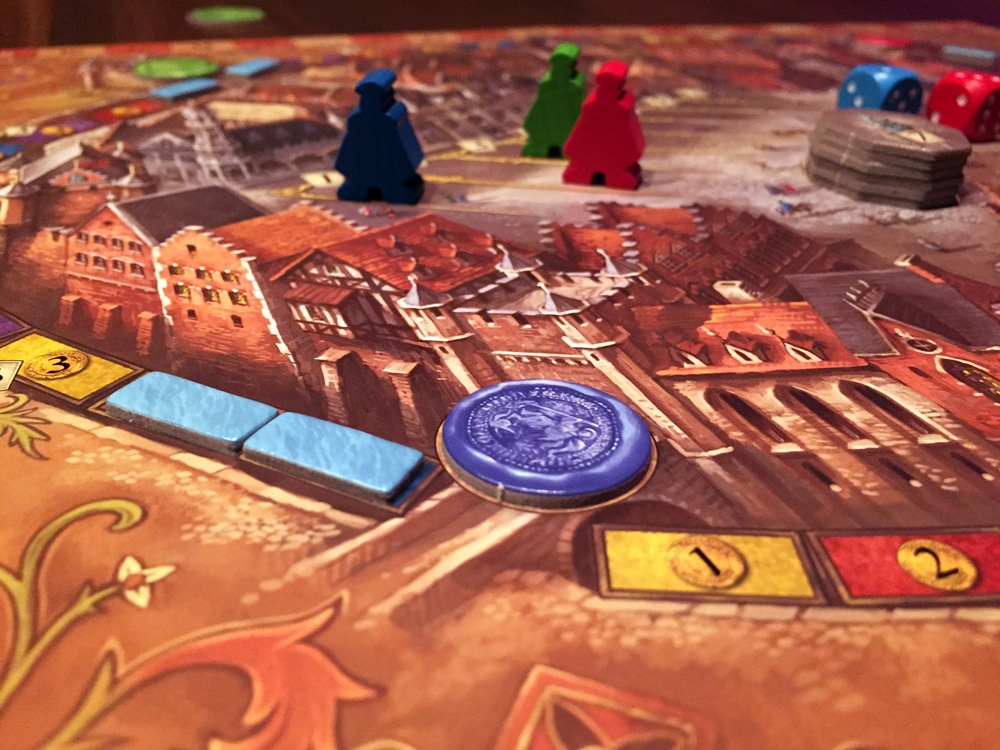
I had a great time playing this game about a clock, specifically the Prague Astronomical Clock. This was a solid point-salad Eurogame featuring worker placement, resource management, and set collection on a shared rondel that triggered actions across several other rondels and tracks. While a lot of fun, it’s fortunate that Orloj contains such an outstandingly beautiful board to distract players as they await their turns, because the shared rondel makes it near impossible to plan turns in advance at 4 players, which definitely felt overly long. I expect this would be more fun with 2-3 players.

Echoes of Time
I don’t normally like games with take-that, but I do love engine-builders, and this card-based tableau builder designed by Simone Luciani and Roberto Pellei contained a novel time-delay mechanism for deployment of fantastically illustrated mythical creatures, each containing unique instant, ongoing, and/or seasonal effects that created some really cool action combos. The take-that element was rather profound, so this won’t be for everyone, although the rulebook does contain suggestions for removing specific cards to make the game a less ruthless experience.
I appreciated some interesting elements, but this wasn’t for me
Sanctuary
Ark Nova is a top 10 game for me, and this was not “Ark Nova Light” but rather an abstract game with a nicely rendered zoo theme. Granted, the spatial puzzle was a lot of fun, and I’d happily play it again, but I found the frequent lack of choice in tile selection to be rather frustrating.

Night Soil
I am generally not a fan of take-that in games, and this one literally has players shoveling sh*t into other players’ territories. Props should be given for the straightforward rules, unique theme, and entertaining artwork. In my 5-player game, however, one player was deprived of workers for a whole round (not fun for him), and it’s possible to have some wasted turns if the waste dries up. Nonetheless, some players are bound to enjoy the interactive elements and the opportunity to make unsanitary jokes.

Bohemians
This was a relatively light deck-building game with an immersive theme of artists seeking inspiration from romantic encounters, nature, and less savory activities to make better art. This is all done at the potential expense of neglecting their day jobs and suffering fairly detrimental hardships (mechanically and thematically speaking), including that of narcissism, mania, and disease. Interaction was minimal, and I felt it overstayed its welcome at 4 players, considering the relatively light decision-space.

Fossilium
The designers of Algae Inc. have returned with another nerd-approved theme: managing a natural history museum. Fossilium contains a novel element of worker placement in a grid where the row dictates the action, and the column dictates excavation location for future digs. This, combined with point incentives to share matching fossils with competing museum directors, made for a fun medium-weight game dominated by set collection and tile placement. Nonetheless, the luck element of finding all the pieces for some of my larger dinosaurs was a bit much, and the graphic design managed to confuse all in our group of experienced gamers.
Ants
The idea of having three unique worker ant types with delayed deployment as they grow from pupa to larva into functional worker ants in this medium-weight Eurogame was intriguing. But this game fell flat for me; the decision space often felt obvious, and once my card engine got going, I didn’t much feel the need to use my forage ants for foraging.
Other New Games of Note
(not in First Look)
PAX Unplugged has an impressively large game library as well as an expo hall featuring several hundred booths with publishers showcasing their newest releases. Here are my thoughts on some of these new games that I got to play.
Loved It!
Covenant
This is another solid heavy-weight Eurogame from German Millan (Bitoku, Men-Nefer) featuring upgradable dwarf workers who help you collect resources, fight goblins (in a very mathy predictable manner), build structures, and explore hidden spaces on a shared map.
Lightning Train
I’m all onboard for this fantastic gateway-plus interactive bag-building game that has players constructing routes and fulfilling deliveries on a shared map, vying to create a network that gets the most use—and thus the most points. Paul Denning (Dune Imperium/Uprising, Clank) proves, once again, that he knows how to design a great game.

Yokohama Duel (reprint)
This was not a game I thought I needed in my life, as Yokohama is already a great 2-player medium-weight Eurogame, but as it turns out, this may be even better. Set-up is super-quick, and it plays in a smooth 30-45 minutes with somewhat altered rules (no more mancala), but just as much crunchy goodness in a shockingly small box.
Dustbiters: Pocket Edition
This tactical 2-player-only card game asks opponents to find synergies and proper sequencing among just 18 cards representing outlandish cars in a deadly Mad Max-like race. It packs a surprising punch for a pocket-sized game, and it might become an all-time favorite of mine among ButtonShy’s offerings.

Liked It:
A Place for All My Books
As an introvert, I can appreciate the thematic integration of a “social battery track” that requires players to retreat into the comfort of books once depleted. The challenging 3D-spatial puzzle of efficiently organizing adorable colored book tokens made this a fun, if lightweight, abstract gaming experience.

Moon Colony Bloodbath
Donald Vaccarino (Dominion) designed an impressively thematic game filled with dark humor about humanity’s hubris. Moon Colony Bloodbath has players racing to construct a card-based tableau on the moon before disasters start repeatedly striking, and they must decide how best to deconstruct their tableau to survive longer than their opponents. There’s some luck in the opening hands, but it’s a short enough game that I didn’t become too emotionally attached to what I had built.
Quorum
This tiny box will make your brain burn as you draft a total of 12 cards, each with a dual contribution to area control and set collection. Optimizing scoring across 10 unique categories was almost stressful, but in a fun kind of way.
Upcoming Games of Interest:
Many publishers were showcasing games that have not yet been released or haven’t even begun crowdfunding. Here are a few that I thought offered something interesting or unique.

Frosted Blooms from Synapses Games
Designed by Bruno Cathala (Five Tribes, 7 Wonders Duel) and Ludovic Maublanc (Draftosaurus), this polyomino drafting game has players planning for both short-term points linking card-play to tile choice, as well as longer-term scoring from creating appropriately sized gaps and large contiguous sections of features. The tiles are gorgeously illustrated with colorful tulips dusted with reflective bits to literally make the game shine. I thoroughly enjoyed my half-length play of this thinky abstract puzzle.
Mystic Curling Club from Asmadi Games
This family-weight dexterity game has players sliding or rolling 12-sided dice across the board in a miniaturized (and less icy) simulation of curling with a couple of gaming twists thrown in. It’s a unique idea, and the one round I played was a hoot.
Kalypso from Inside Up Games (publisher of Earth)
This polyomino tile drafting game is set in a Water World-like environment. The novelty here is that the board and settlement tiles have a non-slip velvet-like surface so they stay in place, whereas boat and other pieces can smoothly slide across the board.

Manoomin from Kinson Key Games (publisher of Galactic Cruise)
Players will take on roles as Ojibwe tribe members undertaking the multi-step process of preparing different types of wild rice whose values will change over time, pending player actions. It’s supposed to be lighter and more interactive than Galactic Cruise. While it’s a competitive game, the use of Inventors of the South Tigris-style cooperative elements and multi-use cards definitely has me intrigued.
Dicey Devices from Origami Whale
Players compete as mad scientists building out their labs and death rays in this tactical tableau-building game where dice rolls activate specific cards, which in turn activate entire rows, so kind of like Space Base meets Wingspan, but with a bit more take-that and area control.
Sprout from Rabble Games
This push-your-luck game contains 120 adorable-looking and completely unique house plants that players must try to keep alive while not overindulging them. This game seems cute and light enough to have mass market appeal for similar audiences as Planted.

Changes to Pax Unplugged over the years:
I’ve attended PAX Unplugged every year since 2021, and I’ll call out three key changes:
- First Look keeps on getting more organized. The First Look games were originally set up in the main expo hall, which is a constant cacophony of noise. 2024 was the first year that First Look games were moved to a separate room, on a separate floor, of the convention center. This allows for a somewhat calmer gaming experience that opens to attendees a whole hour earlier than the main expo hall. Nonetheless, PAX U is a huge gathering of gamers, and last year had a disorganized mob of people waiting at the doors of the First Look hall first thing every morning. This year still saw plenty of early-risers waiting at the doors, but they were now organized into a big line that was definitely more fair to the earliest arrivals. It’s also worth noting that Enforcers were present to provide excellent rule teaches for many more (but still not all) of the games.
- The Board Game Flea Market keeps getting more organized. 2022 was the first time I participated in buying/selling used board games at PAX Unplugged, and while there was a set meeting time and general location for trades, it was an incredibly confusing melee of hundreds of people searching for pre-arranged buyers/sellers in a large open space without many useful landmarks. It took a full hour to make six trades. Last year was the first time the flea market space had numbers on the floor, but there were two different sets of numbers, which led to some lingering confusion. This year was also in the queuing area, but with only one set of numbers, so buyers/sellers could more easily communicate specific locations. My husband and I accomplished 8 transactions in 15 minutes. It’s also worth noting that the flea market offerings have grown over time, as you can see from this bar chart.

- It keeps getting bigger and more crowded. PAX U does not release official numbers, but attendance is estimated to be well over 30,000 people in the course of a weekend. Crowds mean competition for the hottest new releases. It’s much easier to get access to “older” games from the library, and this includes all the titles from the previous year’s First Look section, so keep an open mind as to what you’re willing to play. Also be flexible in your timing—and maybe have some caffeine handy—if you’re really set on playing the hottest new releases. I could not get a seat at Recall until 9:30 pm on Saturday. I had to line up at 8:30 am the following Sunday for a shot at Ada’s Dream. Plenty of games were available Sunday afternoon after many people had left. Also, if you dare to start a heavy Eurogame late in the evening, it helps to have pre-learned the rules for a quicker start/teach, since the First Look hall does close at midnight, and teachers may not be available at the later hours.