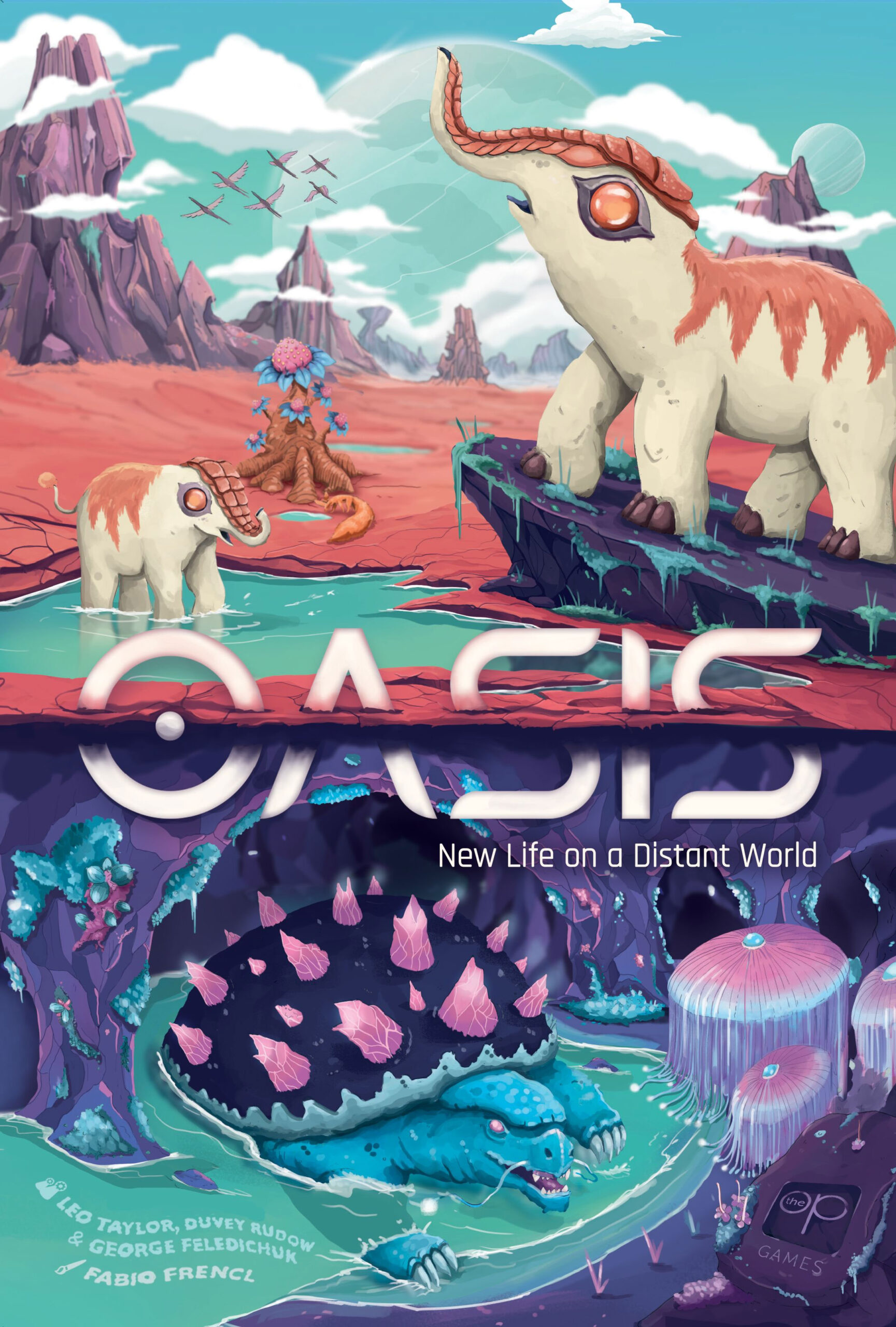
 “In Oasis: New Life on a Distant World, you embody the forces of nature on this primal planet, shaping the planet’s biodiversity by guiding the life cycles of its many bizarre species. Your goal is to cultivate a balanced, vibrant biome where the circle of life fuels the ecosystem’s survival.” -publisher
When I first read that description from the publisher, I thought I might be getting myself into a heavier game than I was expecting. Turns out it was anything but that.
Gameplay Overview:
Gameplay is pretty straightforward—I only needed to reference the rulebook a couple of times during our first game. I appreciated the tabs in the rulebook that made it easy to flip directly to the section I needed. It’s a short rulebook, so it wasn’t necessary, but it was a nice touch.
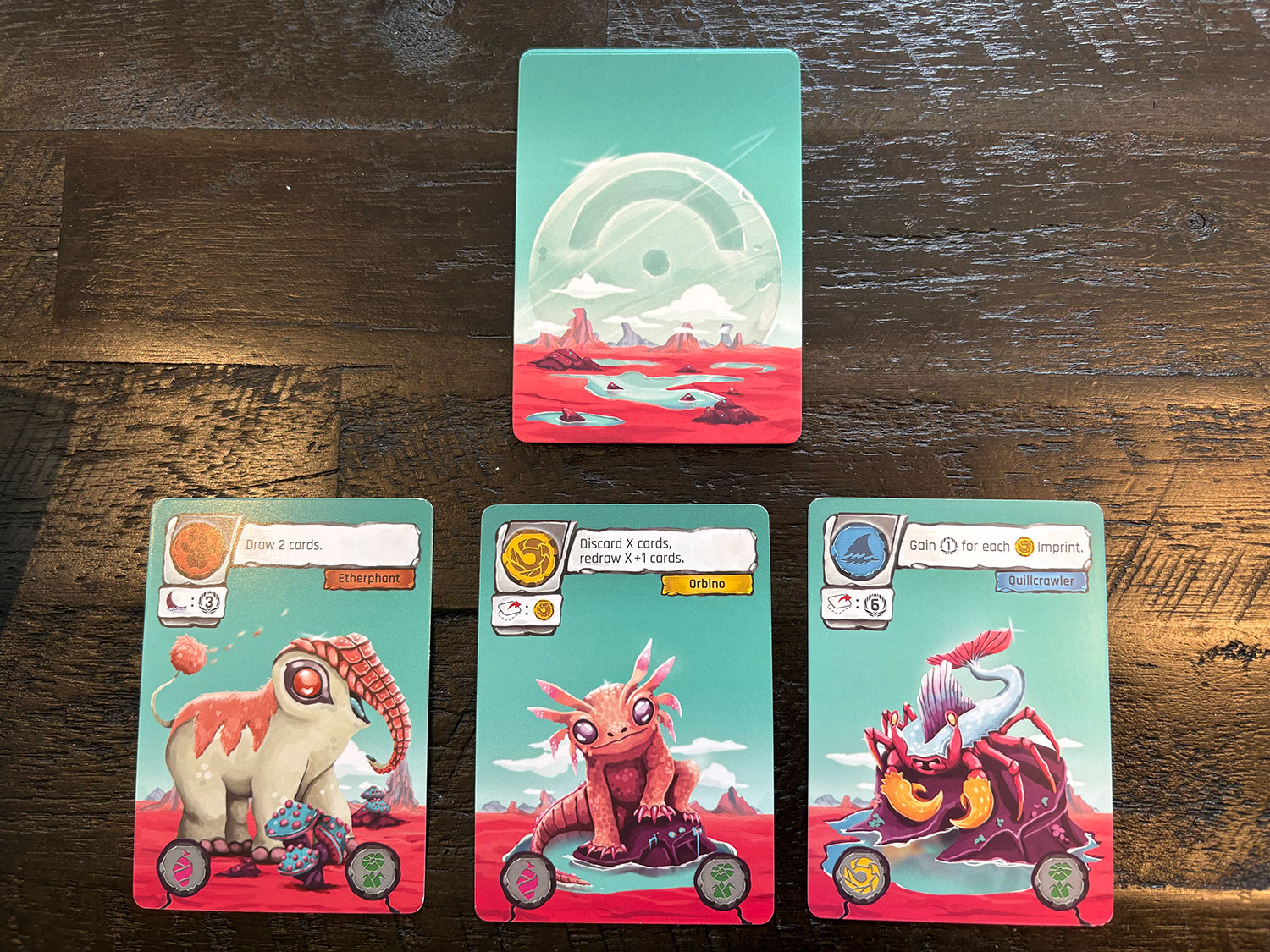
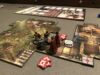
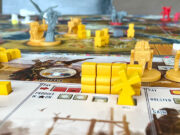
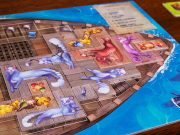
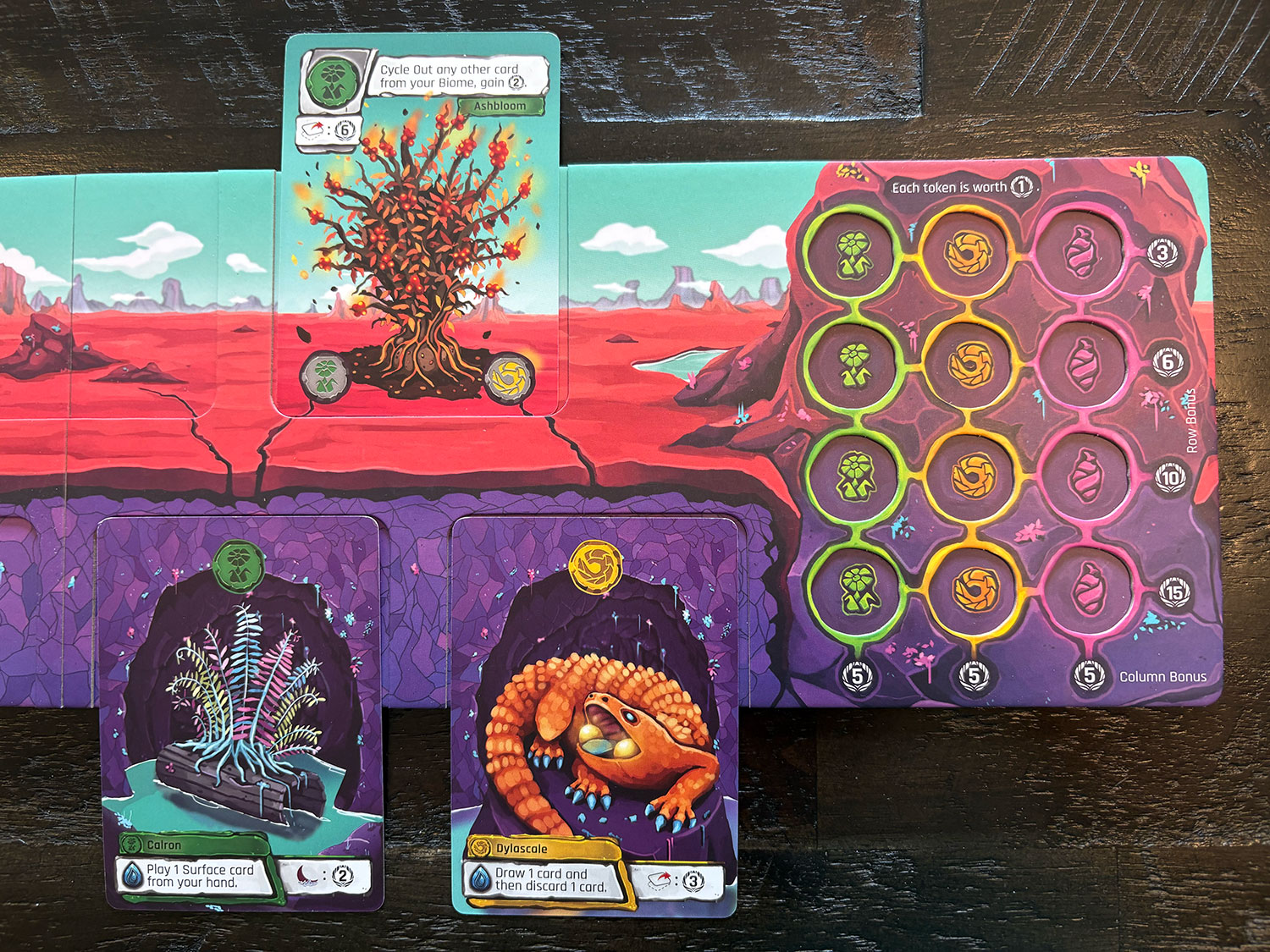
The game spans three rounds (representing three years), where players manage a personal Biome board split into two tiers: Subterrain (bottom row) and Surface (top row). The game is all about tactical micro-combos and smart hand management.
On each turn, you take exactly one of three actions:
- Play a card: from your hand or migration row that you can legally place
- Discard a card to cycle Out: Remove an active card from your biome to free up tight board space by discarding a card from your hand
- Rest: Pass for the round, earn points from active rest triggers, claim a rest tile (which lets you retain a few subterrain cards during the flood), and refill your hand up to 5 cards.
At the end of each round, an annual flood sweeps through, washing away un-retained subterrain cards into the discard pile (triggering special flood effects if they have any) while leaving your surface creatures intact.
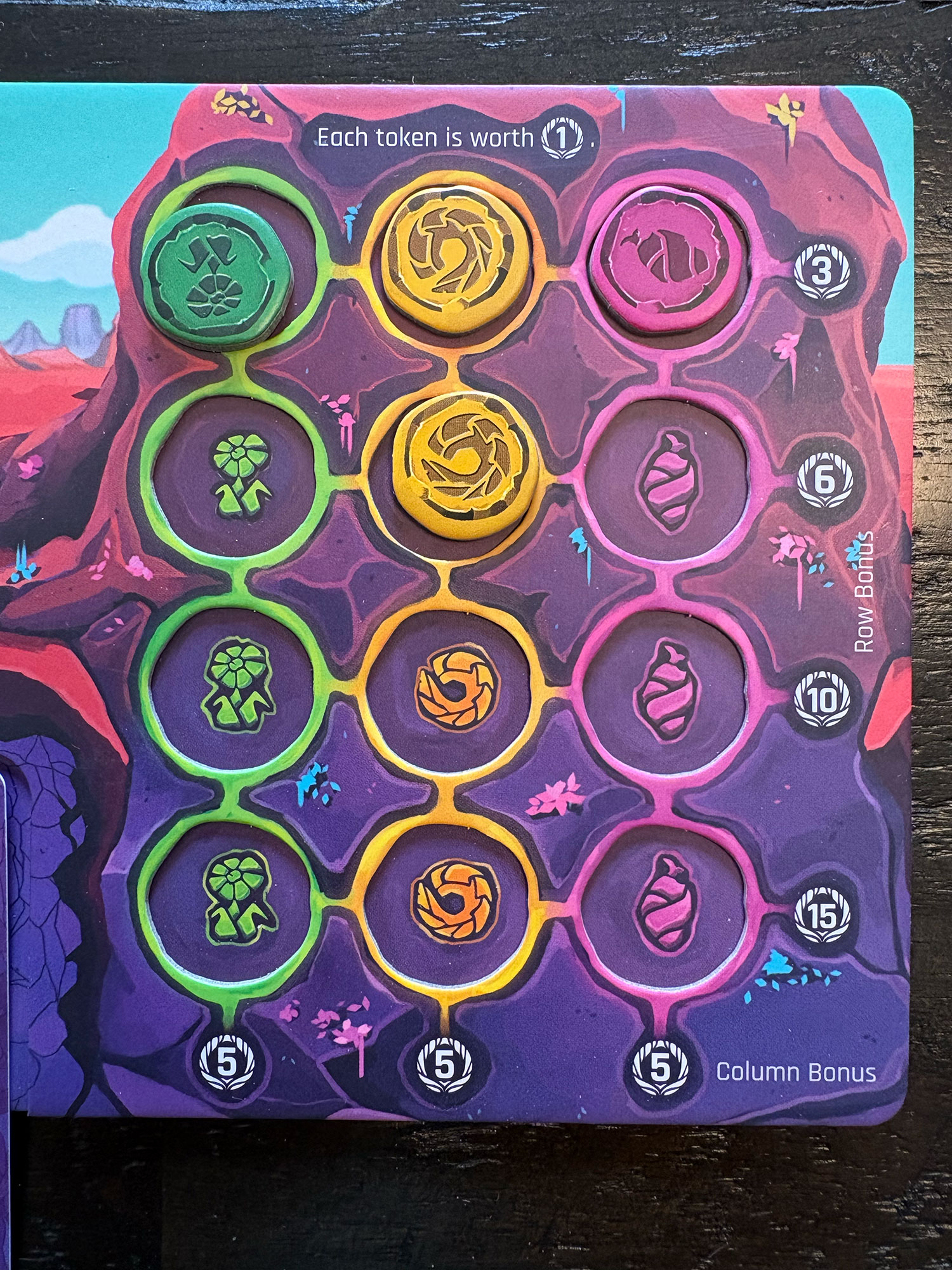
End-of-year trophies (5 points each) are then awarded to whichever player holds the most of each core Imprint type.
Game Experience:
The fun in Oasis comes from discovering clever tactical micro-combos through careful hand management and card sequencing. For example, you play a subterrain card to satisfy the imprint requirement for a high-scoring surface creature, and then on your very next turn, you cycle it out to gain instant removal points while leaving the surface creature perfectly safe and stable above the empty space.
It’s simple and accessible for new players, with enough to think about for experienced ones.
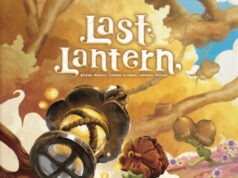
The artwork is unique and works for the theme. That said, the theme is slapped on—and if you start to think about it scientifically, it makes no sense at all, yet it works in a strange sort of way.
I can’t say I got immersed in the theme at all, as I focused more on the symbols to see what I could and could not do, but the vibrant color palette and unique artwork made the game pleasant to look at. Symbols were clear, and there aren’t many you need to know.
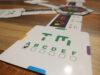
Component-wise, the overall board quality is great, though I think the card quality could be better. Notably, the board slots leave plenty of room for sleeved cards, which was great foresight on the publisher’s part because this is definitely a game you’ll want to sleeve. Although if you sleeved your cards, I think you’d have a problem fitting it all back in the box without lid lift—so maybe not good foresight on the publisher’s part?
The game flowed very well, and setup and cleanup were quick. Turns were exceptionally fast. Playing at 2 players, after finishing a turn and adding up your points, you could immediately start planning your next move as it came back to you almost instantly. You felt like you were constantly playing, which was great, and our first play was easily under an hour.
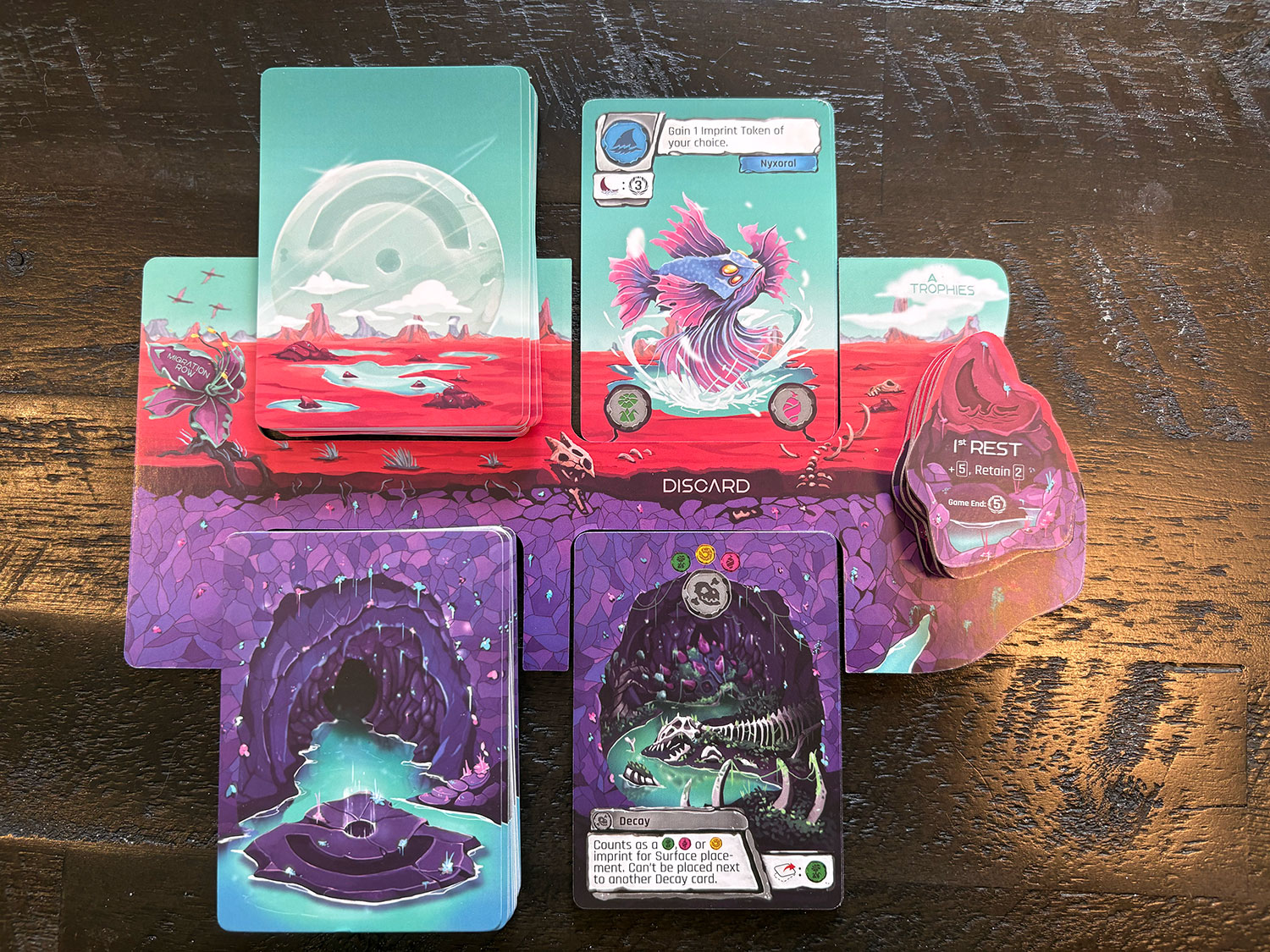
I suspect 3 players is the sweet spot for this game. It gives you that extra minute between turns to think, pause, and actually enjoy watching your “world” develop. At 4 or 5 players, you’re naturally adding more downtime, and trying to plan ahead to draft a specific card from the migration row becomes almost pointless because it likely won’t be there by the time your turn comes around again.
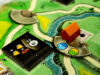
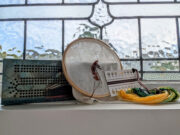
Scoring points is straightforward. The scoring wheel works well because it helps you keep track of your score quickly and easily, especially for such a high-scoring game (it comes with +100 and +200 point tokens). You never really know how your opponent is scoring until the end of the year, but it was surprisingly close and balanced. You’ll likely have seen most of what the game has to offer in your first play, but with so many cards enabling different micro-combinations, you’ll want to play it at least a few more times.
Final Thoughts:
Oasis: New Life on a Distant World is a light, relaxing game centered around tactical micro-combos and hand management. It doesn’t breathe new life into the board game world, but there are bursts of satisfaction as you create micro-combos as you play.
Final Score: 3.5 Stars – there’s enough life on this distant world to make it worth exploring
 Hits:
Hits:
• Satisfying tactical micro-combos
• Fast turns with quick setup and cleanup.
• Clear symbols and rulebook tabs for smooth reference.
• Balanced scoring that keeps games close
Misses:
• Theme is slapped on
• You’ll likely see most of what the game has to offer in your first play.