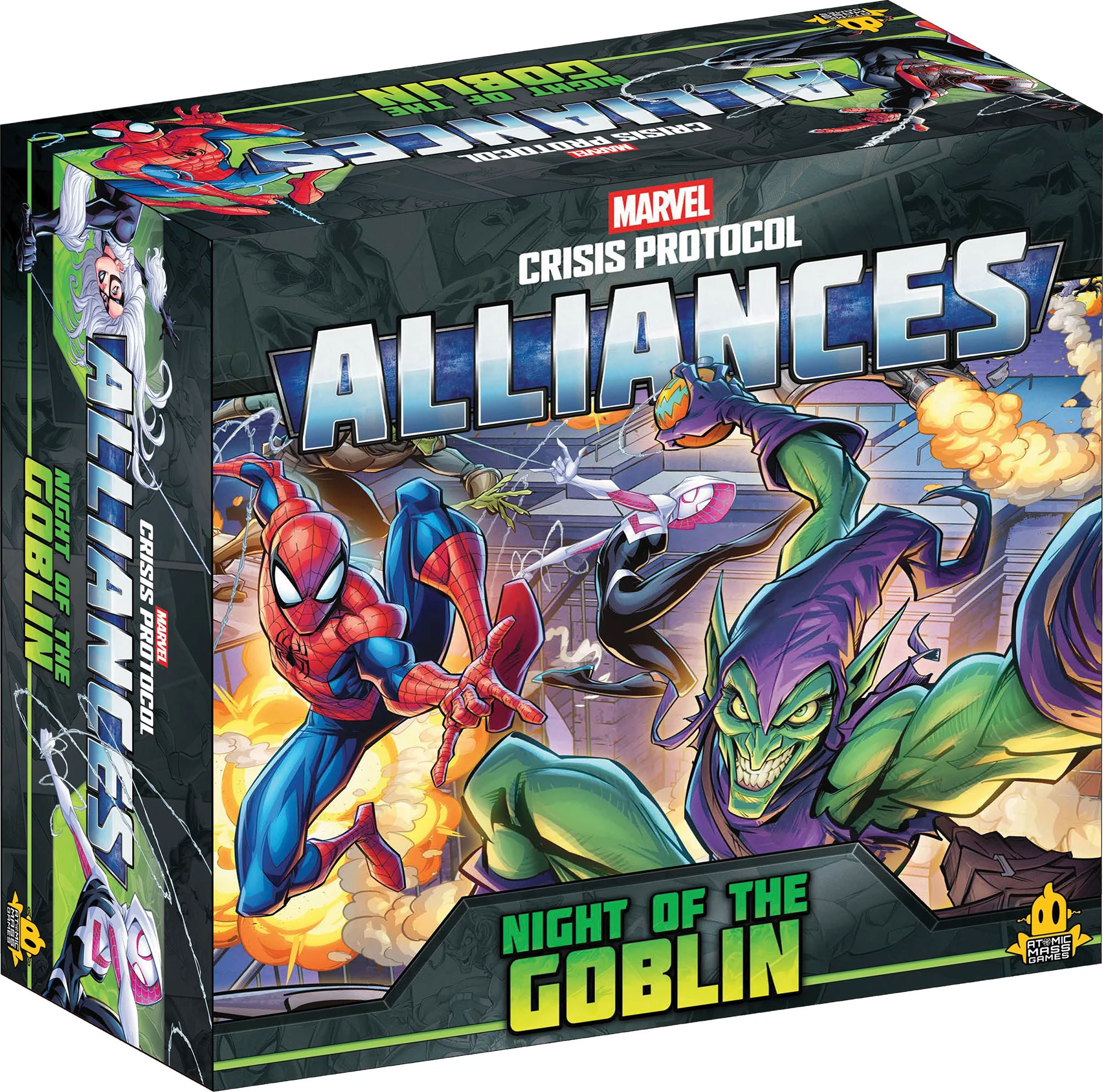
 Superheroes and villains are perfect for a small model count skirmish game, as you can have amazing powers, lots of team-up options, and unique and colorful models to paint. Alliances is the first of several planned boxes that use a lot of core concepts from Marvel Crisis Protocol and convert them into a cooperative experience. The first box is Night of the Goblin and features some Spider-verse friends battling against Green Goblin and his brutes, goons, and sentries.
Disclaimer: I am employed by the Walt Disney Company, which owns Marvel, but I don’t work with any of the folks involved with Marvel or Atomic Mass Games. I enjoy the IP and the base game of Marvel Crisis Protocol but feel obligated to disclose potential bias.
Gameplay Overview:
You always use four heroes, and this set comes with Peter Parker and Miles Morales as the Spectacular and Amazing Spider-Man, respectively, Ghost Spider, and Black Cat.
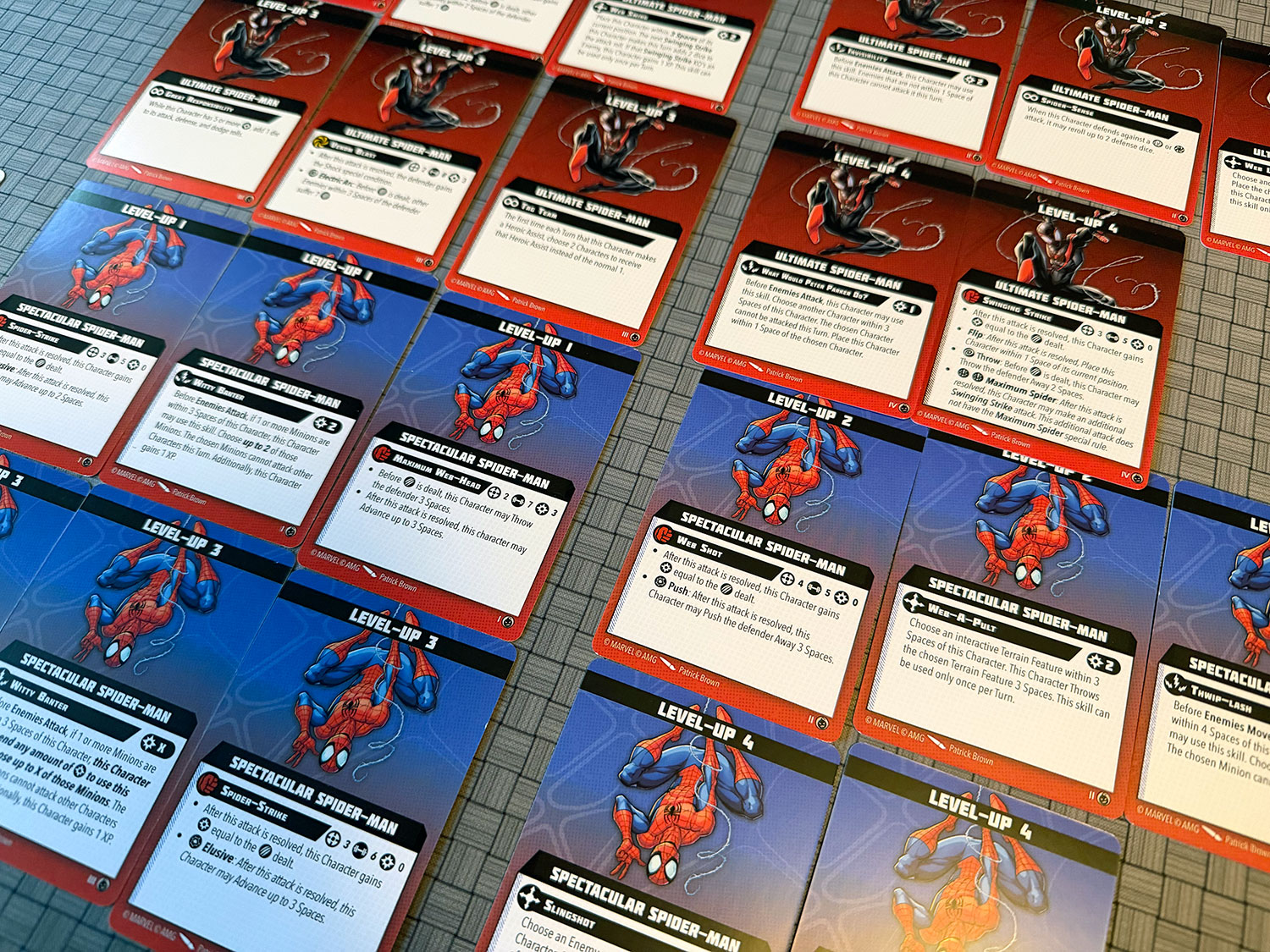
Each hero draws two of three level 1 power-up cards and chooses one of them to use.
A Round starts with the power phase, where all the heroes gain one power. Then there’s the activation phase, where heroes and villains take actions (details below), and then a cleanup phase.
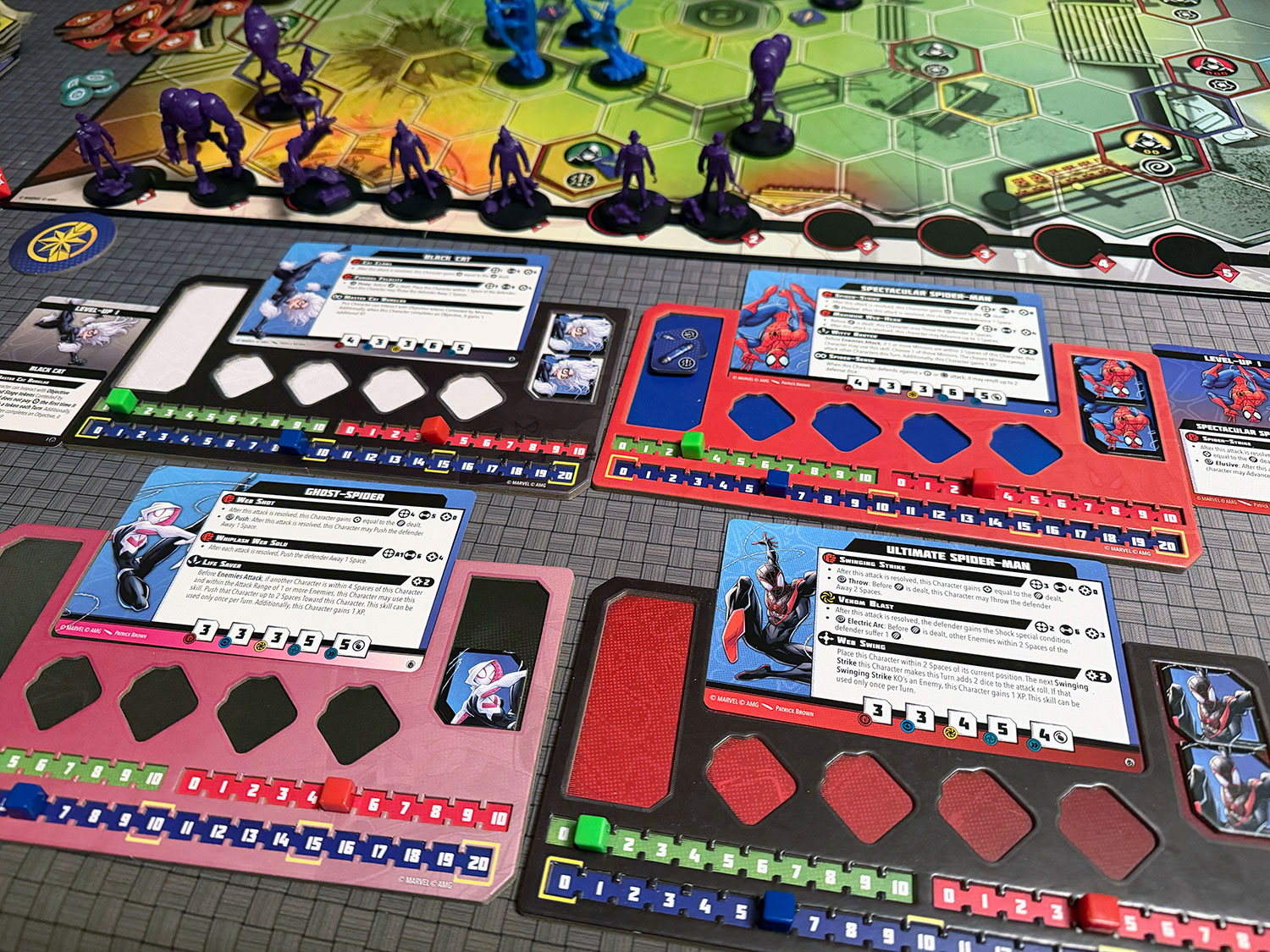
The four heroes will activate, followed by an enemy activation. This cycle repeats twice with heroes going in whatever order they choose. An activation is a single action including:
- Move: Characters advance up to their movement allowance.
- Shake: Remove one special condition, like dazed or shocked, from the character.
- Skill Action: Use a skill or special ability that isn’t a reaction.
- Attack: Use one of the character’s listed attacks, spending power as needed. Most attacks require characters to roll a number of dice and be within a specific range. Enemies have a static defensive value that reduces the number of successes.
Additionally, characters can interact with objective or stage tokens by spending a power if there isn’t an adjacent enemy. Enemies adjacent to objectives are contesting it.
All characters gain XP for someone completing an objective or knocking out a mini-boss. Characters also gain XP for making Heroic Assists. After knocking out a minion, you can pick another character to gain a power, remove a wound, remove a condition, or advance one space. Doing so grants the giver 1 XP. When you reach thresholds of 10, 15, and 20 XP, you gain a new ability, heal up, and then the XP resets.
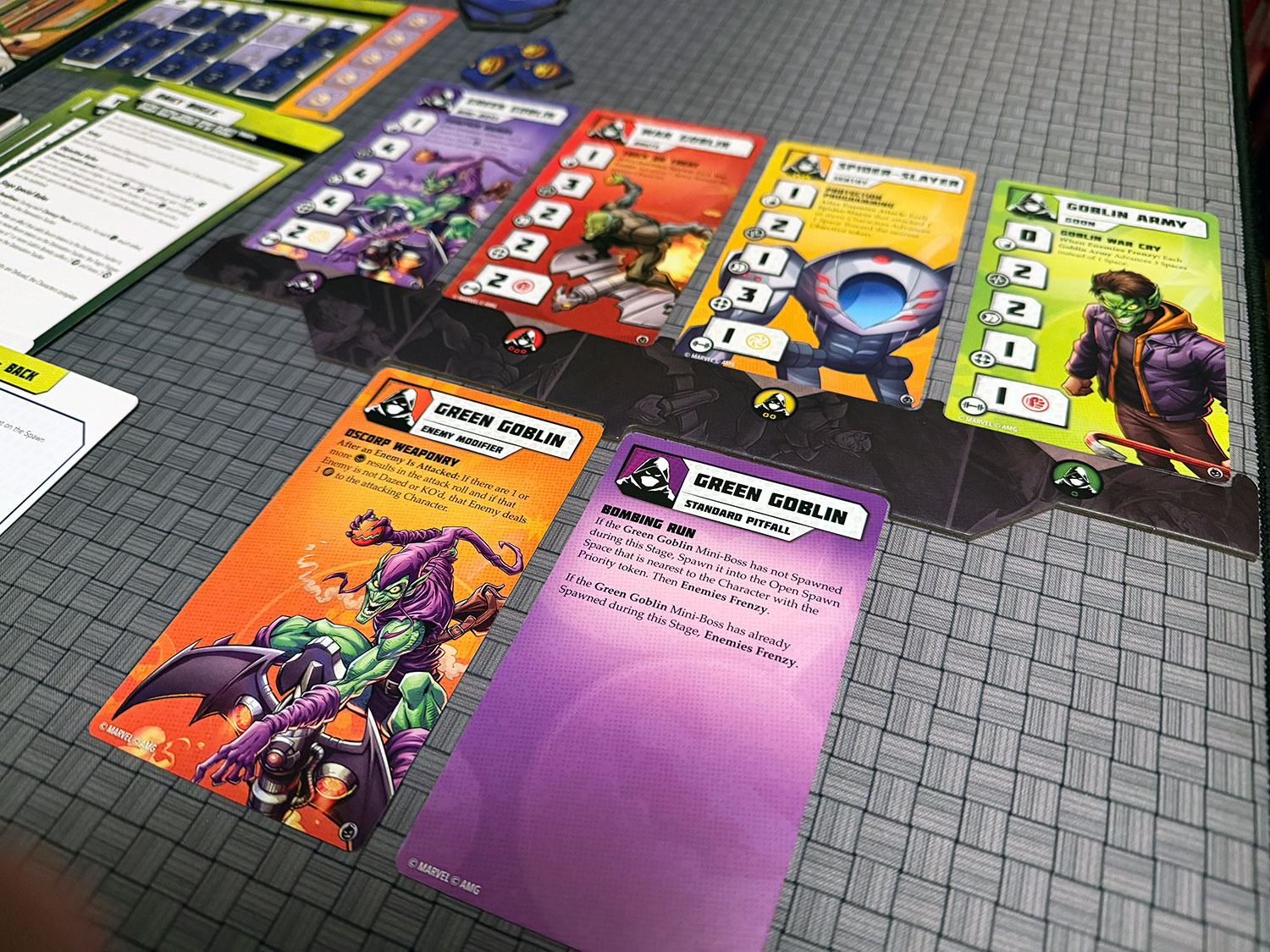
Enemy activation is a few steps, which are:=
- Move enemies on the board.
- Spawn new enemies by rolling the number of dice required based on the number of minis on the spawn track. Skulls during this step trigger the pitfall, and the results dictate where the new baddies go.
- Attack: The sum of the attack values of enemies in range of a hero dictates the strength of the attack, with the leftmost enemy of the group dictating the attack type. Heroes get to roll defense against attacks.
Rounds repeat, with scenario-specific things happening, until a stage is completed. Defeating the boss at the final stage means the heroes win.
Game Experience:
Marvel Crisis Protocol, as a game, has a lot of little rules, which is hindered by a challenging rulebook, and Alliances is no different. The rules are there, but it’s not the easiest to digest at times. I made a lot of mistakes in each of my first few plays. Especially solo, it was easy to forget some minor details, like special abilities on each enemy type that trigger at different times. I suspect that added variety will also increase the chance of mistakes.
A game of Marvel Crisis Protocol: Alliances is normally two stages plus a boss battle but can be extended to three stages if you just want more spandex and mayhem in your life. Night of the Goblins comes with three stages and a boss stage. This does present limited replay value, but what has me the most excited is the other boxes (X-Men/Sentinels and Avengers/Kang) because of the added variety that’ll bring. It would be cool if they made additional mission and character packs too. A neat perk is that there are Marvel Crisis Protocol cards for the heroes and Green Goblin, meaning you can take the new Alliances figures into the skirmish game.
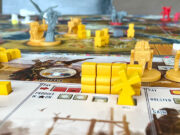
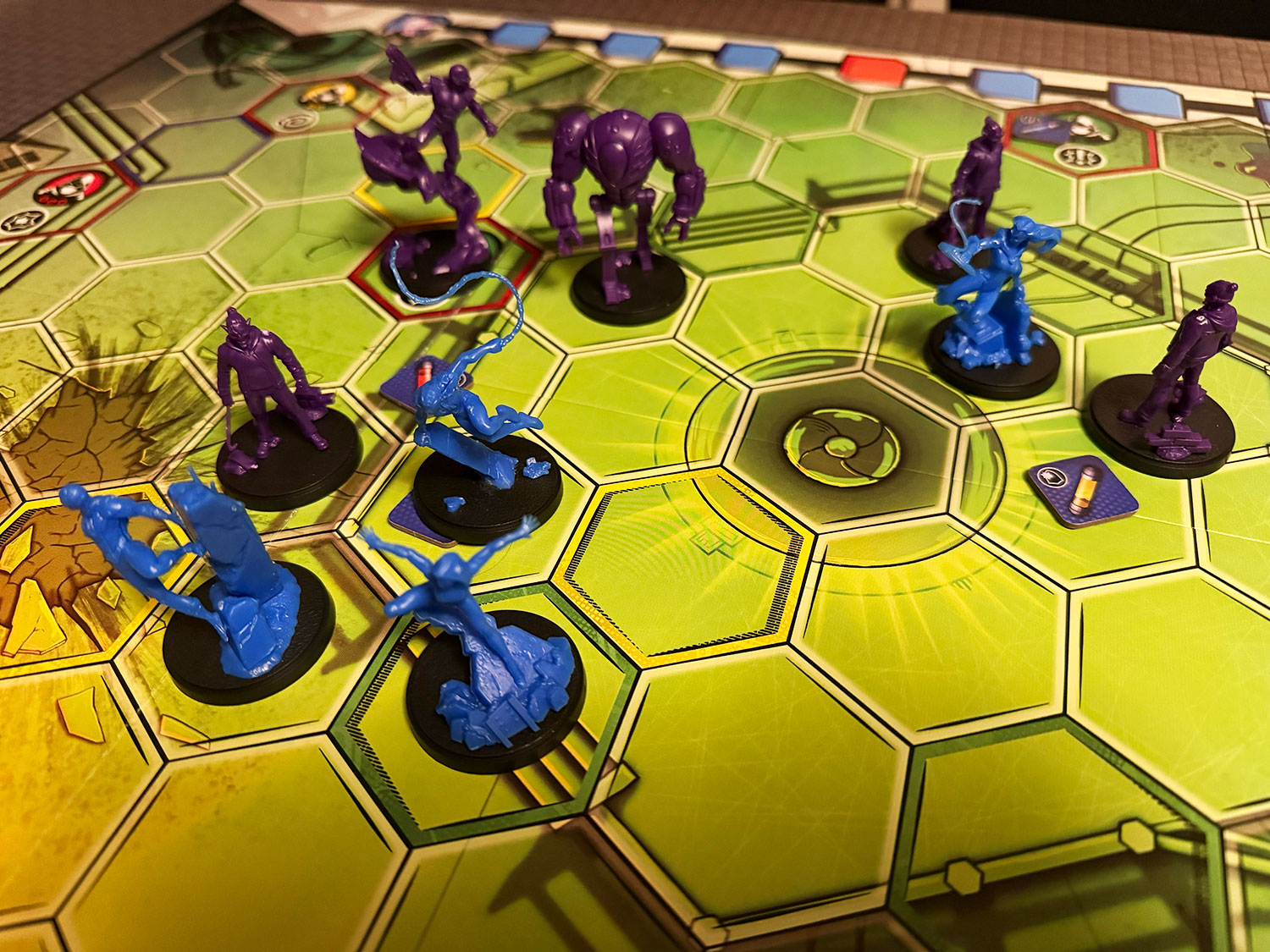
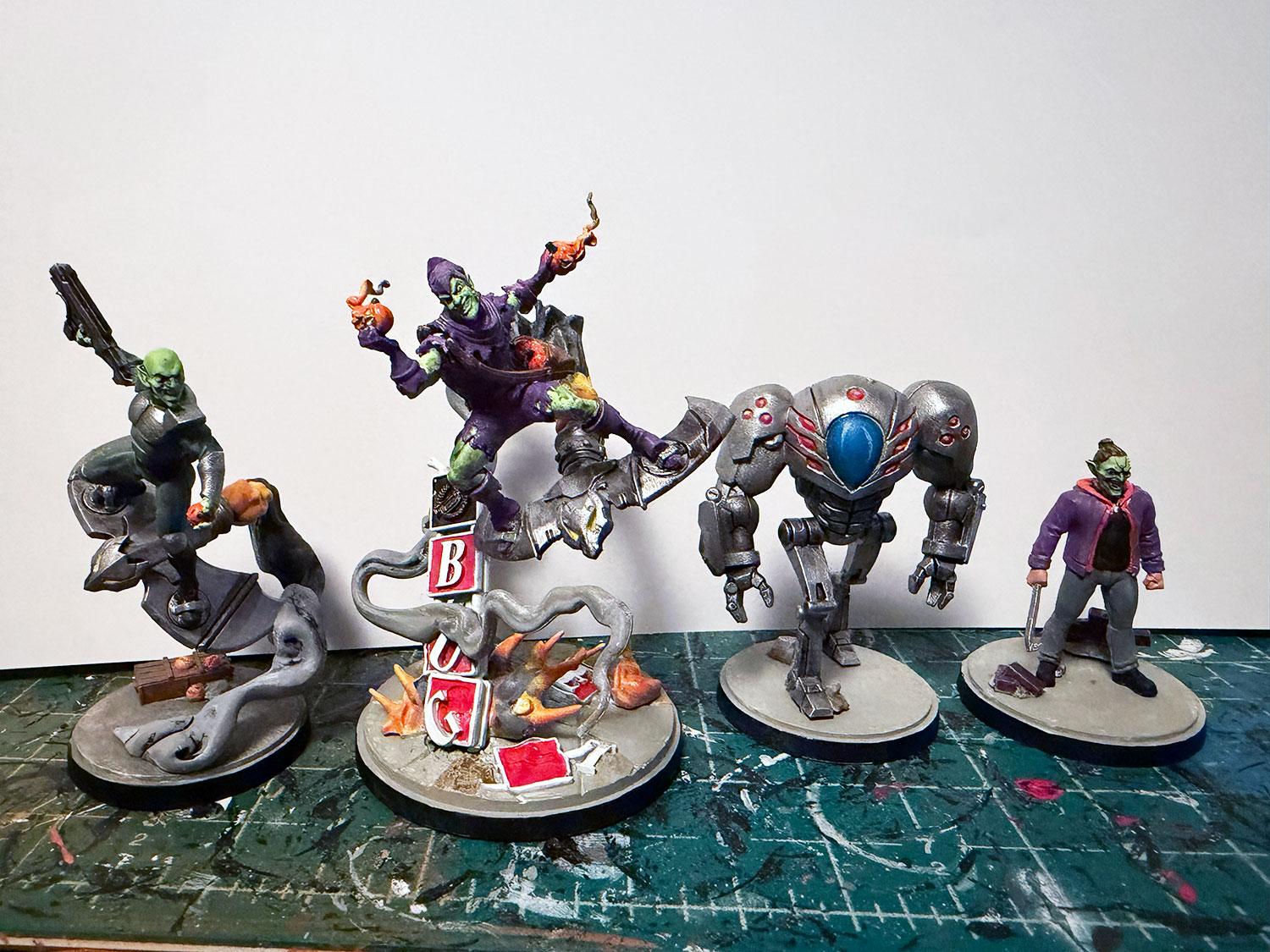
Are the minis as detailed? Detail-wise, they look close to AMG’s normal fare, but the bases aren’t 100% themed, so there will be some differences. The minis are push-to-fit, so glue isn’t required, but you may need/want to glue some of them. I received my copy from Tony already clipped out and assembled (sweet!) but not painted (rude!). He had to glue some that were falling apart on him, and I glued Black Cat together after her head kept falling off. Overall, outside of Green Goblin, they aren’t ultra complicated, so they are a nice introduction to the modeling part of the hobby. They tend to have large surface areas that don’t work well with speed/contrast paints but should look great with a coat of paint.
Unfortunately, the game doesn’t come with any sort of an insert for your carefully assembled and painted miniatures, so welcome to the hobby? For a game that might be introducing people to the miniatures hobby, this feels like a minor miss.
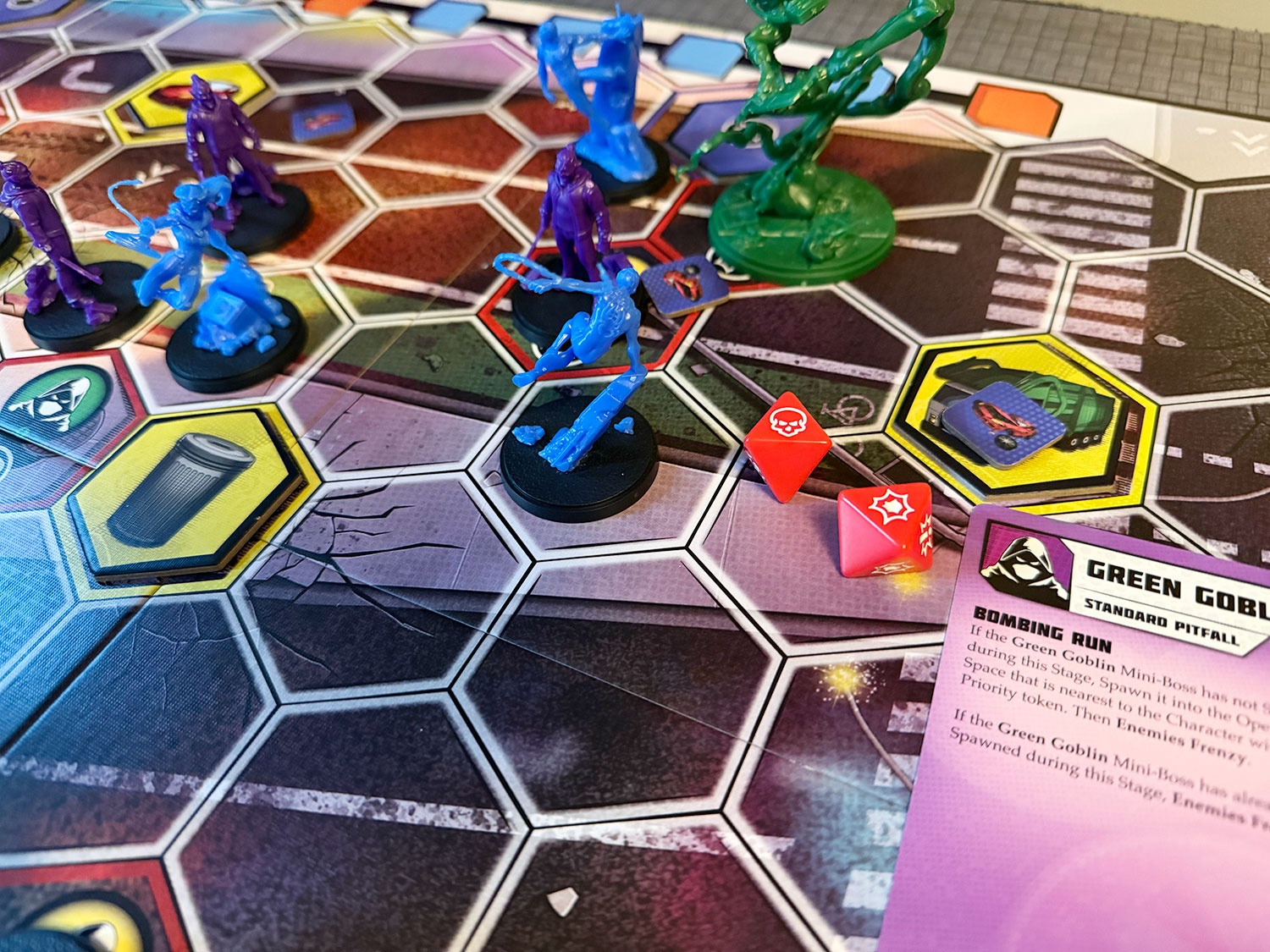
I really enjoyed how each mission was different. One of them has the heroes beating up minions and collecting tokens to match and make antidotes, while another has the players trying to defuse bombs before they go off, and the third is moving scrap metal to block sewer entrances. In all of these, there’s a balance between focusing on the objective and beating the stuffing out of the bad guys to open up the objectives. But too many bad guys on the track means they respawn at a faster rate.
The most challenging part of the game for me to grasp was only having one action per activation. Spending a turn only moving felt a little underwhelming, while being able to attack, getting to advance, or throw an enemy to then use a bonus action on an objective felt fantastic. But this rewards good, coordinated play between players, at a risk of alpha gamers being the real villains.
Playing two stages plus a boss stage took me about 2 hours and change with familiarity, maybe pushing that down a little so this isn’t a quick game, but it’s on par with what a normal game of Marvel Crisis Protocol typically runs. I think where both versions of Crisis Protocol excel is when you narrate the action that the dice represents out loud or in your head. Immersing myself in the action makes me want to get my best Gwen Stacy or Peter Parker snarky comments on.
Leveling up the heroes differentiates this game from his competitive big brother and is one of the standouts, as you get to pick from two of three at each of the first three levels. These are generally little boosts to the basic abilities, but they do add up. The variability gives a slight rogue-like experience, with a potential downside of you getting abilities that don’t jive with your playing style.
I found I tended to have Black Cat be my objective monkey, err, cat, taking advantage of her innate ability to work on contested objectives. With four players, it’s possible one person may feel like they aren’t having as much fun, although I did enjoy having Black Cat jump around hitting multiple objectives in a single activation.
Final Thoughts:
This has been one of my most anticipated games this year, and it didn’t disappoint. While I wish for more variability, I know that’s coming, and I think it’s important to know that this game, at its $100 MSRP, is likely best for people who plan to buy multiple boxes or use this to add to the competitive game.
Final Score: 4 Stars – This opening salvo of a system is a puzzly co-op beat ‘em up that hints at a bright future.
 Hits:
Hits:
• Marvel Crisis Protocol but cooperative that’s expandable with future Alliances sets and the base skirmish game
• Leveling up the heroes adds some variability to each play
• Enemy attacking system of pooling dice together into a single roll is quick and clever.
• Each stage is a different puzzle to solve
Misses:
• Limited variability within this box
• An insert would’ve been nice for the minis
• Lots of little rules to keep track of