
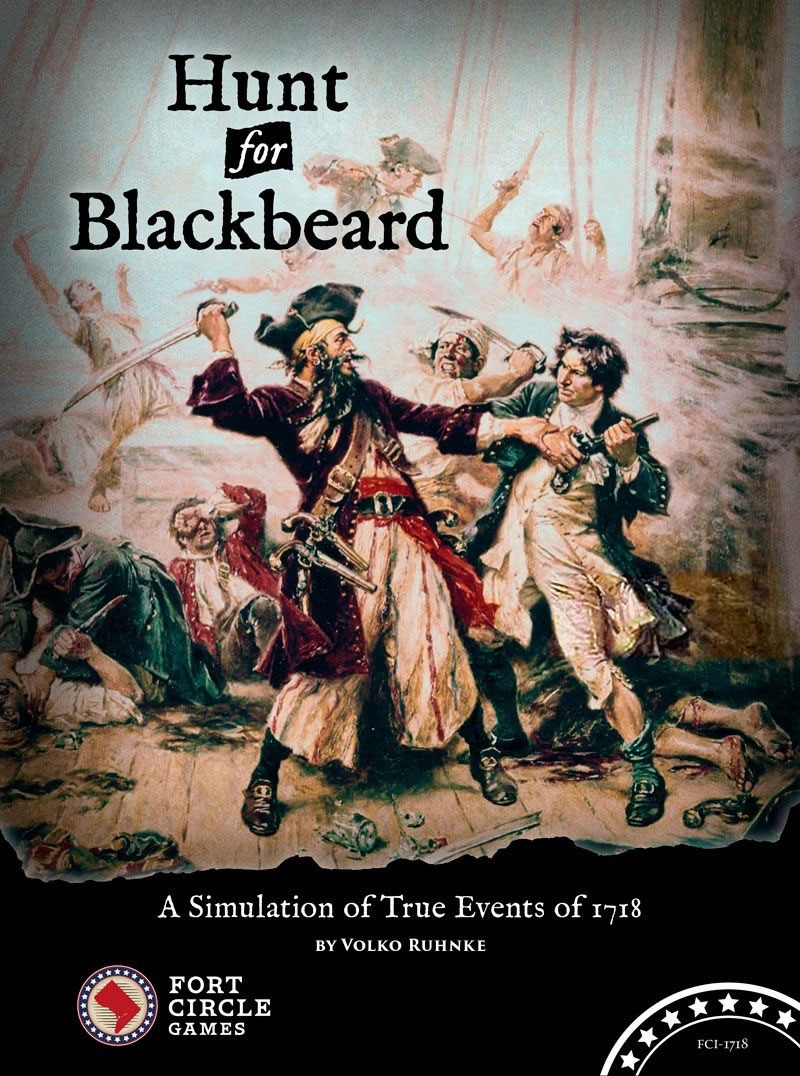
 Fort Circle Games continues to release games with compelling settings. From the Shores of Tripoli to the halls of Congress and beyond, each release has found a way to tackle unique historical subject matter and gamify the theme. With the recent release of Hunt for Blackbeard, the focus shifts to a hidden movement design with one player attempting to escape the law, and the other struggling to hunt down the titular legend.
Designer Volko Ruhnke, famous for numerous COIN game designs, presents a shorter and less complex system that hinges on historical misconception and intriguing fact. Let’s join the hunt and track down the truths hidden within this release.
Gameplay Overview:
In this competitive cat-and-mouse hidden movement game for two players, one plays as Blackbeard attempting acts of piracy and living the pirate’s life, while the other takes on the role of the Royal Navy commissioned to bring an end to the disruption along the coast of colonial North Carolina. Victory requires precisely planning out piracy acts and staying alive for Blackbeard, whereas the Hunters must find a way to corner and board the ship or arrest Blackbeard.
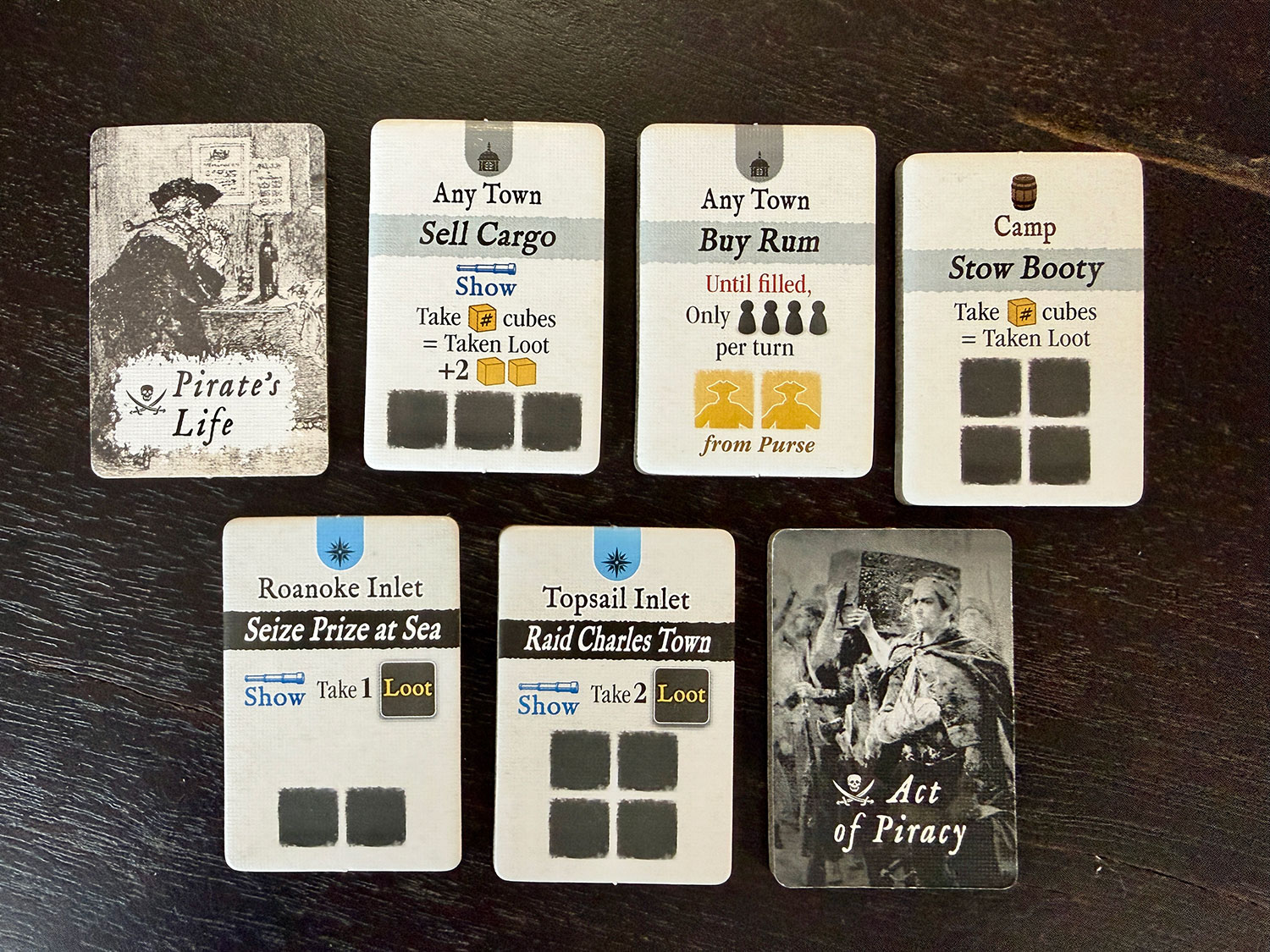
Each game has a maximum of four rounds. Blackbeard can see the face of all tiles on the gameboard and places his camp secretly to start. Then, the round of play alternates over specific actions for each side. The system is asymmetrical by design, and while actions may differ, players do use available pawns to take said actions both in secret and in the open.
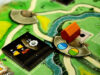
Play begins with the Hunters drawing an informant tile and choosing whether to utilize their information to peek secretly at specific tiles based on their locations. The map features different terrain types where informants may prove useful. Hunters seek Blackbeard’s camp at the start but can also find where Blackbeard’s ship may have moved to in future rounds. Hunters can also place a Surveil token next to any tiles they want to keep face up, which may hinder Blackbeard’s future movement.
Blackbeard’s first turn is spent secretly swapping out blank tiles (that feature seagulls signifying the open ocean) with ship sighting tiles that signify spaces that they have moved through. Blackbeard starts this turn by flipping over piracy tiles and planning their route to these locations for treasure and/or piracy. Each piracy tile has a specific number of squares that indicate how many pawns can be sent to it. By the end of round four, if Blackbeard has not completed at least half of these squares in either the top row (Acts of Piracy) or bottom row (Pirate’s Life), they lose. Blackbeard can also prepare ship defenses by spending gold on upgrades.
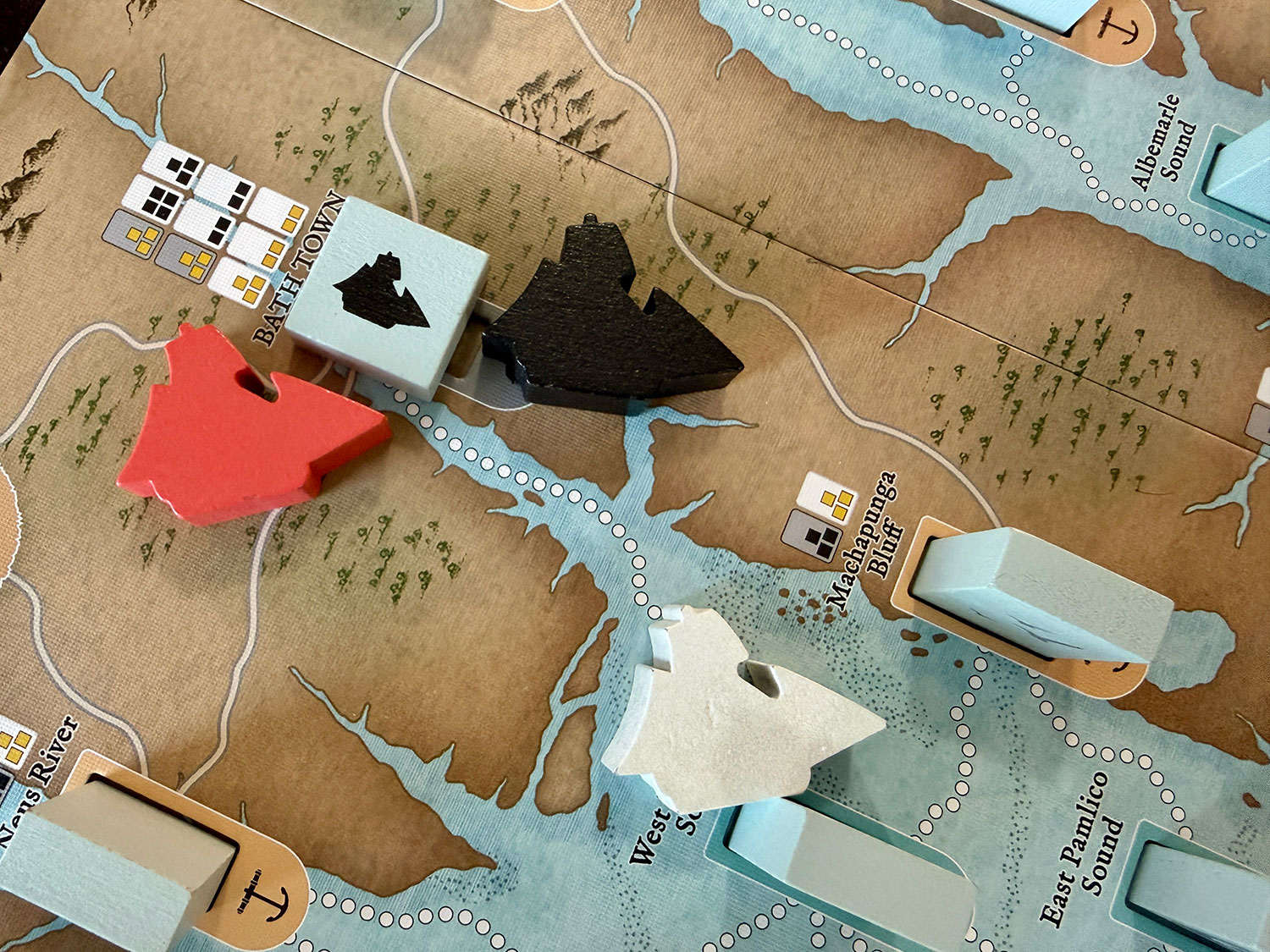
Next, the Hunter begins their reconnaissance. They can secretly commandeer assets (more on this in the battle section) in their starting harbor before moving along the coast to scout and spot tiles. Movement and scouting require pawns, so Hunters must be wary of how many they use for their informants before each movement phase. If a spotted tile features a sighting tile, the Hunter can freely spot again in an adjacent space until they find only water, or they discover Blackbeard’s location. Blackbeard’s camp can also be discovered this way and remains open information for the remainder of the game (it cannot be moved).
Whereas Blackbeard has only one hidden ship, the Hunters begin with two ships as well as a Lieutenant who can move along the coastline to spot at towns. Many of Blackbeard’s piracy actions rely on towns, so this adds pressure to the hunt.
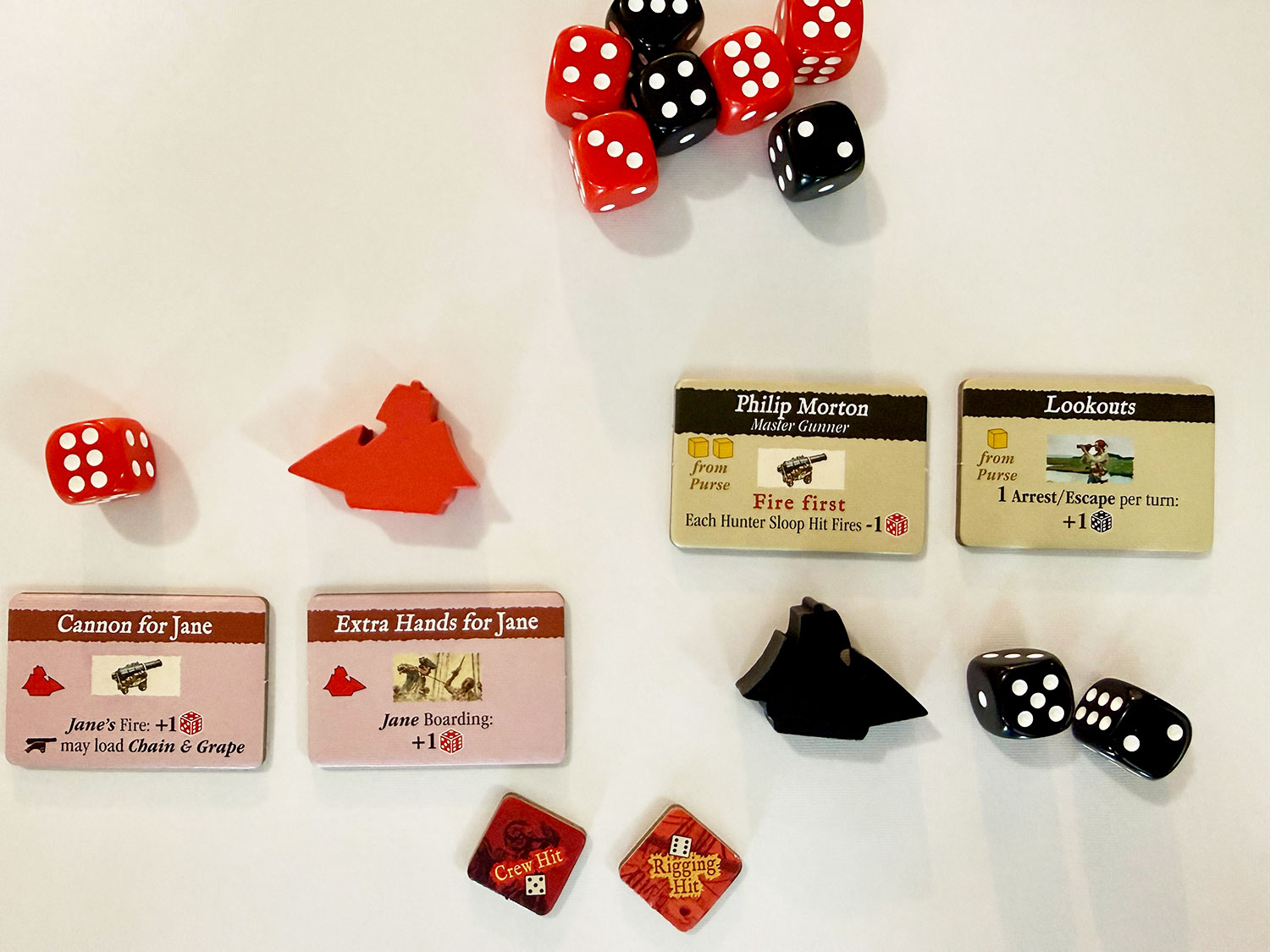
If both players find their ships (or the Lieutenant) on the same space, a battle encounter begins. Encounters allow players to commit assets to the battle (ship weapons and crewmates) and roll dice to determine the winner. Battles feature different phases, from Arrest (in a town), Battle, Escape, and Boarding. A boarding roll wins the game for either side. If no encounter occurs, Blackbeard secretly resolves his piracy if he’s hidden in the correct location for such acts.
Game Experience:
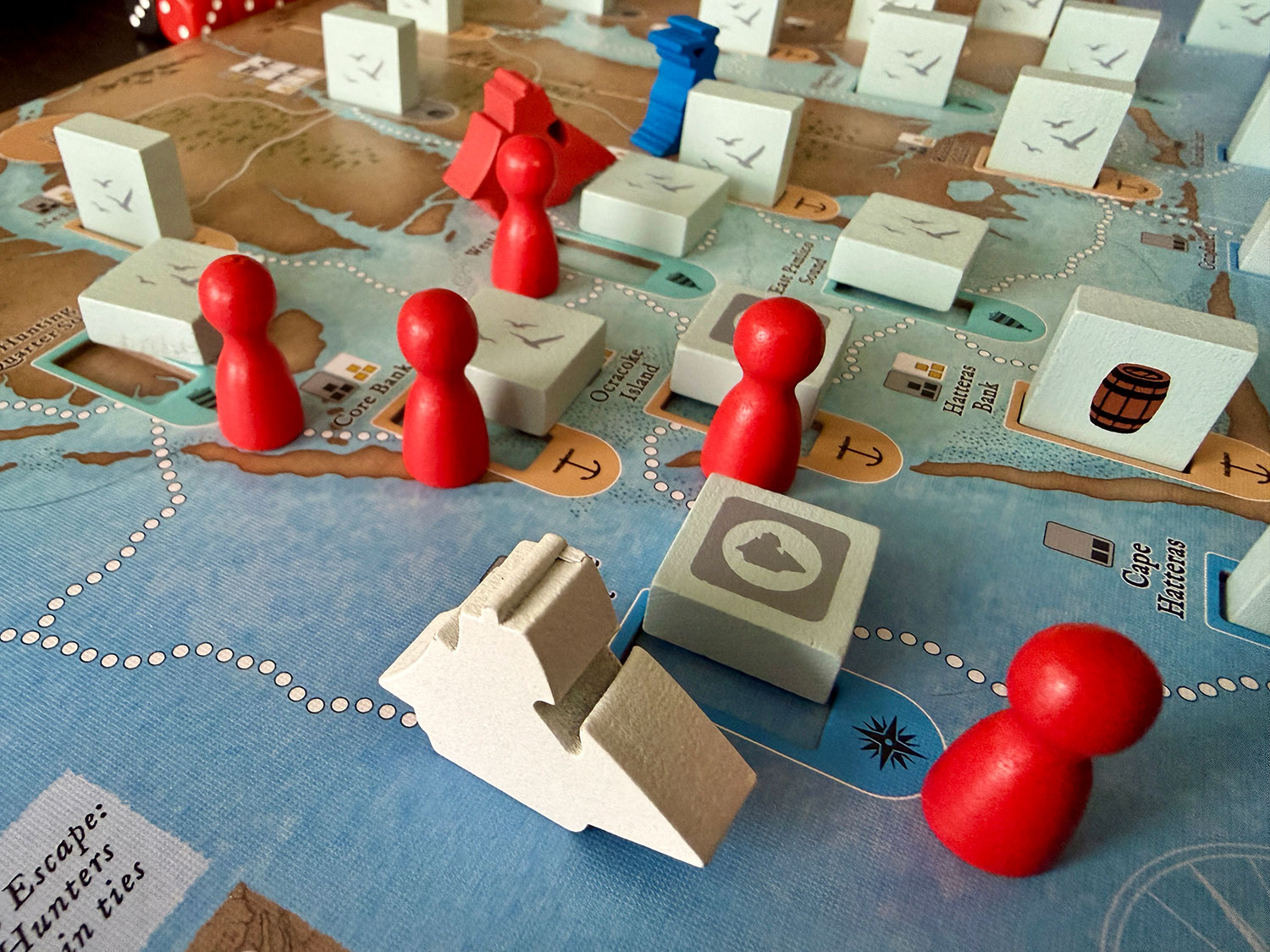
I was excited to get this to the table. It promised to be a 30–45-minute hidden movement game with some historical zest, and in this way it did not disappoint. The four-round structure requires precise decisions, risk-taking, and a little luck. Hunters must decide whether to spend time in the early game building up their ship’s defenses, considering the reliability of their informants, and sailing their ships into the unknown. The first round is mostly preparation in this sense, unless you luck upon the trail early enough.
Blackbeard, on the other hand, suffers from his notoriety. He must move often to complete piracy goals, but in doing so, everyone recognizes his ship, and it’s the sighting tiles that come back to bite him. The choice to follow Acts of Piracy also finds Blackbeard having to reveal his location due to the new infamy he is spreading. He can find a little luck through his piracy draws, loot acquisitions (which provide gold), and a nice die roll resulting in an escape.
The structure of play provides a good balance. Informants provide a sneaky insight, but then Blackbeard moves next turn. Hunters spread out and seek next. But if not found, Blackbeard resolves his piracy and the game shifts to the next round. Even an encounter can lead to an escape and thus shift the tide with more hidden movement. As such, there can be sudden thrills and sneaky maneuvering, and there is always the threat of not quite knowing what your enemy may know.
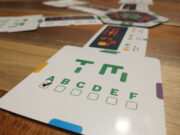
All that said, I do have several issues with my plays. The foremost issue has been the way the rules are presented. For a simple system, the rules do little to get out of the way. We found ourselves deep into the rulebook seeking answers to questions that were as hidden as Blackbeard. There are also two different ways to experience the rules via the Learn to Play and the main rulebook, both of which do a disservice to the other. Thankfully, the player aids keep each round on track, though they seem to muddle the battle encounters quite a bit. And based on the empty real estate on the privacy screens, they could’ve been printed there instead of being a large reference sheet.
Speaking of battles, it is rare to have more than one or two during a game. When they happen, they should be epic moments, and sometimes they can be seen that way. But the rules behind how to gather dice and present assets to use in battle, and firing and losing dice based on which part of your ship is hit, and escaping and boarding all collide in a strange fashion—similar to the sentence you just read. There is some theme hidden in there, but it’s more complicated than it needs to be and bogs down the moment.
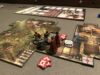
Another issue that may just be a “me” thing is the looking away from the board while your opponent makes their secret moves. The game features player screens to hide your pawn and ship areas, but the open map requires looking away from the game. It never feels good to have to step away from the action even in a hidden movement game. And due to the nature of the design, the board’s map is never facing one single player. This leaves the board hovering strangely between usable and awkward.
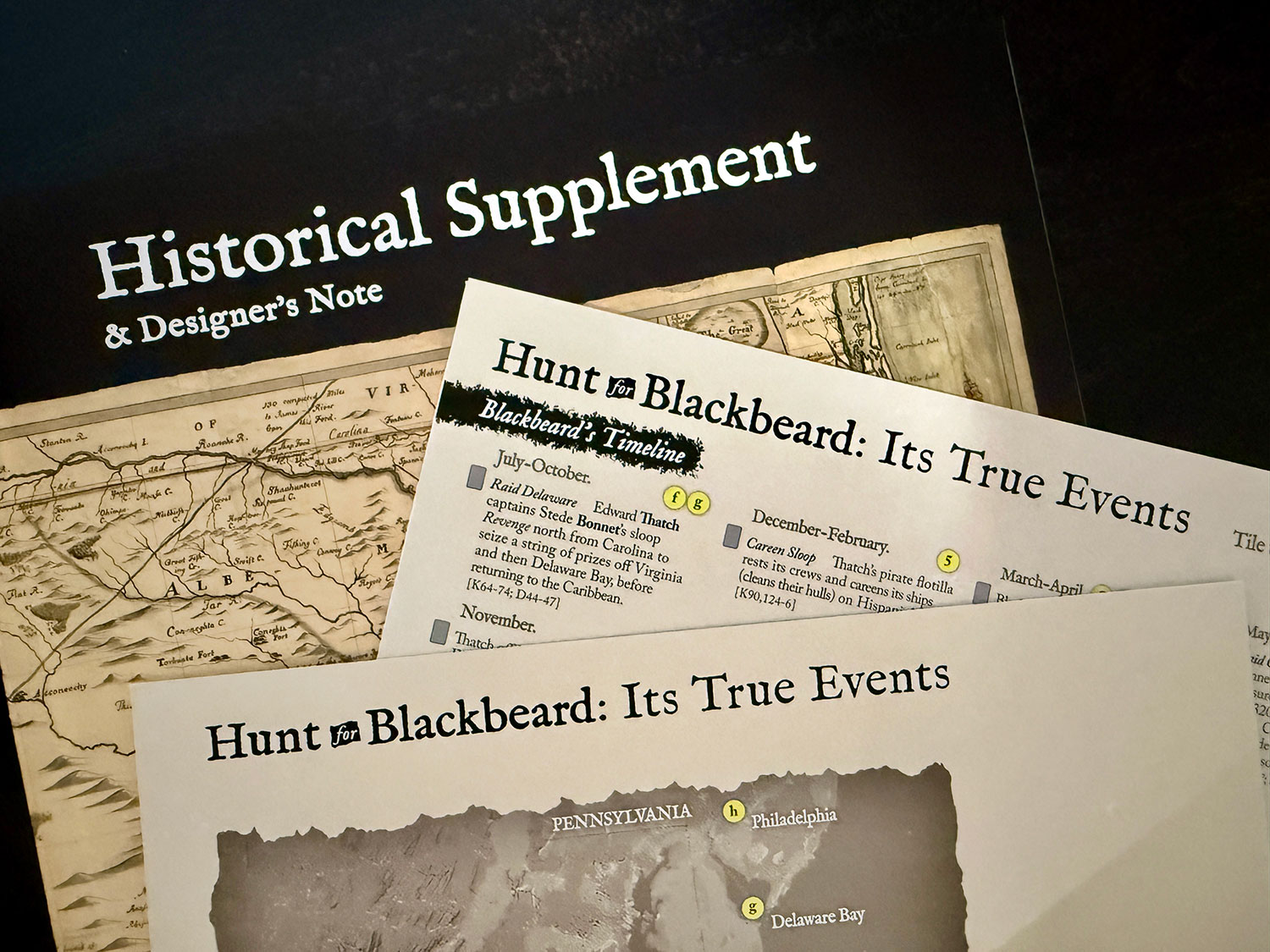
Hunt for Blackbeard does feature an advanced mode that provides more ship assets and allows Blackbeard two pirate figures for land movement as well. This gives Blackbeard more risk along the shores but also allows him to press his luck for piracy acts that require more action from the Hunter’s lieutenant. A historical booklet is included with twenty-one pages of insight into the real Blackbeard, the legend, and the life and times during that era, which is a fun read.
Final Thoughts:
Due to the nature of rules complexity and the quick plays, Hunt for Blackbeard finds itself in muddy waters. It’s probably best for players who have a dedicated partner to dig into the nuances of the system and who strive for carving out new paths to explore. Teaching this to new players isn’t conducive to a fun time, as it immediately requires an overview that’ll take longer than the game and presents an imbalance of knowledge about the mechanisms at play. I still commend Fort Circle for embracing the historical landscape and presenting designs that are unique and educational. Here, I could’ve used a little less mechanism and a little more thematic fun.
Final Score: 2.5 stars – Hidden movement for those who need a break from their heavy COIN games.
 Hits:
• Never overstays welcome
• Cat-and-mouse head games
• Round structure
Misses:
• Rules overhead/clarity
• Time spent looking away
• Component miscues
• Battles are not fun