

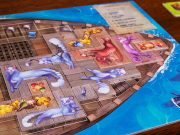
 Adrenaline pumping, high-speed races have never registered with me as something that could translate well into a board game, but when I had the opportunity to trade for Flamme Rouge, I decided to give it a try.
It turned out to be a surprisingly fun and engaging game. It played quickly, and with the slipstreaming and exhaust features, it genuinely made you feel like you were cycling in the Tour de France.
However, over the past couple of years, circumstances have made it harder to get out to play in regular gaming groups. As a result, I’ve been looking more for games with a solo mode. Flamme Rouge unfortunately doesn’t have a great solo mode out of the box unless you buy the Grand Tour expansion—and I really didn’t want to spend $60 just to get a solo feature.
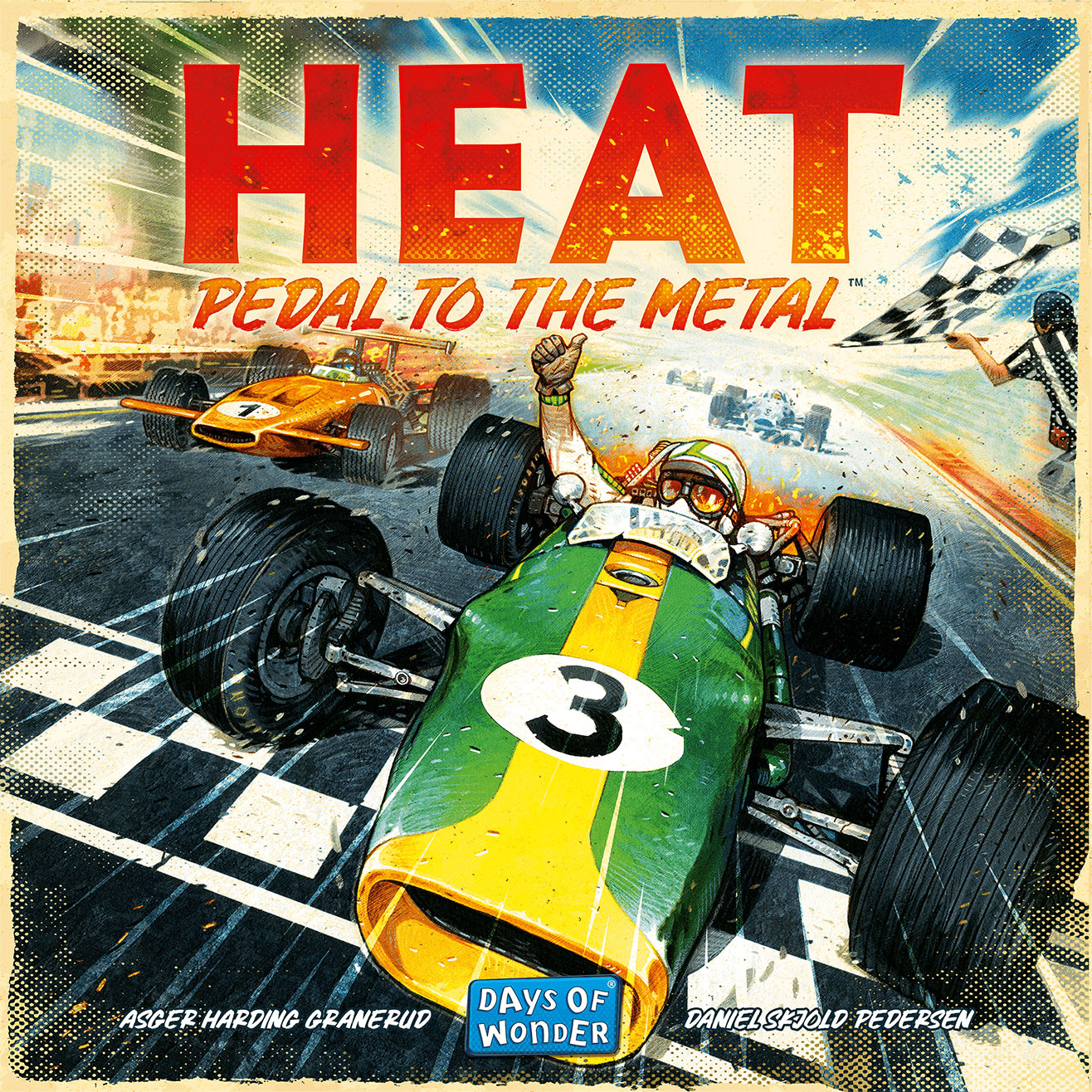
That’s when I began to wonder about Heat: Pedal to the Metal by Days of Wonder. I was highly skeptical that a car racing game could feel thematic and exciting unless you were chucking dice, but even then, is that truly thematic?
I didn’t want to overlap similar games in my collection, as I have a limited budget and limited shelf space. But then I came across a great deal for Heat: Pedal to the Metal that I had to consider, and the reviews on the solo mode were highly positive. I asked a friend who owned the game and played it multiplayer, and he told me flat out: “You won’t regret it.” So, I pulled the trigger and grabbed the game. Would Heat Pedal to the Metal be a winner?
Gameplay Overview:
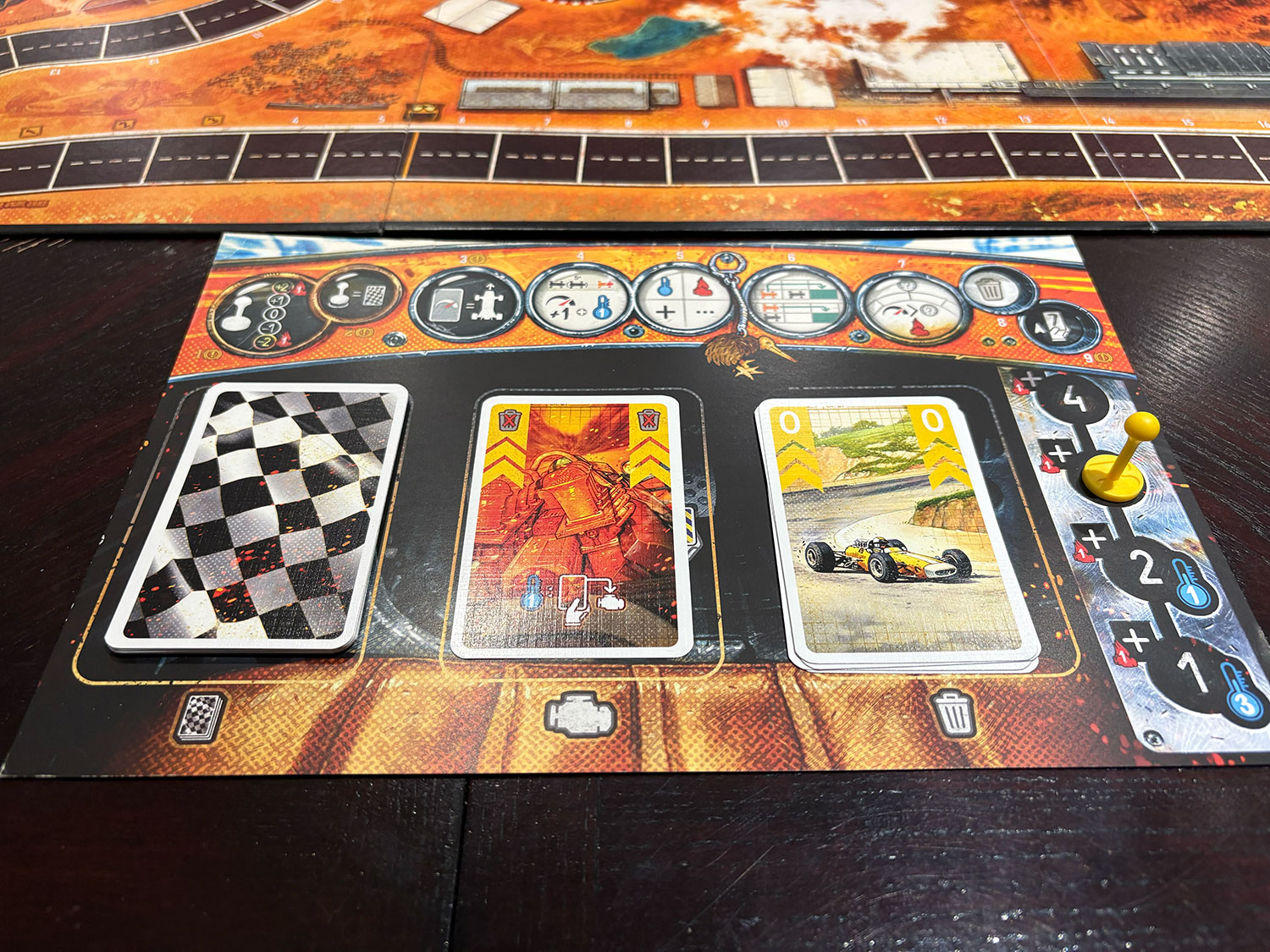
In Heat, you are managing a hand of cards to race vintage 1960s formula cars around a track. At the start of your turn, you decide to shift your gear up or down. Your gear choice dictates exactly how many speed cards you have to play from your hand that turn, directly influencing how many spaces you would move.
Once you choose your cards, you reveal them and move your car forward by the total numeric value of those cards. The real puzzle of the game comes down to navigating the corners. Every curve on the track has a specific speed limit printed on it. If the total speed of your cards goes over that limit, you have to pay the difference using “Heat” cards from your engine pool. If you run out of Heat cards in your engine and can’t pay for your speed, you spin out, take some nasty penalties, and eat everyone’s dust.
You can race up to five other cars, and the first to complete two laps is the winner.
Game Experience:
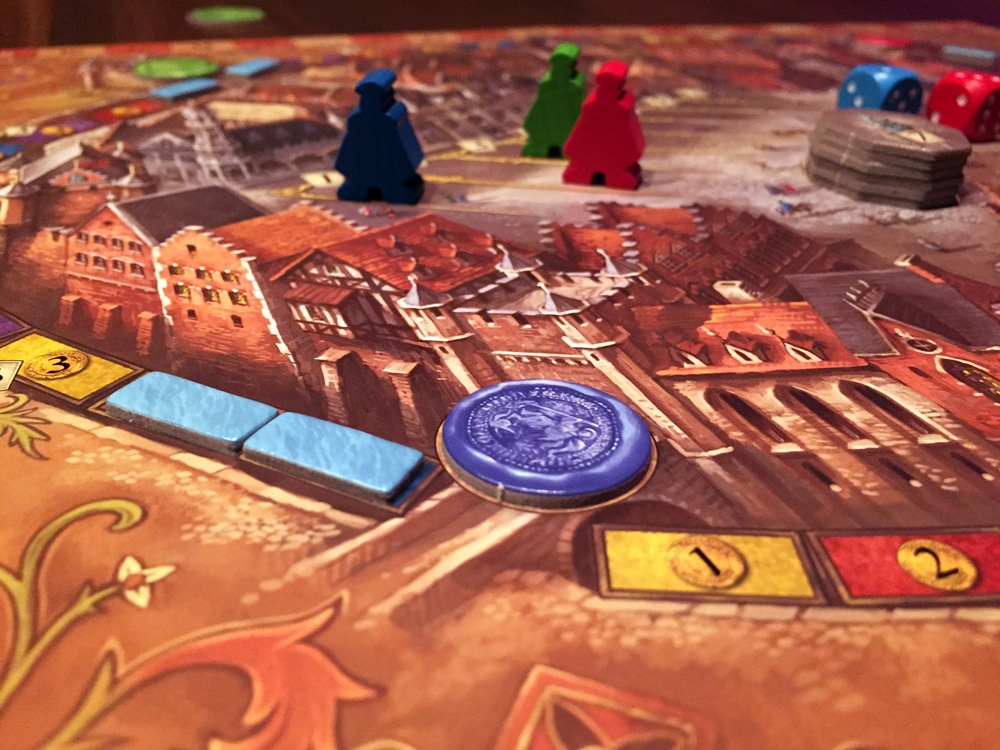
The art is done by Vincent Dutrait, who likes to do everything by hand with traditional pencils and paints. Instead of sleek, hyper-realistic digital graphics, the artwork has a classic, retro feel.
It looks like the cover of an old 1960s sports magazine or a vintage poster for the Monaco Grand Prix. The colors are bright and vibrant, and the way the dust, exhaust, and crowds are drawn captures that old-school, cinematic racing atmosphere. It does a fantastic job of selling the theme before you even put a car on the track.
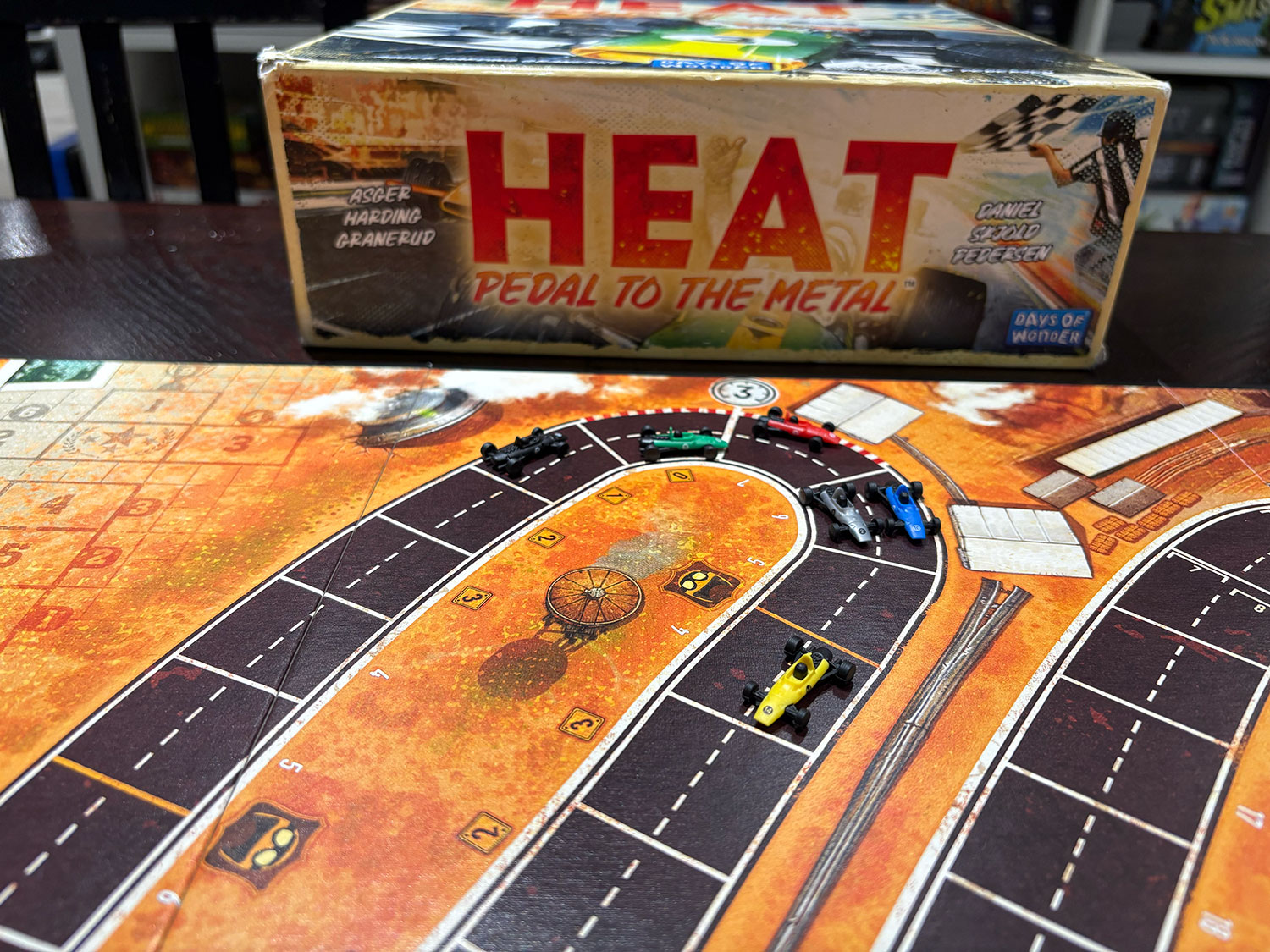
The little race cars and plastic gear shifts are fine for plastic components, and the box insert leaves room for expansions!
Setting up the game is quick and easy. However, while the rules themselves are not complicated, it did take a little bit of time for me to get into a rhythm and fully wrap my head around the flow of the game.
A few turns into my very first game, I started to get a feel for the flow, and the play moved quickly. After getting destroyed in my first race, I realized it might take a few games to start to get the strategy down.
Then came my second game. With a game under my belt and minimal management for the solo mode, I was able to focus on the strategy of the game.
I quickly fell behind in the race, but as I learned to navigate the hairpin turns, I started to catch up, and by my second lap, the game started to click, and I was fighting for the lead. It was a tight game, but after making a smart play around a corner to make a run for the finish line, I won the race.
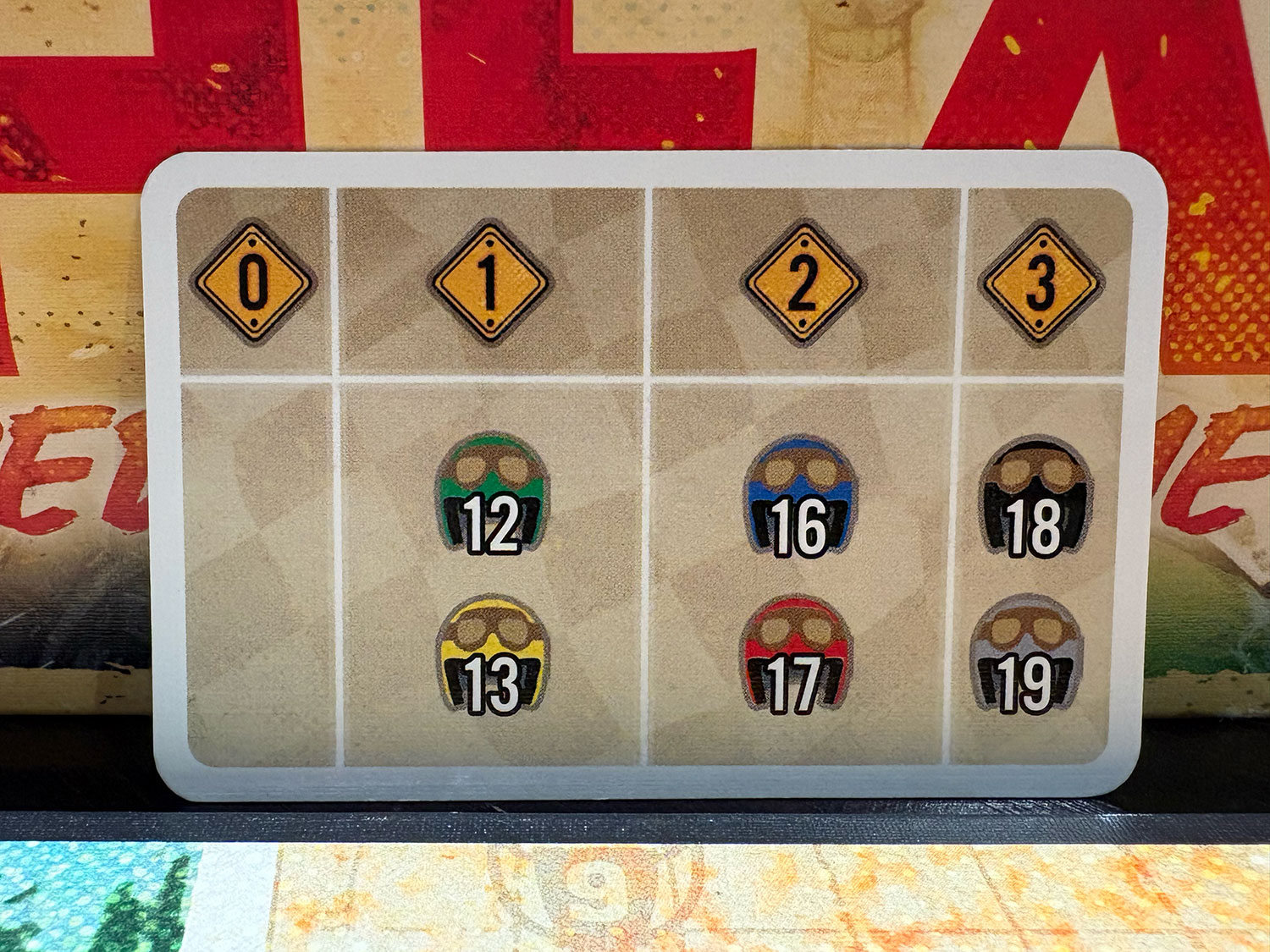
I literally just sat back in my chair, looked at the game on the table, and thought: “Wow. That was incredible.” I just sat there for a minute, taking in what I had just experienced. It wasn’t just that I had one; it was how the whole game felt so thematic, engaging, and even thrilling. Rarely have I ever had that kind of feeling with a solo game. It felt perfectly balanced, highly competitive, and as realistic a race as I think a board game could possibly have.
A massive part of that success comes down to how the game handles the other drivers. You use the “Legends Module,” which is a deck of automated cards that runs the bot cars. Managing these cards is remarkably quick and easy and in no way tedious. You just flip a card, move the bot cars according to the simple instructions, and get right back to your turn. It was remarkable to see how balanced and competitive the bot cars actually were. They constantly keep the pressure on you.
I have to commend the designers for the thought they put into designing the solo mode.
This fantastic game is made even better by the sheer number of variables included in the base box that make it infinitely replayable. Days of Wonder put a ton of content in this game. For starters, it comes with four different maps right out of the box (USA, Great Britain, France, and Italy), giving you plenty of tracks to learn.
On top of the maps, you can mix in several different modules to change things up:
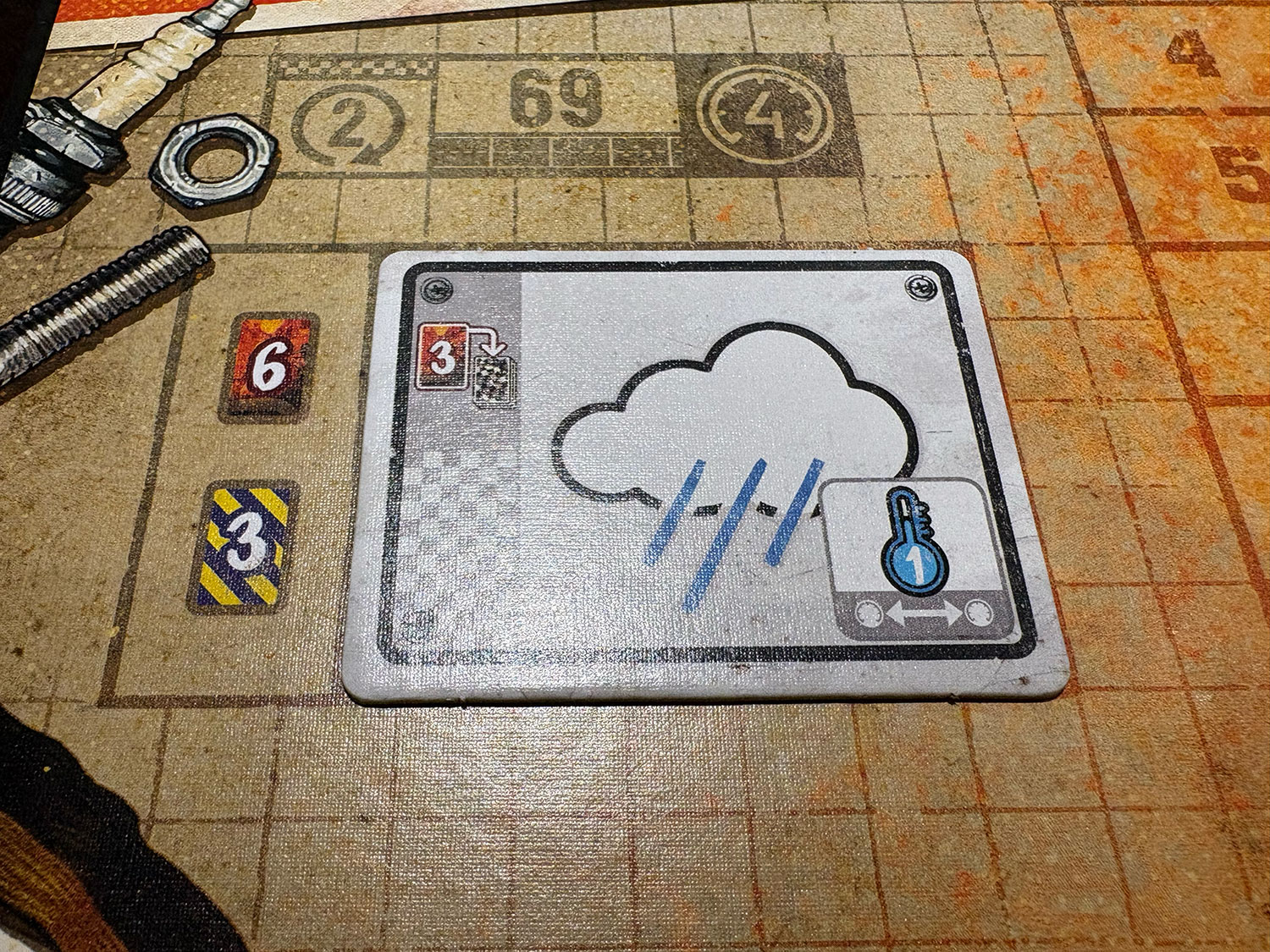
The Garage Module: This introduces a system where you get to upgrade your car before the game starts. There are so many different ways you can customize your deck with advanced parts to change how your car handles.
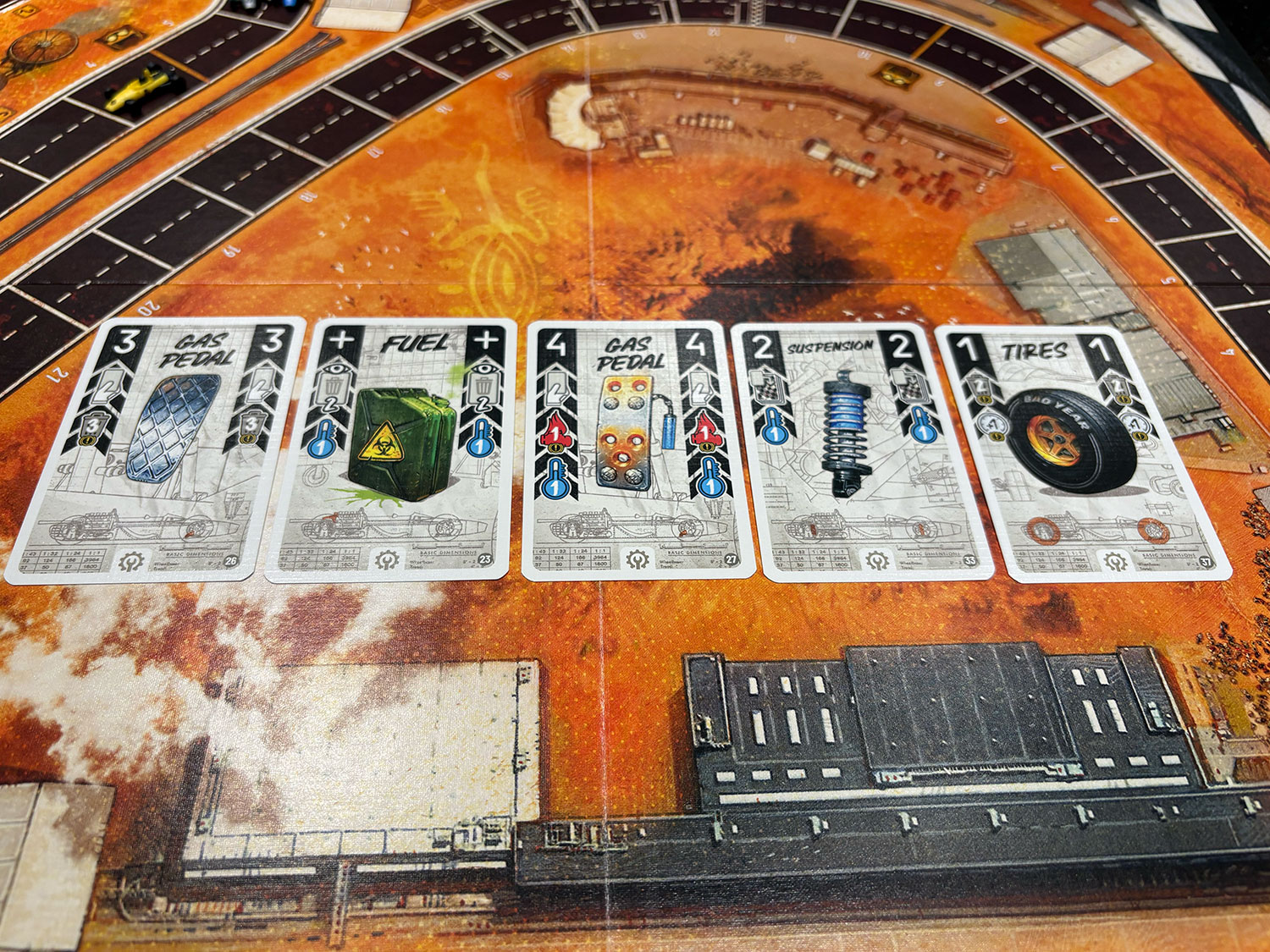
Weather and Road Conditions: This module mixes things up and makes it a lot of fun. It adds tokens to the track that alter the weather, affecting things like corner speed limits or how fast your engine cools down. It completely forces you to develop brand-new strategies.
Championship Mode: If you want a deeper experience, you can choose to do a full championship, which involves running multiple races back-to-back where your upgrades carry over.
Final Thoughts:
Heat: Pedal to the Metal completely blew away my skepticism about whether a car racing board game could be fun, let alone be fun to play solo. It manages to capture the tension of a real race without bogging you down in complicated rules or fiddly management.
If you are a solo gamer looking for an experience that feels genuinely competitive, has high replay value, and is capable of giving you that rare “wow” moment at the end of a game, Heat is a game worth checking out.
Even though I haven’t played the game with other players yet, I have no doubt it will be a winner. My friend was right; I didn’t regret it, and neither will you.
Final Score: 5 Stars – A finely tuned racing engine of a game worthy of a championship trophy!
 Hits:
Hits:
• The solo mode is incredibly well thought out.. Managing the other cars is quick, easy, and not tedious at all.
• The game is remarkably tight, balanced, and competitive, giving a highly realistic racing feel.
• Insane amount of content and replayability right in the base box, including 4 maps and multiple modules.
• Thematic artwork
Misses:
• The box is quite large and takes up a good amount of shelf space.









Just thought about buying this today and was looking for a review in this website. Crazy how it got published today, must be a sign lol
It must be David! Would love to hear your thoughts once you’ve played it!
Should probably note in the title this is a solo review.