
 I despise the word “impossible” in the two-player board game design space. It’s “impossible” to make an 18xx game at two players. It’s “impossible” to make an area control game with two players. It’s “impossible” to make a hidden roles game with two players. When a designer or design team aims to tackle the “impossible,” I always seek it out.
Scales of Fate, promising to be a two-player deduction game, intrigued me from the start, and I’m honored to be able to review it.
Gameplay Overview:
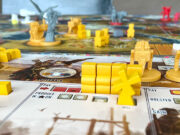
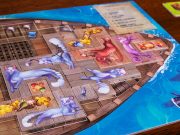
In Scales of Fate, two players will be manipulating nine demigods with the aim of raising and/or lowering those demigods’ points. At the start of the game, each player will draw two demigods from their personal nine-card demigod deck, and those two demigods are the ones they will be scoring with. The players aim to have their two demigods end on the same scoring space and score that number of points, or aim to have their two demigods have a large spread between the two, with that spread being their score. (For instance, if one demigod is at 11 and the other is at 4, that player’s score would be 7.) Do note that each player has the same demigod deck, so it’s possible that the players could share one or both demigods with one another!
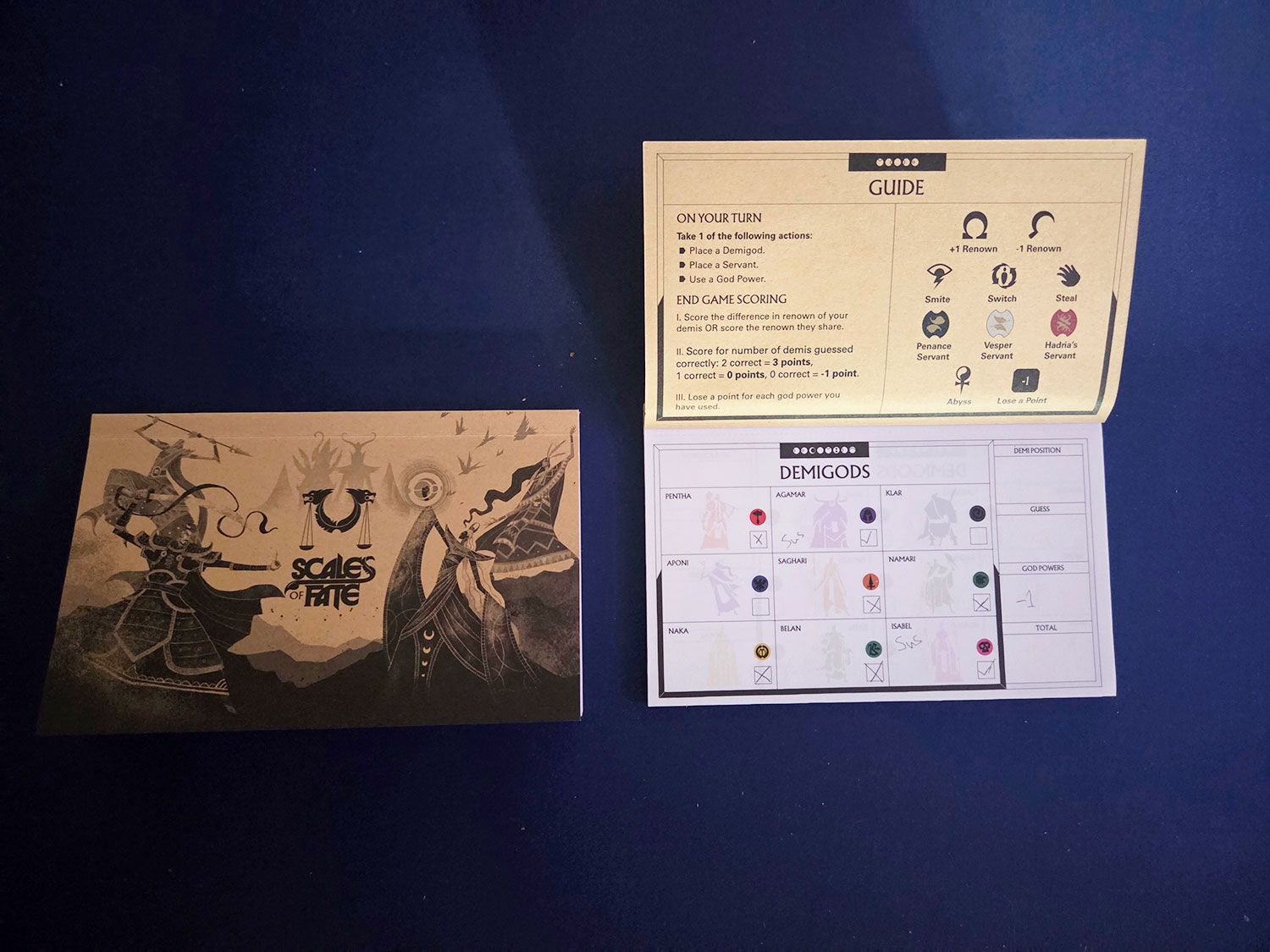
The final scoring of the game factors in the demigod scoring, but also includes additional points or penalties for guessing or not guessing the other player’s demigods correctly. Guess them both correctly to get three points; guess one correctly and get zero points, and guess none correctly to lose one point.
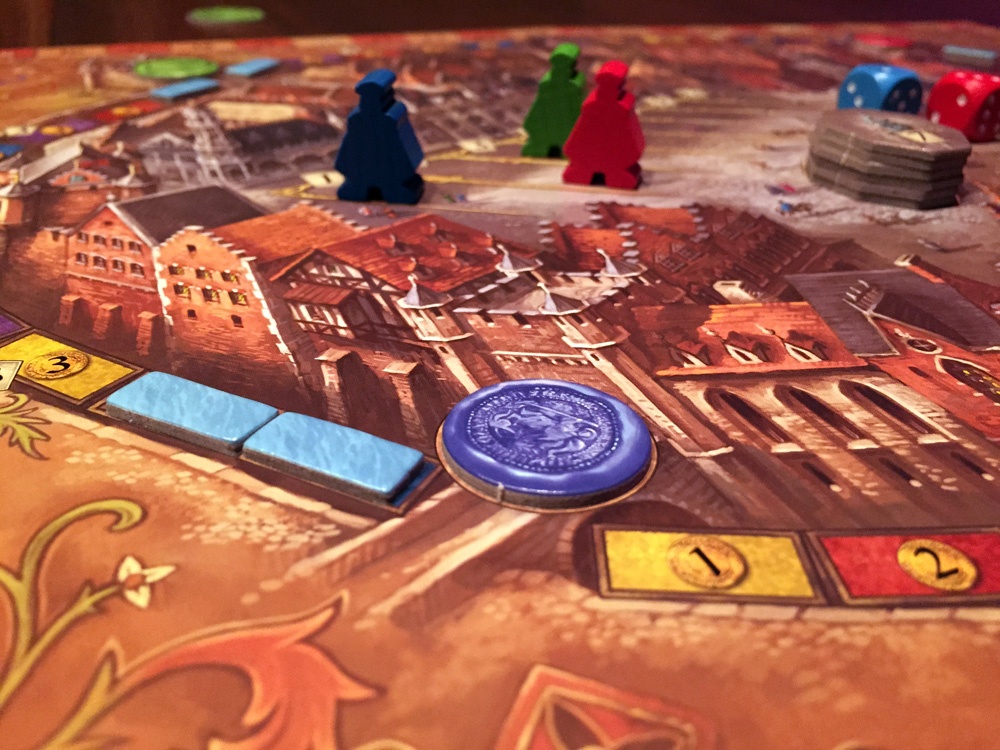
The game takes place over three rounds. In each round, players will be able to place any demigod on available action spaces. They’re all quite simple and allow the demigod point values to go up or down by one to three points. At the end of the round, there is a free clue to the demigod identities through different factors of the board state: scoring position, demigod placement, etc.
At the end of the third round, players will make their final guesses and calculate their final scores. Victory only comes to the player who can finely walk the tightrope of moving their demigods into high-scoring scenarios while simultaneously not making those movements obvious. Deceive and play cleverly to win Scales of Fate.
Game Experience:
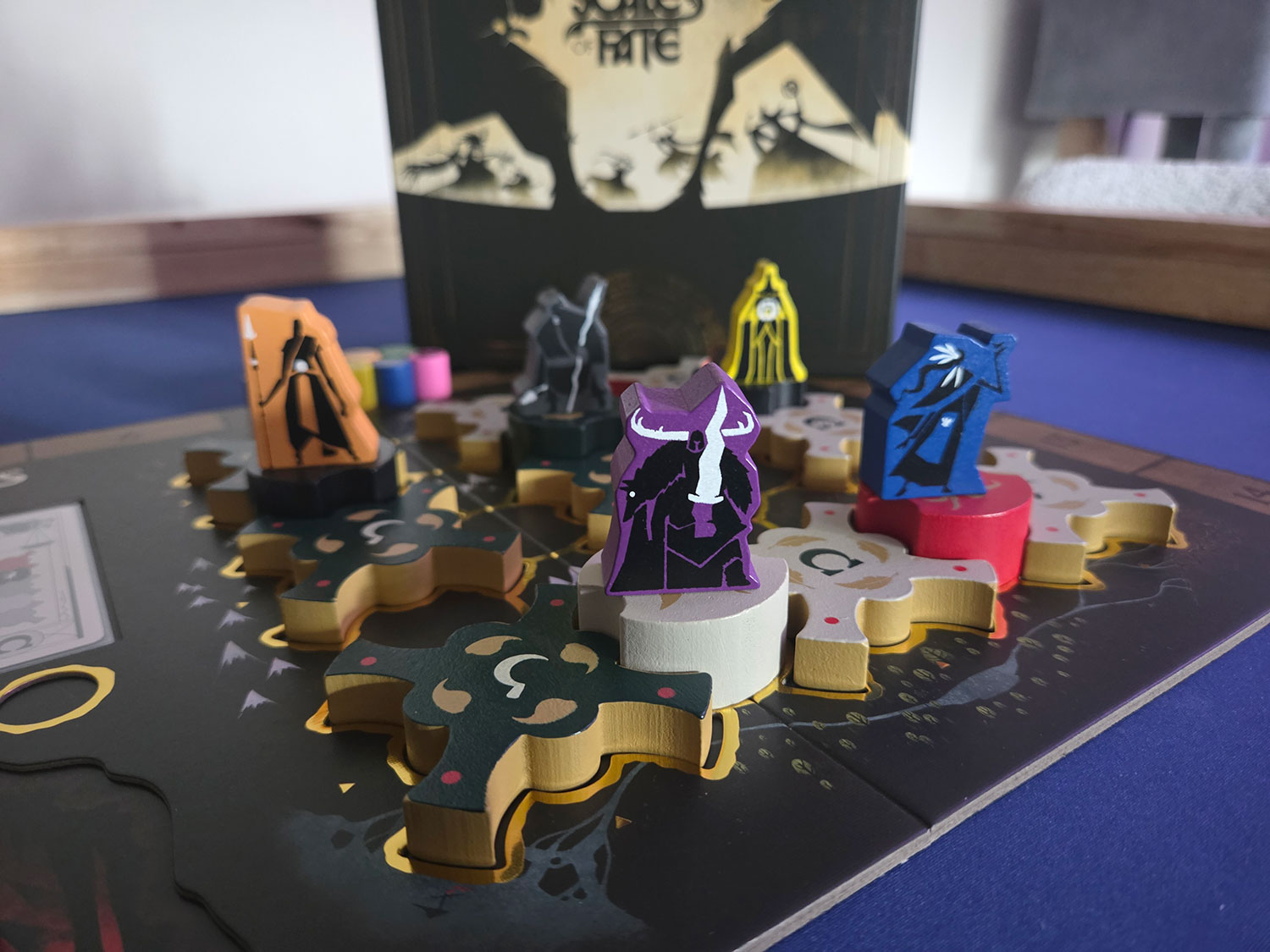
Scales of Fate is a dead simple game with few options each turn, and yet each action taken has immense weight. Not only is the active player trying to find the appropriate move to improve their situation (or throw the other player off their scent), but the other player is watching every single action, every hesitation, to try to deduce who the other player is trying to score with. It’s this balance that makes Scales of Fate stand out: at no point can anything be hidden. The game is so small in its scope that every action (or lack of action) can be read into, leading to every second of the game being engaging for each player.
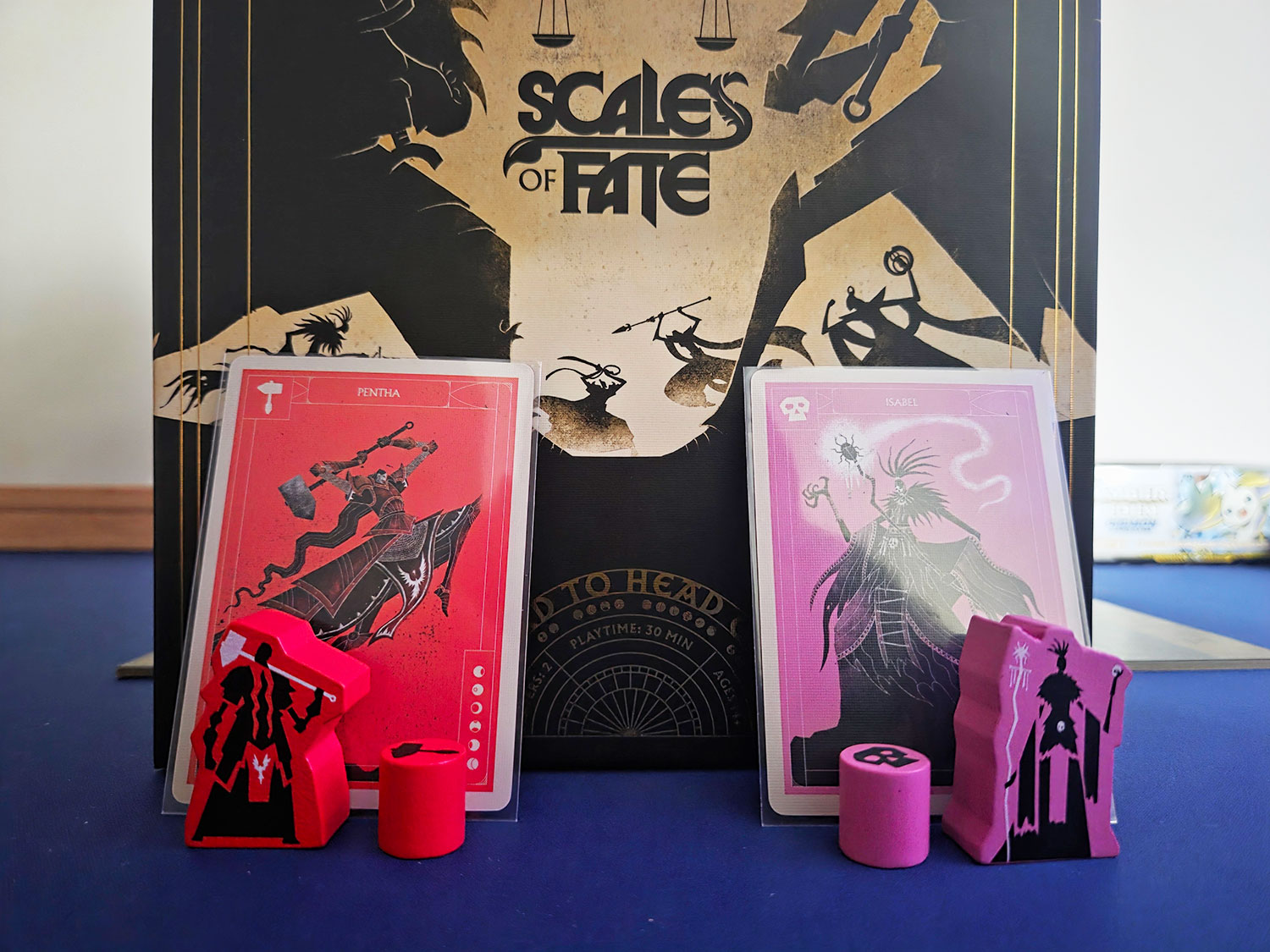
Another layer to this is the end-of-round clues. While it is posed as a simple “yes” or “no” question, that information is vital for winning the game. I may now know that three of the nine demigods are not victory pawns for my opponent, which means I can now focus even more intently on the remaining six. It also means that I might be able to place a few of those remaining pieces into compromising positions so that the next clue given out will help my guesses even further. But my opponent is doing the exact same thing. Or are they?
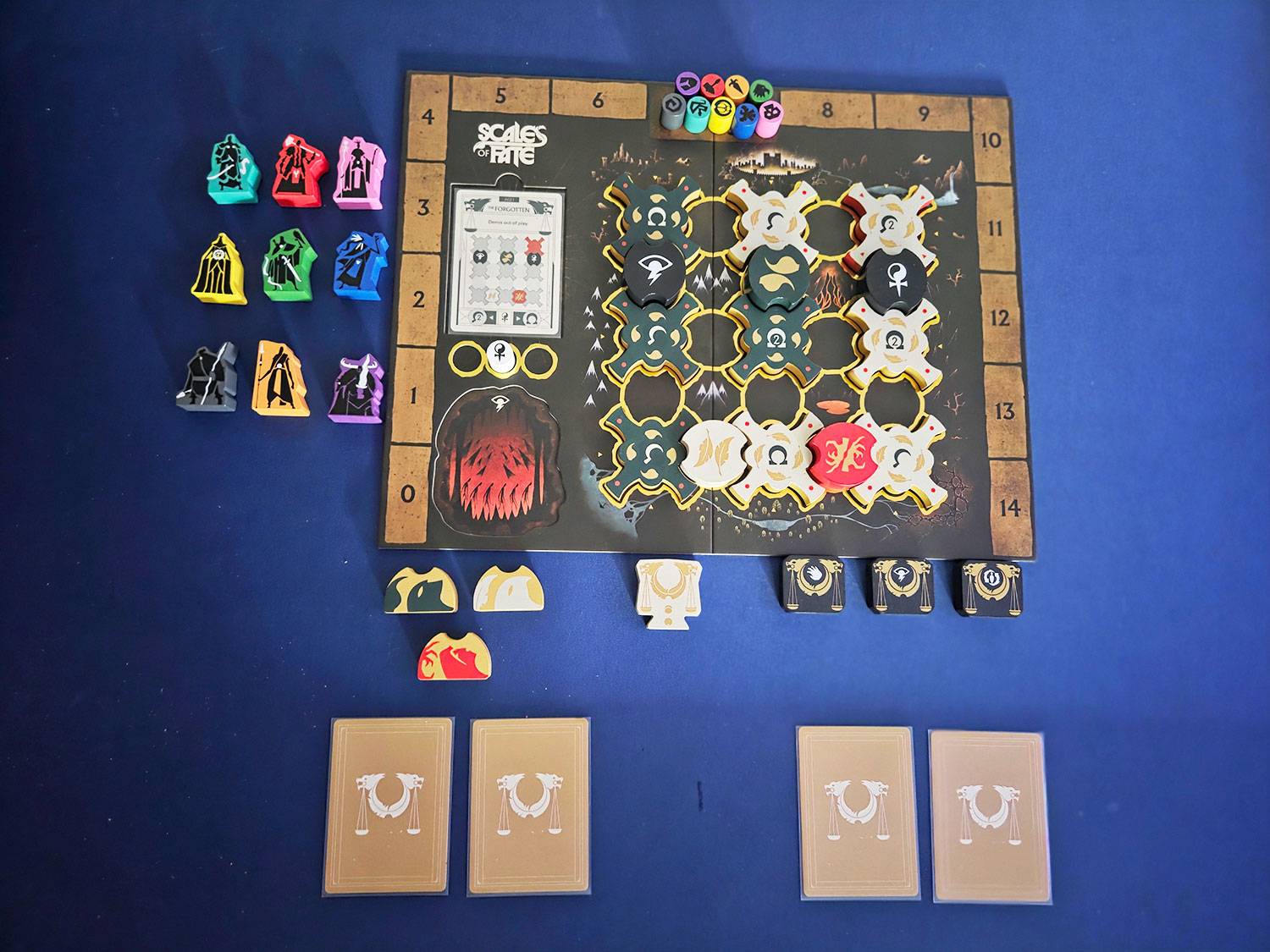
The design of this game leads to every action and every lack of action having such an impact on the investigation of the other player’s demigods. But the wrinkles don’t end there. Two of the actions that a player can take on their turn are to place a separate scoring piece next to a given row or column to score all of the black or white scoring disks in that row or column. Sometimes this play can be obvious, in that there’s only one demigod in the row or column. But how am I supposed to deduce any solid information from that action if there are three or more demigods there? And what if placing in that space was itself a distraction?
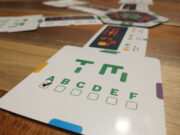
In case I haven’t hammered the point home hard enough, this is the most intense and thought-provoking deduction game I’ve ever played. Pair that with excellent components and custom notepads, and you have an experience that is perfect to play, both physically and mentally. And while it is a game that requires full attention during its rounds, each round only lasts five to ten minutes, so there are also built-in breaks for each player to digest the plethora of information they just received. While its playtime of 20-30 minutes may seem short to some, I think it’s the perfect length for a game that requires this much mental bandwidth. Besides, I’ve never sat down and played this game one time: each time I’ve played with my wife, we’ve done at least three games, because neither of us wants to walk away from it.
Final Thoughts:
This has been one of the most difficult reviews I’ve ever had to write. Describing the simplistic perfection and beauty of Scales of Fate is impossible to do without extreme hyperbole. The game captures the feeling of a high-player-count worker-placement game with just two players. It does hidden role gameplay in a more engaging manner than any other game I’ve ever played, let alone any two-player game. The pacing is perfection, always ending with just enough actions to impact scoring and just enough information to make some solid predictions as to whom your opponent is scoring with. Scales of Fate is the Mona Lisa of board gaming, and deserves to be heralded forever and given a spot in the world’s most prestigious art museums.
Final Score: 5 Stars: The Scales of Fate are Perfectly Balanced
 Hits:
• Perfect production quality
• Engaging, active gameplay at all times
• Two-player hidden roles have been cracked!
Misses:
• Slight color readability issues
• Non-deluxe version has accessibility issues
• Limited to two players only