

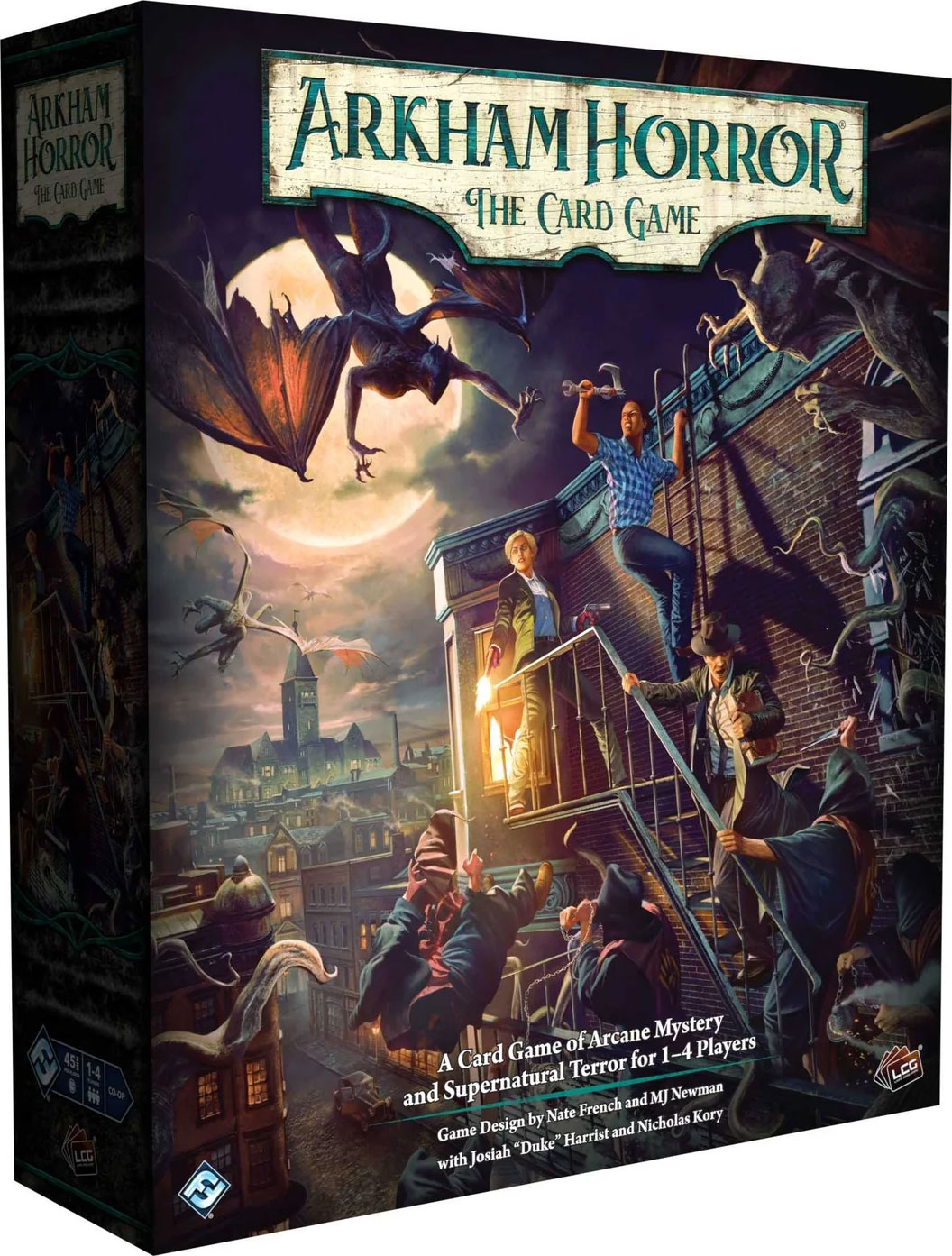
 Fantasy Flight Games has been gracious enough to continue to support the Arkham Horror: The Card Game system for almost ten years. During that timeframe, they released several campaigns, standalone scenarios, investigator decks, and supplementary products. Due to a lack of reprints and scarcity, the system was strained by continuing forward while losing the ability to bring in new players.
Enter this updated core set for the game. Considered a second chapter of the system, this release features new lead designers Josiah “Duke” Harrist and Nicholas Kory taking on the task of revisiting the game’s core for the next era of gamers. Is now the perfect time to join the Arkham universe? And will it tempt current players to continue to delve into the mythos?
Gameplay Overview:
This is a deckbuilding game with campaign elements and a progressive narrative. As such, one to four players choose an investigator as their character and create a deck of cards that match the character’s build restrictions. Each character features a signature and a weakness card that also gets shuffled into the mix. Decks can be improved after each scenario by spending gained experience to add more powerful cards to their deck.
There are five types of investigators included (Guardian, Seeker, Rogue, Mystic, Survivor), and each provides a role based on their card pool. Each investigator also has a specific stat based on four categories (Willpower, Intellect, Combat, Agility) as well as starting health and horror values. Players leverage their skills to pass tests with the goal of advancing the scenario.
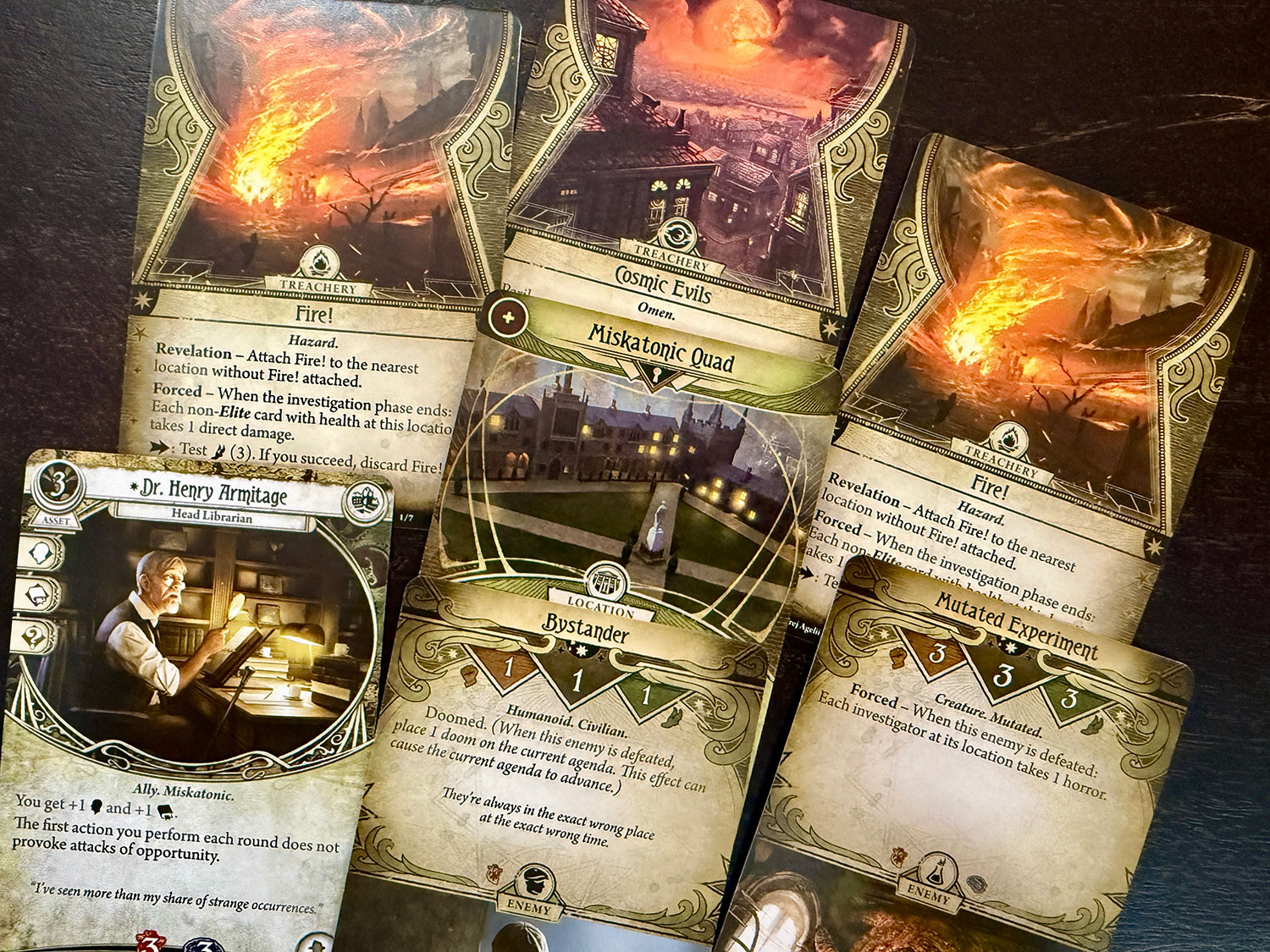
Each scenario features an act and an agenda deck. The act deck provides the goal that investigators are trying to achieve, whereas the agenda deck is the doom timer that ticks away each round, bringing you closer to possible failure. Each round, players take three actions apiece, investigating scenario location cards for clues. After a round is complete, players must then draw cards from a mythos deck and resolve the test using their skills.
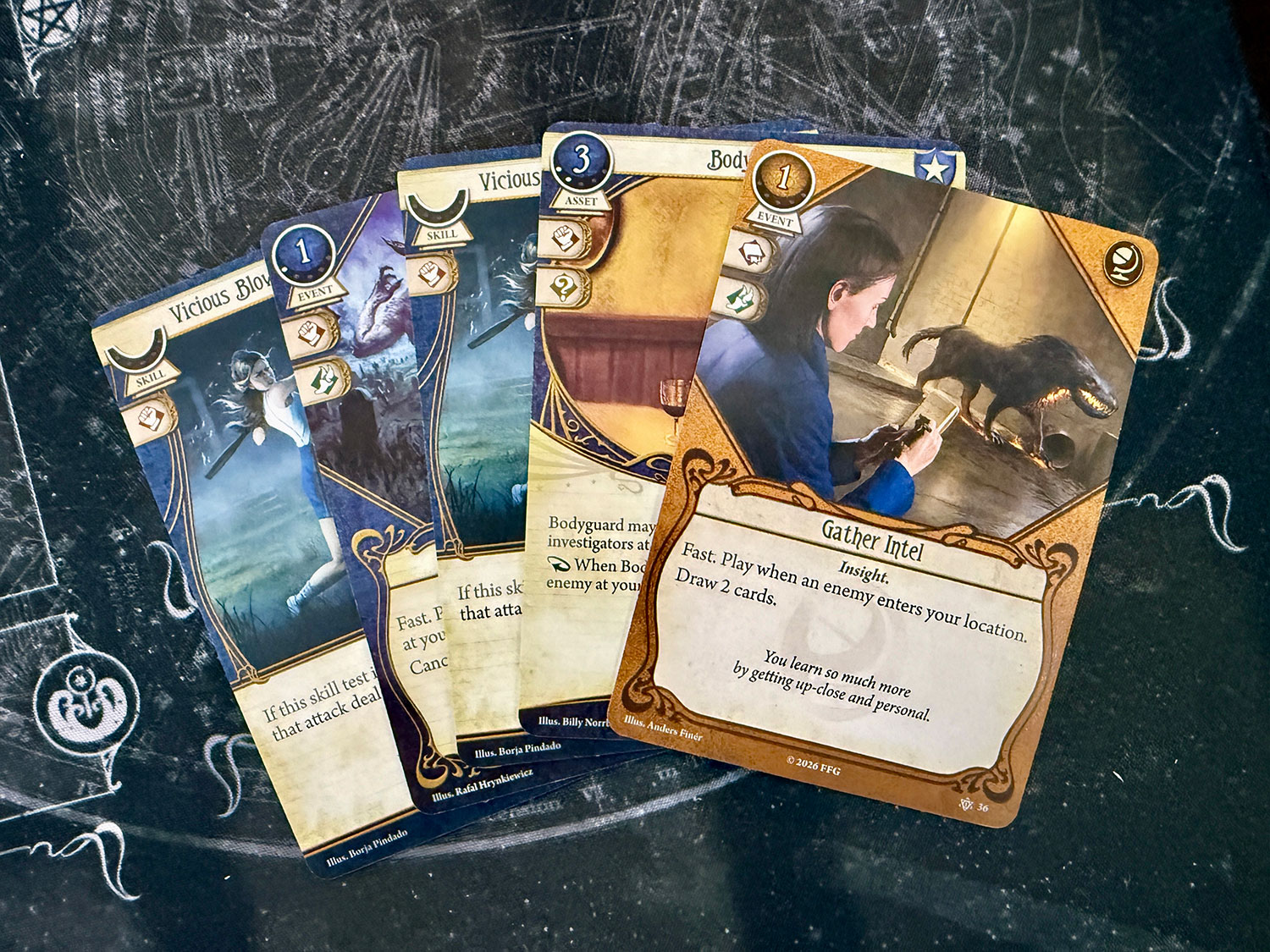
Players are tested in many ways and utilize both their cards and their resources to boost their success. Player cards come in a variety of options, from allies and weapons to event-based powers and skill icons that boost test values. A player may face an enemy that requires them to fight using their combat value. Or if that enemy is too frightening, they may need to utilize their agility to evade.
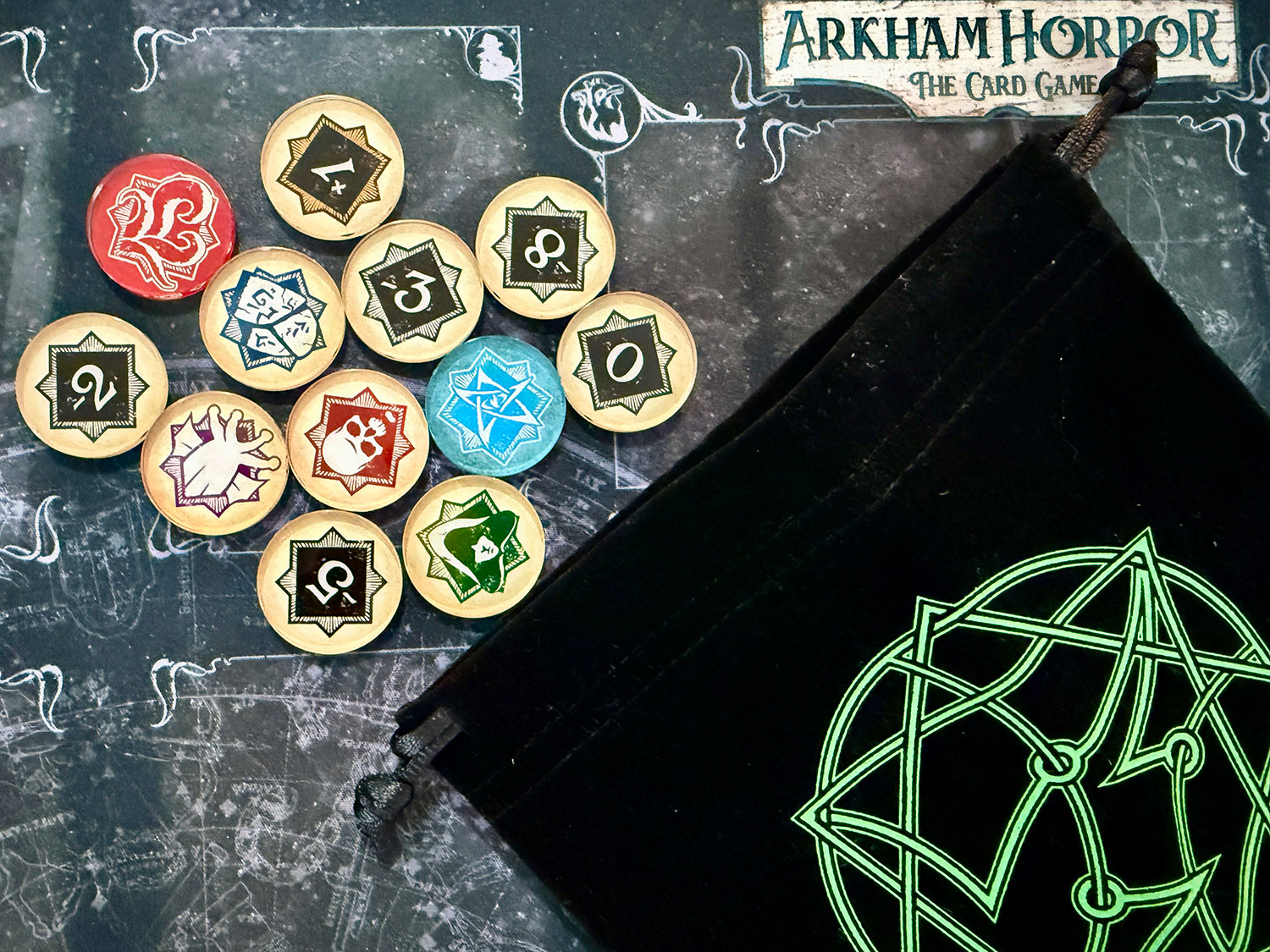
Each turn presents new challenges as new locations are uncovered, new tests must be completed, and new enemies emerge. While actions like “move” or “draw a card” or “resource” do not require a skill test, most progress does. To gain clues, investigators must test their intellect versus the shroud value at the location. They can use abilities on cards in their tableau or skill icons on cards in their hand. They then draw from a bag of chaos tokens, which modify the final value. If the final number is equal to or higher than the test, they succeed.
Players must navigate each scenario while maintaining their health and horror values so that they do not become defeated. Thankfully, there are many times where a scenario defeat does not end the game but rather features a fail-forward system that hinders you further while also continuing the campaign. In between each scenario, there are typically narrative developments and decision points that affect future scenarios.
Game Experience:
I’ve been playing Arkham Horror: The Card Game for nearly ten years. I start there because I must approach my playthroughs of the new content with two perspectives: one as a player new to the game, as well as one for those continuing to delve. I’ll separate my thoughts into two sections below.
Welcome to Arkham!
The new core set for the second chapter features everything you need to begin your journey. Each investigator has enough options and upgrades to build a competent deck, though there are not enough player cards to create more than a couple of unique builds. There are upgraded rules and components to make life easier along the way. And there is some rebalancing that makes the experience more engaging.
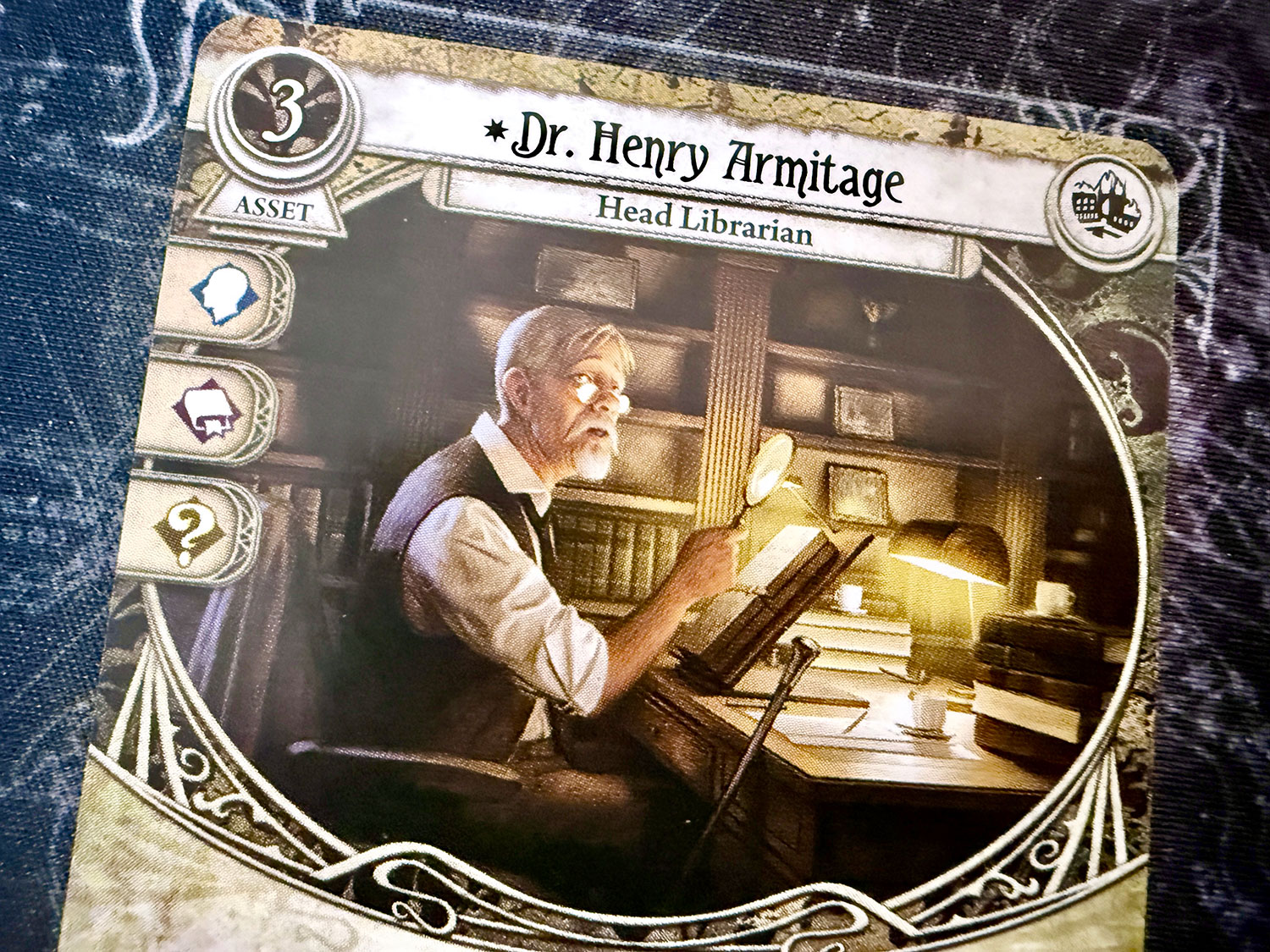
The three-scenario campaign provides exactly what you’ll need in terms of conceptual immersion. Scenarios feature tough narrative decisions, an ever-evolving sense of dread, and an agonizing final battle that may take some time to master. New players may not get all the built-in narrative lore and nods to the first chapter, but this set is primed to allow them to create those memories into the future.
The buy-in for this core set is important for those wanting to try a larger campaign in the future. The included campaign is better for testing the ruleset and how to navigate different archetypes. But already there has been a set of five new investigator decks beyond this core set that provide many more player cards to work into your deckbuilding, much sooner than these were introduced after the core release ten years ago.
The next step would be to get the upcoming campaign release in the summer. The game’s release schedule features small campaigns (three scenarios), standalones (one scenario), as well as a full campaign (five scenarios), all coming this summer and beyond. If you can’t wait that long, seek an older campaign set to play—there are many great options still available out there.
Just like those who’ve been invested since the beginning, it’ll take some time for new players to gain significant player cards to satisfy their deckbuilding dreams. But the game system is great, so I recommend you stick around if you can.
Do Current Players Need a New Core?
Ah, all my fellow legacy players. I have some thoughts for you. The first thing to note: this new core set features a new base encounter set that will be required for future campaigns. The new encounter sets are fun, and I’m excited to see how they are implemented in new stories. That said, mainstays like Rotting Remains and Crypt Chill are relegated to chapter one. Maybe we’ve had enough trauma from them, though?
The new small campaign included with the second chapter (Brethren of Ash) is, unfortunately, a letdown. It’s a modern take on the original Night of the Zealot campaign. While it improves upon the design, it does little to distinguish itself as a bold new direction. It even rehashes the codex from past campaigns and does little with it from a replay perspective. I can only imagine that it’ll be attempted once or twice before being shelved for hopefully more immersive storytelling.
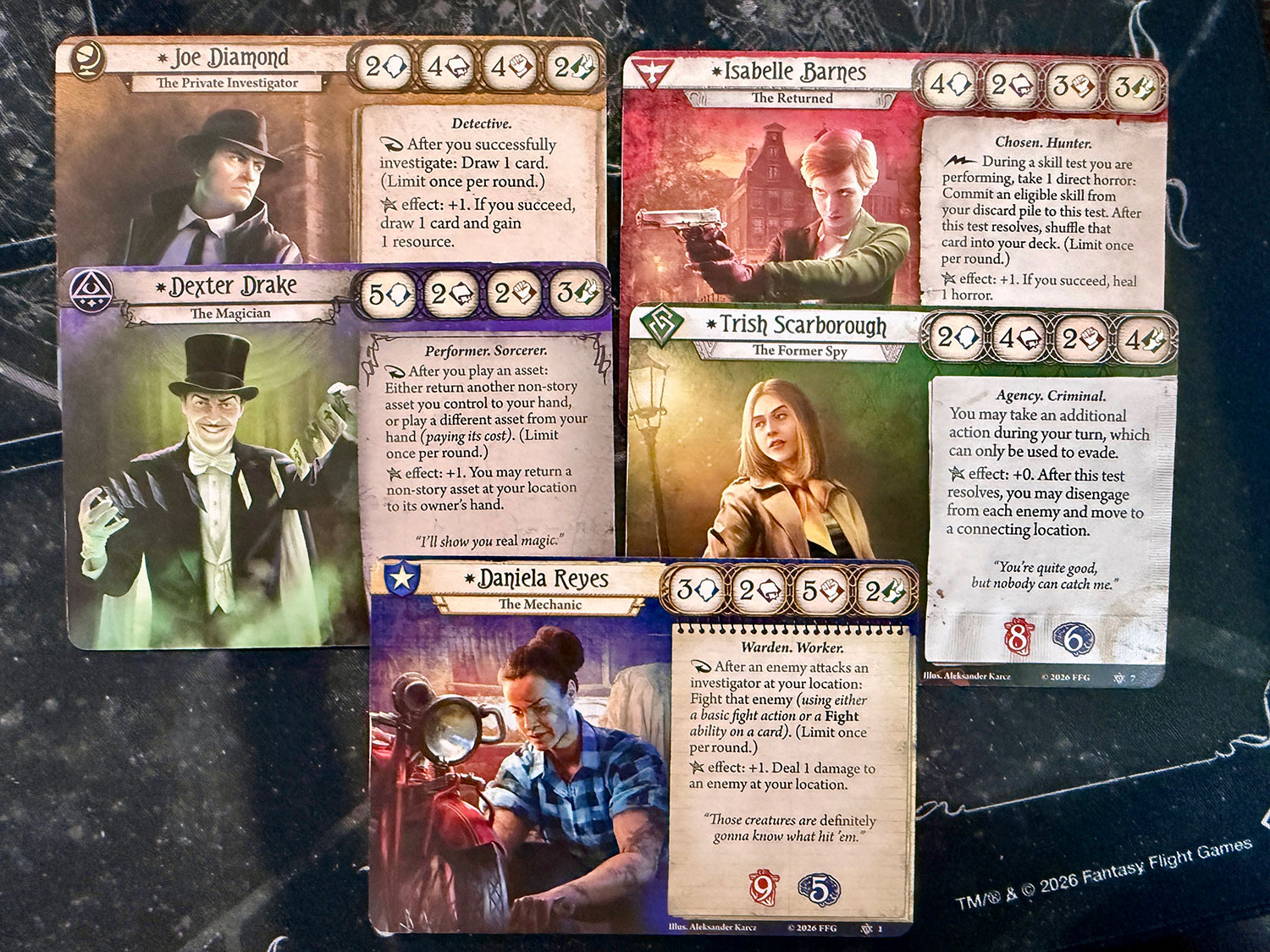
The new investigators all feel rather competent. Some are even strong. It’s nice to see previous investigators show up in a new light, having experienced the mythos and been changed due to it. Each of these five core features includes basic deckbuilding rules as well as straightforward abilities. Nothing too flashy here. But each improves upon the chapter-one core investigators in one way or another.
As for player cards, there is not a lot here that you’ve not already seen. I’ve only found a handful of cards in each archetype that I consider unique enough to find a way into the full card pool. Several cards are duplicated here, some with the same art and some with new art. Speaking of art, some of the new illustrations are superb, whereas many others are a step down from art in the past.
I’m not sure I can recommend a lot of what’s included here if you’re already fully invested. Unfortunately, the need for the new core encounter cards means that there is a steep buy-in to the second chapter. And based on the introductory campaign, I’m beginning to wonder if the highs from previous campaigns are going to be out of reach for several more years.
Final Thoughts:
Two trains of thought on this release. First, new players are going to have a great starting point for future content. They are getting a core experience with upgraded components, better rules, and ten years of design experience behind new and upcoming narratives. With five new investigators releasing right after this core set (review of these coming soon), new players also have a great starting card pool for deckbuilding if they seek these out.
Current players face a dilemma. Do they stick with chapter one content and live out the remainder of their days satisfied with the wild ride it provides? Or do they continue and support a system that has shifted into an earlier iteration of itself, even if it has improved ever so slightly? I plan to try the upcoming full campaign that releases in the summer. I hope they knock it out of the park and make five scenarios the new standard. But will they ever reach the peak emergent narratives of the past?
Final Scores:
New Players – 4 stars
Current Players – 2.5 stars
A revamped reintroduction for new players that treads eerily familiar ground for the mainstays.
 Hits:
Hits:
• Component updates
• Card rebalancing
• Nods to chapter one
Misses:
• Campaign lacks intrigue
• Repeat cards
• Certain card artwork