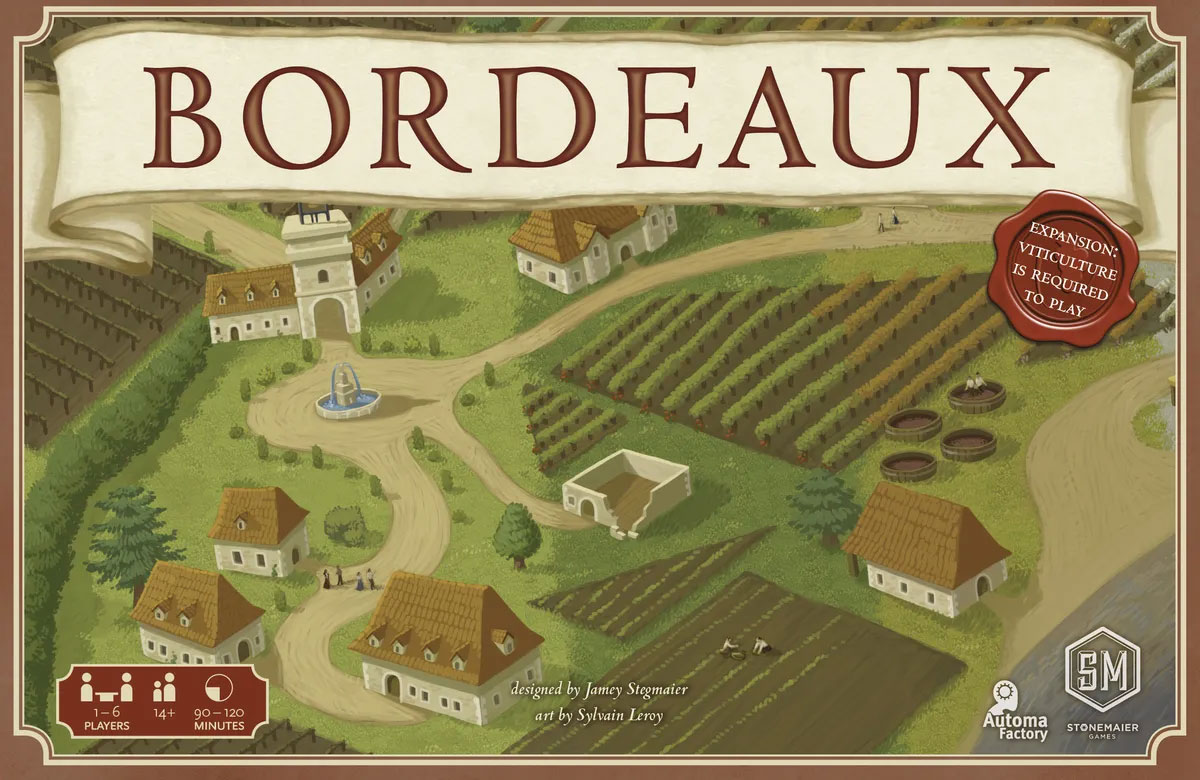
 Viticulture is a worker placement game that, in this reviewer’s opinion, has aged like a fine … product that ages well. Despite being released over a decade ago, it still feels fresh and interesting, thanks in part to the strength of its core mechanisms, but also to the sheer amount of iteration performed on it in the years after its release. A second edition, expansion, “essential” edition, and “essential” expansion later, and Viticulture is now a finely honed work, whose frustrations feel like intentional design decisions rather than oversights or mere foibles.
Now, a decade after the release of the essential edition, Stonemaier Games has released the new Bordeaux expansion, designed to add more strategic depth and speed up the game, especially at higher player counts. Does it succeed? More importantly, is it still worth buying if you already own the first expansion? Let’s find out!
Expansion Overview:
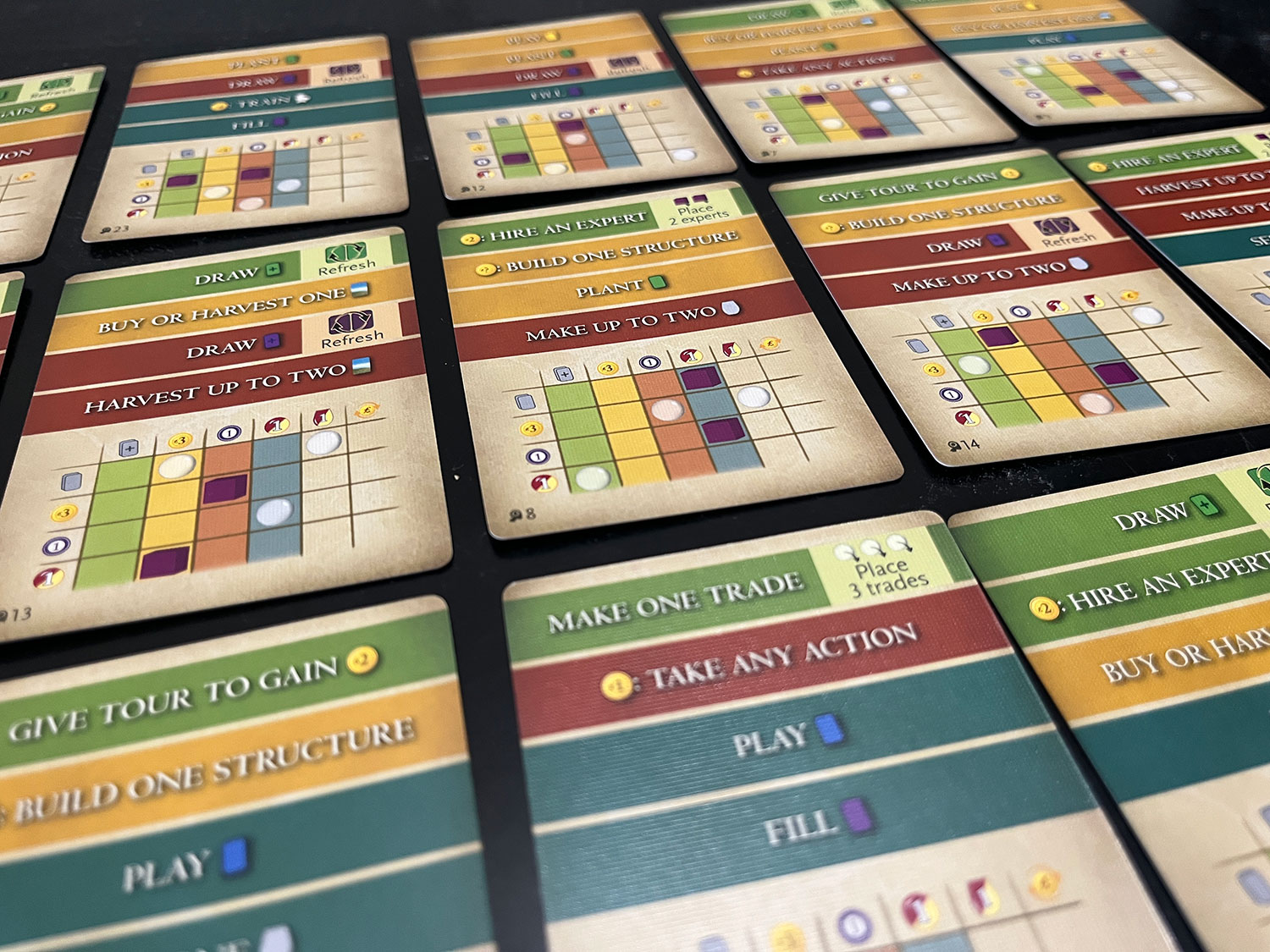
The Bordeaux expansion is simply a new game board for Viticulture, designed to be swapped out with the original board. Instead of the base game’s two seasons, Bordeaux’s board is split into four seasons, with new actions added and existing actions modified to account for this. Notably, a new “hire experts” action allows players to upgrade other actions exclusively for their workers, the “sell wine” action lets you sell wine for reputation without a contract card, and the “trade” action lets you swap resources for one another. The wake-up chart has also been overhauled to fit within this structure, with each row on the chart providing different benefits for each season you pass into.
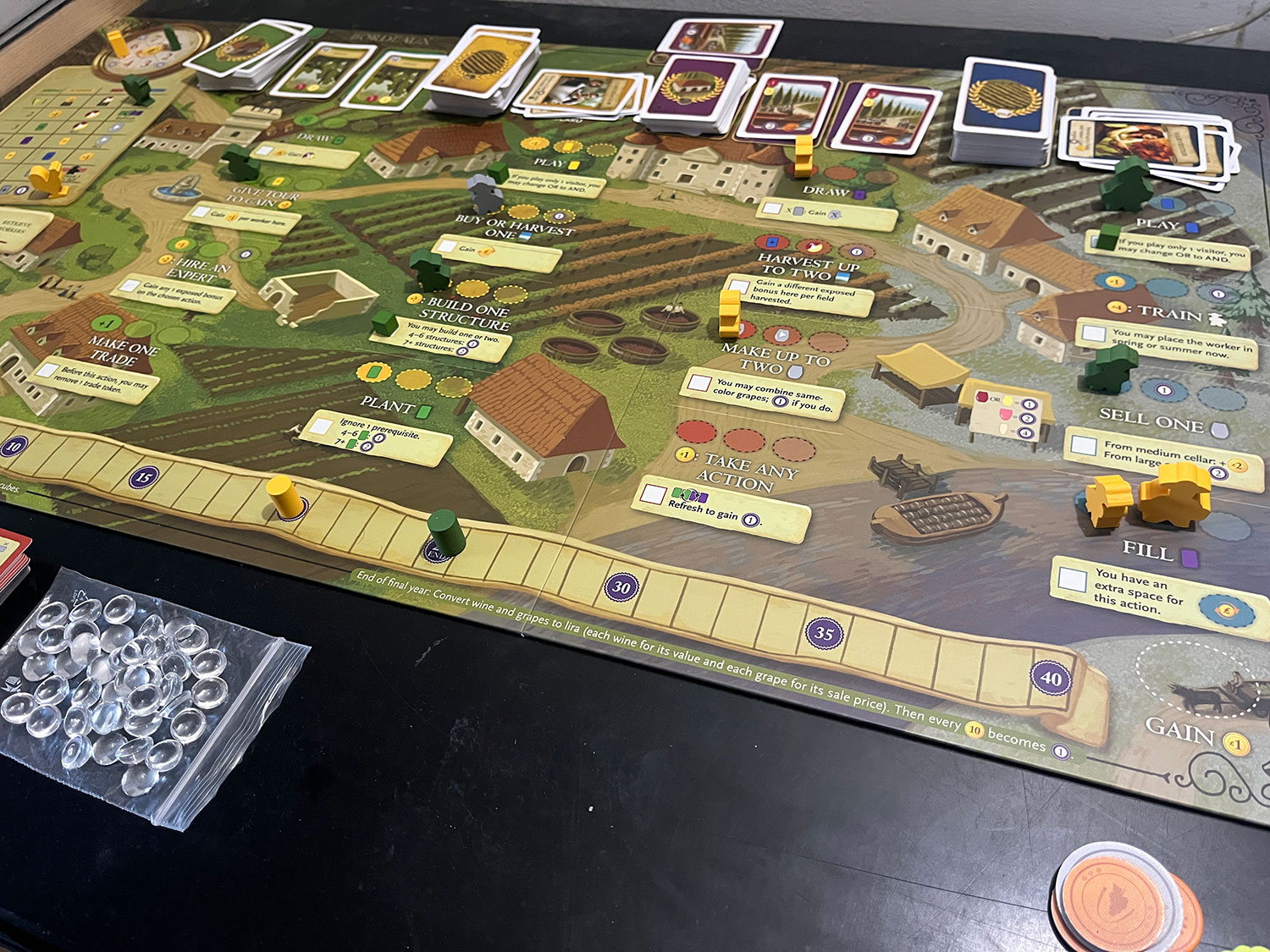
Bordeaux also makes other adjustments to the play experience. Grape and contract cards now have a small display of cards to draw from, instead of being forced to always draw from the top of the deck, and players receive a smattering of bonuses during setup to cut down the early-game build-up time. The final scoring process has also been tweaked to convert unscored grapes, wines, and lira directly to victory points. Finally, the new residuals track provides one-time reputation bonuses when certain thresholds are reached, and a new automa deck lets you play the whole expansion solo.
Game Experience with the Expansion:
Just about every change in the Bordeaux expansion makes Viticulture quicker, leaner, and more interesting. The move from two seasons to four adds a tremendous amount of tactical and strategic depth, just as it did in the similar Tuscany expansion. It’s a change that seems small, but once you’ve tried it, it’s hard to imagine playing without it. The addition of card displays for grape and contract cards is a similarly impactful change. A selection of two cards doesn’t seem like much of a difference, but it provides just enough control to eliminate Viticulture’s worst frustrations.
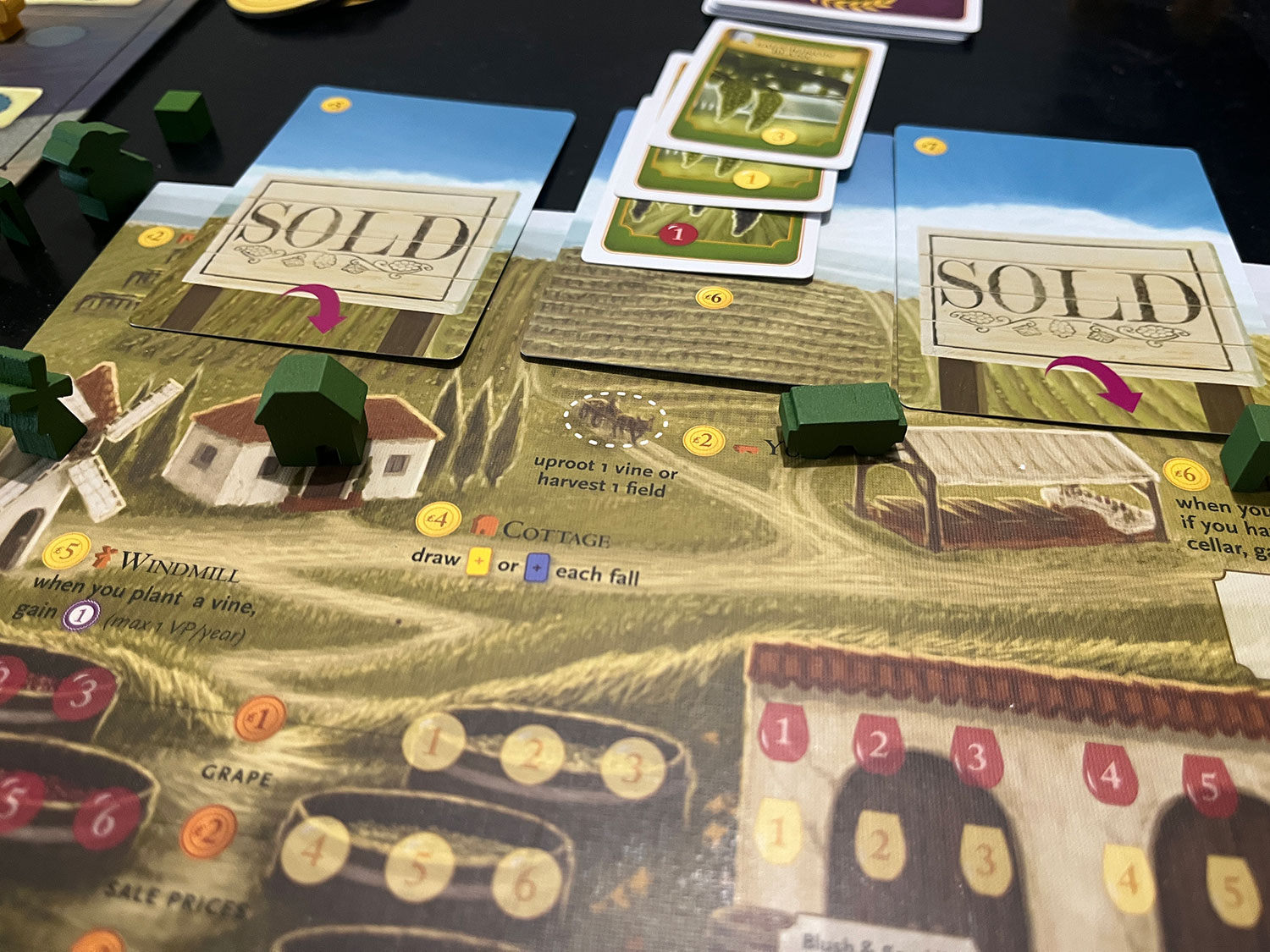
The new “hire an expert” action also helps make plays feel distinct, which alleviates the repetition that could occur in the base game. Each expert can only be hired by a single player, so each player will naturally drift towards different action spaces over the course of the game. The setup and endgame changes manage to cut down the game length noticeably, without sacrificing depth. In fact, more strategies feel viable than ever, especially with the new “sell wine” action, which helps players gain late-game reputation without needing specific contract cards.
I’m not thrilled about all the changes, to be fair. The new trade action in particular feels underwhelming; it isn’t unbalanced or worthless, but it’s so involved and yet so disjointed from other actions in the game that making a trade always feels a bit off, like it was ripped from a different game. The new setup changes also smooth the game down a little too much for my tastes. The wine-making process feels more prescribed than ever, which saps Viticulture of a small bit of its original magic. My biggest criticism with Bordeaux, though, is that it feels superfluous in the broader context of existing Viticulture content.
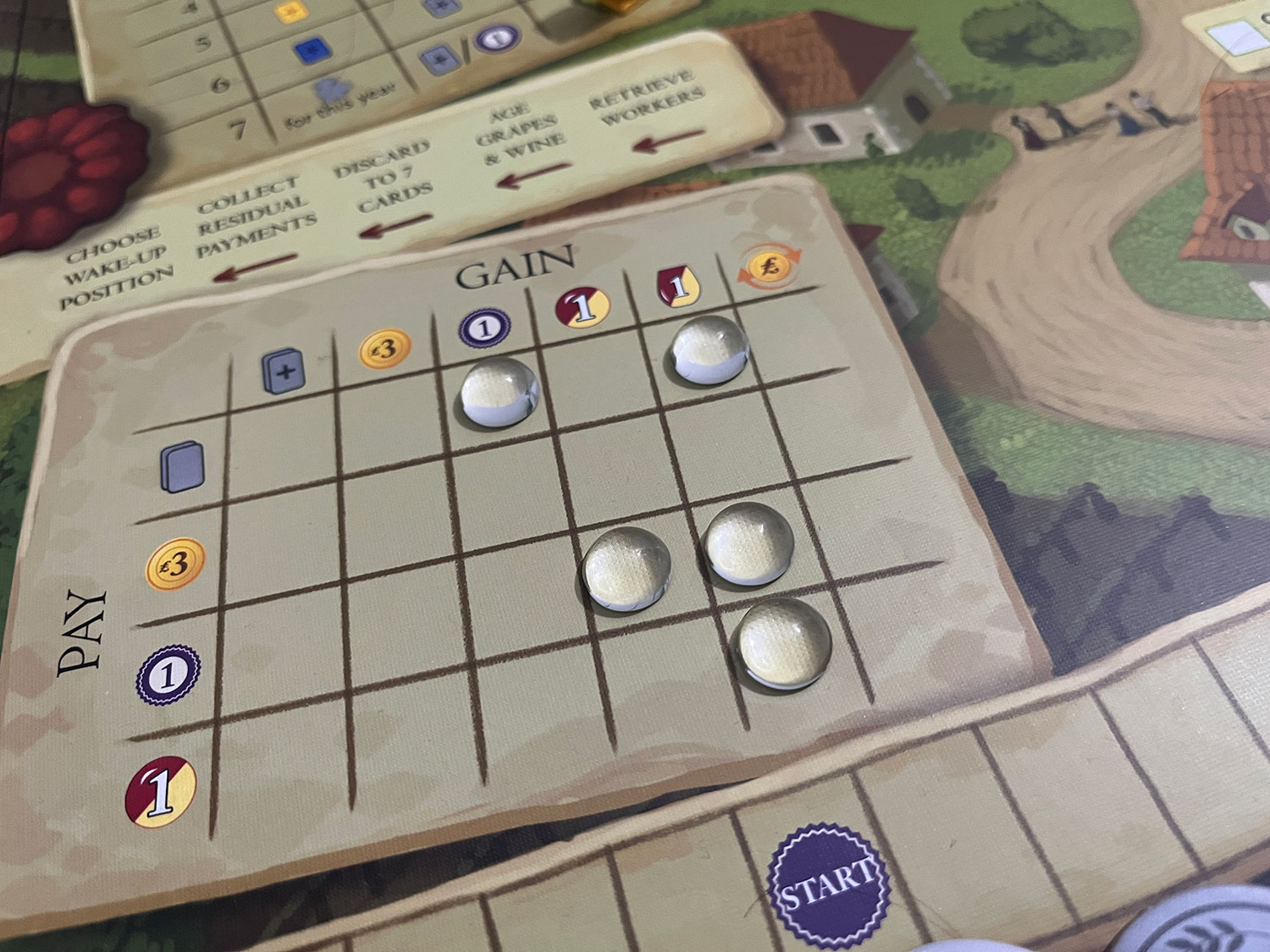
The card displays, the setup changes, and the new residuals track are all great, but you could feasibly use these changes without buying the expansion—the new board even has a version of the original board on the back side that does exactly that. Those changes do pair nicely with the new four-season board… but the new board isn’t quite as good as the board that comes in the Tuscany expansion, whose new actions are largely identical to or improvements on those in the Bordeaux board. Tuscany also includes modules for structure cards and special workers, which do a lot more work to differentiate players than the “hire expert” action in Bordeaux.
Final Thoughts:
In a vacuum, Bordeaux is an excellent expansion for Viticulture. The four-season board is almost essential once you’ve played with it even a single game, and the other rules changes trim some of the fat that occasionally snuck into plays of the base game. In context, though, I find it hard to recommend Bordeaux when the Tuscany expansion exists as a much more complete package. Bordeaux is still worth a buy…but only if you can’t find the Tuscany expansion, or if you are absolutely obsessed with Viticulture.
 Hits:
Hits:
• Four-season board is a near-essential addition
• Hiring experts helps focus and differentiate player actions
• Welcome rebalancing and setup changes to speed up the game
Misses:
• Underwhelming new trade action
• Rebalancing changes feel like a patch rather than a proper expansion
• Can skip if you already own Tuscany