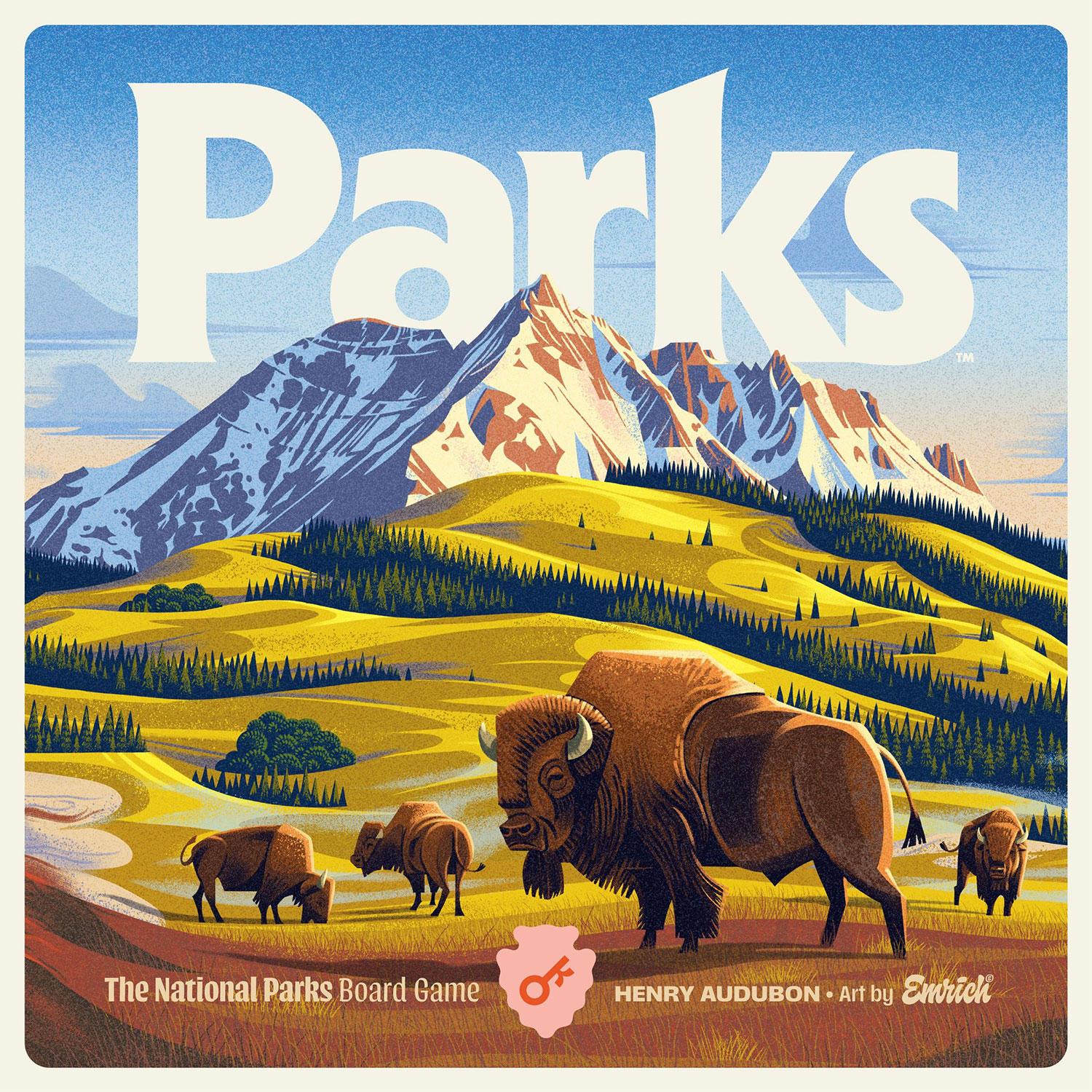
 When I first saw the new edition of Parks at Gen Con in summer 2025, I was dismissive. I am a longtime fan of the original Parks, as well as the Nightfall expansion and I often play. With the new version, the iconic National Parks poster art was gone. The game trays (meant to look like logs) were now cream instead of bark brown. And for purely sentimental reasons, where was the Cuyahoga Valley National Park box cover? I turned away from Keymaster’s booth and went exploring elsewhere.
That was a mistake. Parks’ original edition has been a fantastic family game, a good intro for non-board gamers, and a regular go-to with my gaming group. I was too quick to walk away from the second edition. The game design by Henry Audubon and art by Emrich Office and Lisk Feng are time well spent in “nature.”
Gameplay Overview:
Parks is essentially worker placement: claim a space, gather resources, trade resources for points, and collect end-of-round bonuses. The game sits on the light side of medium weight in terms of difficulty.
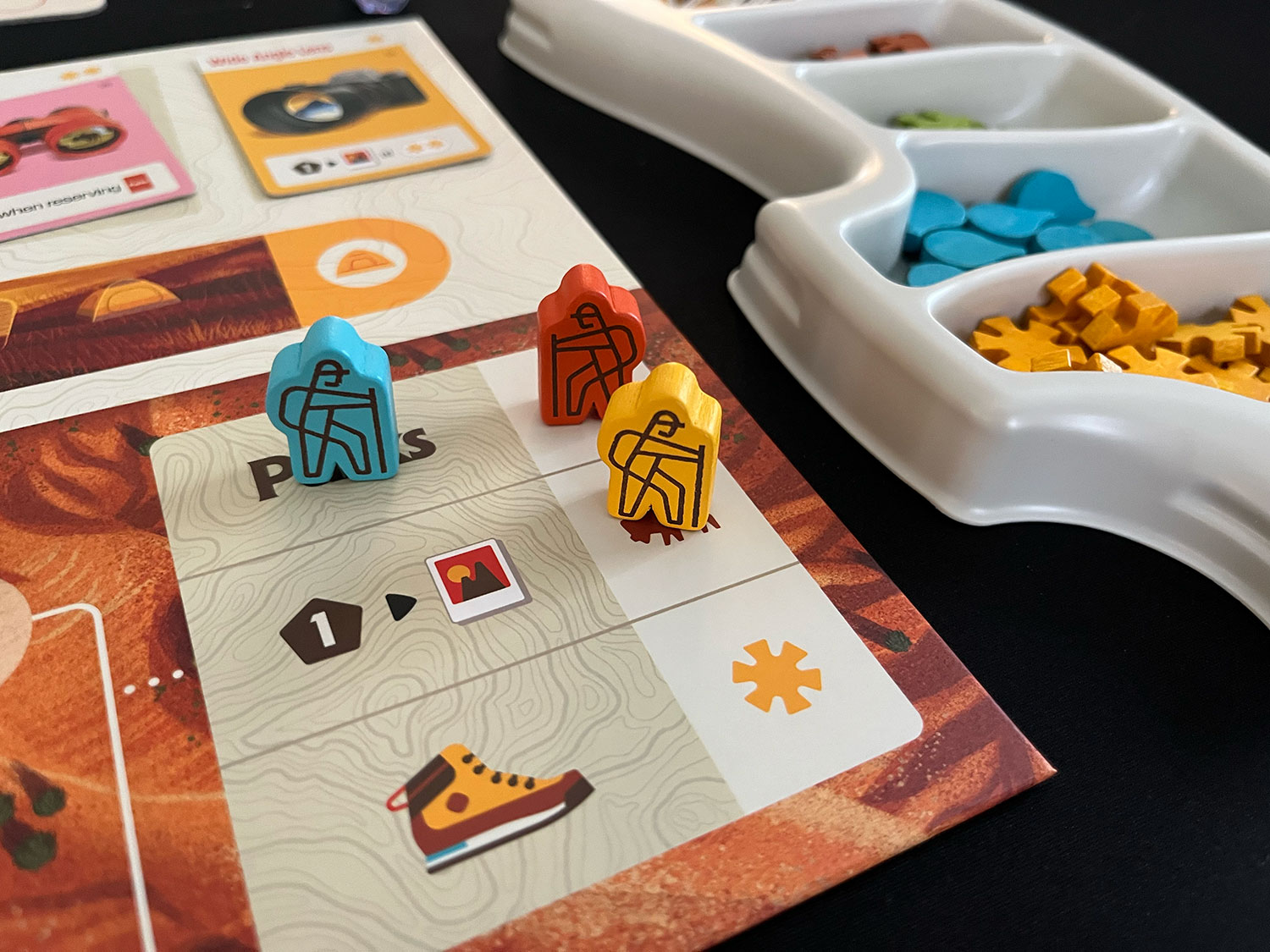
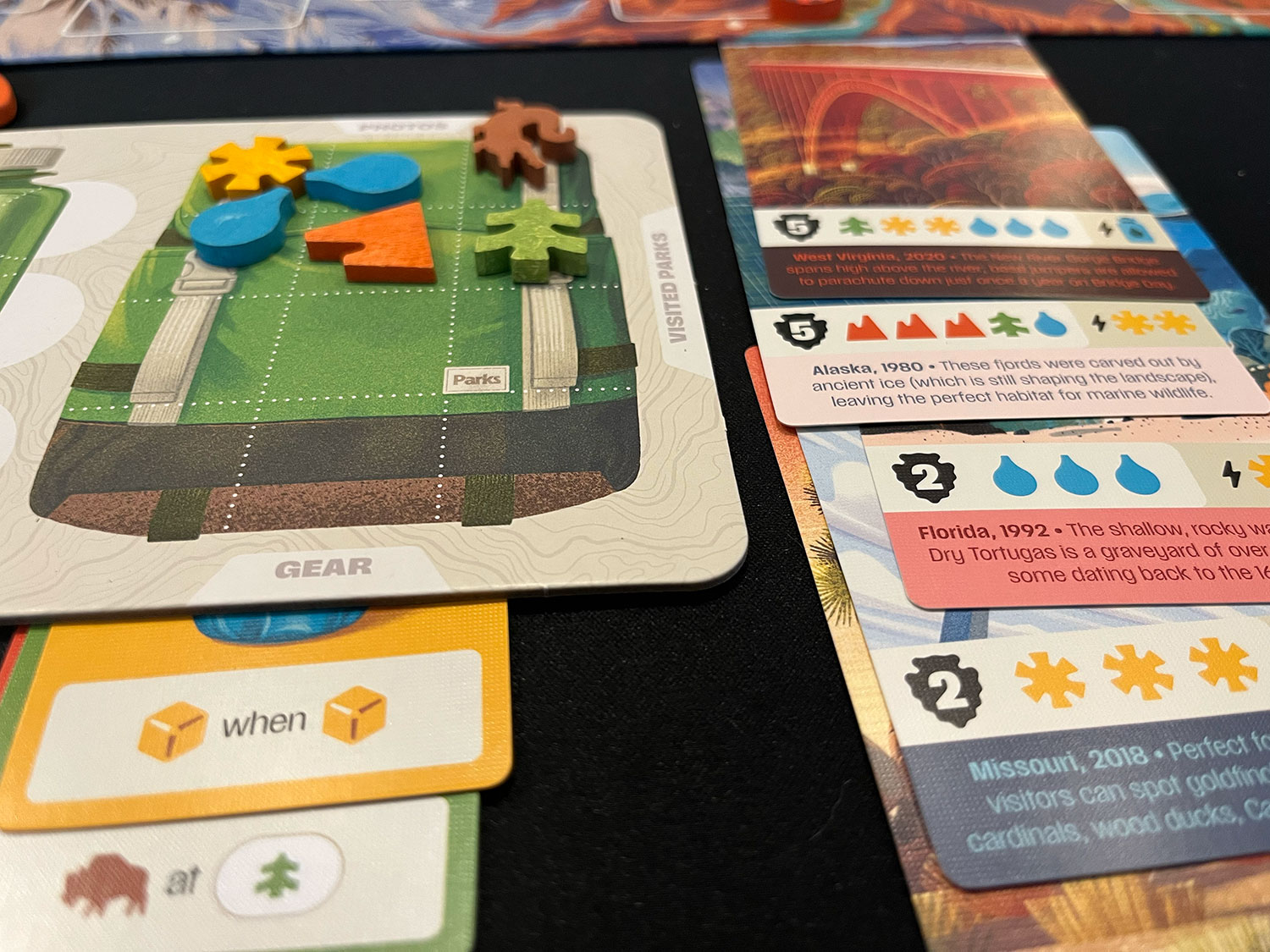
Parks plays over three rounds—spring, summer, and fall. Players move two hikers along a trail, with each space yielding resources to stash in their backpack. Eventually, you’ll trade these to visit a park or gain end-of-season bonuses. Visited parks score points at game’s end, and sometimes grant bonus resources. Like any well-prepared hiker, you can also acquire gear, share a campfire, and fill your canteen.
Gear cards and canteen tokens help you gain resources. With just three rounds, I’d advise grabbing gear and canteen tokens early to help boost your play in rounds one and two. The campfire token lets you share space on the trail with another player. Sharing the same spot on the trail is otherwise not permitted. You can also snap photos along your hike—each picture is worth a point at game’s end.
Gameplay Experience:
The new edition’s rulebook is one of the best I’ve encountered. My routine when reviewing a new game is to first read the rulebook several times in order to absorb all the details. In contrast, I only had to read through the new Parks rulebook once. I acknowledge that my familiarity with the previous version may have contributed to my experience; however, the clarity sparkles like fresh snow in the trees. The examples are crisp, explanations are succinct, and illustrations are clear. I could write a whole review on just the rulebook.
Opening the box of this latest edition of Parks is a feast for the eyes and the obsessively organized among us (or at least those who appreciate space-saving design, as well as quick set up and take down). Everything has a place. It’s easy to find and keep components. It warms my heart to both set up and put away this game. The first player token goes here, and the camera token goes there; the cards, the board go there. It’s a thing of beauty.
For those new to Parks, the game design and play oozes theme. This alone is reason to love the game. From the moment you begin, the rule book isn’t a rule book; it’s a field guide. You don’t buy park cards, you visit them. Photos snapped along your hike return as endgame points. I truly appreciate the designers’ thoughtful incorporation of such details into the player experience.
Like its predecessor, I find the new installment of Parks to be a quick-moving game. While you can certainly plan ahead by anticipating where you may want to move your hiker, or have your eye on a certain gear card, canteen token, or park, gameplay tends to stay fast and fluid. Evolving gameplay choices are economically streamlined and immediately impactful. Among my play group, the combination helped move the game and avoid delays due to players’ over-analysis.
I enjoy the light interaction that Parks provides. The first hiker to the finish line of each round collects helpful rewards such as going first next round, getting a discount on a gear card, or a wild resource. So, timing when you make that leap is important, as your plans can be easily foiled by an opponent who picks up on your play style. Players can also strategize about how to make use of their park destinations. Do you want to visit a park now, or would it be more advantageous to reserve a park visit for later—and in the process thwart an opponent who is eyeing up the same park?
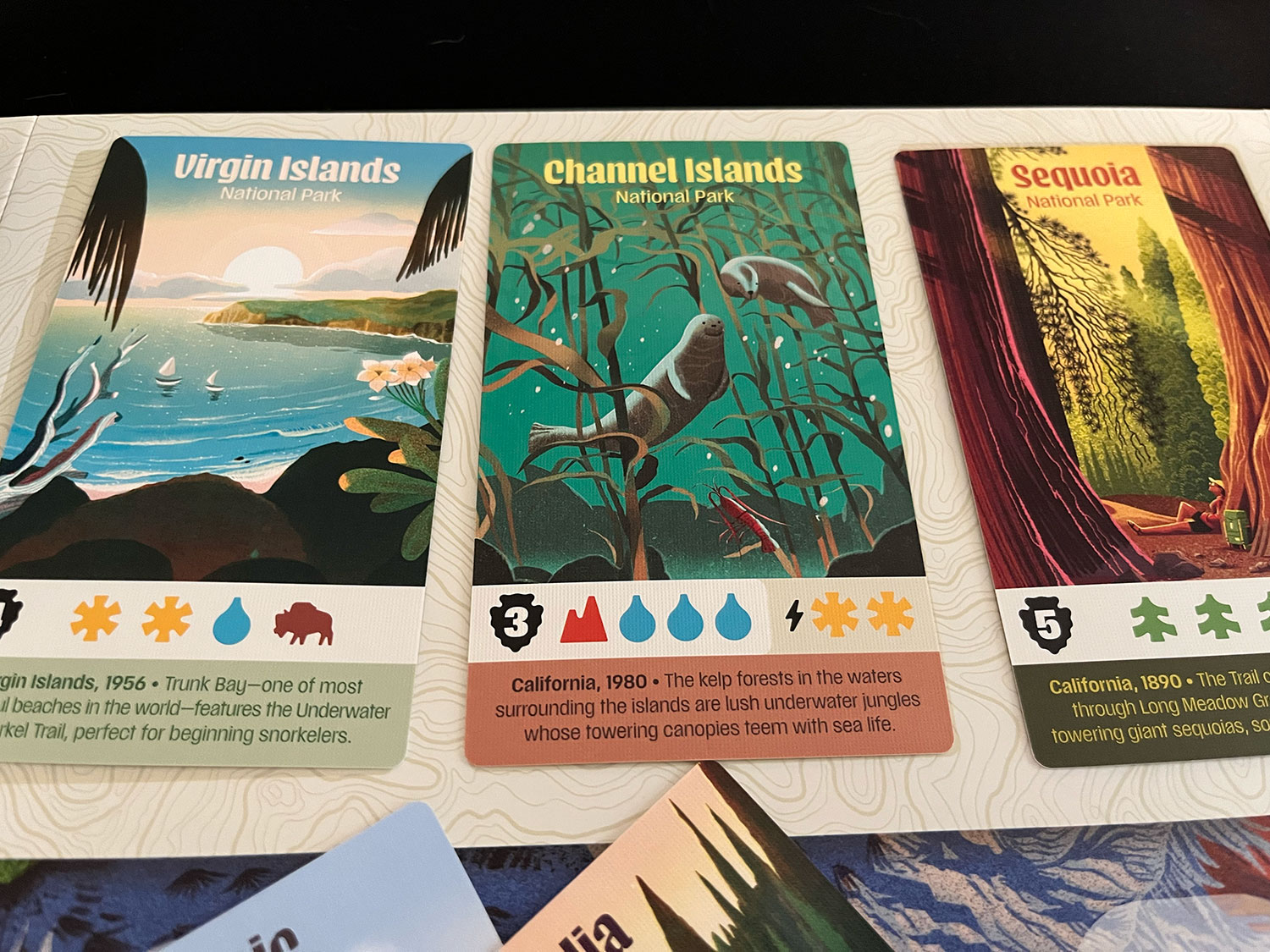
Parks offers considerable variability in gameplay. First, the sheer number of national parks (up to 63 now) makes for easy replay value. Even after multiple playthroughs, I feel like I haven’t seen all the parks, let alone visited them. Second, you can change the experience by adding the campsite variation. Those familiar with the Nightfall expansion in version one will recognize the gameplay, though the components have changed. Again, the designers have streamlined the setup and components. In my experience with version one, camping is much more interesting at the higher player counts.
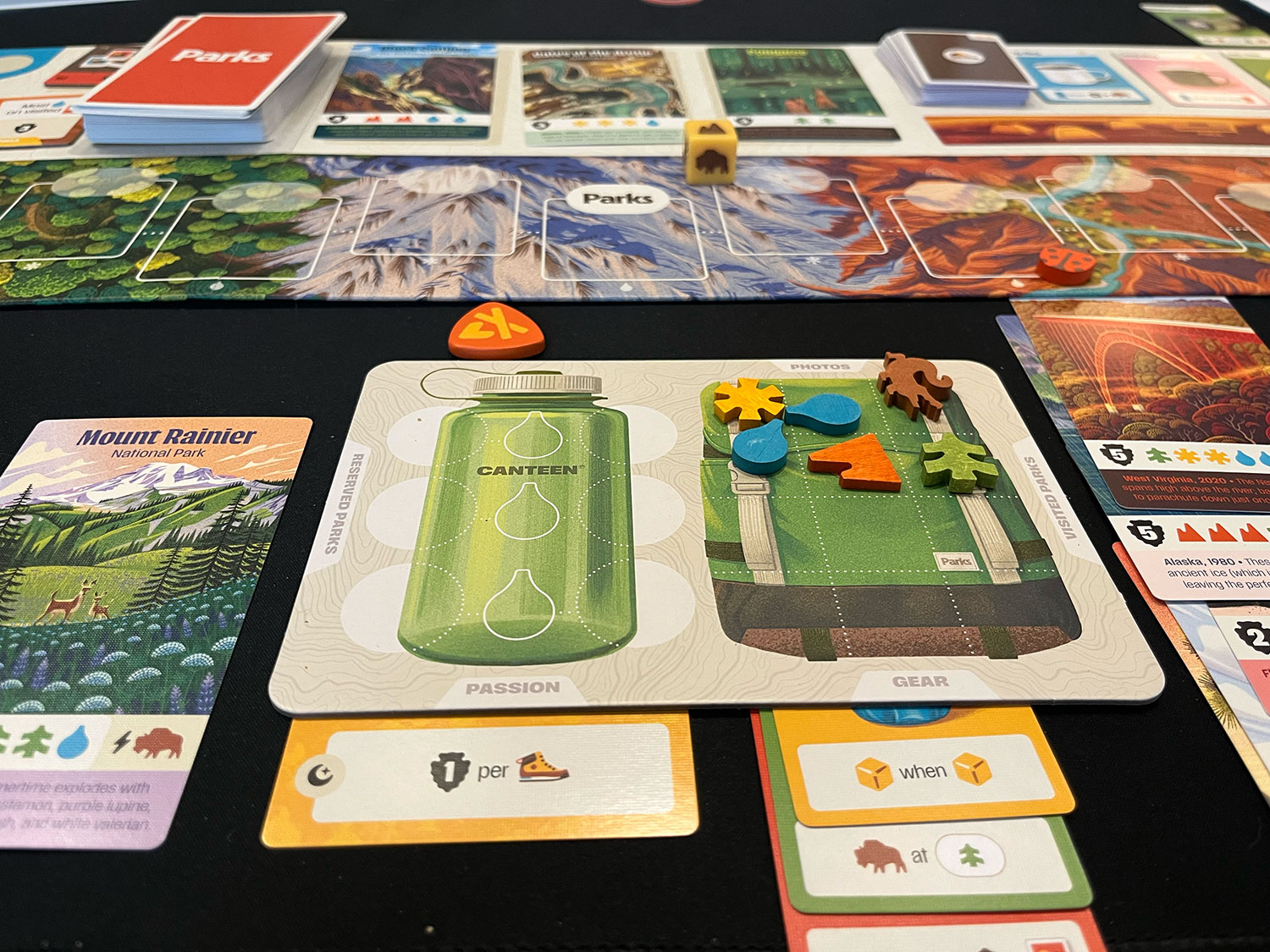
During play for this review, I played with 4 and 2 players as well as solo. Solo and two-player games with the optional Ranger Teddy (automa) add scarcity to your decisions, without being overly cumbersome. This makes solo gameplay feel similar to higher player counts. In solo mode, I also experimented with playing at two players without the automated Ranger Teddy. I found that not bringing Teddy along the trail left many more choices, and it also created some space for me to run away with the game, which wasn’t great for my trail companion.
As someone who was already a fan of Parks, I find that there are several design improvements in the latest edition that are worth mentioning.
Final Thoughts:
Parks: Second Edition is a refined experience that honors what made the original special while thoughtfully simplifying an already great board game. The streamlined components, intuitive player boards, and exceptional rulebook make this edition more accessible without sacrificing depth. Whether you’re introducing new players to the hobby or seeking a reliable medium-light game for your regular group, Parks delivers.
The thematic immersion remains intact—you’re not just moving meeples, you’re genuinely hiking trails and visiting parks. While I initially mourned the loss of those iconic poster-art cards, the gameplay improvements won me over, and I’ve warmed up to the new art. If you’re new to Parks, this is the edition to get. If you own the original and expansions, the question is trickier—the core experience is similar, but the quality-of-life improvements are substantial. For me, Parks’ second edition has earned its place on my shelf. Sometimes the trail worth taking is the one you’ve walked before, just with better gear.
Final Score: 5 Stars – Parks second edition refines an already excellent game with streamlined components, intuitive player boards, and an exceptional rulebook.
 Hits:
Hits:
• Makes an already great game easier to love
• Strong thematic immersion
• Outstanding production value and artwork
• Plays well with different player counts
• I forgot to mention: the game has a great playlist from Keymaster too
Misses:
• Color change on the component trays