
Note: This preview uses pre-release components and rules. What you see here may be different from the final, published game.
 As the new year starts, I thought I’d impart a fact about space. Did you know that current research suggests that the universe may be almost 27 billion years old, almost twice the age we previously thought? You’ve likely seen images from the James Webb Space Telescope, some of which have helped inform and challenge these ideas we had about the age of the universe. What a crazy time to be alive.
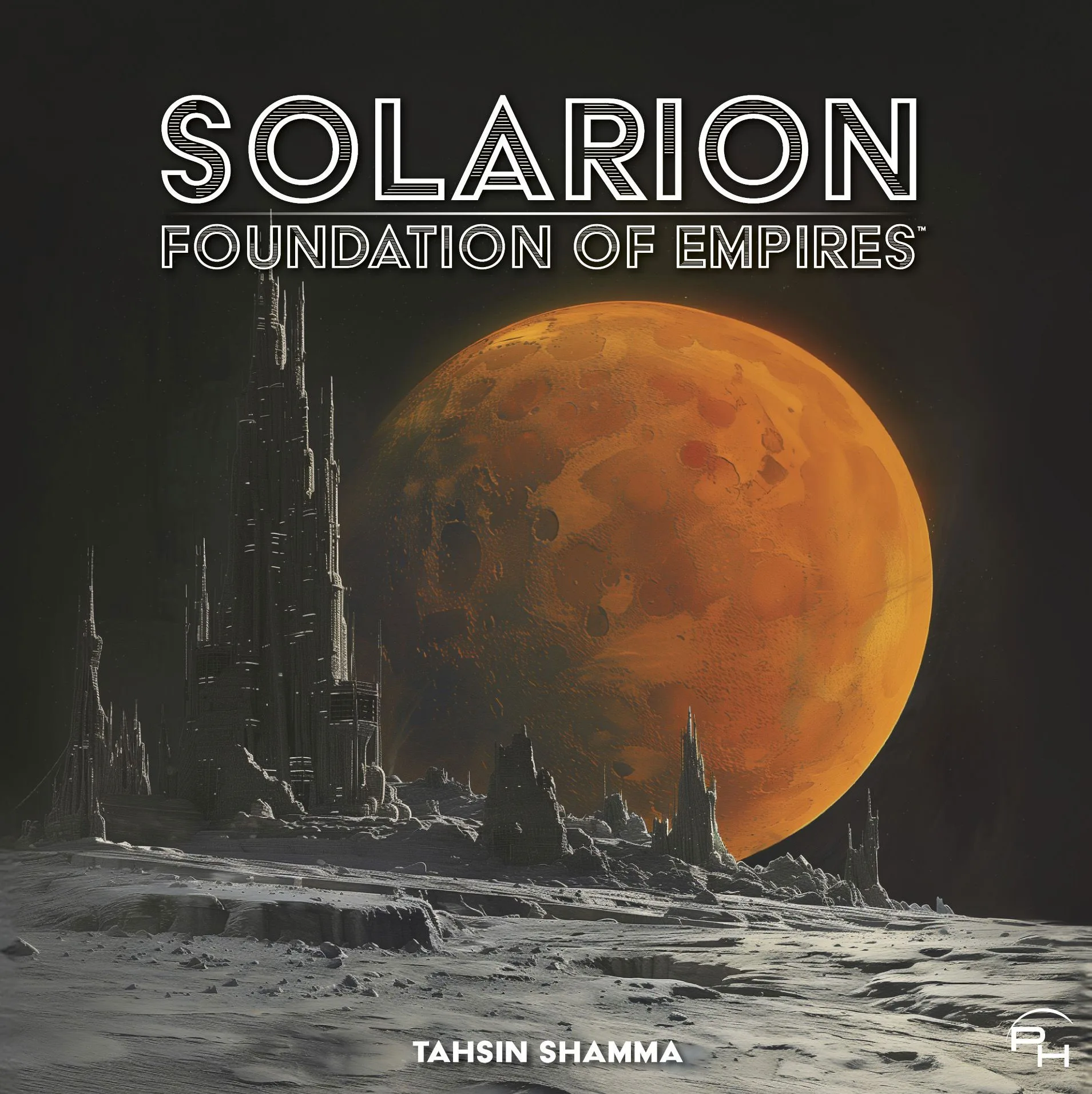
Fortunately, they have yet to find life out there that threatens our existence. But at least we’re getting some pretty images. For the time being, we’ll have to play games that let us imagine an alien dominant force taking over planets and zipping around space. If that interests you, Solarion: Foundation of Empires might be your ticket to the stars.
Gameplay Overview:
In Solarion: Foundation of Empires, players are vying for galactic dominance through area control and deck building. By colonizing planets and controlling sectors, players work to build out a formidable space fleet to fight, defend, and extend their presence throughout the galaxy. The game is played over three Ages, each containing decks that serve as a countdown and fill the Technology Market with buying options. At the end of each Age, players score points based on criteria selected for that Age and the areas they control. The game ends either when the final Age’s deck has run out or a player uses their final Colonist. The player with the most points wins.
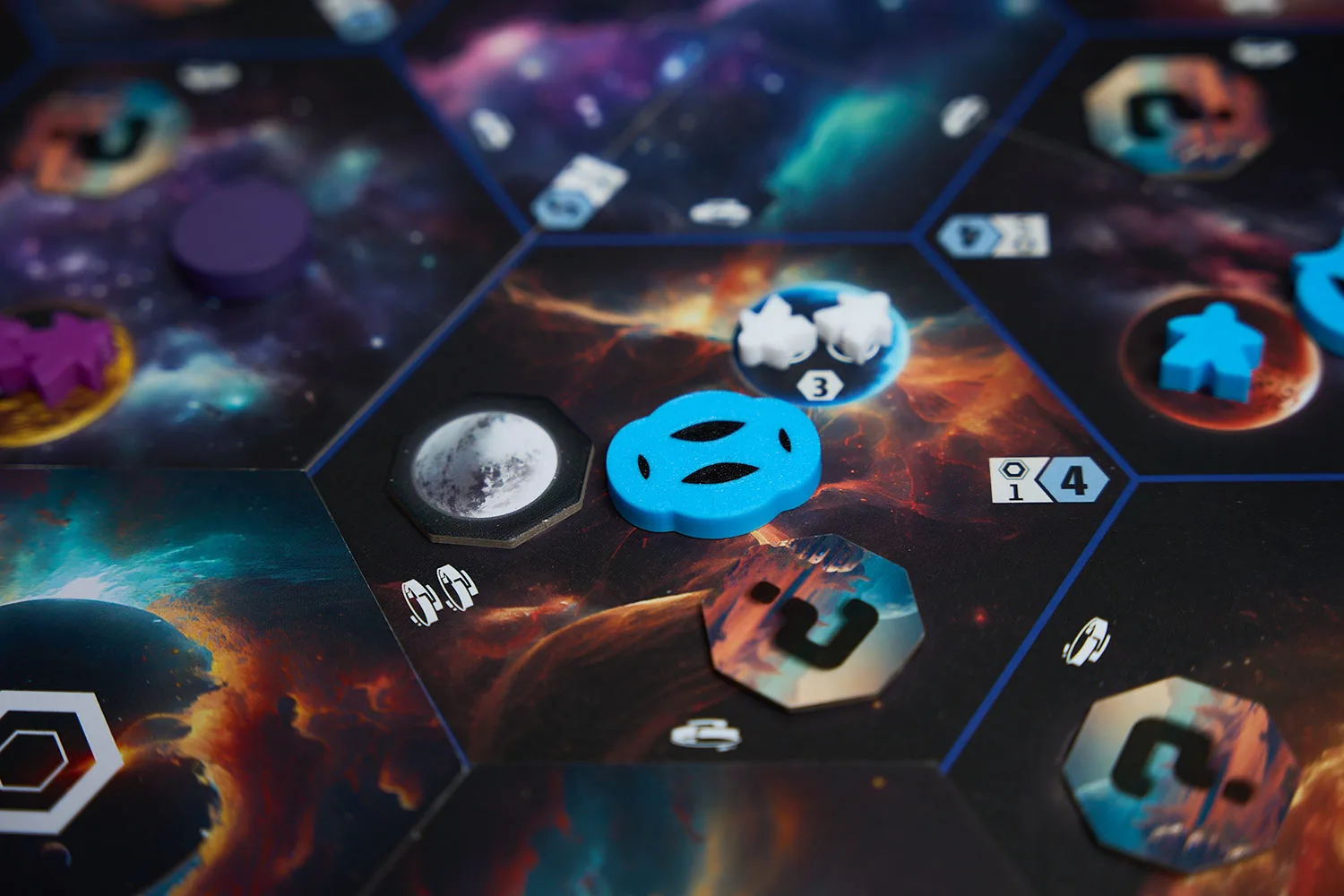
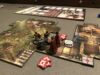
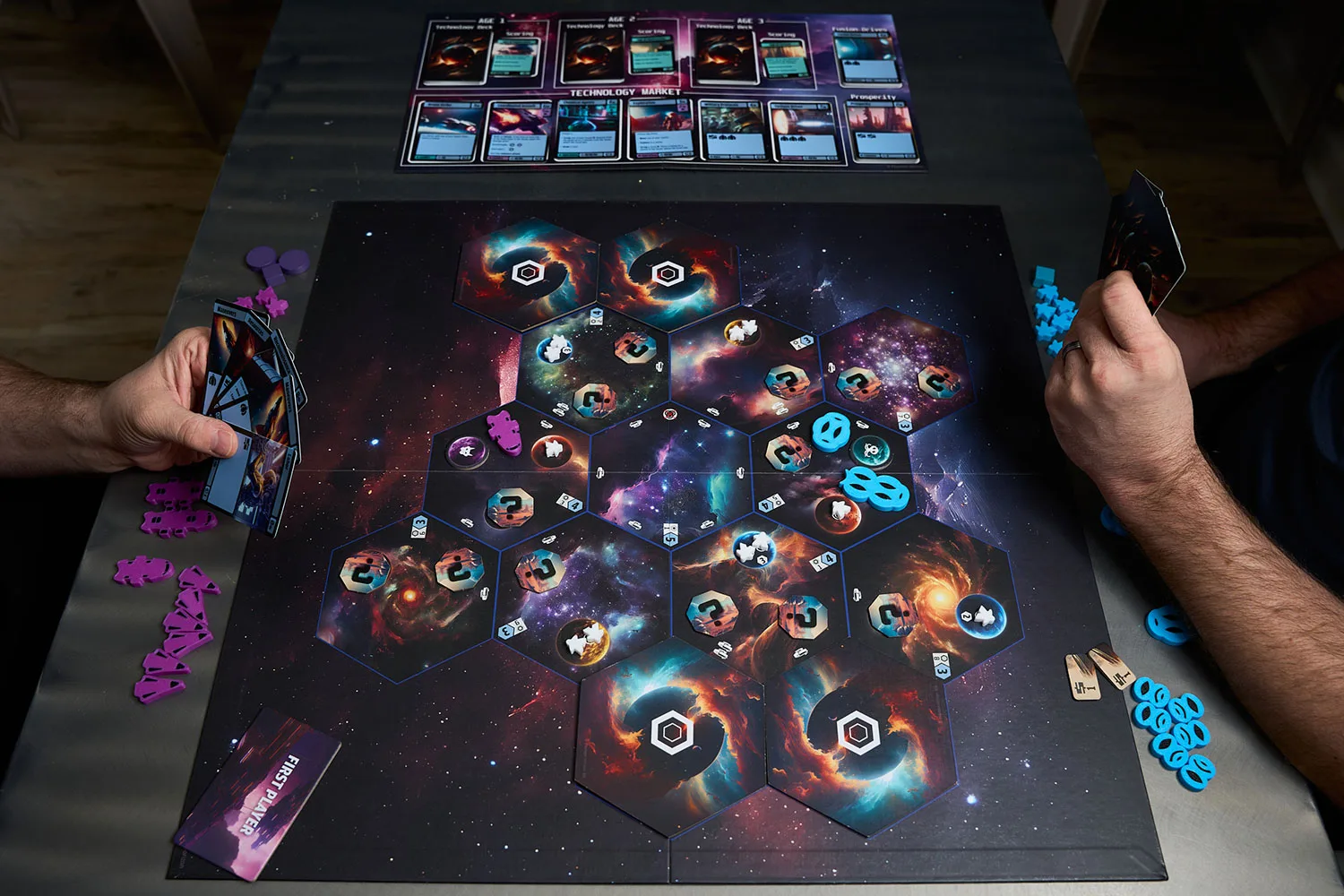
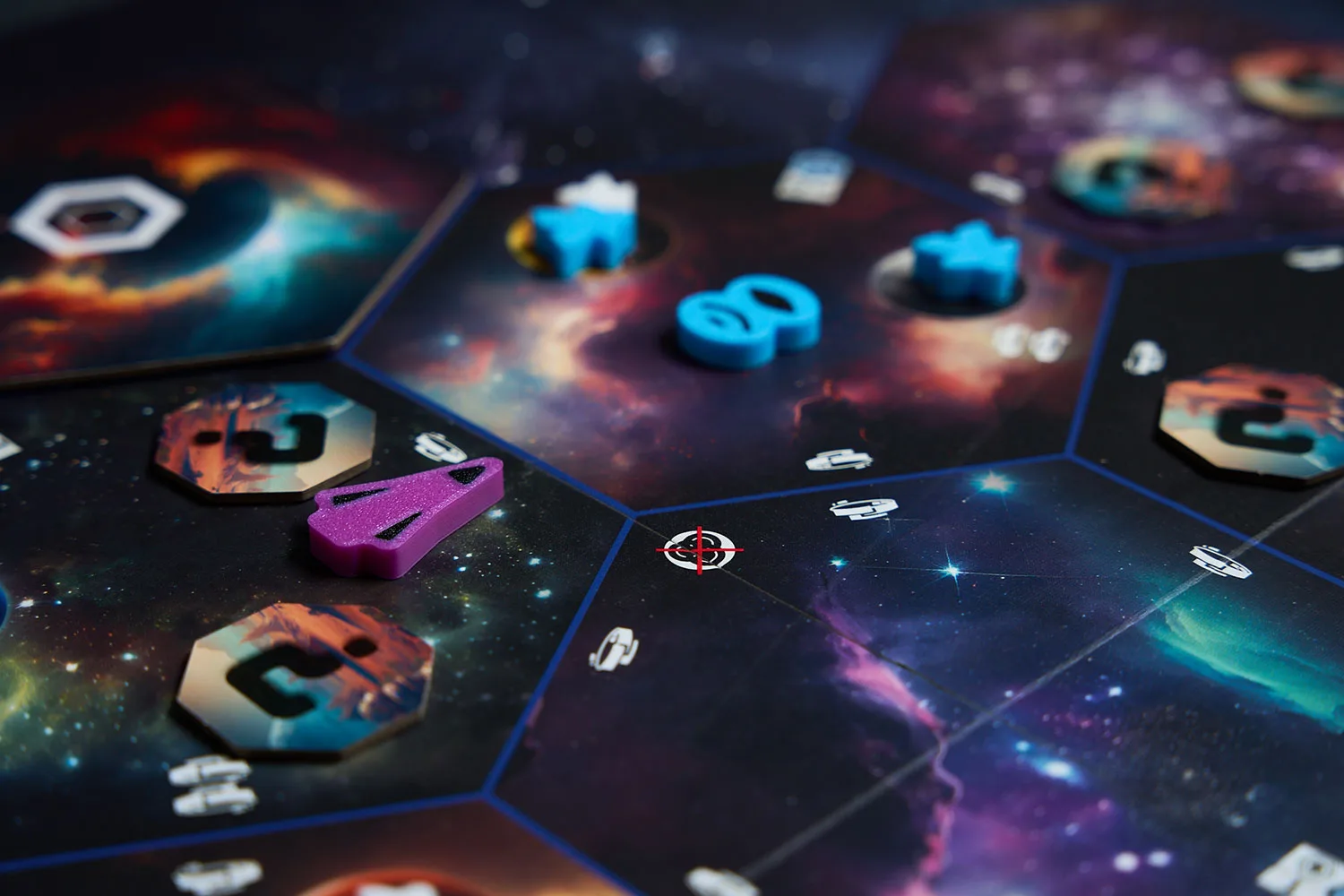
The game offers setup options for a tutorial game and player counts. Sectors, which can be placed in numerous ways during setup, contain planets, warp gates, and star gates, which help you jump around space a bit faster. There is the nucleus (single hex at the center), inner sectors (placed around the nucleus), and outer sectors (which contain star gates). With so much variety in setup, coupled with Age scoring opportunities and different species that players can play (i.e. unique starting bonuses), you’ll never play the same game state twice.
Turns are divided into three steps: Gain Resources, Take Actions, and End of Turn. Gain Resources lets players gain Credits and Command. Credits are used for purchasing cards and building different attack ships and starbases. Unspent credits are carried between turns. Command is used to perform actions like ship movement, enhancing attacks, and colonizing planets. Any unused Command is discarded at the end of the turn.
During the Take Actions phase, players buy/play cards and units, using their available resources. Players can reference all these actions and their costs from their player boards, which is very helpful when learning the game. Players can take as many actions as they can afford, but the only action a player must take is playing at least one card.
At the End of Turn phase, the player discards any played cards, gains any bonuses, draws back up to a hand of five, and disposes of one card from the Market if they didn’t buy one during their turn. This helps ensure some Market refreshing is occurring and moves the Age closer to ending.
Gameplay Impressions:
It was a treat personally to have the chance to play Solarion: Foundation of Empires. Not only because a friend is designing it (what psychopath doesn’t want a friend to succeed), but I also had the privilege early on to playtest via Tabletop Simulator during the heights of the pandemic when gaming in person for all of us changed drastically. So it’s neat to have followed along up to this point where there is a physical object to play and share.
I appreciated the ease of entry into Solarion. Not only are the rules generally straightforward, but having action information, costs, and turn structures on a player’s board is helpful, especially when you’re familiarizing yourself with the game. I can’t tell you how helpful this is, especially if you’re accustomed to being the game teacher. There are still a few rule caveats that will need to be taught and referenced, but I don’t feel like there are so many that it’ll continually disrupt your gameplay.
If you generally play games at a lower player count, I have encouraging news: Solarion modifies based on the player count. This means you’ll use fewer Sectors, thus shrinking the play space and encouraging more interaction. However, you will still need at least a medium-sized table to play on, as the hexes can take up some table real estate. However, this helps the aspects of area control remain relevant. Therein was something interesting and new for me when it came to a deck-building game.
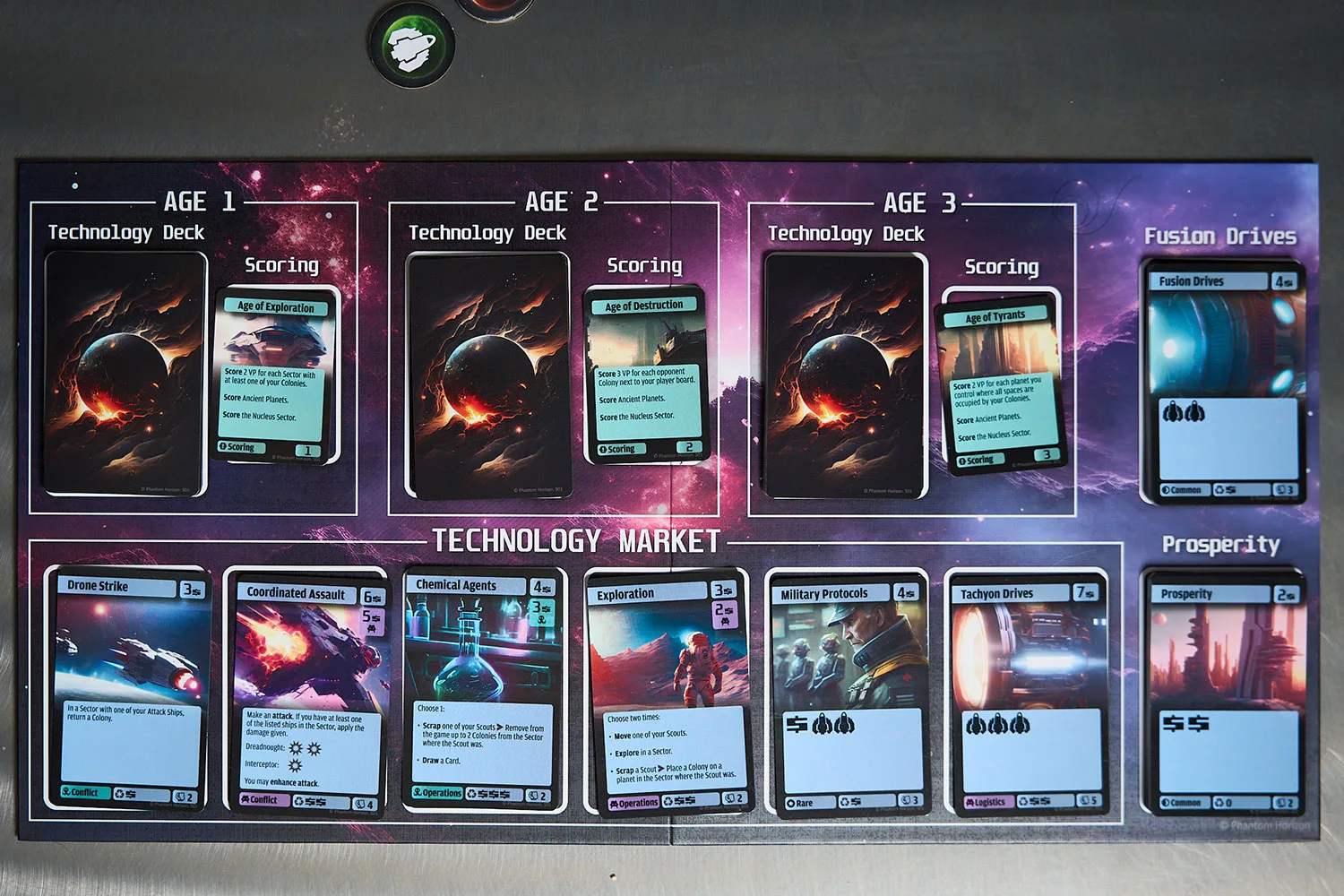
When I think back on deck-building games I’ve played, I couldn’t recall any that packaged things together the way Solarion does. Each player has the same starting deck, which you’d expect. Every species has 16 faction cards. I thought that was such a neat idea to use these for the Age decks and Technology Market. Doing some quick math, you can start to see how Ages might complete a lot faster if someone goes on a buying spree, especially in a two-player game. The cards of your species may be offered a discount in some cases. While factions have some repeated cards in their decks, they don’t appear at the same ratio and some will be unique.
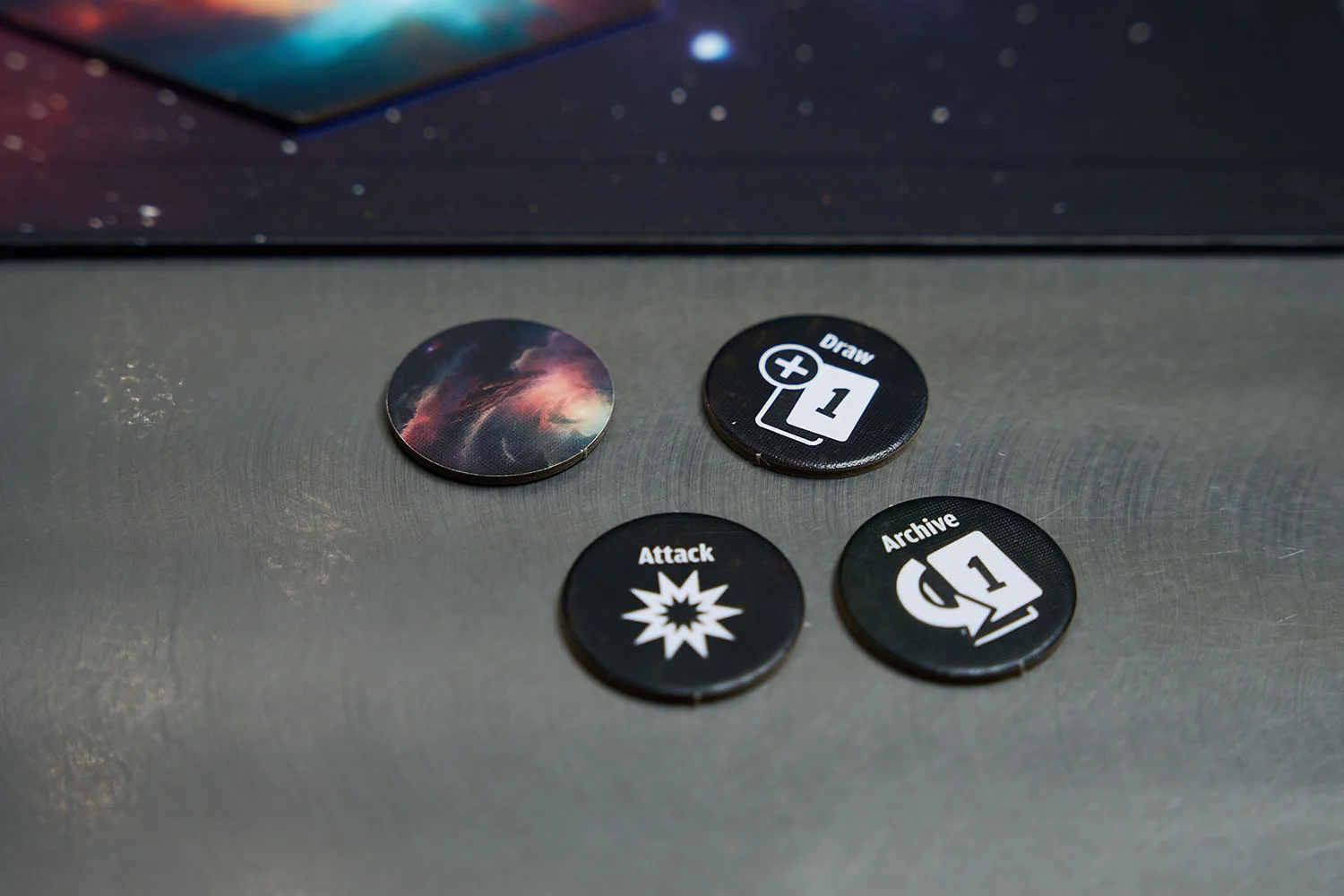
One last thing I found that distinguished these cards from those in other games was the concept of archiving. It’s essentially removing a card from your deck that will be worth points at the end of the game. Cards by themselves would normally be worth one point at the end, so this gives you something extra to consider beyond the myriad of other avenues for points.
Something I like to consider when I’m buying a game is the perceived value I’m getting for it. With Solarion, there is huge value to keep you interested in your current game and strategies to win, plus high replay value to encourage you to return to the well over and over again. This might be one that will have you developing strategies to try out long after the game has finished. That kind of quality in a game is something to consider.
Final Thoughts:
I have been a longtime fan of deckbuilding games, so when Tahsin was developing Solarion, I was happy to playtest it. Previews are a chance for backers to get an idea about the direction a project is going. We reserve final critiques that one typically finds in a review because those are finished, published products. Things can and do change between presentation, funding, and publication, so it’s always helpful to keep this in mind. If you’re interested in some of the behind-the-scenes development, Tahsin has published some development diaries that can be found on BGG.
With that said, Solarion: Foundation of Empires is a lot of fun. It offers something different and isn’t “just another space-themed deck builder”. It feels familiar and makes one wonder if they’ve experienced this combination of mechanics in a game before. Having area control be a part of the game gave me more to consider beyond choosing cards. I love having a variety of ways to set up the board to keep future strategies and games feeling dynamic. This will help keep the game experience fresh and encourage players to keep exploring it past their initial play.

Disclosure: The designer of this game is a former writer for Board Game Quest. He had no influence over the opinions expressed in this preview.